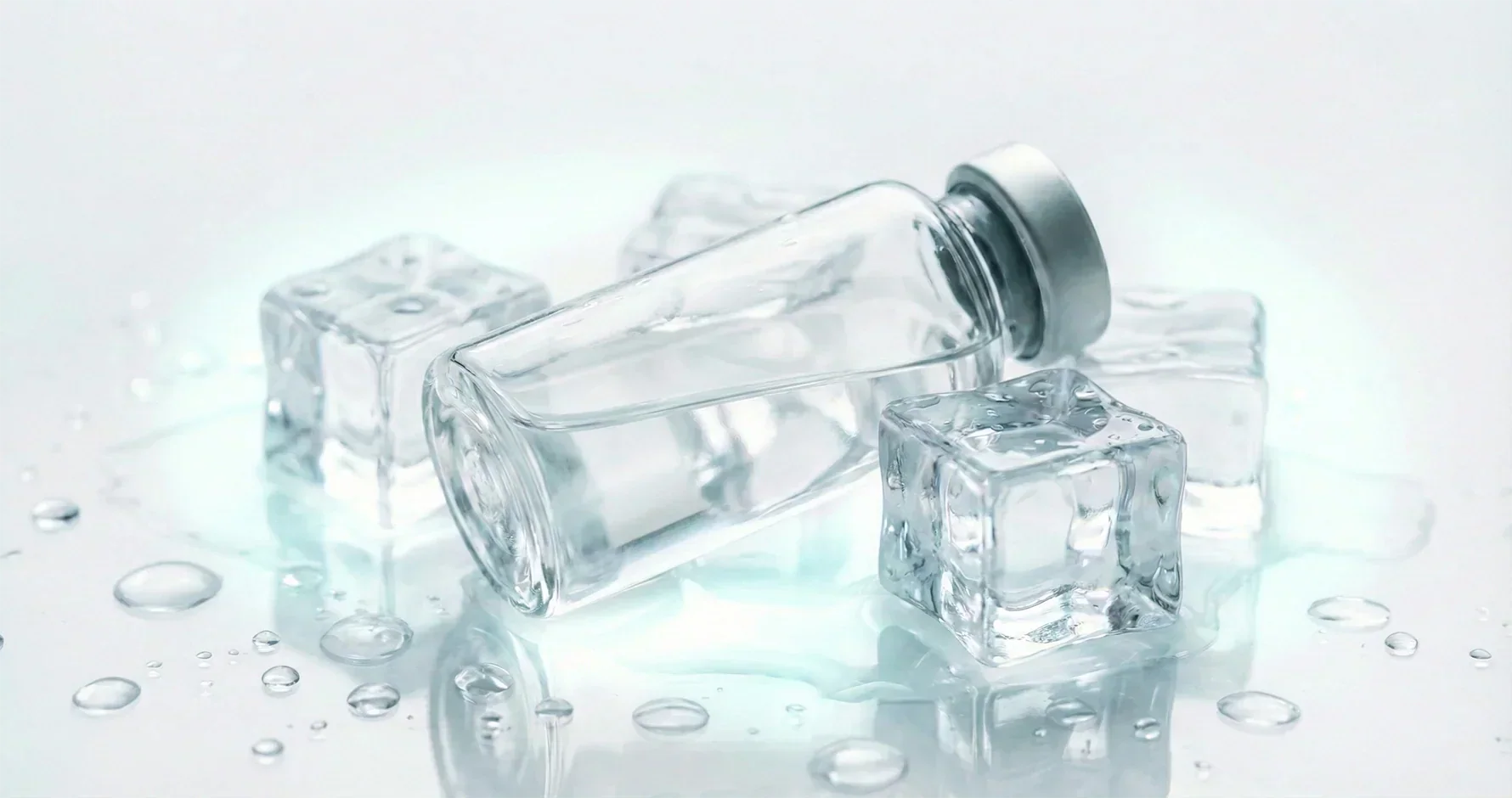
A skin booster, an exosome ampoule, or a hyaluronic acid filler is a real investment, and like any investment it holds its value only if it is kept correctly. This is Part 8 of our care series, and it deals with the quiet variable that decides whether the product you open is still the product that left the manufacturer: temperature, light, time, and the chain of custody in between.
Most of these products are not simple lotions. They are biologic and hydrogel formulations whose performance depends on a delicate molecular structure staying intact. That structure is sensitive to heat, to freezing, and to the cumulative effect of poor handling along the way. Understanding why is the difference between casual storage and the kind of care these products are designed to receive.
Why aesthetic products are temperature-sensitive
Two ingredient families dominate the modern aesthetic shelf, and both are fragile for reasons rooted in their chemistry. The first is the protein and biologic family, which includes growth factors, peptides, and exosome-based actives. Proteins hold a precise folded shape, and that shape is what makes them work. Heat unfolds it. The biopharmaceutical industry measures this directly through differential scanning calorimetry, which identifies the unfolding temperature, the point at which folded and unfolded protein exist in equal measure, after which structure is lost.1 Once a protein has unfolded and aggregated, the change is often irreversible.2
The second family is the hydrogels, chiefly the hyaluronic acid products used in fillers and many skin boosters. These are not proteins, but they are no less temperature-sensitive. Freezing is the particular enemy here: ice crystal formation can damage the hyaluronic acid structure and alter the viscosity and sterility a filler depends on.3 Excessive heat degrades them from the other direction. In both families, the rule is the same. The molecule on the label and the molecule in a heat-stressed or frozen vial are not the same thing.
The cold chain: general principles
The cold chain is simply the unbroken sequence of temperature-controlled handling that carries a sensitive product from manufacture to use. Its logic is borrowed from vaccine and biologic distribution, where the working standard for many products is a tightly held 2 to 8 degrees Celsius range maintained at every step.4 Insulated containers, phase-change gel packs conditioned to the right temperature, and climate-controlled transport are the ordinary tools used to hold that band across long distances.4
The reason the chain must stay unbroken is the temperature excursion: any deviation outside the prescribed range, which can quietly degrade a product and is most often caused by transit delays, inadequate packaging, or equipment failure.5 A single uncontrolled afternoon on a loading dock can undo what careful manufacturing built. This is why serious distribution treats temperature control as a continuous discipline under good distribution practice rather than a checkbox at the warehouse door.5
Freezing deserves a separate warning, because for many products it is worse than heat. Freezing imposes ice crystal formation and the concentration of solutes that can denature proteins, and thawing adds a second round of stress through recrystallization.6 For both biologics and hydrogels, cold does not mean colder is safer. There is a floor as well as a ceiling.
Storing fillers and skin boosters
For hyaluronic acid fillers and the broad category of skin boosters, the practical guidance is consistent and modest. Most are kept at controlled room temperature, generally not exceeding 25 degrees Celsius, or refrigerated where the label specifies, with the manufacturer's instructions always taking priority.3 Three things to avoid are constant across nearly every label: do not freeze, do not expose to excessive heat, and keep the product out of direct light. Then check the expiry date, and do not assume a product stored well is exempt from it.
Prescription aesthetic products such as botulinum toxin are kept refrigerated and never frozen, strictly per the manufacturer's labeling and a clinic's professional protocol.
The journey before it reaches you
By the time a vial reaches a practitioner, it has already lived a long logistical life: out of a manufacturing line, into temperature-controlled storage, across borders, through customs, and into a delivery network. Each of those handoffs is a place where the chain can break. A product that spent an unmonitored stretch at the wrong temperature can look perfectly normal and still have lost the structural integrity that mattered.2
This is the part buyers rarely see and cannot easily verify on their own, which is exactly why it belongs at the center of any honest conversation about value. The condition of a product on arrival is decided long before the box is opened. Sourcing and handling are not separate from quality. For temperature-sensitive aesthetics, they substantially are the quality.
Where the supply side fits
This is the part a distributor can actually stand behind. We operate a dedicated cold-chain line for beauty and medical products, sourcing through authentic official channels and shipping to the United States and the European Union. We do not promise what any product will do for a given patient, because that is a clinical question. What we can speak to is the variable above: keeping authentic, temperature-sensitive products in their intended condition from origin to delivery.
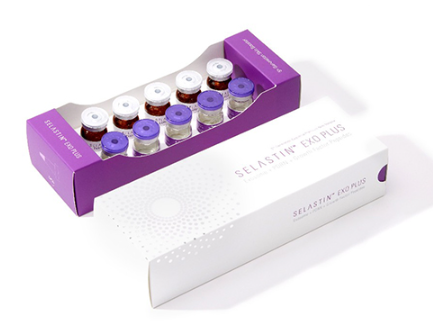
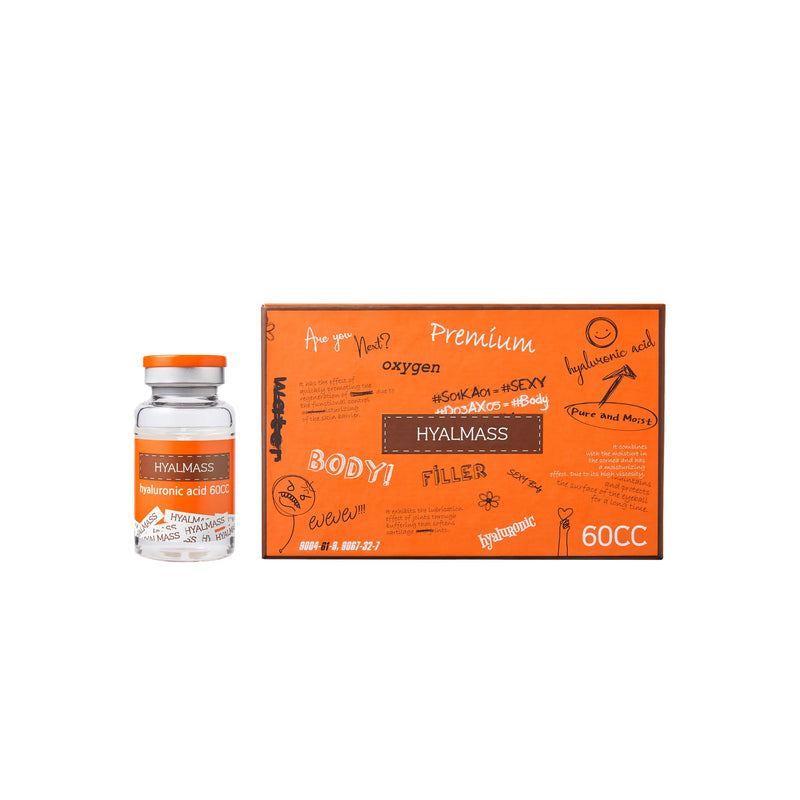
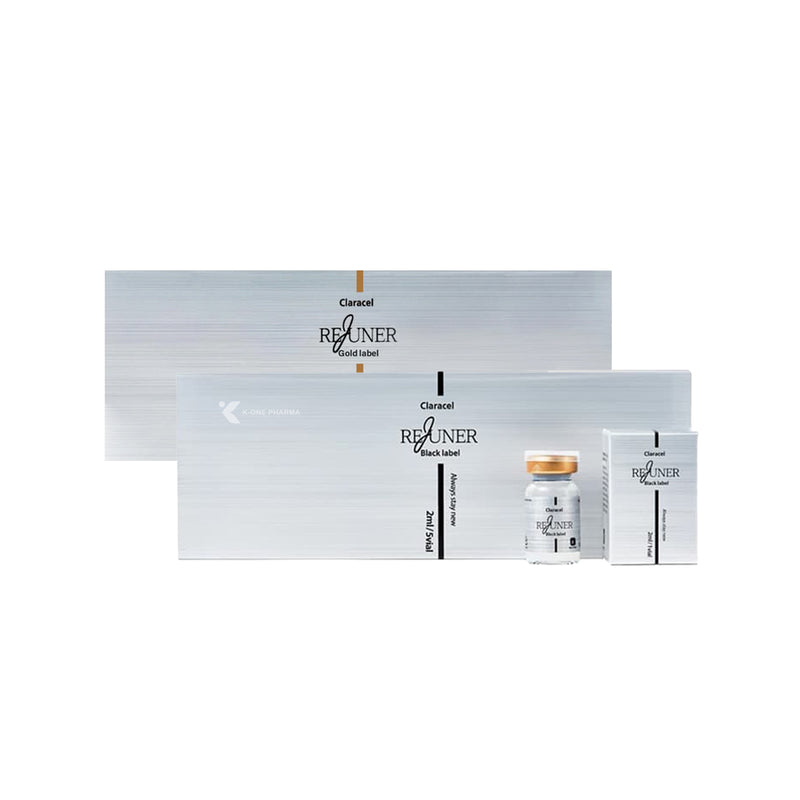
That commitment is reflected in the logistics record on our customs page, which reports roughly a 97 percent clearance rate over five years. On US orders, an all-in, duties-and-taxes-included (DDP) option can be selected at checkout, so where it applies the duties and taxes are settled within the delivered price rather than left as a surprise at the border — a method you choose, not a default on every order. For readers mapping the temperature-sensitive range, examples include the exosome-based SELASTIN EXO PLUS, the hyaluronic acid skin booster Hyalmass 60CC, and the regenerative booster Rejuner, all intended for professional use and all the kind of product the cold chain exists to protect.
Frequently asked questions
Frequently asked
Why are skin boosters and exosome products so temperature-sensitive?
Can I store a hyaluronic acid filler in the freezer?
No. Freezing can damage the hyaluronic acid structure and affect viscosity and sterility. Most fillers are kept at controlled room temperature up to about 25 degrees Celsius, or refrigerated only where the label specifies. Always follow the manufacturer's instructions.3
What is a cold chain and why does it matter?
If a product looks fine, can I assume it was stored correctly?
Not reliably. A product exposed to a temperature excursion in transit can appear normal while having lost structural integrity, so provenance and verified handling, not appearance, are what indicate condition.2
Disclaimer. This article is general information for educational purposes and is not medical advice. It describes why temperature-sensitive cosmetic and aesthetic products require careful storage and handling, not how to prepare or administer any specific product. Products referenced are intended for use by trained professionals. Always follow the manufacturer's labeling and current local regulations, which vary by country and change over time.
Sources & references
- Peer-reviewed overview of protein thermal stability and the unfolding temperature (Tm) measured by differential scanning calorimetry. sciencedirect.com
- Temperature stability of proteins: analysis of irreversible denaturation and aggregation (isothermal calorimetry study). ncbi.nlm.nih.gov
- Public guidance summaries on hyaluronic acid dermal filler storage (controlled room temperature up to ~25C, avoid freezing and heat). pmc.ncbi.nlm.nih.gov
- Cold chain principles for temperature-sensitive biologics (2 to 8C standard, insulated containers and climate-controlled transport). paho.org
- Good distribution practice and temperature excursions: definition, causes, and the need for continuous control. gmpinsiders.com
- Effect of freezing and thawing on protein denaturation and aggregation (ice formation, solute concentration, recrystallization stress). pubmed.ncbi.nlm.nih.gov