Three reports from Korea's Ministry of Food and Drug Safety, published between May and July 2026, put numbers on the three Korean product families most familiar to aesthetic buyers. Korea produced 786.2 billion won of toxin and antitoxin products in 2025, up 16.9 percent. It exported 376 million dollars of tissue-repair biomaterials, the device category that holds dermal fillers. And it exported 11.42 billion dollars of cosmetics, enough to overtake the United States and become the world's second-largest cosmetics exporter. Each figure answers a narrower question than a headline suggests, and reading them side by side shows how differently sized the three families are.
The three reports
The Ministry publishes annual production, export and import results separately for cosmetics, medical devices and drugs. For 2025 the cosmetics figures came first, on 22 May 2026, as national approved statistics. The device figures followed on 28 May. The drug figures, which include biologics such as botulinum toxin, were released on 2 July.
Drugs: the record year behind the toxin figure
Korea's drug production reached 33.8466 trillion won in 2025, up 3.0 percent and the highest since the Ministry began collecting the statistic in 1998. Drug exports passed ten billion dollars for the first time, at 10.438 billion dollars, up 12.4 percent in dollar terms and 17.1 percent in won terms. Imports were 8.932 billion dollars, and the resulting trade surplus of 1.506 billion dollars was also a record.
Biological products drove a large part of that. Biopharmaceutical production rose 11.2 percent to 7.0214 trillion won, and biopharmaceutical exports rose 17.5 percent to 7.64 billion dollars, about 73 percent of all drug exports.
| Product type | 2024 (won) | 2025 (won) | Change |
|---|---|---|---|
| Recombinant products | 3.6687 trillion | 4.1890 trillion | +14.2% |
| Vaccines | 838.0 billion | 860.5 billion | +2.7% |
| Toxins and antitoxins | 672.4 billion | 786.2 billion | +16.9% |
| Plasma fractionation products | 548.6 billion | 565.7 billion | +3.1% |
| Blood products | 499.8 billion | 538.7 billion | +7.8% |
Toxins and antitoxins rank third among biological product types, behind recombinant products and vaccines, and they grew faster than either. The category is the one in which botulinum toxin products are counted.
A careful reader should hold two qualifications. First, toxins and antitoxins is a statistical category, and it is not limited to aesthetic botulinum toxin products. Second, it is a production value, not a value of domestic sales or exports of toxins specifically. The figure shows that the category grew strongly in 2025; it does not measure any particular product's market. The register behind that production, 57 live toxin licences held by 21 companies, is described in Korea's toxin register in four waves.
Devices: where fillers sit in the numbers
Korea's medical device production reached 12.3558 trillion won in 2025, up 8.1 percent. Exports were 5.37 billion dollars, up 2.2 percent, and imports 5.04 billion dollars, up 9.3 percent, leaving a trade surplus of 330 million dollars, the sixth consecutive year in surplus. The domestic device market grew 12.6 percent to 11.8769 trillion won.
The Ministry singled out tissue-repair biomaterial, the item known as filler, among devices with growth in all three measures.
| Measure | 2023 | 2024 | 2025 | Change 2024 to 2025 |
|---|---|---|---|---|
| Production (won) | 501.7 billion | 484.2 billion | 522.4 billion | +7.9% |
| Exports (US dollars) | 346 million | 370 million | 376 million | +1.6% |
| Imports (US dollars) | 46 million | 61 million | 77 million | +25.2% |
Three things stand out. Production dipped in 2024 and recovered above its 2023 level in 2025. Exports grew in both years but only slightly in 2025. Imports, although small in absolute terms, rose by a quarter for the second consecutive year, from 46 million dollars in 2023 to 77 million in 2025.
The export figure is roughly five times the import figure. Korea is, in trade terms, an exporter of fillers by a wide margin, which is consistent with a register in which 890 of 944 live filler licences are for Korean-made products. The growth in imports sits alongside the return of new import licences in 2025 described in Korea's filler register after 2020, although trade values and licence counts are different measures and one does not explain the other.
A surplus that has narrowed sharply
The device report's headline is a sixth consecutive year of trade surplus, and that is accurate. The size of the surplus tells a more varied story.
| Year | Trade surplus |
|---|---|
| 2021 | 3.28 billion |
| 2022 | 2.99 billion |
| 2023 | 450 million |
| 2024 | 650 million |
| 2025 | 330 million |
Within that narrower balance, fillers remain a clear net export. Their 376 million dollars of exports against 77 million dollars of imports gives a filler trade surplus of roughly 300 million dollars, similar in size to the entire device industry's surplus for the year. That comparison should not be pushed too far, because other device categories run deficits that offset surpluses elsewhere, but it does show that fillers are one of the categories keeping the device balance positive.
Other aesthetic-related devices grew faster
Fillers were not the fastest-growing aesthetic-related devices in the report. The Ministry highlighted general-purpose electrosurgical units, used among other things in skin wrinkle procedures, whose production rose 36.9 percent to 180.4 billion won, exports 48.9 percent to 157 million dollars and imports 69.4 percent to 61 million dollars. Disposable hand-controlled electrodes used with those units grew even faster, and at 169 million dollars were the single largest device import item in 2025.
Cosmetics: the largest family by far
The cosmetics figures belong to a different order of magnitude. Korea exported 11.42 billion dollars of cosmetics in 2025, up 11.8 percent, and imported 1.29 billion dollars, down 2.3 percent. The trade surplus of 10.13 billion dollars passed ten billion for the first time. Production reached 17.9382 trillion won, up 2.3 percent.
By export value Korea moved from third to second in the world, behind France at 24.3 billion dollars and ahead of the United States at 10.8 billion. The United States became Korea's largest cosmetics export destination for the first time, at 2.2 billion dollars, ahead of China at 2.0 billion and Japan at 1.1 billion. Korean cosmetics were exported to 202 countries, up from 172.
| Type | Exports (US dollars) | Share |
|---|---|---|
| Skin care | 8.53 billion | 74.7% |
| Colour cosmetics | 1.51 billion | 13.2% |
| Hair products | 590 million | 5.1% |
| Body cleansing | 480 million | 4.2% |
| Eye make-up | 200 million | 1.7% |
Skin care alone accounted for three quarters of cosmetics exports. Many products that aesthetic buyers encounter as boosters or ampoules are classified as cosmetics rather than as drugs or devices, and they would be counted in these figures rather than in the device or drug reports. The report does not separate those products from skin care generally.
Where Korean cosmetics went in 2025
The destination figures in the cosmetics report show a shifting map. The United States became the largest single destination for the first time, at 2.2 billion dollars and 19.1 percent of exports, up from 840 million dollars in 2021. China, long the largest destination, fell 19 percent to 2.0 billion dollars. Japan rose 4.9 percent to 1.1 billion.
The fastest risers among the top ten were further afield. Exports to Poland grew 115 percent to 280 million dollars, lifting it to ninth place from fourteenth a year earlier and twenty-third in 2023. Exports to the United Arab Emirates grew 70.6 percent to 290 million dollars, placing it eighth. The top ten destinations together took 70.7 percent of exports, and Korean cosmetics reached 202 countries, thirty more than the year before.
Growth within biologics: toxins outpaced the largest type
Returning to the drug report, the order of growth among biological product types is worth a closer look. Recombinant products, the largest type by far at 4.189 trillion won, grew 14.2 percent. Vaccines grew 2.7 percent. Toxins and antitoxins grew 16.9 percent, faster than either of the two larger types and faster than plasma fractionation products at 3.1 percent and blood products at 7.8 percent.
In absolute terms, recombinant products added about 520 billion won of production in a year and toxins and antitoxins about 114 billion. The toxin category is growing faster from a smaller base. Over the same period, the register added six new toxin licences in 2025 and one so far in 2026, a pace consistent with a category that is still attracting filings rather than consolidating.
The three families side by side
| Family | Figure reported | 2025 value | Change |
|---|---|---|---|
| Toxins and antitoxins | Production | 786.2 billion won | +16.9% |
| Tissue-repair biomaterial (fillers) | Production | 522.4 billion won | +7.9% |
| Tissue-repair biomaterial (fillers) | Exports | 376 million dollars | +1.6% |
| Cosmetics, all types | Production | 17.9382 trillion won | +2.3% |
| Cosmetics, all types | Exports | 11.42 billion dollars | +11.8% |
By production value, the toxin and antitoxin category was about one and a half times the filler category in 2025, and cosmetics production was more than thirteen times the two combined. Filler exports were about three percent of cosmetics exports. The families that dominate conversations among aesthetic professionals are, in the national statistics, small parts of a much larger Korean beauty and pharmaceutical economy.
Growth rates run in a different order from size. The toxin and antitoxin category grew fastest in production. Filler production grew at about half that rate and filler exports barely grew, while cosmetics exports grew strongly from an already large base.
Won and dollars do not grow at the same rate
The drug report shows a detail that matters whenever these figures are compared across years. Drug exports rose 12.4 percent measured in dollars but 17.1 percent measured in won, because the won weakened against the dollar over the period. Imports show the same gap, 5.9 percent in dollars and 10.4 percent in won.
That means a growth rate is partly a statement about the exchange rate. Filler exports are reported in dollars and filler production in won, so the two filler growth rates in this article, 1.6 percent and 7.9 percent, are not directly comparable. Some of the apparent gap between them reflects currency rather than volume.
How the figures fit with the register
For toxins, the register shows a category still adding licences, with six granted in 2025, and the production figures show the toxin and antitoxin type growing faster than any other large biological product type. Both point to a category that was expanding in 2025.
For fillers, the register shows the fastest growth in licences in its history, with 123 filler licences granted in 2025, while production grew 7.9 percent and exports only 1.6 percent. The two do not contradict each other. A licence is permission to market a product; it does not guarantee volume. A category can add many licences in a year when output grows moderately, especially if many of the new licences belong to recent entrants whose products are still establishing themselves.
How the figures relate to the KSTATION range
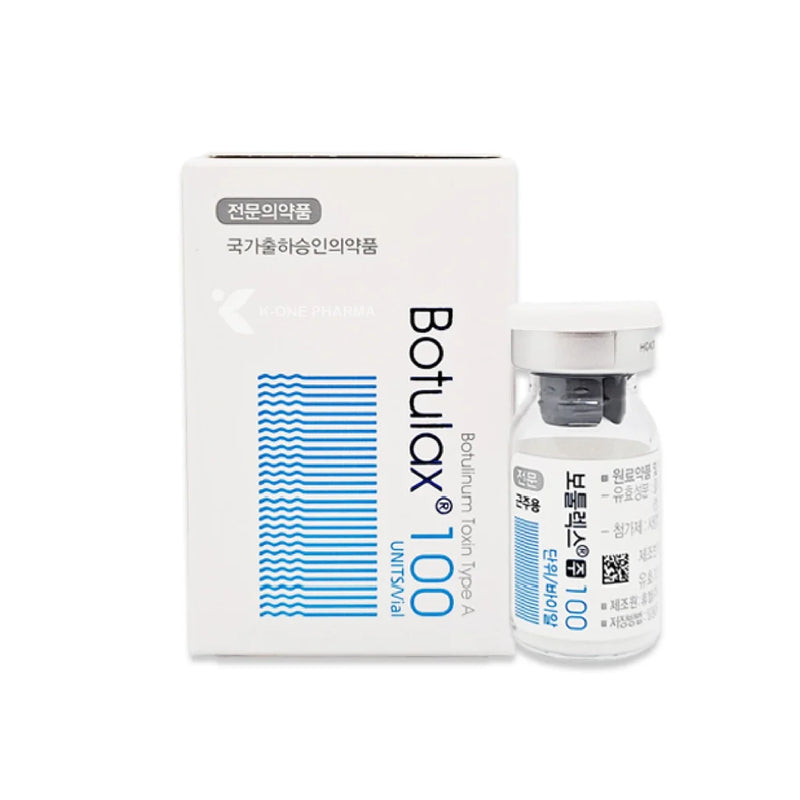
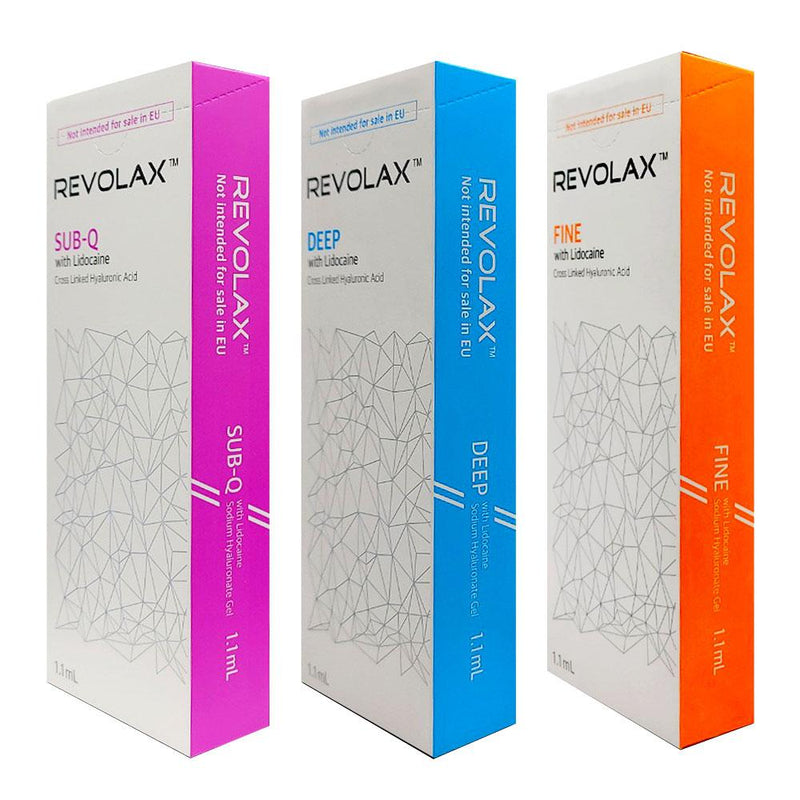
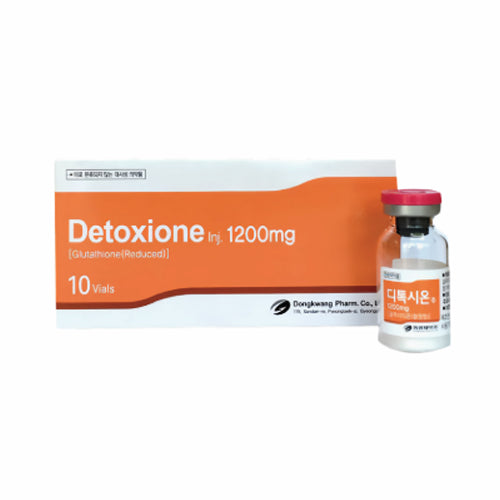
The products in our range sit inside all three families. Toxins such as Botulax belong to the biological product type whose production grew 16.9 percent. Fillers such as REVOLAX belong to the tissue-repair biomaterial item whose exports reached 376 million dollars. Injectables such as Detoxione sit in the wider drug production figure. Many boosters and ampoules sit in the cosmetics figures. The full range is browsable under shop all.
Frequently asked
How much botulinum toxin did Korea produce in 2025?
The Ministry does not report botulinum toxin separately. It reports toxins and antitoxins as a biological product type, with 2025 production of 786.2 billion won, up 16.9 percent from 672.4 billion won in 2024.
How much are Korean dermal filler exports worth?
Exports of tissue-repair biomaterial, the device item that includes fillers, were 376 million dollars in 2025, up 1.6 percent. Production was 522.4 billion won and imports 77 million dollars.
How big are Korean cosmetics exports?
11.42 billion dollars in 2025, up 11.8 percent, making Korea the world's second-largest cosmetics exporter after France. The United States was the largest destination at 2.2 billion dollars.
Sources and references
- Ministry of Food and Drug Safety, press release on 2025 domestic drug production results, 2 July 2026.
- Ministry of Food and Drug Safety, press release on 2025 medical device production, export and import results, 28 May 2026.
- Ministry of Food and Drug Safety, press release on 2025 cosmetics production, export and import statistics (national approved statistics), 22 May 2026.
All figures are as published by the Ministry for calendar year 2025. They describe national production and trade and are not sales figures for any company or product. This article does not describe what any product does or how it is used.