Korea's register of dermal filler licences holds 1,167 filings granted since 1999. More than half of them, 660, were granted from 2020 onward. That is not a register that grew steadily for a quarter of a century. It is one that spent its first decade as an import channel, its second becoming a domestic industry, and its last six years expanding faster than at any point before, with a growing share of that expansion coming from companies that had never held a filler licence until recently.
The register in three eras
Dermal fillers are filed in Korea as class 4 medical devices under two items, tissue-repair biomaterial and tissue-repair material. Every filing under those items is a licence, as described in our reading of the three doors into Korea's device register. Counting all of them by grant date, and separating Korean-made licences from import licences, gives three clearly different eras.
| Era | Licences granted | Import | Domestic | Still live today |
|---|---|---|---|---|
| 1999 to 2009 | 81 | 73 | 8 | 6 |
| 2010 to 2019 | 426 | 79 | 347 | 307 |
| 2020 to September 2026 | 660 | 10 | 650 | 631 |
| Total | 1,167 | 162 | 1,005 | 944 |
Read across the rows and the category changes character twice. In the first era nine licences in ten were imports. In the second, domestic licences overtook imports early and ended the decade at more than four to one. In the third, imports all but disappear from the flow of new licences, ten out of 660, while the total number of licences granted rises by more than half again over the previous decade.
The last column adds a second dimension. Of the 81 licences from the first era, six remain live, and five of those six are imports. The early register was not only import-led; almost all of it has since ended. The filler field a buyer encounters today was, in register terms, built almost entirely after 2010, and two thirds of its live licences date from 2020 or later.
1999 to 2009: an import channel
For its first decade the register functioned as a list of foreign products licensed for sale in Korea. Seventy-three of the 81 licences granted before 2010 were imports, and in several years every single filing was one. Domestic manufacturers appear only occasionally, eight licences across the whole period.
The import licences of that era have not aged well in register terms. Sixty-eight of the 73 have since ended. The device register records each ending with a date and one of three numeric ending-type codes, which the public data does not label, so this article counts every ending together rather than naming a type. That is not a statement about the products, and the register does not say why each one left; licences end for commercial, corporate and administrative reasons as often as any other. It does mean that the filler register's own early history is now mostly archive. A buyer reading about fillers licensed in Korea in the mid 2000s is reading about entries that, with a handful of exceptions, no longer stand.
The detailed shift from import to domestic manufacture across these years, including the first domestic licences, is set out in our explainer on why an HA filler is not in the drug register. This article picks up where that shift was already complete.
2010 to 2019: a domestic industry forms
The second era is when Korean manufacture became the norm. Domestic licences outnumbered imports from 2011 and the gap widened every year after. By the second half of the decade, import licences had fallen to two to five a year while domestic licences ran between 33 and 64.
The era also established most of the holders whose names are now familiar. One hundred and fourteen companies received their first filler licence between 2010 and 2019, more than twice the number that had entered in the previous decade. Many of those holders filed repeatedly through the decade, adding licences for further product lines and presentations, which is why the licence count grew faster than the roster of companies.
Most of what the era produced is still in force. Of 426 licences granted between 2010 and 2019, 307 are live. That survival rate, a little over seven in ten, is what one would expect of a mature category in which products are retired and replaced at a moderate pace rather than abandoned wholesale.
2020 onward: the fastest growth in the register's history
From 2020 the annual count of new licences moves into a different range. Before 2020 the busiest single year produced 68 filler licences. From 2020 no year has produced fewer than 67, and the most recent full year, 2025, produced 123. The first eight and a half months of 2026 have already produced 96.
| Year | Licences granted | To holders first licensed 2020 or later | Share |
|---|---|---|---|
| 2020 | 85 | 20 | 24% |
| 2021 | 67 | 23 | 34% |
| 2022 | 86 | 37 | 43% |
| 2023 | 95 | 41 | 43% |
| 2024 | 108 | 66 | 61% |
| 2025 | 123 | 94 | 76% |
| 2026, to 14 September | 96 | 64 | 67% |
The second and third columns answer the question in this article's title. Growth since 2020 did not come mainly from established holders filing more. In 2020 roughly a quarter of new licences went to recent entrants. By 2025 three quarters did. Across the whole period, 345 of the 660 licences granted since 2020 belong to companies that held no filler licence before 2020.
The roster of companies grew accordingly. One hundred and thirteen companies received their first filler licence between 2020 and September 2026, almost exactly as many as in the entire previous decade, and the two busiest years for new entrants in the register's history are 2024, with 25, and 2025, with 23. Those newer companies already hold 332 of the 944 live licences, a little over a third of the field.
Imports: a pause, then a return
Inside the flow of domestic licences, the import side tells a small story of its own. After a decade of two to five import licences a year, imports thinned to one or two a year from 2020 and then stopped entirely. No filler import licence was granted in 2023 or in 2024.
They resumed in 2025. Three import licences were granted that year, one naming Matex Lab as manufacturer and two naming S&V Technologies, and three more in 2026 so far, all naming Teoxane. Each came through a different Korean importer. Six import licences in under two years is a modest number against more than two hundred domestic ones, but it ends a two-year gap.
The live import field as a whole is concentrated among a small number of foreign makers. Of 54 live import licences, eleven name Q-Med as manufacturer, seven name Allergan, six Teoxane, five each Vivacy and S&V Technologies, and three each Sinclair and Anteis, with the remainder spread thinly. Several of those makers appear under slightly different spellings in the manufacturer field, so any count by maker needs the variants combined.
Companies that came and went
The register's roster of holders is larger than its roster of active holders. Counting variants of the same company name as one, 276 companies have held a Korean filler licence at some point since 1999. Of those, 196 hold at least one live licence today. Eighty companies that once held a filler licence hold none now.
That gap is the other side of the growth story. The category has added companies quickly since 2020, and it has also shed them steadily across its whole history, most heavily among the importers of the first era. The net figure a buyer sees, 196 active holders, is the result of both movements rather than a simple accumulation.
What the growth changes for a buyer
The first consequence is currency. A list of Korean filler makers compiled even five years ago describes a field in which more than half of today's live licences did not exist. Most of the 113 companies that entered since 2020 are not yet widely known outside Korea, and many of their products carry brand names that no English-language reference has caught up with. As with toxins, the register is the most current source for the question of who holds a Korean filler licence, while outside references remain better at telling you which names are already familiar.
The second is that holder history has become a more useful field to read. When most licences belonged to a small number of long-established companies, the holder name told a buyer relatively little beyond identity. With a third of the live field now held by recent entrants, the date of a holder's first licence says something concrete: whether the product comes from a company with a decade of filings behind it or from one that entered the category last year. Neither is a judgment on the product. Both are facts that a description of the product may or may not match.
Reading a filler's place in this history
Placing a particular product on this timeline takes two readings of the register. The first is the product's own licence: its grant date tells you which era it belongs to, and whether it is live tells you whether it still stands. The second is its holder's earliest filler licence, which tells you whether the company is an established filer or a recent entrant.
The two dates can differ by many years. An established holder may have been granted a new licence last month, and that new licence belongs to the 2020s even though the company belongs to the 2010s. A recent entrant's licence and its company's first licence may be one and the same. Reading both avoids the easy mistake of treating a company's age as the age of every product it holds.
A third reading is worth adding when a product is described as new. Check whether its licence is recent or whether the holder has simply added a new brand name to an older licence. The register records licences, not marketing launches, and a product introduced to buyers this year may rest on a filing granted several years ago. Equally, a licence granted this year may cover a product that has been sold abroad under a different arrangement for some time. The grant date answers only the question of when the Korean filing was accepted, and it is best read as exactly that.
Where fillers in the KSTATION range sit across the eras
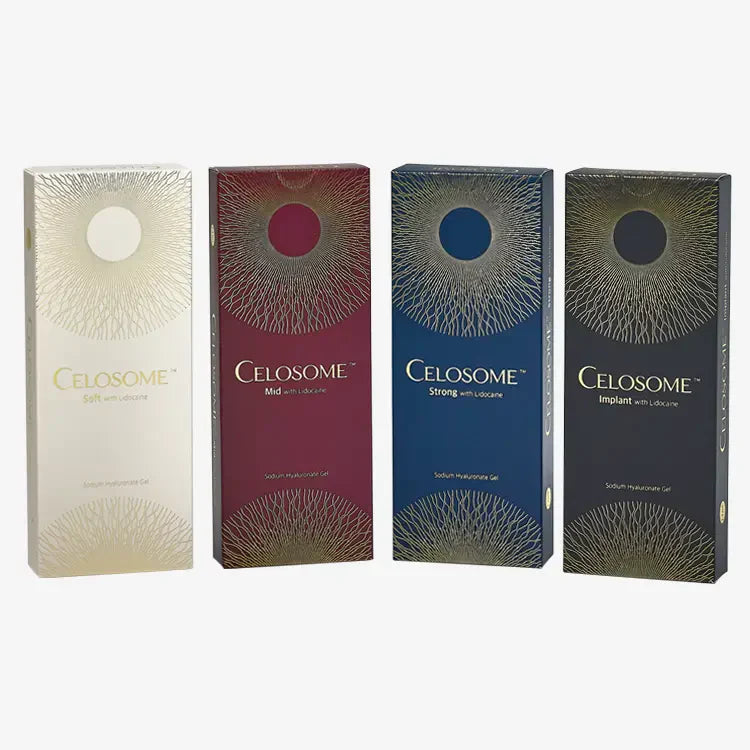
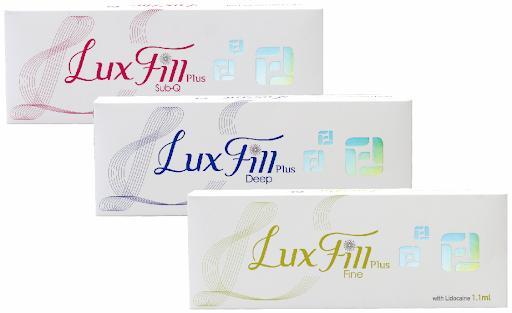
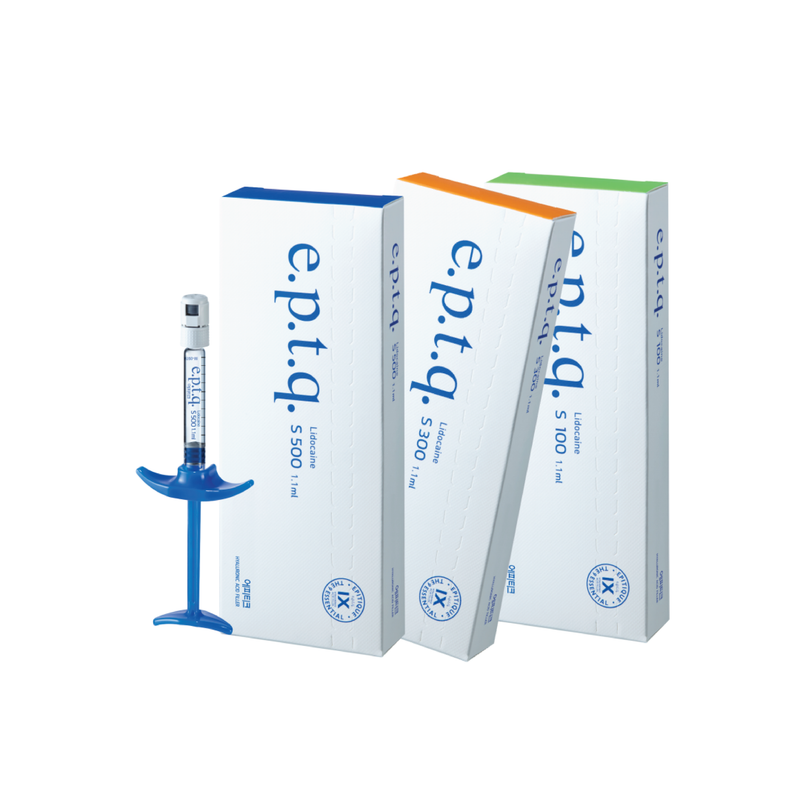
E.P.T.Q belongs to Jetema, whose filler licences, filed under the company and its manufacturing site, run from 2014 to 2025 and number 23 live. It is an example of an established second-era holder that has continued filing into the third. LUXFILL belongs to a holder with a single tissue-repair licence, granted in May 2019, at the very end of the second era, by a company whose other device licences sit in different device items altogether. CELOSOME belongs to a holder whose seven live filler licences were granted between September 2017 and October 2025, straddling the two eras with filings in both.
The three together also show why a single date is rarely enough. One holder filed once, one filed across two eras, and one has filed steadily for more than a decade from two sites. Each of those shapes is ordinary in the register, and each would be flattened by a description that gives only a brand name and a country of origin.
Frequently asked
How many dermal filler licences are there in Korea?
On 14 September 2026 the device register held 1,167 tissue-repair licences granted since 1999, of which 944 were live. The count combines the two filler items and both spellings of the first item name.
Are most Korean dermal fillers made in Korea or imported?
Made in Korea. Of 944 live licences, 890 are domestic and 54 are imports. Since 2020, 650 of 660 new filler licences have been domestic.
How many new companies entered the Korean filler market recently?
In register terms, 113 companies received their first filler licence between 2020 and September 2026, including 25 in 2024 and 23 in 2025, the two highest years on record. They hold 332 of the 944 live licences.
Sources and references
- Ministry of Food and Drug Safety, medical device product approval information (public open data service), queried by device item name under all three strings, retrieved 14 September 2026.
- Ministry of Food and Drug Safety, 2025 medical device production, export and import results, announced 28 May 2026, as reported in the Korean trade and medical press.
Register figures are a reading taken on 14 September 2026 and move as licences are granted and come to an end. Holder counts treat spacing and corporate-form variants of the same name as one company, and branch or site names as recorded. This article describes filing records only and says nothing about how any filler is used or performs.