Every placenta-derived drug in the Korean register was licensed. Every one of the 33 live filings for hydroxocobalamin was notified. Most shoppers never see that distinction, because both routes end in the same place, a product lawfully on the Korean market with an entry in the Ministry's register. But the register records which route each filing took, in a field that is easy to overlook, and the pattern across ingredients is close to a rule. Knowing how the rule works explains why two injectables on the same shelf reached it by different doors.
Two routes into the drug register
A Korean drug reaches the register either by a licence, 허가, or by a notification, 신고. The distinction is set out in the Ministry's regulation on drug product licensing, notification and review. The regulation lists what must be licensed, and everything else may be notified.
The list of what must be licensed is specific. It includes new drugs, drugs with no previously licensed equivalent, drugs subject to safety and efficacy review, radiopharmaceuticals, drugs designated for misuse control, biological products, recombinant products, cell-culture products, gene and cell therapies, and placenta-derived drugs, among others. A product in any of those groups takes the licence route.
A second provision describes what does not need a safety and efficacy review. A product whose active ingredients, specification and strength are the same as a product already licensed or notified qualifies. So does a product listed in the Korean Pharmacopoeia or a recognised compendium, a product conforming to the Ministry's standard manufacturing standards, and certain established over-the-counter products. Those are, in practice, the products that can be notified.
The route, ingredient by ingredient
We read the licence-or-notification field for every live filing across twelve active ingredients relevant to aesthetic and wellness practice. The results separate into three groups with very little ambiguity.
| Active ingredient | Live filings | Licensed | Notified |
|---|---|---|---|
| Botulinum toxin type A | 57 | 57 | 0 |
| Placenta extract and hydrolysate | 42 | 42 | 0 |
| Thioctic acid (all forms) | 157 | 92 | 65 |
| Polydeoxyribonucleotide (PDRN) | 47 | 13 | 34 |
| Hyaluronidase | 32 | 8 | 24 |
| Tranexamic acid | 30 | 7 | 23 |
| Lidocaine | 219 | 38 | 181 |
| Dexpanthenol | 90 | 10 | 80 |
| Sodium hyaluronate | 266 | 24 | 242 |
| Glutathione | 75 | 4 | 71 |
| Ascorbic acid | 611 | 16 | 595 |
| Hydroxocobalamin | 33 | 0 | 33 |
At the top are two ingredients with no notified filings at all. At the bottom is one with no licensed filings at all, and several more in which licences are a small minority. In between sit a handful of ingredients that genuinely split. Each group lines up with the regulation in a way that can be read off the table.
Always licensed: toxins and placenta
Botulinum toxin products are biological products. Placenta-derived drugs are named in the regulation by category. Both fall inside the list of products that must be licensed, and the register reflects that without exception: 57 live toxin filings, all licensed, and 42 live placenta filings, all licensed.
The placenta result is the more striking of the two because the category is old and varied. It includes injections that have been on the market for more than two decades and oral solutions combining placenta extract with several other ingredients. Age and format make no difference. A product in a category the regulation names cannot be notified, however established that category has become.
Always or almost always notified: established vitamins
At the other end of the table, every one of 33 live hydroxocobalamin filings was notified, whether oral or injectable. Of 611 live ascorbic acid filings, 595 were notified. Of the 16 that were licensed, 13 are combination products declaring anywhere from two to twenty-four active ingredients. Of the live single-ingredient ascorbic acid injections, all but two were notified.
That is what the regulation predicts for long-established single actives with compendial status and published manufacturing standards. The composition is codified, the strengths are conventional, and a new filing matching them does not require a new safety and efficacy review. The licensed exceptions are combinations whose particular mix of ingredients had no exact precedent.
Ingredients that split, and what the split follows
The middle of the table is where the field starts to carry information, because the same active ingredient appears on both routes. Reading which filings took which route shows patterns consistent with the regulation, although the register never states the reason for any individual filing.
Glutathione is the clearest. Of 75 live filings, four are licensed. Two of the four are the first reduced-glutathione injection of its kind in the register and that product's higher-strength version, granted in 2012 and 2014 to the same holder. Later injections declaring the same active in comparable form, including one granted to another company in 2014 and Detoxione in 2015, were notified. That sequence is exactly the shape the regulation describes: the first product of a kind is reviewed, and later products matching it can be notified.
The follow-on filings arrived quickly. The first reduced-glutathione injection in the register was licensed in July 2012. By the end of September 2014, at least seven further injections declaring the same active had been granted to other companies, and every one of them was notified. Some of those have since expired, and more followed in later years, but the sequence in 2014 is the clearest single illustration in our reading of what the notification route is for. Once a composition has been reviewed, the next products that match it do not repeat the review.
Thioctic acid shows a different trigger. Its 92 licensed filings are concentrated in two groups. Fifty-seven are indexed as R-thioctic acid tromethamine, while the six live filings indexed as thioctic acid tromethamine were all notified, and most of the remaining 35 carry a marker in their product names indicating an extended-release tablet. A distinct active form and a modified-release format are both the kind of change that takes a product outside the same-as-before exemption, and the licensed filings cluster precisely there.
| Ingredient | Licensed filings | Where they cluster |
|---|---|---|
| Glutathione | 4 of 75 | The first reduced-glutathione injection of its kind and its higher strength; later comparable injections notified |
| Thioctic acid | 92 of 157 | R-thioctic acid tromethamine (57) and extended-release tablets |
| Sodium hyaluronate | 24 of 266 | Includes all six cross-linked gel drug products |
| Ascorbic acid | 16 of 611 | Thirteen are multi-ingredient combinations |
| Hyaluronidase | 8 of 32 | One from 2011, seven granted in 2024 and 2025, including two recombinant products |
| PDRN | 13 of 47 | The category's first injection in 2008, a 2016 group, and four granted in 2025 and 2026 |
Sodium hyaluronate follows the same logic from another angle. Of its 24 licensed filings, six are cross-linked gels filed as drugs, a form that differs materially from the solutions that make up most of the category. Hyaluronidase shows a recent cluster: seven of its eight licences were granted in 2024 and 2025, and two of those declare a recombinant enzyme, which the regulation places on the licence route by category. The remaining recent licences are not explained by the register, and we do not guess at them.
What the route does and does not tell a buyer
It tells you whether a filing was treated as novel when it was made. A licence means the product, at the time of filing, fell into a category requiring review or had no established equivalent. A notification means it matched something already reviewed, compendial or standardised. For a buyer trying to understand where a product sits in its category, that is real information. A licensed product among many notified ones is often the category's original, a different salt, a different release format or a combination with no precedent.
It does not tell you that one product is better than another. A notified glutathione injection that matches an earlier licensed one is, by definition, a product whose composition and strength were judged equivalent to something already reviewed. Reading the notification as a weaker credential inverts what the route means.
It also does not travel. Both routes are Korean procedures. Neither registers a product in another country, and neither is a statement about whether a product is suited to any particular use. The questions of supply category and prescription status, which do have practical consequences abroad, are separate fields, discussed in what prescription-only means when you import.
Reading the field for a specific product
The method is short. Find the product's entry by its exact Korean product name, read the licence-or-notification field, and then read it against the category rather than on its own.
If the category is one the regulation places entirely on the licence route, such as toxins or placenta-derived drugs, the expected answer is a licence and the field mainly confirms that the entry fits the rules. If the category is an established vitamin or compendial active, the expected answer is a notification and a licence is the entry worth a second look, usually because it is a combination or a different form. If the category splits, the field helps place the product: original or follower, standard or modified.
One practical caution applies throughout. The field belongs to a filing, not to a brand. A brand with several filings, for instance a product and its higher-strength version, can in principle hold them under different routes, as the glutathione example above shows for a single holder's first two injections and the follow-on filings of others. Always read the route on the specific entry behind the specific product.
How the injectables in the KSTATION range were filed
| Product | Holder | Granted | Route |
|---|---|---|---|
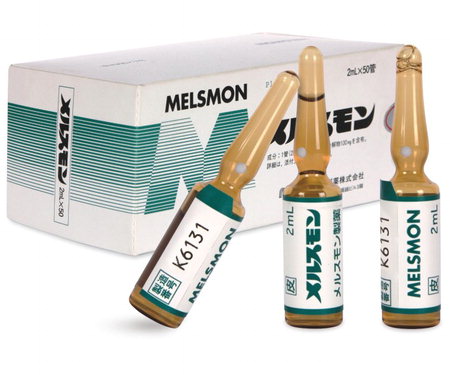
| Melsmon Inj | Korea Melsmon | 2003 | Licensed |
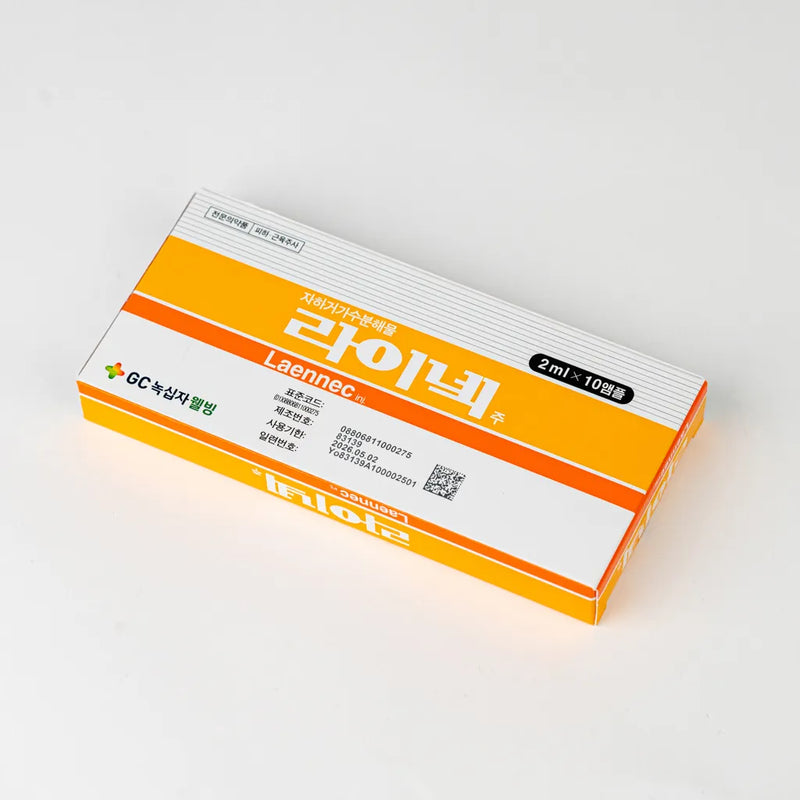
| Laennec Inj | GC Wellbeing | 2005 | Licensed |
| JBP Plamon Inj | PharmaResearch | 2007 | Licensed |
| MultiVita Inj | Daehan New Pharm | 2005 | Notified |
| Lipotocin Inj | Huons | 2007 | Notified |
| Liporase Inj | Daehan New Pharm | 2008 | Notified |
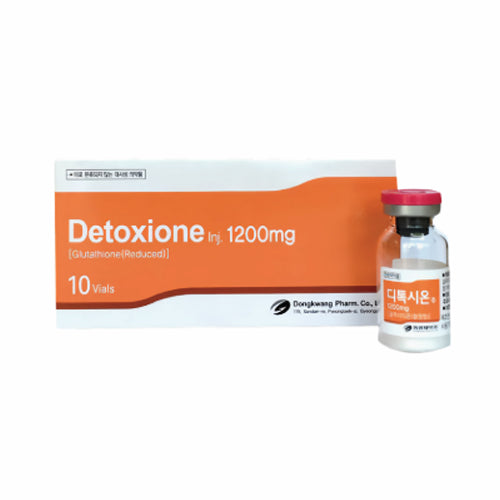
| Detoxione Inj | Dongkwang Pharm | 2015 | Notified |
The three placenta products, Melsmon, Laennec and JBP Plamon, are licensed, as every placenta-derived drug must be. Detoxione is notified, filed in 2015 after the first reduced-glutathione injection of its kind had been licensed three years earlier. MultiVita, Lipotocin and Liporase are notified as well.
The dates add a small but real detail. The three licensed placenta products are among the oldest filings in the table, from 2003 to 2007, and they are licensed not because they are old but because of what they are. The four notified products span 2005 to 2015, and they are notified not because they are new or minor but because each matched a composition that had already been reviewed, codified or standardised. Age and route are independent fields, and reading one into the other would get both wrong.
Frequently asked
What is the difference between a licensed and a notified drug in Korea?
A licensed drug went through the licence route, required for categories such as new drugs, biological products and placenta-derived drugs, or for products with no established equivalent. A notified drug matches something already licensed, listed in an official compendium or covered by a published manufacturing standard, so a fresh safety and efficacy review is not required.
Why are placenta injections licensed rather than notified in Korea?
Because the regulation names placenta-derived drugs among the categories excluded from notification. All 42 live placenta filings in the register, injectable and oral, are licensed.
Does a notified Korean drug go through less review?
It does not go through a new safety and efficacy review, because it must match a product or standard that already defines its composition and strength. That is a statement about novelty rather than quality, and it does not make a notified product a lesser one.
Sources and references
- Ministry of Food and Drug Safety, public drug product licence register, licence-or-notification field, queried by active ingredient for twelve ingredients, retrieved 14 September 2026.
- Ministry of Food and Drug Safety, Regulation on Drug Product Licensing, Notification and Review, Article 3(1) on products subject to notification and Article 25 on products exempt from safety and efficacy review.
Register figures are a reading taken on 14 September 2026. The patterns described are consistent with the published regulation and are not a statement of the reason any individual filing took its route. This article is not legal advice and says nothing about what any product is indicated for or how it is used.