There is one thing the Korean drug register will tell you about an injectable before you look it up, and it is worth knowing exactly how far that certainty extends. We swept ten actives in full and counted 365 live injectable licences between them. All 365 are classified prescription only. Not most. All of them. The same rule run in the opposite direction predicts nothing whatsoever, and the gap between those two facts is the practical content of this article.
The ten actives were swept on 10 August 2026 and chosen because they span the categories that actually move across borders in this trade: local anaesthetics, haemostatics, antioxidants, vitamins, enzymes, polynucleotides, hyaluronates and anticoagulants.1 Between them they account for 1,578 live licences. This article is about one field on each of those licences, the supply classification, and what an importer can and cannot infer from it.
One direction is absolute
Sort every live licence in the ten sweeps by route and by supply classification, and the injectable column has one value in it.
| Active | Injectable licences | Prescription only | Non-injectable licences | Over the counter |
|---|---|---|---|---|
| Sodium hyaluronate | 113 | 113 | 153 | 14 |
| Ascorbic acid | 46 | 46 | 565 | 546 |
| Glutathione | 38 | 38 | 35 | 34 |
| Hyaluronidase | 32 | 32 | 0 | 0 |
| Thioctic acid | 30 | 30 | 128 | 2 |
| Lidocaine | 29 | 29 | 193 | 142 |
| Polydeoxyribonucleotide | 28 | 28 | 18 | 18 |
| Dexpanthenol | 20 | 20 | 68 | 68 |
| Tranexamic acid | 16 | 16 | 14 | 3 |
| Heparin | 13 | 13 | 39 | 39 |
| Total | 365 | 365 | 1,213 | 866 |
Three hundred and sixty-five out of 365, across ten unrelated therapeutic categories, from a 13-licence anticoagulant to a 113-licence hyaluronate.
Those two claims about class code and decade are worth substantiating rather than asserting, because a rule is only interesting if it survives conditions that ought to break it. The 365 licences are spread across 13 distinct register class codes, including metabolic agents, vitamin C preparations, enzyme preparations, local anaesthetics, agents affecting tissue and cell function, ophthalmic preparations, haemostatics and anticoagulants. They are held by 118 different companies. And they span 57 years of grants, from 대한아스코르브산주사액 on 11 March 1969 to 오비디히알주 on 16 July 2026, which was granted less than a month before we read the register.
Thirteen classes, 118 holders, six decades, one answer. That is not a quirk of one therapeutic area or one licensing era.
For an importer it is a usable default. You do not need to look up the supply classification of a Korean injectable to plan around it. You need to look it up to confirm it, which is a different and much smaller job.
The one apparent exception was not one
Our first pass returned 366 records in the injectable bucket, of which 365 were prescription only and one was over the counter. A single exception in a set that size is exactly the kind of result that should be checked rather than reported, because a lone outlier is more often a defect in the method than a fact about the world.
It was a defect in the method. The record is 래반포르테주입크림, held by 퍼슨, filed under a class the register names as haemorrhoidal preparations. The last three syllables of that name mean cream. It is not an injectable at all.
We are spelling this out rather than quietly fixing it because the same trap is waiting for anyone who repeats this exercise, and because a claim of universality earns more scrutiny than a claim of ninety-nine percent, not less. The corrected record is counted on the non-injectable side in every figure in this article.
It holds for the withdrawn ones too
Live licences are a snapshot, and a rule that only holds for what happens to be current today is a weaker rule than one that holds for everything the register has ever recorded. So we ran it again including withdrawn and expired records.
The ten sweeps return 420 records in the injectable bucket across the register's whole history, 365 of them live and the rest exited. Of those 420, exactly two are not classified prescription only. One is the haemorrhoidal cream above. The other is 레반에이치주입연고, held by 한국위너스약품 until the licence lapsed in November 2023 when the company closed, and it is filed under the same haemorrhoidal class. Its name ends in the word for ointment.
Both false positives are the same word, and it is not the word for injection. Korean marks an insertable preparation with a compound that shares a syllable with the marker for injections, and haemorrhoidal products are where that compound lives. Remove those two and the register has recorded 418 injectable licences under these ten actives since 1969, every one of them prescription only, with no exception ever.
The reverse rule does not exist
Now run it the other way. If injectable reliably means prescription only, does non-injectable reliably mean over the counter?
It does not, and it is not close. Across the same ten actives the non-injectable share that is over the counter ranges from under two percent to one hundred percent.
| Active | Non-injectable licences | Over the counter | Share |
|---|---|---|---|
| Thioctic acid | 128 | 2 | 1.6% |
| Sodium hyaluronate | 153 | 14 | 9.2% |
| Tranexamic acid | 14 | 3 | 21.4% |
| Lidocaine | 193 | 142 | 73.6% |
| Ascorbic acid | 565 | 546 | 96.6% |
| Glutathione | 35 | 34 | 97.1% |
| Polydeoxyribonucleotide, dexpanthenol, heparin | 125 | 125 | 100% |
Thioctic acid and dexpanthenol sit in the same bucket by route and give opposite answers, 1.6 percent against 100 percent. There is no default here to fall back on. A non-injectable Korean product might be a pharmacy shelf item or it might be prescription only, and the only way to know is to read the licence.
The sharpest version of the asymmetry lives inside a single molecule. Glutathione has 38 live injectable licences, every one prescription only, and 35 live non-injectable licences, 34 of which are over the counter. Same active, same register, same year read. The classification flips completely, and it flips on route.
Why the rule only runs one way
The asymmetry looks strange until you notice that non-injectable is not a dosage form. It is what is left over after you remove the injections, and the leftovers do not belong to one category in any meaningful sense.
Three examples from these sweeps, all of them real licences.
Sodium hyaluronate's 14 over-the-counter non-injectable licences include a dental gel, a nasal spray, a wound gel and a wound gauze. A licensed gauze dressing is a non-injectable product. So is an eye drop, so is a mouth rinse, and so is a tablet, and the register has no reason to classify them alike.
Ascorbic acid's non-injectable side is 565 licences, of which 19 are prescription only. Those 19 are not prescription vitamin C tablets. Sixteen of them are filed under a class the register names as X-ray contrast agents, because ascorbic acid appears in bowel preparation powders taken before imaging. Two are circulatory preparations and one is an amino acid solution.
Glutathione's single prescription-only non-injectable licence, the one exception in that 35, is 비에스에스플러스액 from 한국알콘, granted in 1994 and filed as an irrigating solution. It is a surgical fluid, not something anyone swallows.
None of those is an oral product being unexpectedly restricted. They are entirely different kinds of thing that share only the property of not being injections. That is why the reverse inference fails: the category it starts from is not a category.
What prescription only actually constrains
Supply classification is not a statement about a product's strength, quality, purity or effect. It is a statement about the conditions under which a product may be supplied, and in the Korean system the practical consequence is about who may lawfully receive and administer it rather than about what is in the vial.
That is the part worth carrying into a sourcing decision. When 365 out of 365 injectable licences in a broad sample carry that classification, the correct planning assumption for any Korean injectable is that it is a professional-use product, with everything that follows for who your customer can be, how it is handled, and what documentation the transaction needs.
It is also worth saying plainly what it is not.
It is not a quality tier. Prescription-only status does not mean a product is better made than an over-the-counter one, and over-the-counter status does not mean a product is casual. Both sit on the same register under the same licensing regime.
It is not an efficacy statement. The register classifies supply conditions; it does not endorse outcomes, and nothing in this article should be read as a claim about what any of these actives does.
And it does not travel. A Korean classification describes Korea. Whether a given product may be imported, by whom, and under what conditions is decided by the authority in the destination market, which applies its own framework and may reach a different answer about the same molecule. Korean prescription-only status is evidence about the product's standing at origin, and it is a reason to check the destination rules rather than a substitute for checking them.
The rule an importer can actually use
Two sentences, and the second one is the one that saves money.
If it is injectable, assume prescription only and confirm. Across 365 licences in ten categories there was not one exception, so the assumption is safe to plan around. Confirming it is still worth the two minutes, because you are confirming the specific licence rather than the molecule.
If it is not injectable, assume nothing. The answer ranges from 1.6 percent to 100 percent over the counter depending on the active, and the same molecule can appear on both sides. There is no shortcut here and treating one as though there were is how a product gets misdescribed to a customer.
Check the licence, not the molecule
One further habit is worth building, and it follows from the tranexamic acid case we looked at previously. Supply classification is assigned per licence, not per active. Tranexamic acid has 11 prescription-only non-injectable licences and three over-the-counter ones, all live, all in the same register. Asking whether tranexamic acid is prescription only in Korea has no single correct answer. Asking whether a named licensed product is prescription only does.
Nor does the class code settle it, which is the last shortcut worth closing off. Lidocaine has 110 live non-injectable licences filed under the register's local anaesthetics class. Sixty-five of them are over the counter and 45 are prescription only. Same active, same route, same class code, and the register still splits them almost down the middle.
So there is no field that answers the question by proxy. Not the molecule, not the route once you are off the injectable side, and not the class. The supply classification is its own field, recorded per licence, and reading it takes the same two minutes whichever way you were hoping to shortcut it.
Licensing and manufacturer details are checked against the MFDS register before a product is listed, and where a supplier sheet and the register disagree, the register wins. We stock officially sourced products only, and the method is set out in our Editorial & Sourcing Policy.2
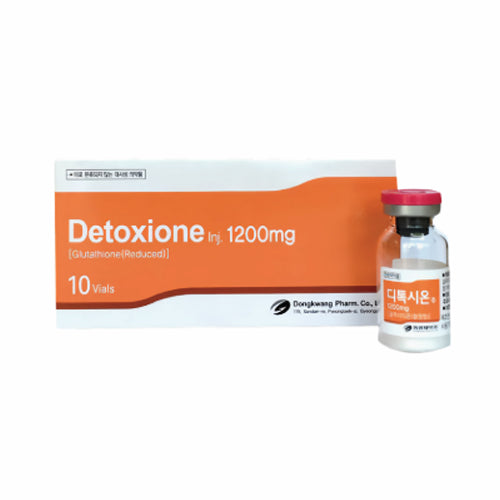
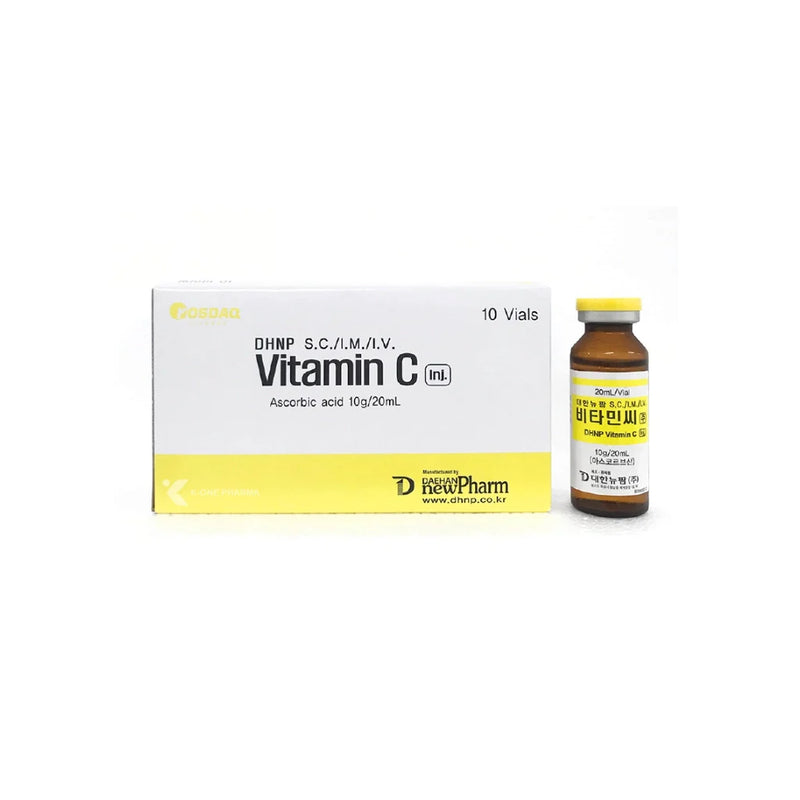
Our stocked range sits under vitamins and injectables and skin boosters and ampoules, including Detoxione Inj and Vitamin C Inj, both drawn from actives counted above. For the same register read on individual molecules, see reading a thioctic acid injectable, what the register calls tranexamic acid and what it licenses PDRN as. For the register's structure generally, see inside Korea's MFDS regulation.
Frequently asked questions
Frequently asked
Are Korean injectables always prescription only?
In our sweep of ten actives on 10 August 2026, all 365 live injectable licences were classified prescription only, across 13 register class codes and 118 licence holders. Including withdrawn and expired records the figure is 418 out of 418, with no exception recorded since 1969. That is a strong basis for treating it as the default planning assumption for any Korean injectable, though it is a finding about the licences we counted rather than a statement of law, and the specific licence should still be confirmed.
Does that mean an oral or topical Korean product is over the counter?
No, and this is the most common error. The over-the-counter share of non-injectable licences ranged from 1.6 percent for thioctic acid to 100 percent for dexpanthenol, polydeoxyribonucleotide and heparin. Non-injectable is not a dosage form, it is everything that is not an injection, and it includes eye drops, gauze dressings, nasal sprays, imaging preparations and surgical irrigating fluids alongside tablets.
What does prescription only mean on a Korean licence?
It is a supply classification recorded on the licence, describing the conditions under which a product may be supplied. In practice the consequence is about who may lawfully receive and administer it. It is not a quality grade, not a statement about strength or purity, and not an efficacy claim.
Does Korean prescription-only status apply in my country?
No. A Korean classification describes standing in Korea. The authority in your market applies its own framework and can reach a different conclusion about the same molecule, including on whether a product may be imported at all and by whom. Treat Korean status as evidence about the product at origin and confirm the destination rules separately.
Is tranexamic acid prescription only in Korea?
The question has no single answer, which is itself the point. All 16 live injectable licences are prescription only. On the non-injectable side, 11 are prescription only and three are over the counter. Supply classification is assigned per licence, not per active, so the answerable question is whether a named licensed product is prescription only.
How did you determine which licences are injectables?
By reading the licensed product name, because the register has no route of administration field to sort on. Korean naming convention marks injections distinctly, and we audited the result in both directions before publishing. Two records across the register's whole history turned out to be haemorrhoidal preparations, one a cream and one an ointment, whose names contain a compound sharing a syllable with the injection marker. No injectable was found hiding on the non-injectable side. Both corrections are applied throughout.
Disclaimer. This article is general educational information. It is not legal, regulatory or medical advice, and it is not a guide to importing any product. It describes how the Korean drug register records supply classification; it makes no claim about what any active does, achieves, or is suitable for. Products classified as prescription only are intended for professional use by trained practitioners. Import eligibility, professional supply rules and customs requirements vary by country and change over time; confirm current requirements with the relevant authority in the destination market before acting.
Sources & references
- Ministry of Food and Drug Safety (MFDS), drug product approval register, queried on the active ingredient field on 10 August 2026 for ten actives: Lidocaine, Tranexamic, Glutathione, Thioctic Acid, Hyaluronidase, Polydeoxyribonucleotide, Ascorbic Acid, Sodium Hyaluronate, Dexpanthenol and Heparin. All pages retrieved for each; 1,578 live licences in total. Supply classification, class code, licence holder and grant date were read from the licence records themselves. Route was derived from licensed product names, audited in both directions, with one correction applied as described in the text. data.go.kr
- KSTATION, Editorial & Sourcing Policy (official-channel sourcing and traceable provenance). kstations.com/pages/editorial-policy