When you buy Korean derma, you are buying a product that grew up inside a specific regulatory system. The agency behind it is the Ministry of Food and Drug Safety, or MFDS, and it sorts what we loosely call skincare and aesthetics into very different legal categories with very different rules. Knowing which category a product sits in tells you more about how seriously it was reviewed than any label claim does.
What the MFDS is
The MFDS is South Korea's national regulator for food, drugs, cosmetics, and medical devices. For the K-derma world, two of those lanes matter most: cosmetics and medical devices. They are not interchangeable. A product is assigned to one track, and that assignment decides whether it can be sold after the fact with light oversight, or only after a formal review and a manufacturing-quality certification. The same shelf in a clinic can hold items from both tracks, which is exactly why the distinction is worth understanding.
Two tracks, very different bars
The first split is cosmetics versus medical devices. Within cosmetics there is a second split that trips people up.
| Track | What it covers | The regulatory bar |
|---|---|---|
| General cosmetics | Everyday skincare and beauty products | Can be manufactured or imported without pre-registration, under post-market surveillance |
| Functional cosmetics | Products that aid in functionally improving or changing the condition of skin or hair | Must complete registration and obtain an approval letter from the MFDS before sale |
| Medical devices | Risk-based, four classes under the Medical Device Act | Higher classes require full pre-market review, K-GMP, and a licensed Korea License Holder |
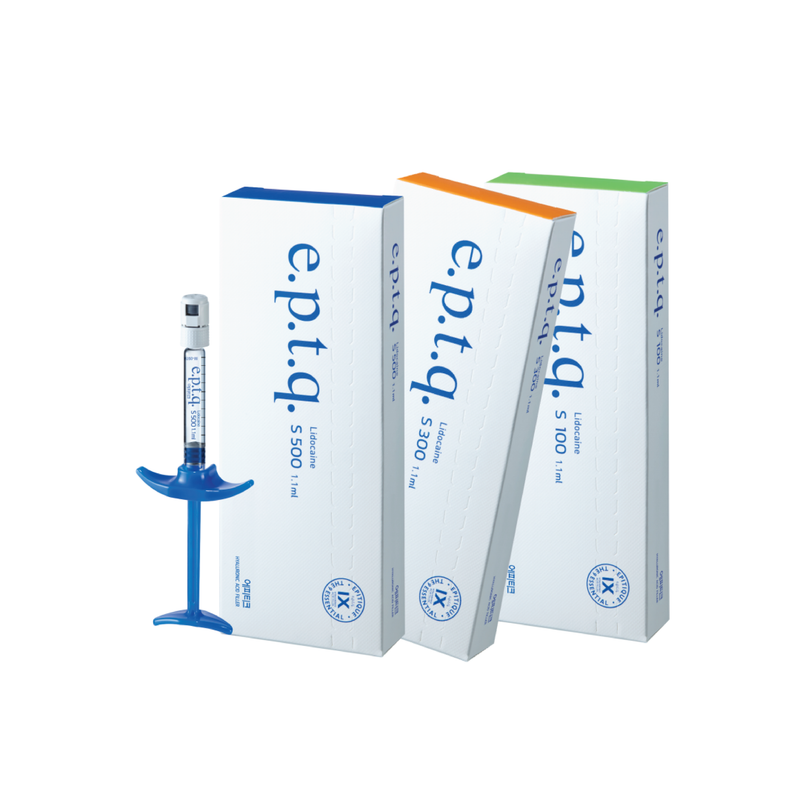
Dermal fillers sit at the demanding end of this map. Under the four-class system, they are generally classified as Class III or Class IV medical devices, which means full pre-market review, K-GMP certification of the manufacturer, and the designation of a licensed Korea License Holder before the product can reach the market.2 That is a different universe from a general cosmetic that ships under post-market surveillance.
What K-GMP and pre-market review actually mean
Two terms carry most of the weight here. Pre-market review means the regulator examines the product before it can be sold, rather than reacting to problems afterward. K-GMP, Korea Good Manufacturing Practice, is a certification of the manufacturing site and its quality systems, not just the product on paper.3 For the higher-risk categories, a Korea License Holder is the legally responsible party inside the country. Together they describe a chain of accountability: a reviewed product, made in a certified facility, with a named holder of the license. It is the structural reason a Class III device is treated differently from a serum.

Where the rules are heading
The framework is not static. The MFDS has announced a multi-year tightening of its cosmetics rules, aimed at strengthening safety oversight across a product's life and bringing domestic rules closer to global standards. The plan runs through pilot projects in 2026 and 2027, with phased implementation beginning in 2028 by company size, starting with firms whose annual production or import volume exceeds a set threshold, and extending to newly approved functional cosmetics and products for infants and children.1 The direction is toward more lifecycle oversight, not less.
Why this matters when you buy across a border
From a sourcing standpoint, the track a product sits in is the most honest signal of how it was vetted at origin. A genuine Korean filler is a reviewed, K-GMP-made, license-held medical device, and a product sold outside that chain is not the same thing, whatever the box says. This is the same logic behind buying through official channels rather than the gray market: the value is not only the product, it is the regulatory provenance attached to it. KSTATION sources Korean derma through official channels, which is to say products that sit inside this system rather than around it.
You can read how to check a product's authenticity in our guide to verifying a Korean skin booster, and browse the reviewed device categories across the derma fillers range. Import eligibility in your own market is a separate question for you and your local authority.
Frequently asked questions
Frequently asked
What is Korea's MFDS?
The Ministry of Food and Drug Safety is South Korea's national regulator for food, drugs, cosmetics, and medical devices. For K-derma, it governs both the cosmetics track and the medical-device track, each with its own rules.
How are dermal fillers regulated in Korea?
Fillers are generally classified as Class III or Class IV medical devices under the Medical Device Act, which requires full pre-market review, K-GMP certification of the manufacturer, and a licensed Korea License Holder before market entry.2
What is the difference between general and functional cosmetics?
General cosmetics can be manufactured or imported without pre-registration, under post-market surveillance. Functional cosmetics, those that aid in functionally improving or changing the skin or hair, must be registered and receive an MFDS approval letter before sale.1
What does K-GMP mean?
K-GMP is Korea Good Manufacturing Practice, a certification of a manufacturing site and its quality systems. For higher-risk medical devices it is part of the pre-market requirements, alongside review and a licensed Korea License Holder.3
Disclaimer. This article is general educational information, current as of its publication date, and is not legal or regulatory advice. Regulatory classifications and requirements differ by product and change over time; confirm current MFDS rules and your own market's import requirements with the relevant authorities. Regulatory class describes oversight, not a guaranteed outcome.
Sources & references
- Ministry of Food and Drug Safety, cosmetics approval process (general vs functional cosmetics; functional cosmetics require an MFDS approval letter), and announced multi-year cosmetics regulatory revisions (pilots 2026 to 2027, phased implementation from 2028 by company size). mfds.go.kr
- 2026 Regulatory Map for Injectable Dermal Fillers (South Korea: dermal fillers classified as Class III or IV medical devices, full pre-market review, K-GMP, licensed Korea License Holder). hafiller.com
- Emergo by UL, South Korean medical device regulatory framework and K-GMP requirements. emergobyul.com