Ask what tranexamic acid is and you will get an answer that depends entirely on who you ask. The Korean drug register does not have that problem. It assigns every licensed product a class code, and for this molecule the code is overwhelmingly the same one. Twenty-seven of the thirty live licences are filed as haemostatics. So is every single injectable.
We swept the register in full on 10 August 2026 using the ingredient index rather than the product name, and it returned 35 records under this active, of which 30 are live.1 This article is about what those 30 licences are classified as, who holds them, and where the new ones have been going. It is not about what tranexamic acid does, which is a clinical question the register does not answer, and it makes no claim about any cosmetic use of the molecule in any market.
The class code is the answer
Every licence on the Korean drug register carries a therapeutic classification number, a five digit code with a plain Korean name attached. It is assigned per licence, not per molecule, which means the same active can appear under different codes depending on how a given product was filed. That is what makes the field worth reading rather than assuming.
Sort the 30 live tranexamic acid licences by that code and the distribution is lopsided in a way that settles most sourcing questions on its own.
| Injectable | Non-injectable | |
|---|---|---|
| Live licences | 16 | 14 |
| Register class | Haemostatics, 16 of 16 | Haemostatics 11, other agents for external use 3 |
| Supply classification | Prescription only, 16 of 16 | Prescription only 11, over the counter 3 |
| Licence holders | 10 companies | 14 companies |
| Licences carrying export wording | 10 | 2 |
| Oldest live licence | 4 January 1985 | 10 July 1972 |
| Newest live licence | 20 May 2021 | 12 January 2026 |
Sixteen of sixteen. If a tranexamic acid product is injectable and licensed in Korea, the register files it as a haemostatic and classifies it as prescription only. There is no partial category, no second bucket, nothing that requires interpretation. Whatever a supplier tells you an injectable is for, the licence describing it says haemostatic.
The three exceptions are tablets
Three live licences sit outside the haemostatic class, filed instead under a code the register names as other agents for external use, which is its residual dermatological bucket. It would be reasonable to assume that these are the topicals, the creams and gels, and that the register is simply separating external preparations from systemic ones.
That assumption is wrong, and checking it is the whole point of reading the register instead of inferring it. All three are tablets.
| Licensed product | Holder | Granted | Form |
|---|---|---|---|
| 트랜미정, Tranme Tab. | 아이월드제약 | 31 July 2009 | Tablet |
| 더마화이트정, Dermawhite Tab. | 현대약품 | 2 September 2009 | Tablet |
| 트란시노2정, Tansino2 Tab. | 보령 | 31 May 2016 | Tablet |
The Korean suffix 정 and the English abbreviation Tab. both mean tablet, and all three carry it in both languages. These are swallowed, not applied. The class code named for external use is describing what the product is aimed at, not how it is delivered, and the register applies it to an oral dosage form without contradiction because the taxonomy is organised by therapeutic field rather than by route.
This is the kind of thing that goes wrong quietly. A reader who sees a dermatological class code and concludes topical has drawn an inference the register never offered, and the inference is wrong for every record in the set. The three are also the only over the counter tranexamic acid licences in Korea. Every one of the other 27 is prescription only.
Note also what is absent. Zero injectable licences appear in that dermatological pocket. The entire non-haemostatic side of this register consists of three oral tablets, and no company holds both a dermatological licence and an injectable one.
The names point one way and the class codes point another
Read the product names alone and you would build a different picture of this register than the class codes support. Four live prescription capsules and tablets carry names built on the same Korean syllables used for pigmentation: 멜라스민캡슐, granted to 오스틴제약 in August 2019; 멜란사민정500밀리그램, to 지엘파마 in October 2021; 트라멜라캡슐, to 동구바이오제약 in December 2024; and 멜라녹스캡슐, to 더유제약 a week later.
All four are classified as haemostatics. All four are prescription only. The naming and the filing are describing different things, and only one of them is a regulatory statement.
This is a general hazard with Korean product names, which are commercial decisions made by the holder and are not reviewed as claims. A name can gesture at a use the licence does not describe. It can also do the opposite, as it does here, where several straightforwardly clinical products carry names that would look suggestive to an importer skimming a list. In both directions the correction is the same: read the class code and the supply classification, which are fields the regulator populated, rather than the name, which the company chose.
Four records the register hides from a name search
There is a second reason not to work from product names, and this one is mechanical rather than interpretive.
The Korean register does not spell this molecule consistently. Twenty-five of the 35 records render it 트라넥삼산 inside the licensed product name. Six render it 트라넥사민, or 트라넥사민산 in full. These are two transliterations of the same international nonproprietary name, both present in the live register, and a search on either one returns a partial set. The same holder has used both: 대한약품공업 filed 대한트라넥사민산주사500밀리그램 in December 2007 and 대한트라넥삼산주사250mg in February 2009, fourteen months apart, spelling its own active two different ways on two consecutive licences.
That leaves four records that use neither spelling. Their names are 트랜미정, 더마화이트정, 트란시노2정 and 멜아웃정, and a product name search for this molecule in any spelling returns none of them, because none of them contains the molecule's name at all.
We have written before about the ingredient index being case sensitive and English keyed, which is its own trap. This is the complementary one. The product name field is human written, inconsistent across decades and holders, and under no obligation to mention what is in the bottle. It is the wrong field to count on, and the failure mode is not random noise. It is systematically biased toward whatever the majority of holders happened to name their products after.
Two registers with two different shapes
Split the live set by route and the two halves are not just classified differently. They are structured differently.
The 16 injectable licences are held by 10 companies, which means concentration. 한국유니온제약 alone holds four live licences, more than any other company in the set, across three strengths and both a vial and a capsule. Four more holders carry two each. The injectable side of this register is a small number of established manufacturers with multiple filings, which is what a mature generic injectable category tends to look like.
The 14 non-injectable licences are held by 14 companies. One licence each, without exception. That is the opposite shape: wide, flat, and recent, with no accumulated positions.
One holder spans both, and the span is long. 제일약품 holds the oldest live licence on the entire register, an oral capsule granted on 10 July 1972, and also holds an injectable granted on 20 May 2021. Forty-nine years separate them. It is worth noting that this is a different company from 제일제약, which holds the two 1985 injectables, a distinction that is easy to lose in transliteration and worth checking whenever a Korean corporate name looks familiar.
Export wording is two different markings
Twelve live licences carry wording about export inside the licensed product name, and they do not all mean the same thing. This is a distinction that gets flattened routinely, including by counting tools, so it is worth separating explicitly.
| Marking | What it says | Injectable | Non-injectable |
|---|---|---|---|
| 수출용 | The licence itself is for export | 8 | 1 |
| 수출명 | A domestic licence that also carries an export name | 2 | 1 |
| Total | 10 of 16 | 2 of 14 |
The first is a category of licence. The second is a naming convention attached to a licence that exists on its own terms, recording the name a product carries when it leaves the country. Reading the second as the first will tell you a domestically licensed product is export only, which is a meaningful error when the question at hand is what a Korean licence covers.
The oldest live licence in the whole register is an example of the second kind. 도란사민캡슐, granted in July 1972, carries an export name in parentheses and is a prescription only domestic haemostatic capsule. It has been both things for 54 years.
The split by route is the striking part. Ten of 16 injectable licences carry export wording of one kind or the other, against two of 14 on the non-injectable side. Whatever the injection side of this category is for, a majority of it is filed with an eye on shipments leaving Korea. We will take the export marking apart properly in a later piece, including what it does not mean, which is a great deal.
The injection side stopped in 2021
The newest injectable licence in this register was granted on 20 May 2021. Since then Korea has issued six more tranexamic acid licences, and every one of them is oral.
| Granted | Licensed product | Holder |
|---|---|---|
| 20 October 2021 | 멜란사민정500밀리그램 | 지엘파마 |
| 9 December 2024 | 트라멜라캡슐 | 동구바이오제약 |
| 17 December 2024 | 멜라녹스캡슐 | 더유제약 |
| 26 March 2025 | 트라넥산캡슐 | 씨엠지제약 |
| 12 January 2026 | 트라넥스캡슐 | 메디카코리아 |
| 12 January 2026 | 도라넥스캡슐 | 제이더블유신약 |
Six licences, six different holders, no repeats, and the last two granted on the same day to two unrelated companies. All six are capsules or tablets, all six are prescription only, and all six are filed as haemostatics rather than in the dermatological pocket.
Four of the six arrived inside a fourteen month window running from December 2024 to January 2026, after a three year gap in which the register recorded nothing at all. That is a category with a clear direction of travel, and the direction is oral, prescription, and generic. Nobody has filed a new injectable in five years.
Five exits inside fifteen months
The other half of the movement is on the way out. Five records have left the live register, and all five left between April 2025 and July 2026.
Four were withdrawn by their holders. 제뉴파마 withdrew a prescription capsule in April 2025. 경남제약 withdrew both of its licences on the same day in June 2025, both export designated injectables. 한국유나이티드제약 withdrew an export designated injectable in August 2025 that had been on the register since 1992. The fifth was not withdrawn but expired: 동구바이오제약's over the counter tablet reached the end of its validity period on 1 July 2026 without renewal.
Withdrawal and expiry are ordinary administrative events and imply nothing about any product's safety. What is worth reporting is the shape. Three of the five exits are export designated injectables, in a register where the injection side has not seen a new grant since 2021. The injectable half of this category is contracting on both ends at once, losing licences while gaining none.
One company did both things. 동구바이오제약 lost the over the counter dermatological tablet it had held since 2011, and in December 2024, eighteen months before that licence lapsed, took a new prescription haemostatic capsule. Same holder, same molecule, moved from one side of this register to the other. That is what the aggregate trend looks like inside a single company.
What the register does not tell you
The register does not record indications. A class code places a product in the national taxonomy; it does not state what the product is approved to be used for, which appears on approved labelling and is a separate document. It does not record specification, purity, or manufacturing detail. It does not record clinical evidence, and nothing in it should be read as an efficacy statement.
It also does not travel. A Korean licence describes standing in Korea. It is not an approval in any destination market, and a product's classification abroad is decided by that market's own authority, which may class the same molecule differently or not permit a given use at all. Prescription only in Korea means prescription only in Korea, and the practical consequence for an importer is about who may lawfully receive and administer a product where it is going.
Finally, and importantly for anyone who arrived here from a product page: a cosmetic ampoule containing tranexamic acid is not one of these 30 licences. The drug register lists licensed medicines. Ampoules sold into professional aesthetic practice sit under a different regulatory framework with different filing requirements, and none of the numbers in this article describes them. If you are sourcing an ampoule, the relevant paperwork is the ampoule's own, not the drug register's.
How to check this yourself
Query the ingredient index, not the product name. The name field is inconsistent across decades and, in this register, entirely omits the molecule on four records. Read the class code and supply classification as separate fields rather than treating either as a summary of the other. And when a marking looks like a category, check whether it is one; the export wording on these licences comes in two kinds that mean different things.
How we weigh a supplier sheet against the register is set out in our Editorial & Sourcing Policy.2
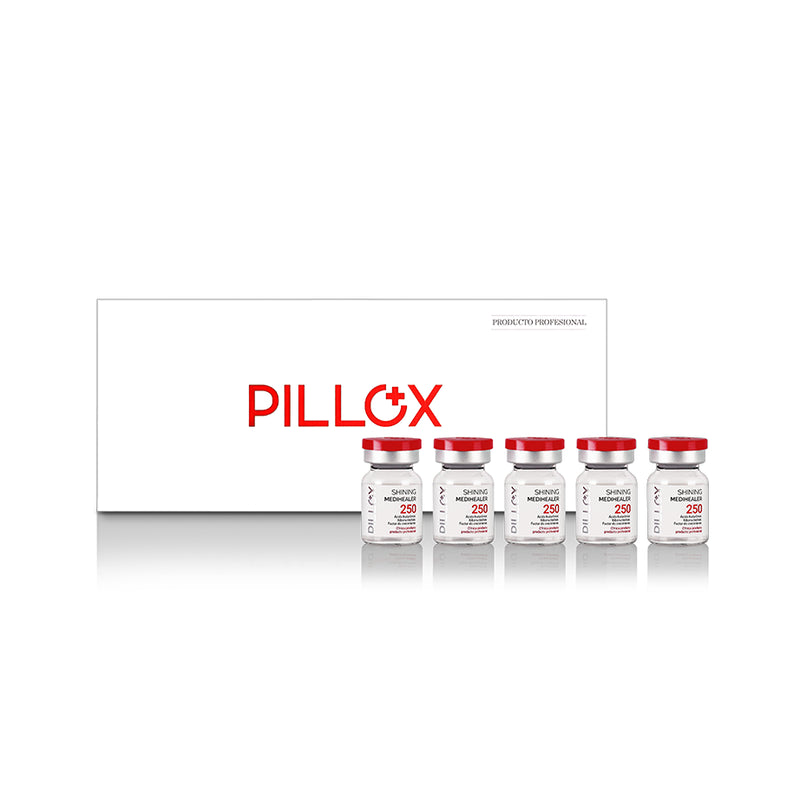
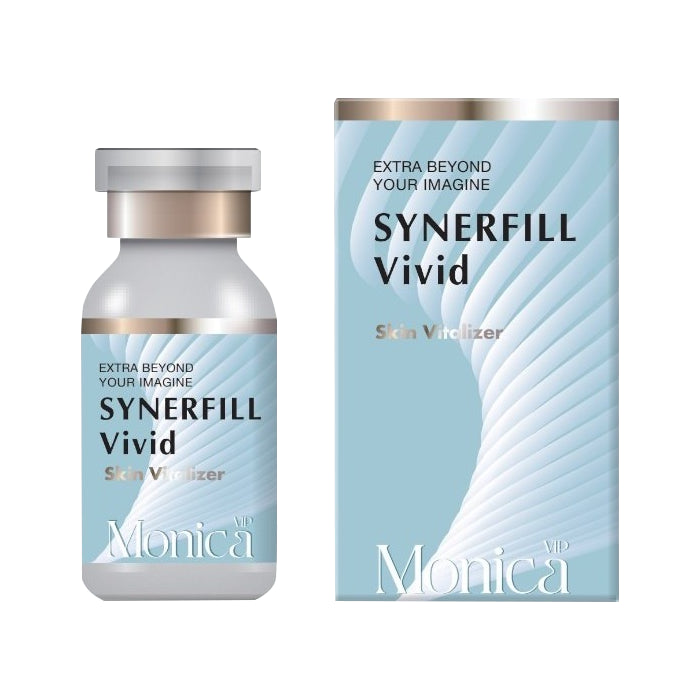
Our stocked ampoule range sits under skin boosters and ampoules and mesotherapy, with lines such as PILLOX Shining Medihealer and SYNERFILL Vivid. As set out above, ampoules are a separate regulatory category from the licensed medicines counted in this article, and none of these figures describes them. For the same register read on other actives, see reading a hyaluronidase vial and what the register licenses PDRN as. For how the register's classification fields work in general, see inside Korea's MFDS regulation.
Frequently asked questions
Frequently asked
Is tranexamic acid prescription only in Korea?
Almost entirely. Twenty-seven of the 30 live licences are classified prescription only, including every one of the 16 injectables without exception. The three remaining licences are over the counter oral tablets. There is no over the counter injectable tranexamic acid on the Korean register as of 10 August 2026. Korean classification is a fact about Korea and does not determine status in any other market.
What class does the Korean register file tranexamic acid under?
Haemostatics, for 27 of the 30 live licences and for 16 of 16 injectables. Three oral tablets are filed under a residual class the register names as other agents for external use, which is its dermatological bucket. A class code is a placement inside the national therapeutic taxonomy. It is not a statement of what a product is approved to be used for, which appears on approved labelling instead.
How many tranexamic acid products are licensed in Korea?
Thirty live licences on 10 August 2026, out of 35 total records, split 16 injectable and 14 non-injectable. The injectable licences are held by 10 companies, with one holder carrying four of them. The 14 non-injectable licences are held by 14 different companies holding one each.
Why do counts of Korean licences vary between sources?
Usually because of which field was searched. This register spells the molecule two ways inside product names, 트라넥삼산 on 25 records and 트라넥사민 on six, and four further records do not name the molecule at all. A product name search therefore returns a partial subset, and not a random one: those four unnamed records are exactly the four filed outside the haemostatic class. Querying the ingredient index returns the full 35.
Does export wording on a Korean licence mean a product is higher grade?
No. It is neither a quality tier nor approval by any destination market. It is a Korean licensing convention, and it comes in two forms that are easy to conflate: a licence issued for export, and a domestic licence that additionally records the name a product carries when exported. Ten of the 16 injectable licences here carry one or the other, against two of 14 non-injectable.
Does the register tell me what a product is indicated for?
No. The register settles classification, supply status, holder, grant date and licence status. Indications appear on a product's approved labelling, which is a separate document, and they differ by market. Nothing in a class code should be read as an efficacy statement.
Disclaimer. This article is general educational information and is not medical advice. It describes how the Korean drug register classifies, licenses and records products containing this active; it makes no claim about what tranexamic acid does, achieves, or is suitable for, and it is not a selection, preparation, or administration guide. It is not a statement of regulatory status in any market outside Korea. Products classified as prescription only are intended for professional use by trained practitioners. Regulatory and customs requirements vary by country and change over time; confirm current requirements with the relevant authority.
Sources & references
- Ministry of Food and Drug Safety (MFDS), drug product approval register, queried on the active ingredient field for "Tranexamic" on 10 August 2026, all pages retrieved (35 records; 30 live, 5 exited). Route, register class, supply classification, grant dates, licence holders, export wording, and withdrawal or expiry dates were read from the licence records themselves. Figures are complete counts of that result set, not samples. data.go.kr
- KSTATION, Editorial & Sourcing Policy (official-channel sourcing and traceable provenance). kstations.com/pages/editorial-policy