Is this glutathione legit is one of the most common questions in the sourcing conversation, and it is a hard one to answer from a photo. Glutathione injectables sit in a category where the material itself is fragile, the format has specific tells, and the regulatory picture is genuinely complicated, all of which makes a fake easier to pass off and a genuine product more important to confirm. This is a verification guide, not a claims piece: it walks through what a real Korean glutathione injectable looks like at the product level, what its manufacturing and regulatory standing should show, and the vendor-side questions that turn is this legit from a guess into a process.
What glutathione is, before you verify it
Verification starts with knowing what the material actually is, because you cannot check a product against a specification you do not understand. Glutathione is a tripeptide, a small molecule built from three amino acids, and it is described in the literature as a major intracellular antioxidant.1 That is the neutral, factual identity of the compound, and it is the identity a genuine injectable is built around. This article stays at that level deliberately and makes no claim about what glutathione does cosmetically, because the subject here is authenticity, not outcome.
The regulatory context is part of the material's identity too, and it is worth stating plainly because it shapes the whole verification question. Reviews of glutathione in dermatology note that the evidence base for injectable glutathione used for skin lightening is limited and that its use in that context is not well established, with safety and regulatory questions attached.2 That is not a verdict on the compound; it is context that a careful buyer should hold, because a category with an unsettled regulatory picture is exactly the kind of category where authenticity and provenance matter most.
Holding both of those facts, a defined antioxidant compound and an unsettled regulatory picture, sets up the right frame for verification. The goal is not to decide whether glutathione works, which is outside this article and a matter for qualified professionals and the relevant authorities, but to determine whether a specific product is a genuine, accountable version of the material it claims to be. Those are different questions, and this piece is strictly about the second one.
That focus also keeps the verification honest, because authenticity checking does not depend on any efficacy claim. Whether or not a compound is proven for a given cosmetic use, a buyer is still entitled to know that the vial contains what it says, made by whom it says, handled as it should be. Verification is about identity and provenance, and those can be checked regardless of the debates surrounding use, which is why the rest of this guide can proceed on solid ground.
Why the freeze-dried powder form is itself a verification signal
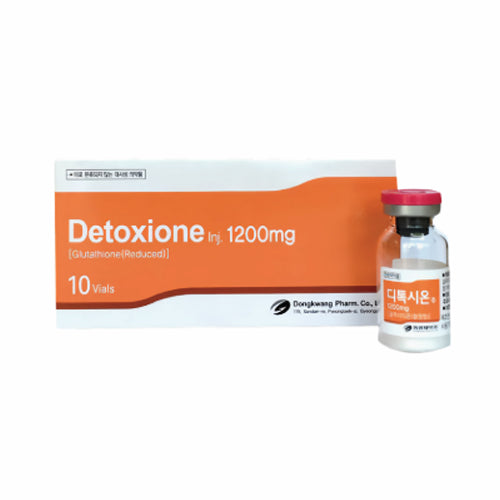
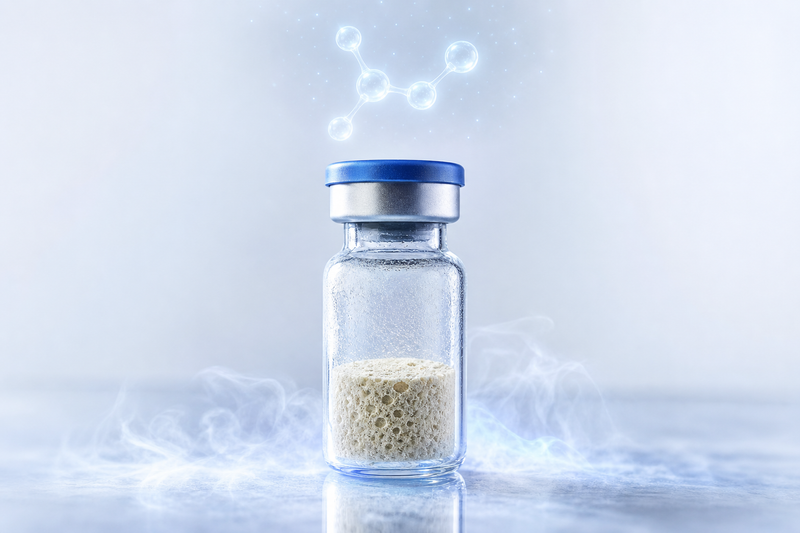
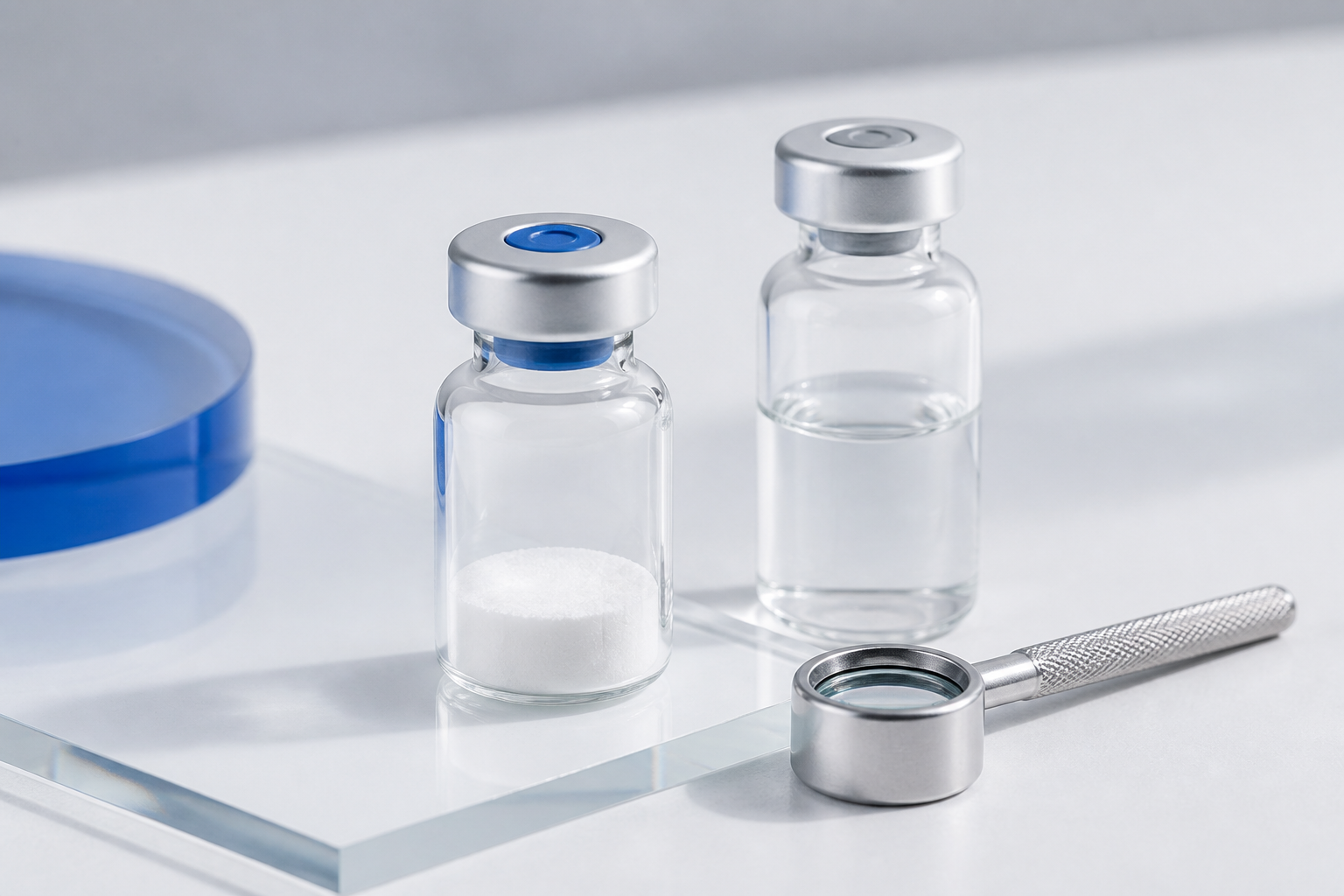
The most useful starting point for glutathione specifically is its physical format, because genuine glutathione injectables commonly ship as a freeze-dried (lyophilized) powder with a separate solvent for reconstitution, and that format is not a packaging choice but a consequence of the chemistry. Glutathione is prone to oxidation in solution, so presenting it as a dry powder that is reconstituted shortly before use is a way of protecting the material until the point of use. A product's format, in other words, should match the chemistry, and for glutathione that means a two-part, powder-plus-solvent presentation is the expected norm.
This makes the format a first-pass authenticity signal that a non-specialist can actually read. A glutathione injectable that arrives as a pre-mixed, ready-to-use solution with a long shelf life is at odds with what the material's oxidation behavior would predict, and that mismatch is a reason to look harder rather than to assume convenience. The expected presentation is a lyophilized cake in the vial, reconstituted with the accompanying solvent, and a product that departs from that without explanation is departing from the chemistry, which is worth noticing.
We went deep into the chemistry of this in why glutathione ships as a freeze-dried powder, and the verification takeaway is that format literacy is free authentication. Knowing that the powder form exists to manage oxidation lets you treat the format as evidence: the right format is consistent with a genuine, chemistry-aware product, and the wrong format is a discrepancy to resolve before anything else. It is the rare verification check that requires no equipment, only understanding of why the material is presented the way it is.
GMP and manufacturing: what a genuine glutathione injectable stands on
Behind any legitimate injectable is a manufacturing story, and for glutathione that story centers on Good Manufacturing Practice (GMP), the quality-system standard that governs how a sterile injectable is made. A genuine product is produced under GMP conditions because a sterile injectable material demands controlled processes, sterility assurance, and batch consistency, and those are not optional niceties but the baseline of what makes an injectable safe to be what it claims to be. Manufacturing standing is therefore a core part of authenticity, not a separate topic.
The reason this matters for verification is that manufacturing is precisely where a counterfeit or grey product cuts costs invisibly. A fake can imitate the appearance of a product without any of the quality infrastructure behind it, which means the thing you most need to confirm, that the material was made under proper conditions, is also the thing least visible in the vial. This is why provenance and documentation carry so much weight: they are how the invisible manufacturing story becomes checkable, standing in for what you cannot see directly.
Practically, this means a genuine glutathione injectable should trace back to an identifiable manufacturer with GMP standing, and an accountable seller should be able to speak to that chain rather than deflect from it. A product whose maker cannot be identified, or a seller who cannot or will not describe the manufacturing provenance, is a product whose most important quality attribute is unverifiable. The absence of an accountable manufacturing story is not a neutral gap; for a sterile injectable it is the gap that matters most.
MFDS and regulatory standing: reading approval, not assuming it
Korean injectables are regulated domestically by the Ministry of Food and Drug Safety (MFDS), and regulatory standing is a verification axis in its own right, distinct from manufacturing. A product's status with the relevant regulator is part of what makes it an accountable product, and reading that status rather than assuming it is a key discipline. The important habit is to treat regulatory claims as things to confirm, because a claim of approval that cannot be substantiated is just a claim.
The nuance to hold, and it is a real one, is that regulatory categories and permitted uses differ by product and by market, and a product's standing in Korea is not the same thing as its status in a destination country. This is where glutathione's unsettled regulatory picture returns: because injectable glutathione for cosmetic skin lightening is not a well-established, uniformly approved use, buyers should be especially careful not to read a domestic registration as blanket approval for any use anywhere.2 Regulatory standing is specific, and reading it accurately means reading exactly what a given approval covers.
For the purposes of verification, the useful move is to treat regulatory standing as one checkable input among several, not as a single stamp that settles everything. A genuine product has a real, describable regulatory position, and an accountable seller can point to it accurately rather than gesturing vaguely at approval in general. We laid out how regulatory and verification signals combine for boosters in how to verify an authentic Korean skin booster, and the same logic applies here: read the standing, do not assume it, and remember that appropriateness of use remains a matter for professionals and the authorities in the destination market.
It is worth showing what that standing actually looks like, because the Korean register is usually described in English rather than read in Korean. Queried directly on 6 August 2026, the register holds glutathione under two quite different regulatory identities depending on route. The oral forms are largely over-the-counter products filed as antidotes, with the oldest still-active licence dating to 1971. The injectable forms are a much younger and much narrower group: every active injectable licence is a prescription-only medicine, and they are filed as metabolic agents or, in one case, an antidote.3
| On the register | Oral, tablet and capsule | Injectable, freeze-dried vial |
|---|---|---|
| Active licences | 35 | 38 |
| Supply classification | Over the counter, 34 of 35 | Prescription only, 38 of 38 |
| Register class | Antidote, 32 of 35 | Metabolic agent not otherwise classified, 37 of 38; antidote, 1 of 38 |
| Oldest active licence | 1971 | 2012 |
| Licence holders | 27 companies | 26 companies |
| Licences naming export use | 9 of 35 | 5 of 38 carry export wording in the licensed product name |
Two things in that table matter for verification. The first is the class: not one active injectable licence is filed under a dermatological category, which means a Korean registration for a glutathione injectable is not, on its face, a registration for a skin use. The second is the export wording. Five of the 38 active injectable licences carry export in the licensed product name itself, so the licence is describing where the product may be sold rather than what it may be used for. Both are reminders that reading a standing means reading its actual scope, not treating the existence of a licence as a general endorsement.
The verification checklist, product-side and vendor-side
Verification is strongest when it is treated as a set of concrete checks rather than a general feeling, and those checks fall into two groups: what you can read on the product, and what you can ask of the vendor. The table below organizes them so is this legit becomes a list to work through rather than a judgment to make on instinct. None of these is a single deciding test; together they build a picture, and the picture is what verification actually is.
| Checkpoint | What genuine product shows | Side |
|---|---|---|
| Format | Freeze-dried powder with a separate solvent for reconstitution | Product |
| Label fields | Coherent amount, coherent dates, matching lot between box and vial | Product |
| Manufacturer | Identifiable maker with GMP standing | Product |
| Regulatory status | A specific, describable standing, read for what it covers | Product |
| Provenance | An accountable supply chain the seller can describe | Vendor |
| Price and pressure | A price within a sensible band, no urgency tactics | Vendor |
Vendor-side checks: "is this glutathione legit?" as a process
The product-side checks establish what a genuine article looks like, but the question is this legit is usually really a question about the seller, and that is where the vendor-side process comes in. The single most informative vendor signal is describability: an accountable seller can tell you the manufacturer, the provenance, and the regulatory standing, and can speak to the format and the label, while a problematic one deflects, changes the subject, or answers with reassurance instead of specifics. The willingness and ability to describe is itself evidence.
Price and pressure are the next layer, and they work together as a pair. A price far below the normal band is a classic signal, especially when it is combined with urgency, limited-time framing, or discouragement from asking questions, because those tactics are designed to close a sale before scrutiny can happen. Genuine product from an accountable channel does not usually need to rush you, and a seller who manufactures urgency is removing the very time you need to run the checks in this guide, which is a signal in itself.
The channel matters as much as the individual transaction, because provenance is a property of the supply chain, not just of one listing. A product bought through an accountable channel comes with a traceable story, while a product bought from an anonymous or unaccountable source comes with none, and no amount of product-side inspection fully compensates for an unaccountable channel. We spelled out the stakes of getting this wrong in what a counterfeit injectable actually costs, and the through line is that the vendor and the channel are part of the product's authenticity, not a separate consideration.
Red flags specific to glutathione
Beyond the general authenticity signals, glutathione has a few category-specific red flags that come directly from its chemistry and its regulatory position. The first is a format mismatch: because the material oxidizes in solution, a glutathione product presented as a stable, pre-mixed, ready-to-use liquid with a long shelf life is at odds with the chemistry, and that is a glutathione-specific warning that would not apply to a material that is stable in solution. Format literacy, again, is the free check that catches this.
The second red flag is overreaching claims, and it is worth naming because it is both a marketing problem and an authenticity signal. Given that injectable glutathione for cosmetic lightening is not a well-established use, a product or seller making confident, specific cosmetic promises is either misrepresenting the evidence, misrepresenting the product, or both, and any of those is a reason for caution.2 A seller who is careful and accurate about what is and is not established is behaving more like an accountable source than one who promises results the evidence does not support.
The third is the reconstitution and handling story, which for a lyophilized product is part of authenticity and safety. A genuine glutathione injectable comes with a coherent account of how it is stored, reconstituted, and handled, consistent with a freeze-dried material that is sensitive once in solution, and a product that arrives without that coherence, or that has clearly been mishandled, is compromised regardless of whether the material started out genuine. Provenance includes the journey, and for a fragile material the handling story is not a detail but a core part of whether the product is still what it claims to be.
How to verify a glutathione injectable, step by step
Put together, verifying a glutathione injectable is a short, ordered process that anyone can run without special equipment. It combines the product-side reading and the vendor-side questioning into a sequence, and the order matters: start with the fastest, cheapest checks and escalate only if those pass. If an early check fails, there is no need to proceed, because a product that fails on format or provenance does not become genuine further down the list.
- Check the format first: is it a freeze-dried powder with a separate solvent, consistent with glutathione's oxidation chemistry, rather than an unexplained pre-mixed liquid.
- Read the label as a specification: coherent amount and dates, and a lot number that matches between the box and the vial.
- Identify the manufacturer and confirm it is a real maker with GMP standing, not an unnamed or untraceable source.
- Read the regulatory standing for what it actually covers, remembering that domestic registration is not blanket approval for any use anywhere.
- Question the vendor: can they describe manufacturer, provenance, and standing specifically, and is the price within a sensible band without urgency tactics.
The logic of the sequence is that authenticity is cumulative and cheap-first. Format and label are free and fast, provenance and regulatory reading take a little more effort, and vendor questioning tests the channel that everything else depends on. A product that passes all five is not guaranteed by any single test but is supported by a converging picture, which is what verification produces at its best: not certainty from one check, but confidence from several that agree.
And the discipline that closes it is the same one that governs all authenticity work. Run the checks in order, stop when one fails, and treat an unaccountable channel as disqualifying regardless of how good the product looks, because provenance is the foundation the other checks rest on. Is this glutathione legit is answerable, but only as a process rather than a glance, and the process is exactly the set of steps above. The material is fragile, the regulatory picture is complicated, and the fake is plausible, which is precisely why the verification is worth doing carefully.
Frequently asked questions
Frequently asked
How do I know if a glutathione injectable is authentic?
Treat it as a process, not a glance. Check that the format is a freeze-dried powder with a separate solvent, consistent with glutathione's oxidation chemistry. Read the label for coherent amount, coherent dates, and a lot number that matches between box and vial. Confirm an identifiable GMP manufacturer, read the regulatory standing for what it covers, and question the vendor about provenance and price. A genuine product is supported by several of these agreeing, not by any single test.
Why does glutathione come as a freeze-dried powder?
Because glutathione is prone to oxidation in solution, so it is commonly presented as a lyophilized (freeze-dried) powder with a separate solvent, reconstituted shortly before use, to protect the material until the point of use. This makes the format an authenticity signal: a glutathione product sold as a stable, pre-mixed liquid with a long shelf life is at odds with the chemistry and is a reason to look harder.
Does an MFDS registration mean it is approved for skin whitening everywhere?
No. Regulatory categories and permitted uses differ by product and by market, and a domestic registration in Korea is not the same as approval for any use in a destination country. Injectable glutathione for cosmetic lightening is not a uniformly established or approved use, so a registration should be read for exactly what it covers rather than as blanket approval. Read directly on 6 August 2026, the Korean register holds 38 active glutathione injectable licences, all of them prescription-only medicines, filed as metabolic agents or, in one case, an antidote. Not one is filed under a dermatological class, and five carry export wording in the licensed product name. Appropriateness and permission remain matters for professionals and the authorities in the destination market.
What are the biggest red flags for a fake glutathione injectable?
A format mismatch, meaning a pre-mixed liquid where a freeze-dried powder is expected; overreaching cosmetic claims that the evidence does not support; an unnamed or untraceable manufacturer; a price far below the normal band paired with urgency tactics; and an incoherent storage or reconstitution story for what should be a carefully handled lyophilized material. Any of these is a reason to stop and verify before going further.
Disclaimer. This article is general educational information about verifying authenticity and provenance, current as of its publication date, and is not medical advice or a treatment recommendation. It makes no claim that glutathione lightens, brightens, whitens, or otherwise affects skin, and no efficacy claim about any product. Injectable glutathione is a professional-use product with an unsettled regulatory picture for cosmetic use; whether it is appropriate, permitted, or safe is a decision for a qualified professional and the relevant authorities.
Sources & references
- Pizzorno J., "Glutathione!" (glutathione as a tripeptide and major intracellular antioxidant). Integrative Medicine (Encinitas), PMC. ncbi.nlm.nih.gov
- Sonthalia S. et al., "Glutathione in Dermatology" (limited evidence and unsettled regulatory and safety picture for injectable glutathione used for skin lightening). PMC. ncbi.nlm.nih.gov
- Ministry of Food and Drug Safety (MFDS), drug product approval register, queried in Korean for the active ingredient glutathione on 6 August 2026 (83 records; 73 active, of which 38 injectable and 35 oral). Counts of supply classification, register class, licence holders and export wording were taken from the licence records themselves. data.go.kr
From a sourcing standpoint, this is why KSTATION treats a glutathione injectable as a provenance question first and a product second, because for a fragile material with a complicated regulatory picture, authenticity is the whole game. The glutathione and antioxidant injectables this guide applies to sit within the vitamins and injectables range, sourced through an accountable channel with a manufacturer and provenance that can be described rather than gestured at. What an accountable seller should be able to answer is precisely the is this legit checklist above. What KSTATION does not do is make any cosmetic claim for glutathione or decide its appropriateness for you: whether it is suitable or permitted remains a matter for a qualified professional and your local authority.