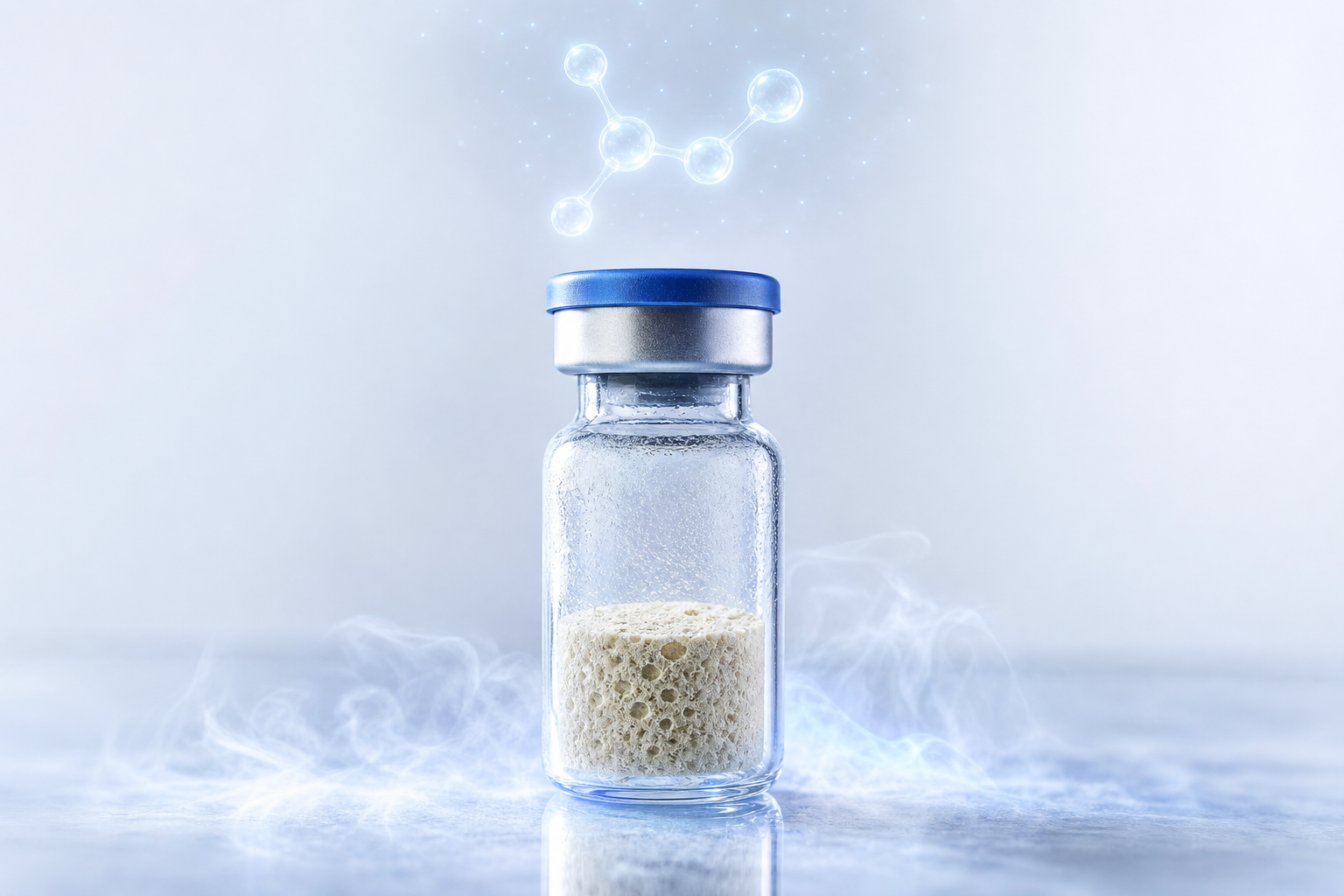
Glutathione arrives as a dry powder in a vial rather than a ready-to-use solution, and the reason is chemistry, not packaging preference. The active form is fragile in water, and that fragility shapes how the product is made, shipped, stored, and handled.
This is a companion to the glutathione hub. Where our reading guide covers what to check on a spec and the evidence piece covers the claims it does not carry, this one is about the physical form: why an antioxidant tripeptide in the vitamins and injectables category is freeze-dried, and what that means once it reaches a fridge, a bench, or a customs line.
Reduced versus oxidized: the molecule the label has to protect
Glutathione exists in two interconvertible states, and only one of them is the active ingredient a spec is naming. Reduced glutathione (GSH) carries a free thiol group and is the form the body uses as an antioxidant; oxidized glutathione (GSSG) is a dimer of two GSH molecules joined at that group. When a product states reduced glutathione, it is committing to delivering GSH, not its oxidized counterpart.
The catch is that GSH does not sit still in water. In solution, exposed to air and light, the reduced form gives up electrons and converts to GSSG, which is why an aqueous glutathione preparation begins losing its stated active from the moment it is mixed. A product's real job, then, is not just to contain GSH but to keep it in the reduced state until the point of use.
That single fact explains most of the handling around glutathione. Every downstream decision, from the powder format to the storage instructions, is a way of slowing the same reaction. Reading a glutathione product well means reading it as a stability problem first and a marketing story a distant second.
Why is glutathione freeze-dried and not sold pre-mixed?
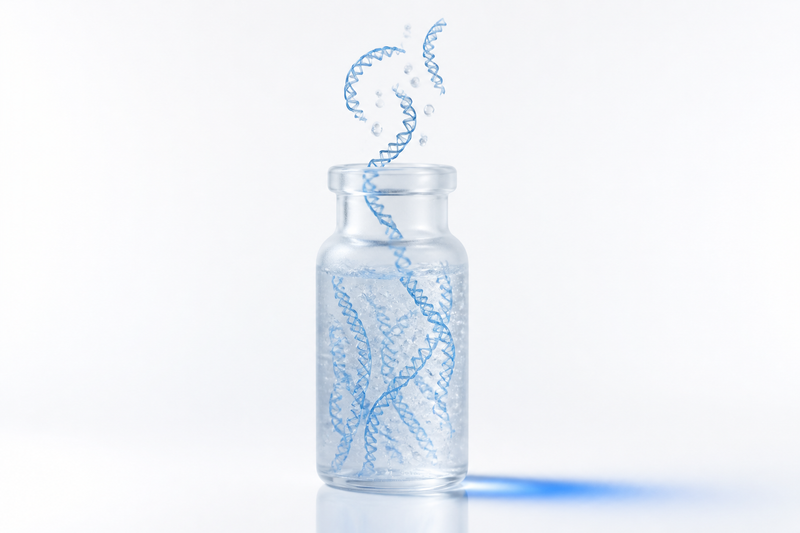
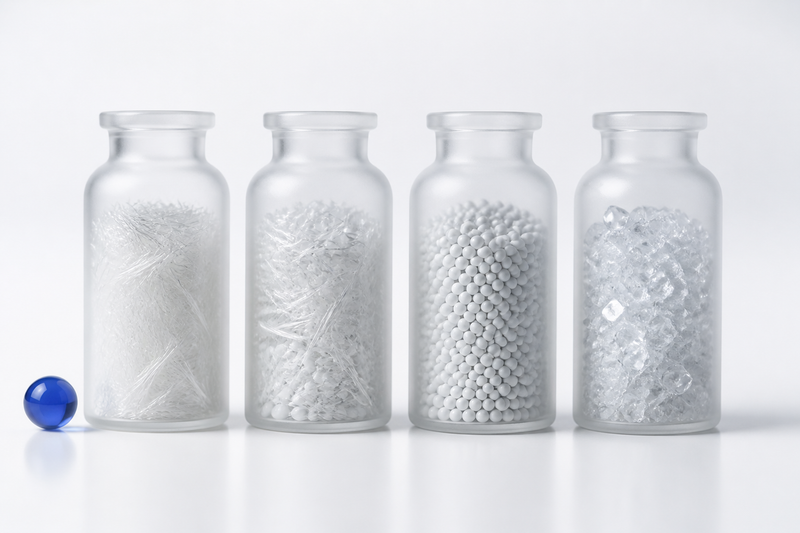
Freeze-drying, or lyophilization, removes water from the product by freezing it and drawing off the ice under vacuum, leaving a dry cake in the vial. With the water gone, the two routes that degrade glutathione, hydrolysis and oxidation, slow to a crawl, because both need a solution to proceed. A lyophilized powder is therefore far more stable on a shelf than the same amount of glutathione dissolved in a vial.
A pre-mixed reduced-glutathione solution would start converting to GSSG from the day it was manufactured, which forces a short shelf life and tight cold storage over the whole distribution chain. Freeze-drying moves that clock: the powder stays inert, and the oxidation only begins when a clinician reconstitutes it just before administration. This is why Korean glutathione injectables are typically supplied as a powder in a vial with strengths in milligrams, a point the hub and reading guide both note.
From a sourcing standpoint, the format is itself information. A powder presentation is a stability decision that lines up with how the molecule behaves, so a product marketed as a ready-mixed glutathione solution is worth a closer look at its stated shelf life and storage, rather than an assumption that convenience came for free.
| Factor | Lyophilized powder | Prepared solution |
|---|---|---|
| Water present | None until reconstitution | Present from manufacture |
| Oxidation of GSH to GSSG | Slowed while dry | Proceeds in the vial |
| Shelf stability | Longer, if stored per label | Shorter, storage-sensitive |
| Preparation step | Reconstituted fresh before use | Ready as supplied |
What reconstitution actually involves
Reconstitution is the step of adding a specified diluent to the powder to bring it back into solution immediately before use. The diluent is not arbitrary; the label names what to use and in what volume, commonly sterile water for injection, and that specification is part of the product rather than a detail left to the bench.
The reason it is done fresh follows directly from the chemistry above. Once the powder is dissolved, the oxidation clock starts, so a vial is reconstituted close to administration rather than prepared and held. Because injectable glutathione is handled as a drug for administration by trained professionals, reconstitution sits inside that professional lane, not in a consumer routine.
Storage, light, and the cold-chain question
A dry glutathione powder is stored the way its stability profile suggests: sealed, kept dry, and protected from light, since exposure to air and light is exactly what drives the reduced form toward its oxidized dimer. Those conditions are what a genuine product's storage instructions are protecting, and confirming they were met through the supply chain is a real authenticity check rather than a formality.
Whether the powder also needs refrigeration depends on the individual product's labeled specification, and this is where glutathione differs from more fragile actives. Unlike exosome products, which are defined by an unbroken cold chain, many lyophilized powders are more forgiving at ambient temperature, but that is a claim to read off the label, not to assume. Vitamin C, the other antioxidant often shelved in the same vitamins and injectables category, is oxidation-sensitive for the same underlying reason, which is why both are handled with an eye on air and light.
Where sourcing fits
Because a glutathione injectable is a drug-status product whose value rests on delivering an intact, reduced molecule, sourcing is largely a question of whether the form was respected end to end: made as a stable powder, stored and shipped per its label, and reconstituted only at the point of use. KSTATION curates official-channel lines and keeps provenance traceable, set out in the Editorial and Sourcing Policy. The fuller picture of what glutathione is, and the claims it does not carry, sits on the glutathione hub.
Frequently asked questions
Frequently asked
Why is glutathione freeze-dried instead of sold as a ready solution?
Reduced glutathione (GSH), the active form, oxidizes to its dimer (GSSG) in water when exposed to air and light. Freeze-drying removes the water, so the powder is far more stable on a shelf and the oxidation only begins once a clinician reconstitutes it before use. A pre-mixed solution would start degrading from manufacture.
Does glutathione powder need to be refrigerated?
It depends on the individual product's labeled specification. Many lyophilized powders are more tolerant of ambient storage than solution-based or cold-chain products, but the powder is still kept sealed, dry, and away from light. Read the storage line on the label rather than assuming, and confirm the conditions were met through the supply chain.
What is the difference between reduced and oxidized glutathione?
Reduced glutathione (GSH) has a free thiol group and is the active antioxidant form. Oxidized glutathione (GSSG) is two GSH molecules joined at that group, formed when GSH gives up electrons. A spec that names reduced glutathione is committing to the active form, which is the one the product's format and storage are designed to preserve.
Disclaimer. This article is general educational information and is not medical advice. It describes how glutathione injectables are formulated and handled, not what any product will do for an individual, and products referenced are intended for professional use. Injectable glutathione is not FDA-approved for aesthetic use; regulatory status varies by country and changes over time, so confirm current requirements with the relevant authority.
Sources & references
- Pizzorno J. Glutathione! Integrative Medicine (Encinitas), 2014 (reduced vs oxidized glutathione and antioxidant role). pmc.ncbi.nlm.nih.gov
- Sonthalia S, Daulatabad D, Sarkar R. Glutathione as a skin whitening agent: facts, myths, evidence and controversies. Indian J Dermatol Venereol Leprol, 2016 (forms, routes, regulatory notes). pmc.ncbi.nlm.nih.gov
- U.S. FDA, Is It a Cosmetic, a Drug, or Both? (Or Is It Soap?), structure/function vs. drug claims. fda.gov