Two exosome vials can carry the same word on the label and almost nothing else in common. An exosome is defined by where it comes from and how it was handled, not by a single molecule, which makes the label harder to read than a filler's and the sourcing questions more important. This is a reading guide for that label.
It is an ingredient-first companion to our Exosomes hub, and it takes the same narrow job our PDRN reading guide does for salmon-DNA boosters. Rather than re-explaining what an exosome is, it walks through the variables that actually decide whether two exosome products are comparable.
Source cell line
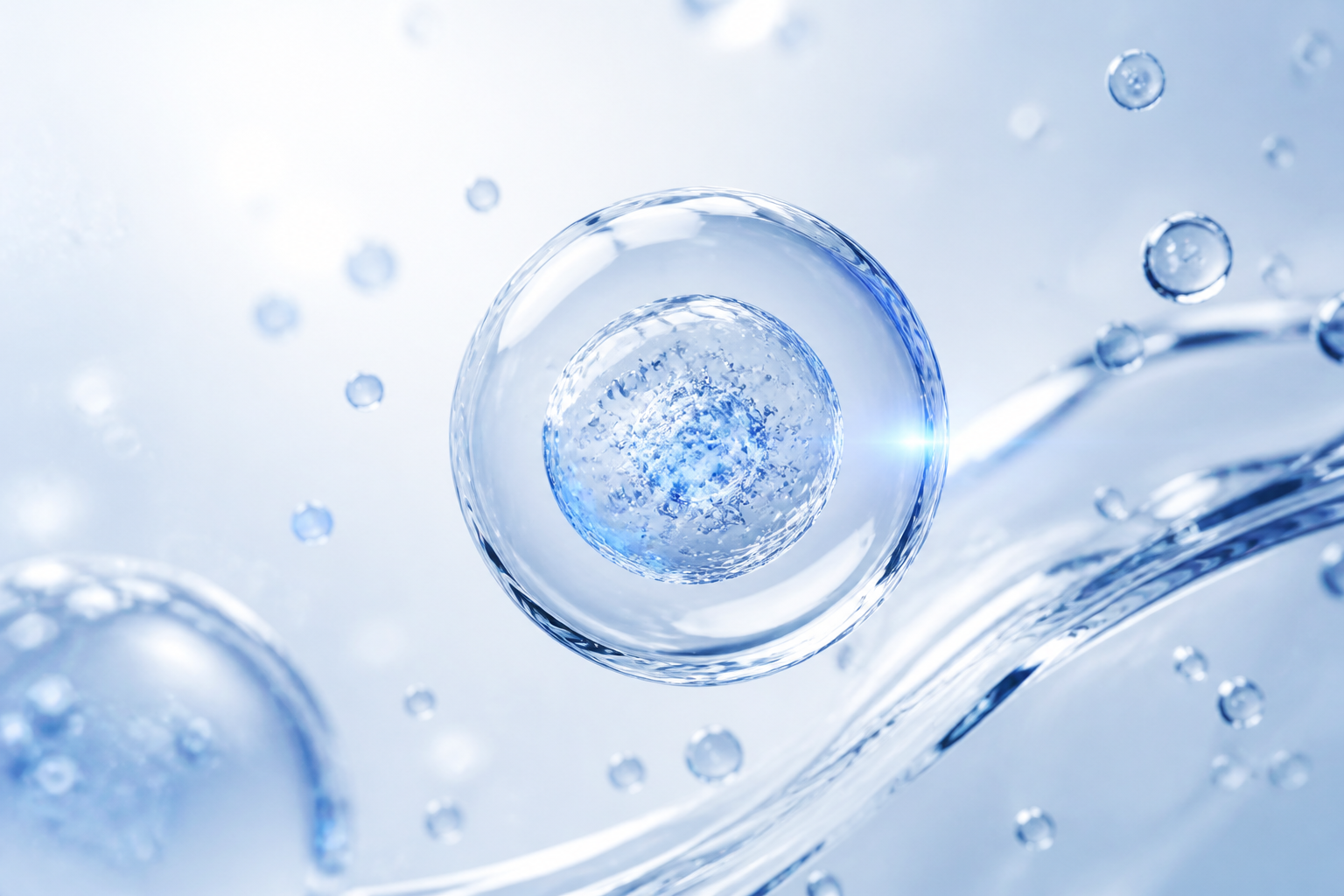
An exosome is a vesicle, and what it carries depends entirely on the cell that released it. The first thing to read on an exosome product is therefore the source: which cell line, from what species or plant, produced under what conditions. Two exosome products from different source lines are not variants of one ingredient. They are different starting materials that happen to share a category name.
Characterization and particle data
Because an exosome is a structure, the meaningful spec is characterization: particle size distribution, concentration in particles per millilitre, and the markers used to confirm the material is what it claims. A product that states particle data is giving you something to verify. One that states only 'exosomes' is asking to be taken on faith.
How it is presented
In the K-derma catalog, exosome products usually arrive as a lyophilized powder reconstituted before use, sometimes paired with a separate diluent. That format exists because the vesicles are fragile, which is the same reason the next variable matters more here than for most ingredients.
Cold chain and provenance
An exosome's value depends on its structure surviving transit. Cold-chain handling and traceable provenance are not extras for this class, they are part of what the product is. A vesicle preparation that was warm in transit, or whose origin cannot be traced, may not match its own characterization by the time it reaches a practitioner.
A reading checklist
| Variable | What to look for |
|---|---|
| Source cell line | Which line, species or plant, and production conditions |
| Characterization | Particle size, concentration, confirming markers |
| Format | Lyophilized powder and diluent, reconstitution step |
| Cold chain | Storage and transit conditions, unbroken |
| Provenance | Traceable origin, official channel |
Where it sits among the neighbors
Exosomes share the regenerative shelf with two different kinds of object: PDRN, a DNA-fragment polymer, and EGF, a single defined protein. An exosome can in principle carry growth factors as cargo, which is why the two are related in biology but not interchangeable as ingredients. For how the three sort apart, see our exosome vs growth factor vs PDRN regeneration map; for the deeper single-ingredient view, Part 13 on exosomes in medical aesthetics picks up where this leaves off.
Where sourcing fits
From a sourcing standpoint the reading guide and the supply chain are one discipline for this class more than any other, because the product is a structure and structures degrade. KSTATION curates official-channel exosome lines and keeps provenance traceable, and our method is set out in the Editorial & Sourcing Policy. The fuller set of what each ingredient is sits on the Exosomes hub.
Frequently asked questions
Frequently asked
What is the most important thing to check on an exosome product?
The source cell line and its characterization. An exosome is a carrier defined by what released it, so two products from different sources are different starting materials, not variants of one ingredient.
Why does cold chain matter more for exosomes?
Because an exosome is a fragile vesicle whose value depends on its structure surviving transit. Poor handling can leave a product that no longer matches its own characterization, so storage and provenance are part of the product rather than extras.
Are exosomes the same as growth factors?
No. An exosome is a membrane-bound vesicle that can carry mixed cargo, while a growth factor such as EGF is a single defined protein. One is a container, the other is one kind of message it might hold.
Disclaimer. This article is general educational information and is not medical advice. It describes how exosome products are specified and handled, not what any product will do for an individual, and products referenced are intended for professional use. Regulatory status varies by country and changes over time; confirm current requirements with the relevant authority.
Sources & references
- Regenerative Approaches to Enhance the Skin Microenvironment and Boost Aesthetic Efficacy: A Narrative Review, IJMS/PMC (positions exosomes within the regenerative skin-microenvironment category). pmc.ncbi.nlm.nih.gov
- Extracellular Vesicles and Exosomes: characterization, particle metrics, and handling, PMC. pmc.ncbi.nlm.nih.gov
- U.S. FDA, Is It a Cosmetic, a Drug, or Both? (Or Is It Soap?), structure/function vs. drug claims. fda.gov