Part 13 of this series turns to the ingredient that has reframed the medical aesthetics conversation around regeneration: the exosome. Where hyaluronic acid hydrates and polynucleotides offer structural support, exosomes belong to a different category entirely. They are messengers, nanoscale vesicles that carry signals between cells. That framing matters more than any marketing line, because it places exosomes in a discussion about cellular communication rather than volume or contour, and it is also where the honest questions about evidence and regulation begin.
From a sourcing standpoint, the first thing worth clarifying is what an exosome is not. It is not a filler, and it is not a drug with proven aesthetic outcomes. It sits instead in the regenerative-signaling category, alongside ingredients such as PDRN and growth factors that this series has covered in earlier parts. When a Korean skin booster lists exosomes among its components, the intent described in research is to deliver signaling cargo rather than to fill or freeze. What that delivery actually achieves in skin is the subject of active study, not settled fact.
What exosomes actually are
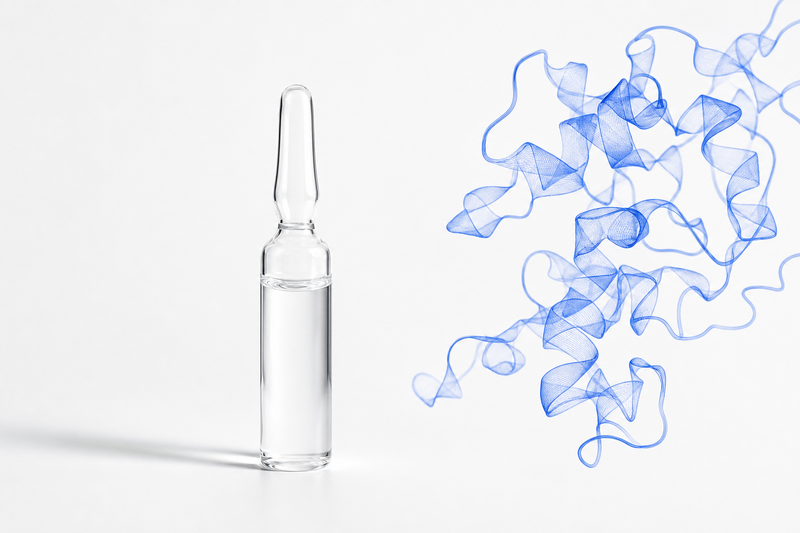
Exosomes are extracellular vesicles, typically 30 to 150 nanometers in diameter, secreted by nearly all cell types in the body. They form through inward budding of the endosomal membrane, creating multivesicular bodies whose internal vesicles are released into the extracellular space when those bodies fuse with the cell surface.1 Once dismissed as cellular debris, they are now understood as a genuine communication system.
Each vesicle is a lipid bilayer carrying cargo: proteins, lipids, and nucleic acids including messenger RNA and microRNA.2 That cargo is the point. Exosomes transfer functional molecules to recipient cells, and the microRNAs in particular can influence gene expression in the cells that take them up. In medical aesthetics the exosomes discussed are most often derived from mesenchymal stem cells, and because the vesicles are isolated and purified, the resulting material is acellular, containing no living cells.3 That is what an exosome is. It is not, on its own, a claim about what any product will do.
How they are proposed to work
The mechanism described in the research literature is signaling, not substitution. In preclinical and early studies, mesenchymal stem cell-derived exosomes have been investigated for wound repair, where they appear to participate in attenuating inflammation, supporting angiogenesis, and influencing fibroblast activity and extracellular matrix remodeling.3 The proposed model is that exosomal cargo, especially microRNA, modulates how recipient skin cells behave during repair.
It is worth stating plainly what this is and is not. Much of the evidence sits in laboratory models, animal studies, and small early-stage human work, and reviewers in aesthetic medicine have noted that large, controlled clinical trials remain limited.4 The honest way to describe exosomes is therefore in the conditional: studied for, proposed to, investigated as. None of that is a promise of regeneration, and the louder a claim of cellular rejuvenation, the weaker its footing.
Topical versus injected, and why it matters
A second distinction decides almost everything about how an exosome product is used and regulated: the route. Exosome material in aesthetics is generally applied topically after a procedure that breaches the skin barrier, such as microneedling or a laser, where the transient microchannels are intended to aid uptake. This is a different proposition from injection.5
The distinction is not cosmetic. Topical application onto freshly treated skin, framed for professional use, carries a different risk and regulatory profile than placing an unapproved biological product under the skin. Injecting exosomes is where the most serious safety signals have appeared, and where regulators have drawn their firmest lines. That is the subject of the next section, and it is the part of the exosome story that no honest sourcing partner should soften.
The regulatory reality
This is the section that matters most, and it is the one the original version of this article omitted. In the United States, there are no FDA-approved exosome products. Exosomes intended to treat conditions in humans are regulated as drugs and biological products under the Public Health Service Act and the Federal Food, Drug, and Cosmetic Act, and are subject to premarket review and approval that no exosome product has obtained.6
This is not a paperwork technicality. In December 2019 the FDA issued a public safety notification after patients in Nebraska were treated with unapproved products marketed as containing exosomes and suffered serious adverse events, including bloodstream infections requiring hospitalization.7 The FDA and CDC have since warned that clinics marketing unapproved exosome and stem cell products deceive patients with unsubstantiated claims, and that such products carry real risks of infection and harm.8 Korea, where much of the global exosome supply originates, tightened its own rules: from 21 January 2025 its Ministry of Food and Drug Safety prohibited the word "exosome" in cosmetic advertising to curb medical-sounding and misleading claims.9
Where the supply side fits
This is the part a distributor can actually stand behind. We do not promise what an exosome will do for skin, because the science and the safety record above are exactly why no honest sourcing partner should. Exosomes are biological material, sensitive to handling, and their identity depends on how they were isolated, stored, and transported. What a distributor can stand behind is provenance and handling: curating official-channel products, keeping the supply chain traceable, and maintaining cold-chain conditions across US and EU shipping so that what reaches a practitioner matches what left the manufacturer.
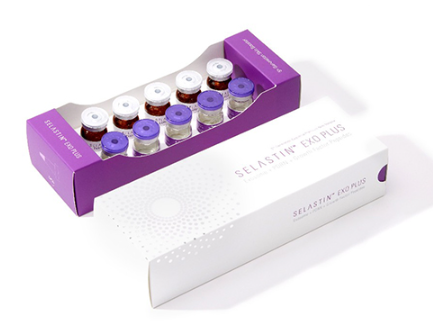
For readers mapping how exosomes appear in the K-derma range, a few examples in steady official-channel supply include SELASTIN EXO PLUS, ExoLume, and LACTO EXO COLLA (LXC). The fuller set sits under Special Functionals (Exosome / Hair), intended for professional use. The durable takeaway is narrower than any hype: exosomes are a signaling vesicle in the regenerative category, best understood through their cargo and their proposed mechanism, and the questions that decide value are evidence, route, regulatory honesty, and authenticity.
Frequently asked questions
Frequently asked
What are exosomes?
Extracellular vesicles, typically 30 to 150 nanometers, secreted by nearly all cells. Each carries cargo of proteins, lipids, and nucleic acids such as mRNA and microRNA, and transfers those signals between cells. In aesthetics they are most often derived from mesenchymal stem cells and purified to an acellular form.1,2,3
Are exosome treatments FDA-approved?
How are exosomes proposed to work in skin?
Through signaling rather than substitution. In preclinical and early studies, exosomal cargo such as microRNA is proposed to influence how skin cells behave during repair, including inflammation, angiogenesis, and matrix remodeling. Large controlled clinical trials remain limited, so claims should stay conditional.3,4
Why does topical versus injected matter?
Route changes both use and regulation. Exosomes in aesthetics are usually applied topically after a barrier-breaching procedure like microneedling. Injection carries the most serious documented safety signals and the firmest regulatory restrictions, which is why professional-use, topical framing is the responsible default.5,6
Disclaimer. This article is general information for educational purposes and is not medical advice. It describes what exosomes are and how they are studied and regulated, not what any product will do for an individual. Exosome products are not FDA-approved and are intended for use by trained professionals. Regulatory status, ingredient rules, and advertising requirements vary by country and change over time; confirm current requirements with the relevant authority.
Sources & references
- Peer-reviewed review on exosome biogenesis, uptake, and intracellular signalling (multivesicular body pathway, size range). biosignaling.biomedcentral.com
- Peer-reviewed review on exosomal miRNA-mediated intercellular communication and cargo (proteins, lipids, mRNA, miRNA). pmc.ncbi.nlm.nih.gov
- Peer-reviewed review, mesenchymal stem cell-derived exosomes in skin wound repair and regeneration (acellular, proposed mechanisms). pmc.ncbi.nlm.nih.gov
- Exosomes in Aesthetic Medicine: An Overview, Aesthetic Surgery Journal (state of clinical evidence). academic.oup.com
- Peer-reviewed and clinical discussion of topical exosome application with microneedling and energy devices versus injection. ncbi.nlm.nih.gov
- U.S. FDA, Public Safety Notification on Exosome Products (no FDA-approved exosome products; regulated as drugs/biologics). fda.gov
- U.S. FDA, Public Safety Alert on unapproved stem cell and exosome products (Nebraska adverse events, serious infections). fda.gov
- U.S. CDC, stem cell and exosome products (bacteremia outbreak investigation, infection risk). archive.cdc.gov
- South Korea MFDS prohibition on the term "exosome" in cosmetic advertising, effective 21 January 2025. en.reach24h.com