Skin that reads as dry, dull, or tired is often not a surface problem at all. It is a question of how much water the dermis is holding and how well the structural matrix beneath the surface is doing its quiet work. Skin boosters are the category built around that idea, and this first part of the series sets out what they are, how they differ from fillers, and what the evidence actually supports.
The category name does a lot of work, so it is worth slowing down on it. A skin booster is an injectable treatment intended to improve skin quality, hydration and overall condition, rather than to add volume or reshape a feature. That intent separates it cleanly from the filler conversation, and getting the distinction right is the single most useful thing a reader can take from this article. Some products marketed loosely as "boosters" are in fact volumizing fillers, and the two are not interchangeable.
What skin boosters are, and how they differ from fillers
A skin booster is delivered by injecting small microdroplet aliquots intradermally, into the dermis, spread across the treatment area by a licensed professional.1 The goal is even distribution through the skin rather than a single deposit under it. That delivery pattern is the physical expression of the category's purpose, which is to condition the skin broadly instead of building structure in one place.
The formulation difference is just as important. Hyaluronic acid skin boosters typically use non-crosslinked or minimally crosslinked HA, a thinner material that spreads through tissue to hydrate, while volumizing dermal fillers use heavily crosslinked HA engineered to hold shape and add structure.2 Boosters and fillers therefore differ in intent, formulation and injection depth, even when both are described under the broad umbrella of HA injectables.3 This is exactly why a crosslinked HA product such as Neuramis is classed as a dermal filler, a volumizer, and not as a hydration booster.4
The two families: HA-based vs PN/PDRN boosters
Most of the skin booster landscape sorts into two ingredient families. The first is hyaluronic acid. Injected HA attracts and binds water within the dermal matrix, which is associated with improved skin hydration and turgor.5 Beyond water alone, microinjection of small-particle HA has been reported to stimulate fibroblast activity, the cells that produce collagen and elastin.6
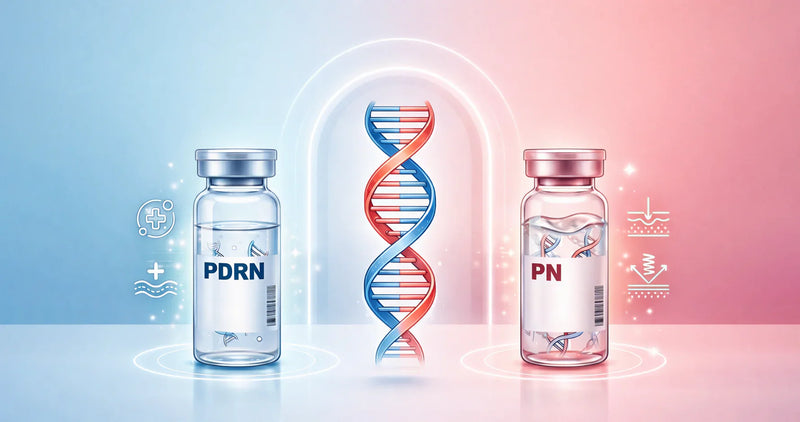
The second family is built on polynucleotides and polydeoxyribonucleotides, usually written as PN and PDRN. These are derived from purified salmon or fish DNA, and their activity is generally attributed to adenosine A2A receptor activation, which has been associated with fibroblast proliferation, collagen support, and downregulation of MMP-1, an enzyme that breaks collagen down.7 Rejuran, introduced in Korea around 2014, was the first PN product positioned as a dedicated aesthetic skin booster rather than a filler, a move that repositioned PDRN away from the volumizing conversation entirely.8
What skin boosters are associated with
Read carefully, the literature describes associations and supported outcomes, not guarantees. HA boosters act as something close to an internal moisturizer, binding water in the dermis, while also behaving as a mild biostimulator of the cells that maintain skin structure.3 A 2024 prospective study of intradermal HA reported significant improvement on a wrinkle scale and across biophysical skin parameters, with no serious persistent adverse effects recorded in that study.9
The honest framing is that boosters may support hydration, elasticity and a more radiant-looking surface, and that individual results vary and are not promised. The vocabulary matters here. A treatment that participates in the skin's own water balance and renewal signaling is best described in terms of support, not correction.
How the treatment works
The procedure itself belongs entirely to a trained clinician. A licensed professional assesses the skin, then places the product as fine intradermal microdroplets across the area, following the microdroplet aliquot technique that defines the category.1 Depth, spacing and product choice are clinical decisions, not something a reader should attempt independently. Treatment courses, intervals and aftercare are likewise set by the practitioner.
Considerations: temporary results and maintenance
The most important practical fact about HA boosters is that their effect is temporary. Free hyaluronic acid has a short native half-life, under roughly a day, because it is degraded by hyaluronidases in the skin.10 That biology is precisely why booster results are not permanent and why maintenance sessions, scheduled by a professional, are part of the model rather than a sign that something went wrong.
So the realistic expectation is a conditioning treatment that is repeated over time, not a one-time fix. Anyone weighing skin boosters should plan around that rhythm and discuss a realistic schedule with their clinician.
Where the supply side fits
This is the part a distributor can stand behind. We do not promise what any booster will do for a given person, because the science above is exactly why no honest sourcing partner should. What we do is curate authentic, official-channel Korean products and keep provenance traceable, with cold-chain handling and shipping to the US and EU, so a practitioner receives the genuine product as labeled.
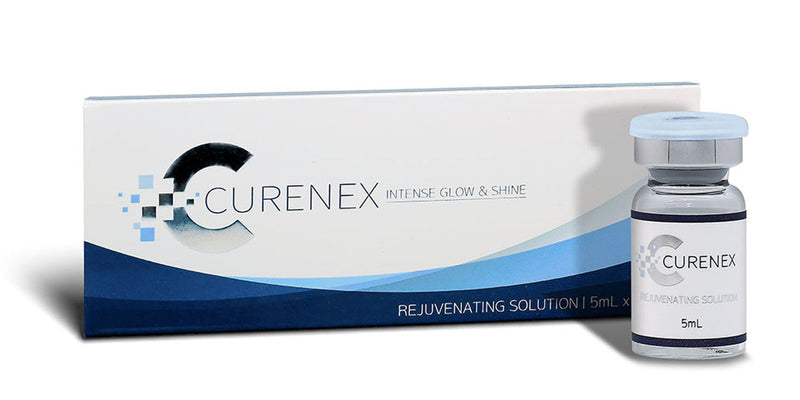
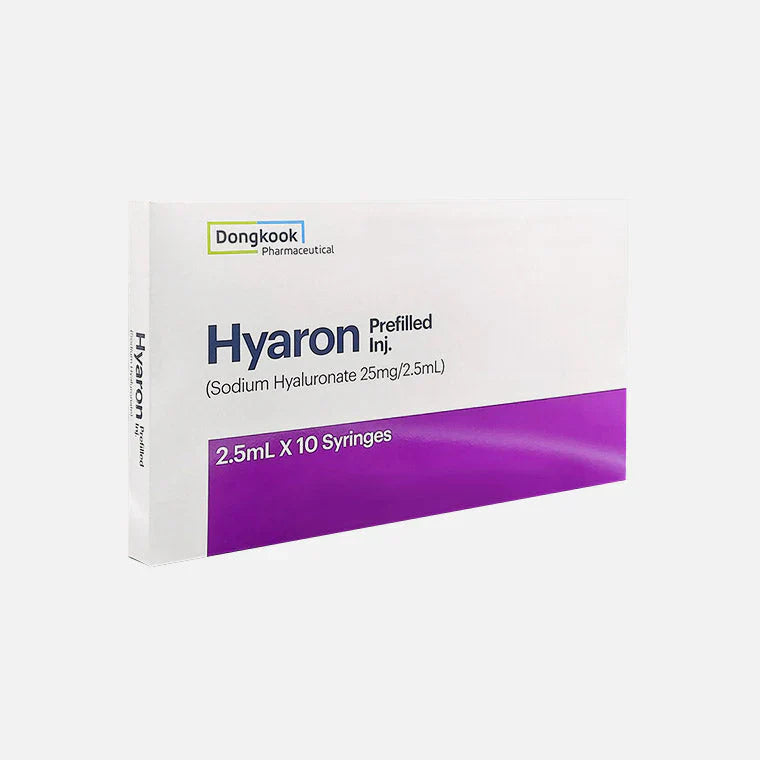
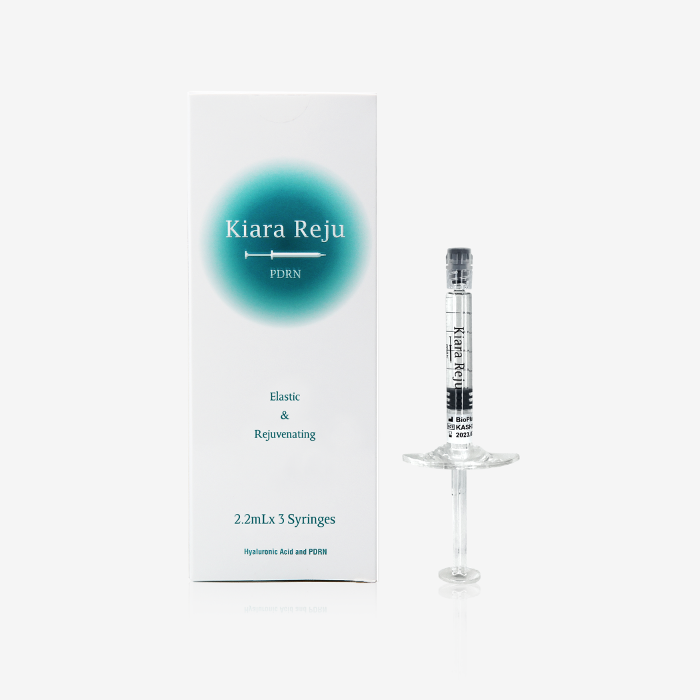
For readers mapping how this category appears in practice, examples in the range include CURENEX INTENSE GLOW & SHINE, Hyaron Prefilled Inj, and KIARA REJU. The broader set sits under skin boosters and ampoules, intended for use by licensed professionals.
Frequently asked questions
Frequently asked
What is the difference between a skin booster and a filler?
A skin booster is injected as microdroplets into the dermis to improve skin quality and hydration, typically using non-crosslinked or minimally crosslinked HA that spreads to hydrate. A filler uses heavily crosslinked HA placed to add volume and structure. They differ in intent, formulation and depth.2,3
How long do skin booster results last?
HA booster effects are temporary because free hyaluronic acid has a short native half-life and is degraded by hyaluronidases, which is why maintenance sessions are part of the model. Individual results vary and durations are not guaranteed; for reference, SkinVive's US labeling studied results to around six months.10,11
What is the difference between HA and PN/PDRN boosters?
HA boosters bind water in the dermis to support hydration and turgor. PN/PDRN boosters are derived from purified salmon or fish DNA and act via adenosine A2A receptor activation, associated with fibroblast proliferation and collagen support. They are different ingredient families with different mechanisms.5,7
Are skin boosters FDA-approved?
Disclaimer. This article is general information for educational purposes and is not medical advice. It describes what skin boosters are and how they are studied and regulated, not what any product will do for an individual. Products referenced are intended for use by licensed professionals, and treatment decisions belong to a qualified clinician. Regulatory status and product availability vary by country and change over time; confirm current requirements with the relevant authority.
Sources & references
- Review on skin booster intradermal microdroplet technique and indications. pmc.ncbi.nlm.nih.gov
- Review distinguishing non-crosslinked / minimally crosslinked HA boosters from crosslinked volumizing fillers. pmc.ncbi.nlm.nih.gov
- Review on booster vs filler intent, formulation and depth (skin quality vs volume). pmc.ncbi.nlm.nih.gov
- Study describing Neuramis as a crosslinked HA dermal filler (volumizer). pmc.ncbi.nlm.nih.gov
- Review on injected HA binding water in the dermal matrix and improving hydration and turgor. pmc.ncbi.nlm.nih.gov
- Review on small-particle HA microinjection and fibroblast stimulation. pmc.ncbi.nlm.nih.gov
- Review on PN/PDRN mechanism: salmon/fish DNA, adenosine A2A receptor, fibroblast and collagen activity, MMP-1 downregulation. pmc.ncbi.nlm.nih.gov
- Narrative review on polynucleotides/PDRN in dermatology (Rejuran history and positioning). jcasonline.com
- 2024 prospective study of intradermal HA reporting wrinkle-scale and biophysical improvement. onlinelibrary.wiley.com
- Review on the short native half-life of free HA and hyaluronidase degradation. pmc.ncbi.nlm.nih.gov
- AbbVie, SkinVive by Juvéderm FDA approval announcement (May 15, 2023). news.abbvie.com
- U.S. FDA, FDA-approved dermal fillers (HA fillers as Class III devices; approval scope). fda.gov