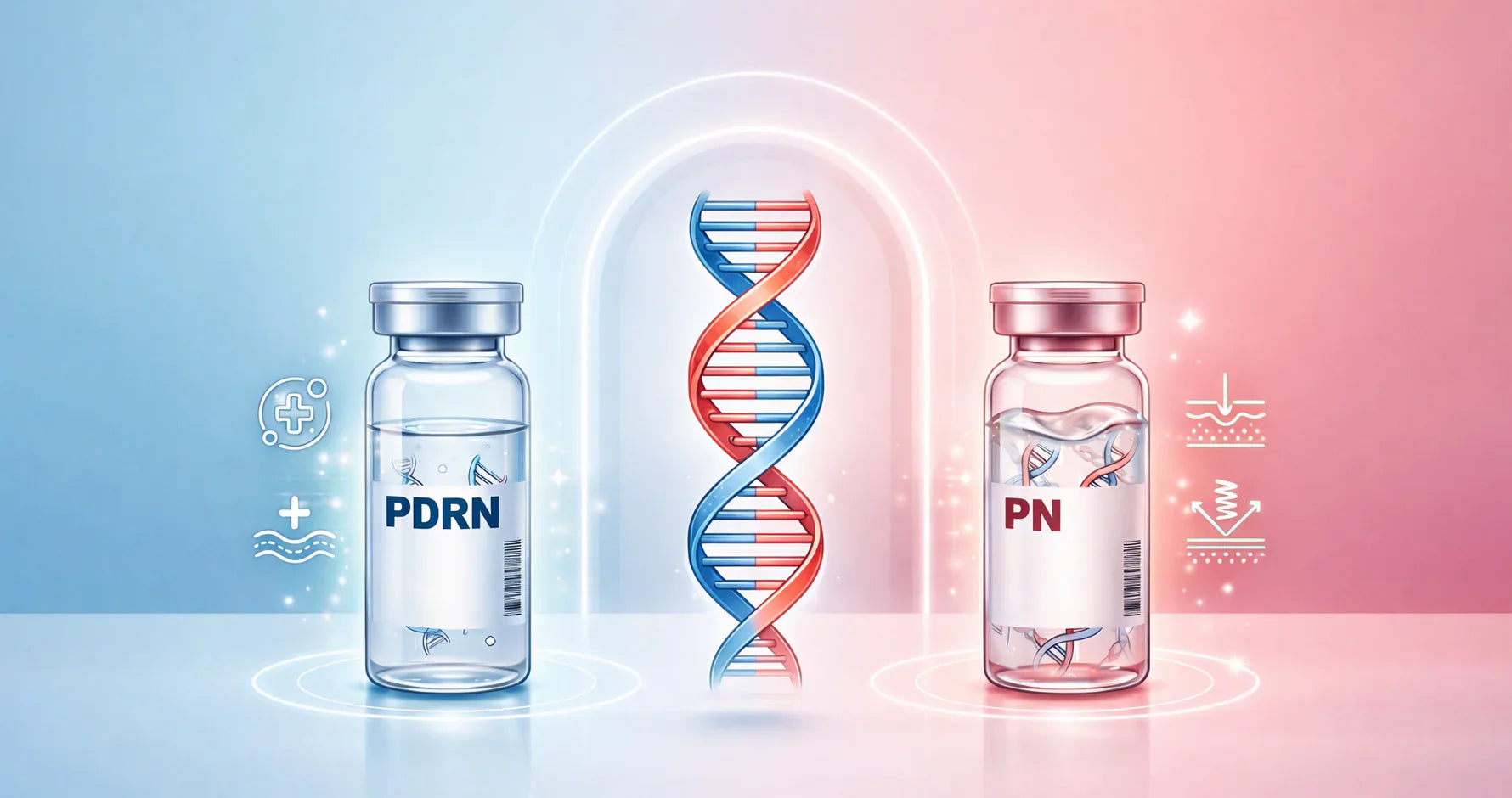
If you have read anything about Korean medical aesthetics, you have met the "salmon injection," and you have almost certainly met its two confusing acronyms: PDRN and PN. The most useful thing to know at the outset is that they are not rival actives from different sources. They are two ends of one spectrum, both cut from the same salmon or trout DNA, and the line between them is drawn mainly by the length of the molecule.
This is Part 7 of our ingredient series, and the goal here is the same as always. Not to promise what a skin booster will do for any one person, but to describe accurately what these ingredients are, how the cited literature says they behave, and what a sourcing partner can actually stand behind. PN and PDRN sit in the regenerative category, the same broad family as growth factors and certain peptide complexes, and like those neighbors they are best understood by mechanism rather than marketing.
What PN and PDRN actually are
Both polynucleotide (PN) and polydeoxyribonucleotide (PDRN) are nucleic-acid polymers built from nucleotide monomers linked by phosphodiester bonds, and both are extracted from the sperm DNA of salmonid fish, typically chum salmon (Oncorhynchus keta) or trout.1 The choice of salmon is not arbitrary. Salmonid DNA is reported to share a high degree of base-sequence similarity with human DNA, which is the usual explanation given for its biocompatibility and low reported risk of immune rejection when used in regenerative products.2 One caution worth stating plainly: the exact "percent similarity" figure varies widely across sources and marketing, so the honest framing is high biocompatibility rather than any single precise number.
The molecular-weight distinction, stated precisely
This is where the existing internet folklore tends to overreach, so it is worth getting exactly right. The 2025 peer-reviewed reviews that try to standardize the terms propose a size-based definition: the label PDRN should be reserved for small- and medium-chain polymers below about 1,500 kDa, while PN denotes the longer chains at or above roughly 1,500 kDa.3 In practice PDRN preparations span a broad range, often cited as 50 to 1,500 kDa, with the bulk of the distribution around 80 to 200 kDa.4 Note the unit: these are kilodaltons of molecular weight, not base pairs, a distinction many summaries get wrong.
The practical reading is simpler than the numbers suggest. PDRN is the shorter, more fragmented, lower-viscosity material. PN is the longer, more intact, more viscous material. They are not two different molecules so much as two points on a continuum of one molecule's length, and most of the published mechanistic research was in fact done on PDRN specifically.3
How PDRN is described to work
The mechanism most often attributed to PDRN in the literature runs through two routes. The first is receptor signaling: PDRN is reported to engage the adenosine A2A receptor, a pathway associated in cited studies with modulating inflammation, supporting fibroblast proliferation, and promoting angiogenesis.5 In primary human skin fibroblast cultures, PDRN increased cell growth in a manner that was abolished by an adenosine A2 receptor antagonist, which is the experimental basis for the receptor claim rather than a guarantee of any cosmetic outcome.6
The second route is the nucleotide salvage pathway. As PDRN is broken down, it releases a pool of nucleosides and nucleotides that cells can reincorporate, sparing them the energy cost of building those units from scratch.5 Together these two routes are how the cited literature frames PDRN's association with tissue repair, anti-inflammatory activity, and collagen-supportive fibroblast behavior. None of that is the same as a promised clinical result.
What PN is associated with
Because PN chains are longer and more viscous, the cited literature associates them less with rapid signaling and more with a structural role. In hyaluronic-acid and polynucleotide complexes, the longer chains are reported to raise elasticity, viscosity, and viscoelasticity, behaving as a hydrating, water-binding scaffold within the dermis while they slowly break down.7 This is the property the skin-booster category leans on when it discusses skin quality, density, and hydration. It is also why PN is the form most associated in the Korean market with products like Rejuran, launched by PharmaResearch in the mid-2010s on a salmon-DNA polynucleotide platform.8 As ever, association in the literature is not a performance promise for any individual.
Regulatory and authenticity reality
Here the regional differences matter more than any marketing line, and they are the part a distributor must get exactly right. In South Korea, polynucleotide skin boosters such as Rejuran are cleared by the MFDS and sold under a regulated medical framework.8 In the United States the picture is narrower: no PN or PDRN injectable is FDA-approved for aesthetic use. Topical PDRN serums and creams can be sold as cosmetics, because cosmetics do not require pre-market FDA approval as long as no drug-like claims are made, but the injectable skin boosters marketed abroad are not authorized for aesthetic injection in the US.9 The FDA line is the familiar one: anything intended to affect the structure or a function of the body is regulated as a drug, not a cosmetic.10
Authenticity is the other half of the reality. These are biological preparations whose value depends on the DNA polymer arriving intact and properly stored. A product handled poorly in transit, or one whose provenance cannot be traced, is functionally a different thing from the one on the label. That is why, for this ingredient class, sourcing and cold chain sit right next to mechanism in any serious assessment.
Where the supply side fits
This is the part a distributor can actually stand behind. We do not promise what a salmon-DNA skin booster will do for your skin, because the science above is exactly why no honest sourcing partner should. What it does is curate official-channel products by ingredient and keep provenance traceable, which is the variable that decides whether a sensitive biological preparation is still the molecule on its label by the time it reaches a practitioner, shipping to both the US and EU.
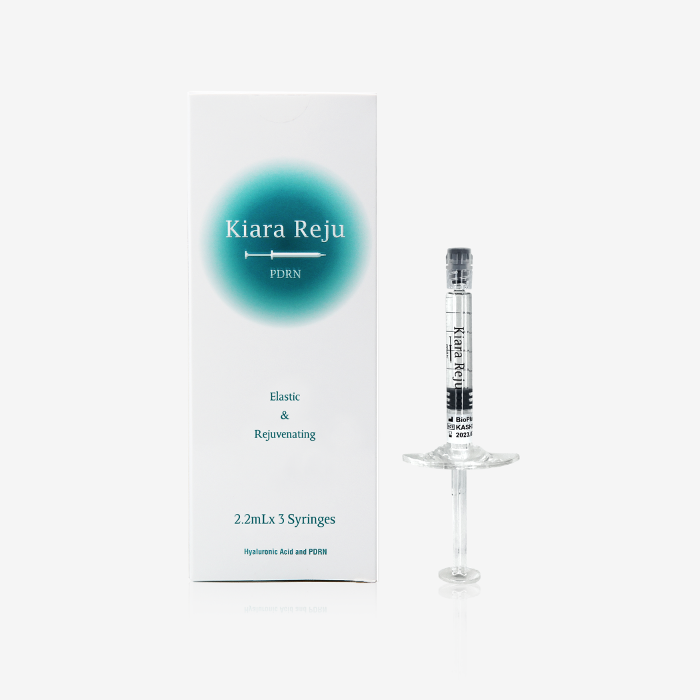
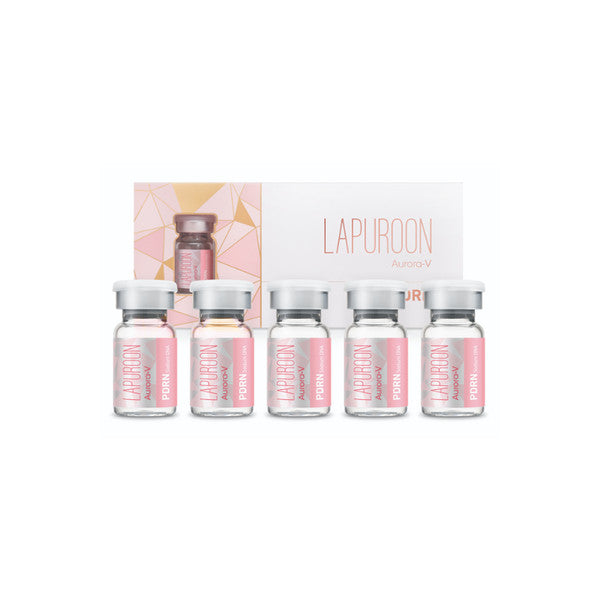
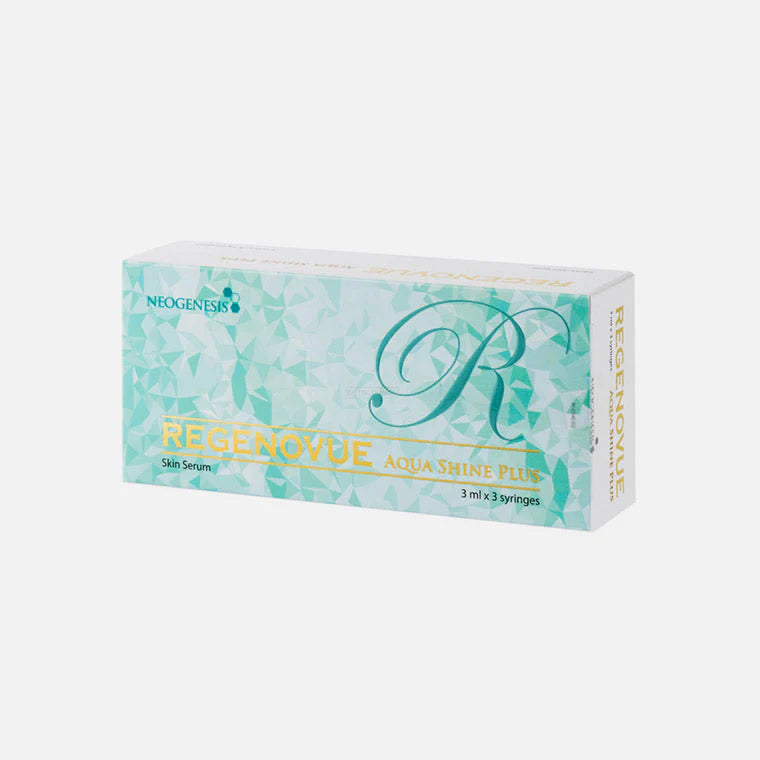
For readers mapping how PN and PDRN appear in practice, a few salmon-DNA and regeneration boosters in the K-derma range include KIARA REJU (2.2mL × 3 Syringes), LAPUROON AURORA Vivid (5mL × 5 Vials), and REGENOVUE Aqua Shine Plus (3mL × 3 Syringes). The fuller set sits under Skin Boosters and Ampoules, intended for professional use.
Frequently asked questions
Frequently asked
Are PN and PDRN the same thing?
Not identical, but not opposites either. Both are nucleotide polymers from the same salmon or trout DNA. The standardizing 2025 reviews separate them by chain length: PDRN for shorter chains below about 1,500 kDa, PN for longer chains at or above it.3
How is PDRN described to work?
Is PN or PDRN FDA-approved in the United States?
Why does sourcing matter for salmon-DNA boosters?
These are biological preparations whose value depends on the DNA polymer arriving intact and stored correctly. Poor handling or untraceable provenance can leave a product different from its label, so official-channel sourcing and cold chain are part of evaluating it at all.
Disclaimer. This article is general information for educational purposes and is not medical advice. It describes what PN and PDRN are and how they are discussed and regulated, not what any product will do for an individual. Products referenced are intended for use by trained professionals. Approval status, cosmetic claims, and ingredient rules vary by country and change over time; confirm current requirements with the relevant authority.
Sources & references
- Comparison of Polynucleotide and Polydeoxyribonucleotide in Dermatology: Molecular Mechanisms and Clinical Perspectives (2025), PMC. pmc.ncbi.nlm.nih.gov
- Review on salmon-derived DNA biocompatibility and source species for PN/PDRN preparations. sciencedirect.com
- From Polydeoxyribonucleotides (PDRNs) to Polynucleotides (PNs): Bridging the Gap (2025), Biomolecules / PMC (size-based definitions, MW thresholds). pmc.ncbi.nlm.nih.gov
- Pharmacological Activity and Clinical Use of PDRN, PMC (molecular-weight distribution, 50 to 1,500 kDa, peak ~132 kDa). ncbi.nlm.nih.gov
- Versatile and Marvelous Potentials of Polydeoxyribonucleotide for Tissue Engineering and Regeneration, PMC (A2A receptor and salvage pathway). pmc.ncbi.nlm.nih.gov
- Polydeoxyribonucleotides enhance the proliferation of human skin fibroblasts: involvement of A2 purinergic receptor subtypes, PubMed. pubmed.ncbi.nlm.nih.gov
- Polynucleotides in Aesthetic Medicine and HA-polynucleotide complex rheology (viscoelasticity, scaffolding), PMC. pmc.ncbi.nlm.nih.gov
- Rejuran (PharmaResearch) polynucleotide platform and Korean MFDS regulatory status. medicadepot.com
- US regulatory status: PN/PDRN injectables not FDA-approved for aesthetic use; topical PDRN sold as cosmetics. thekoreanstyle.com
- U.S. FDA, "Is It a Cosmetic, a Drug, or Both? (Or Is It Soap?)", structure/function vs. drug claims. fda.gov