Three ingredients keep landing in the same sentence: exosome, growth factor, and polydeoxyribonucleotide (PDRN). They share a shelf, a search term, and the word regeneration, and that shared label hides the fact that they are not one category. They differ in what they physically are, where they come from, and the role they play in a formulation. For anyone reading a catalog rather than a marketing line, sorting the three apart is the first useful step.
Why "regeneration" gets used loosely
Regeneration is doing a lot of work as a marketing word. It groups together any ingredient associated with skin quality, recovery, or repair, and that grouping is convenient for a brand and confusing for a buyer. The grouping is real in one narrow sense: exosome, growth factor, and PDRN are all positioned in the regenerative space rather than the volumizing space, which is what separates them from a hyaluronic acid filler. Beyond that, the word flattens three different things into one impression. A clearer reading treats regeneration as a shelf, not a mechanism, and then asks what each item on that shelf actually is.
The distinction matters most at the point of sourcing. A growth factor is a defined protein, an exosome is a structure, and PDRN is a polymer of DNA fragments. Those are three different kinds of object, and they are made, handled, and verified in three different ways. Reading them as interchangeable is how a buyer ends up comparing a price without comparing a product.
Defining each of the three
Each term points to a specific class of material. The job of this section is to define them in neutral terms, not to rank them.
Exosome
An exosome is a tiny membrane-bound vesicle, on the order of tens to a couple hundred nanometers, released by cells and carrying a cargo of proteins, lipids, and nucleic acids. In a regenerative context it is studied as a vehicle for cell-to-cell signaling, which is why exosomes are discussed as a delivery and communication system rather than a single active molecule.1 The defining feature of an exosome is structural: it is a packaged carrier, and what it carries depends on its source.
Growth factor
A growth factor is a signaling protein. Epidermal growth factor (EGF), for example, is a specific, well-characterized polypeptide that binds a receptor and participates in cell-level signaling. Where an exosome is a container, a growth factor is one of the kinds of message a container might hold. In a formulation it is presented as a defined protein ingredient, often recombinant, which is what makes its identity and concentration something that can in principle be specified on a sheet.
PDRN and PN
Polydeoxyribonucleotide (PDRN) is a mixture of DNA fragments, usually derived from salmon or trout, prepared at a defined range of chain lengths. Polynucleotide (PN) refers to the same DNA-fragment family at generally longer chain lengths.2 Neither is a protein and neither is a vesicle: both are nucleic-acid polymers, sourced from fish gonadal tissue and purified. PDRN and PN are often discussed together for that reason, and the difference between them is one of fragment size and how each is positioned, not of species or basic origin.
How to tell them apart
The cleanest way to separate the three is to stop asking which is strongest and start asking what each one is, where it comes from, and what you would have to verify before buying it. The table below holds those questions in one view. Treat every row as a description of category, not a statement of efficacy or a comparison of results.
| Question | Exosome | Growth factor | PDRN / PN |
|---|---|---|---|
| What it is | A cell-derived membrane vesicle carrying mixed cargo | A defined signaling protein, such as EGF | A polymer of DNA fragments at a set size range |
| Typical source | Cultured cells, such as stem or plant-derived lines | Recombinant or biologically produced protein | Salmon or trout gonadal tissue, purified |
| Category framing | Carrier and signaling system | Single signaling molecule | Nucleic-acid recovery material |
| How it is usually presented | Lyophilized powder reconstituted before use | Ampoule or vial, often combined with other actives | Pre-filled syringe or vial of solution |
| What to verify when sourcing | Source cell line, characterization, particle data, cold chain | Protein identity, concentration, manufacturer | Species, fragment-size spec, purity, regulatory status |

Where they overlap, and where they do not
The overlap is genuine but narrow. All three are studied in the context of the skin's own repair and signaling environment, and a recent narrative review groups them among the regenerative approaches aimed at the skin microenvironment rather than at volume.1 That shared positioning is why they appear together in conversation and why a single line can carry all three.
The differences are larger than the overlap. An exosome can, in principle, carry growth factors as part of its cargo, which means the two are related at the level of biology but not equivalent as ingredients: one is a carrier, the other is a possible passenger. PDRN sits apart from both, since it is a nucleic-acid polymer rather than a protein or a vesicle, and its sourcing story is a fish-derived one. Collapsing these into a single regenerative bucket loses exactly the information a buyer needs.
Is PDRN the same as an exosome?
No. PDRN is a polymer of DNA fragments, usually salmon or trout derived, while an exosome is a cell-derived membrane vesicle that carries mixed cargo. One is a nucleic-acid molecule and the other is a structural carrier, so they are not the same ingredient and are not interchangeable, even though both share the regenerative shelf. An exosome can carry nucleic acids among its cargo, which makes the two biologically related but not equivalent as ingredients.
How a sourcing buyer should think about them
From a sourcing standpoint, the right question is never which category wins. It is whether the specific material in the box is what its label claims, and each class raises a different version of that question. The practical checklist runs along the lines each class is defined by:
- For an exosome line, ask about the source cell line, the particle characterization, and how the product is kept stable, since exosomes are structures whose integrity depends on handling.
- For a growth factor, ask which protein, at what concentration, and from which manufacturer, because the value sits in a defined, specifiable molecule.
- For PDRN or PN, ask about species, fragment-size range, purity, and the regulatory status in the destination market, since these are the variables that distinguish one nucleic-acid product from another.
None of this ranks the three against each other, and it is not meant to. It is the map a buyer works from before a clinical decision is ever made, and that decision belongs in the consultation, not in a catalog.
The practical reading
Read these three as three categories that happen to share a shelf. An exosome is a carrier, a growth factor is a signaling protein, and PDRN is a DNA-fragment polymer, and the regenerative label tells you only that none of them is a filler or a neuromodulator. For readers building out the regeneration cluster, the deeper single-ingredient pieces sit alongside this one: a closer look at exosomes in medical aesthetics and at PN and PDRN as salmon-DNA boosters each pick up where this map leaves off.
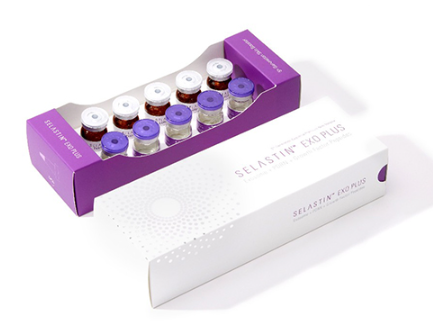
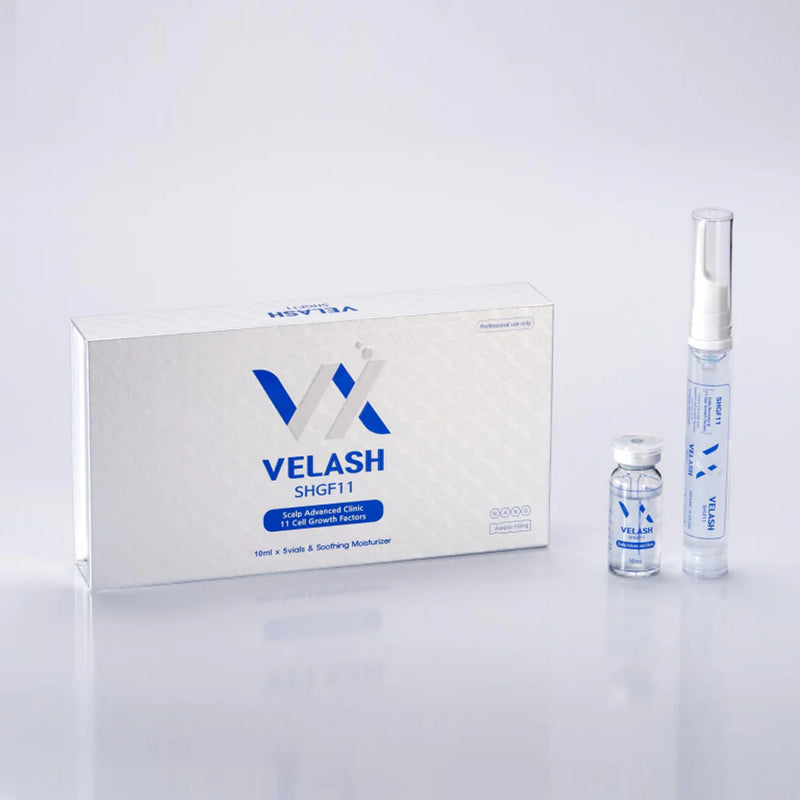
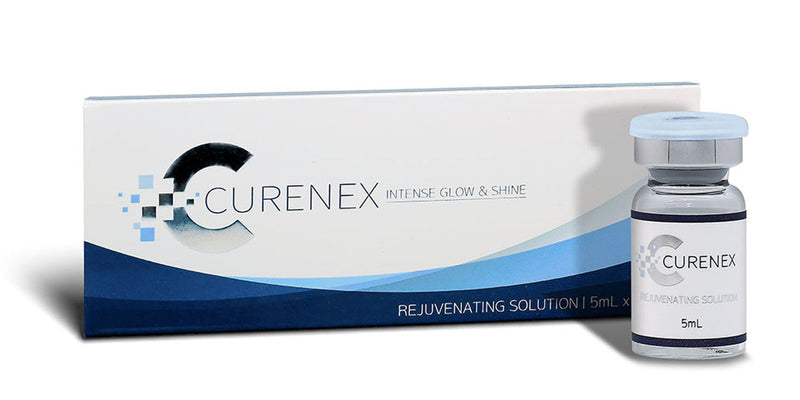
For anyone mapping the category, regenerative lines such as SELASTIN EXO PLUS, growth-factor boosters like VELASH SHGF11, and the CURENEX family sit within the broader skin recovery and regeneration range. KSTATION curates authentic regenerative-category Korean lines through official channels and keeps sourcing traceable, which is the variable that cannot be read off a vial. Which class suits a given case, and whether it is cleared for a given market, stays a clinical and regulatory question rather than a checkout one.
Frequently asked questions
Frequently asked
What is the difference between exosomes and growth factors?
An exosome is a membrane-bound vesicle that carries mixed cargo between cells, while a growth factor is a single defined signaling protein. The exosome is the container; a growth factor is one kind of message a container might hold.1
Is PDRN the same as exosomes?
No. PDRN is a polymer of DNA fragments derived from salmon or trout, while an exosome is a cell-derived membrane vesicle that carries mixed cargo. They are different kinds of object grouped under the same regenerative label, not the same ingredient, so a PDRN product and an exosome product are sourced and verified in different ways.1
Is PDRN the same as PN?
They belong to the same DNA-fragment family, usually salmon or trout derived. Polydeoxyribonucleotide (PDRN) and polynucleotide (PN) differ mainly in fragment chain length and how each is positioned, not in basic origin.2
Are these fillers?
No. None of the three is a hyaluronic acid filler and none is a neuromodulator. Exosome, growth factor, and PDRN are grouped in the regenerative category, which is about signaling and recovery rather than adding volume.
Which category is the strongest?
That is the wrong question for these classes. They are different kinds of object with different mechanisms, not points on one scale, so there is no neutral way to rank them as stronger or weaker. The useful comparison is what each one is and how it is sourced.
How do I verify what I am buying?
Match the question to the class: source cell line, characterization, and cold chain for an exosome; protein identity, concentration, and manufacturer for a growth factor; species, fragment-size spec, purity, and market status for PDRN or PN. Authentic, official-channel sourcing is what makes those answers checkable.
Disclaimer. This article is general educational information and is not medical advice or a recommendation for any individual. Ingredients are defined here, not endorsed, and the article describes how these material categories are understood, not what any specific product will do for a given patient. Regulatory status differs by country and changes over time, so confirm current status with the relevant authority.
Sources & references
- Regenerative Approaches to Enhance the Skin Microenvironment and Boost Aesthetic Efficacy: A Narrative Review (International Journal of Molecular Sciences; positions exosomes, growth factors, and related materials within the regenerative skin-microenvironment category). pmc.ncbi.nlm.nih.gov
- Synergistic Regenerative Strategies: Combining Polydeoxyribonucleotide with Biochemical and Physical Agents (International Journal of Molecular Sciences; defines PDRN as a DNA-fragment polymer and situates PN within the same family). pmc.ncbi.nlm.nih.gov