
Exosomes
Exosomes
Exosomes are membrane-bound vesicles that carry signaling cargo between cells, grouped in the regenerative category of K-derma.
The word 'regeneration' puts three different ingredients on one shelf, and the exosome is the one most often mistaken for a single active. It is not an active at all in the usual sense. It is a carrier, and reading it well means asking about the carrier rather than a molecule. This page collects what an exosome is, how it sits next to its neighbors, and everything KSTATION publishes about it.
What an exosome actually is
An exosome is a membrane-bound vesicle, on the order of tens to a couple hundred nanometres, released by cells and carrying a mixed cargo of proteins, lipids, and nucleic acids. Its defining feature is structural: it is a packaged container, and what it carries depends on the cell that made it. That is what separates it from a growth factor, which is a single defined protein, and from PDRN, which is a polymer of DNA fragments.
Because an exosome is defined by its source and structure rather than by one molecule, two exosome products from different cell lines are different starting materials, not variants of one ingredient. This is the single most useful thing to hold onto when reading a label.
How it is described to work
In a regenerative context, the exosome is studied as a vehicle for cell-to-cell signalling, a delivery and communication system rather than a lone active. A recent narrative review groups exosomes among the regenerative approaches aimed at the skin microenvironment rather than at volume. These are described roles, not promised outcomes, and this page describes them; it does not claim a result for any individual.
The regenerative shelf, side by side
| Class | What it is | Defined by |
|---|---|---|
| Exosome | Cell-derived vesicle with mixed cargo | Its source and structure |
| Growth factor | A single defined signalling protein | Its molecular identity |
| PDRN | A polymer of DNA fragments | Its chain length |
An exosome can, in principle, carry growth factors as part of its cargo, which is why the two are related in biology but not interchangeable as ingredients. For the full map, see our exosome vs growth factor vs PDRN regeneration map; the neighbouring hubs cover EGF and PDRN directly.
Forms and professional use
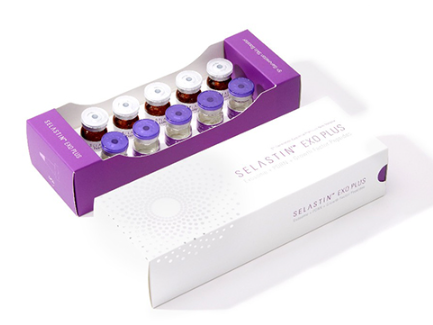
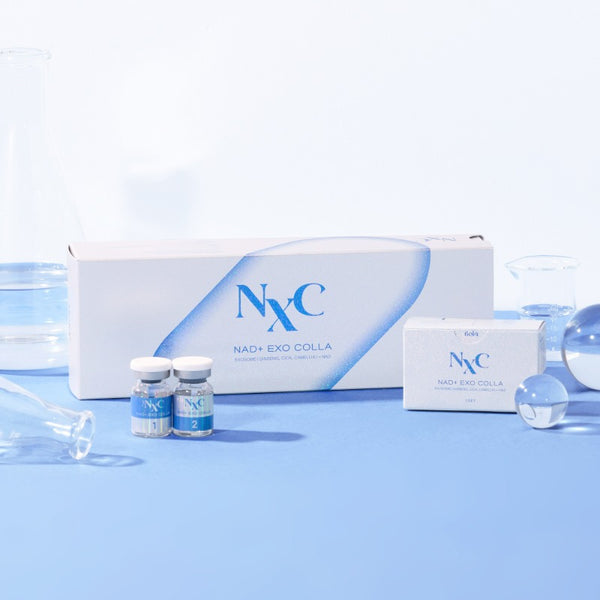
In the K-derma catalog, exosome products usually arrive as a lyophilized powder reconstituted before use, sometimes with a separate diluent, and are intended for professional use. The format exists because the vesicles are fragile, which is also why handling matters more here than for most ingredients. How to read the spec is covered in our exosome reading guide below, and the deeper single-ingredient view in exosomes in medical aesthetics (Part 13).
How KSTATION verifies exosome products
Because an exosome is a structure whose value depends on surviving transit intact, cold-chain handling and traceable provenance sit next to characterization in any serious assessment. We check manufacturer and sourcing details before a product is listed and stock officially sourced products only. The full method is set out in our Editorial & Sourcing Policy.
Common questions
Are exosomes the same as growth factors?
No. An exosome is a membrane-bound vesicle that carries mixed cargo, while a growth factor such as EGF is a single defined protein. One is a container, the other is one kind of message a container might hold.
Why does sourcing matter so much for exosomes?
Because the product is a fragile structure defined by its source. Poor handling or an untraceable origin can leave a preparation that no longer matches its own characterization, so provenance and cold chain are part of the product rather than extras.
Is an exosome a filler?
No. Exosomes sit in the regenerative category, which is about signalling and recovery rather than adding volume. None of the regenerative actives is a hyaluronic acid filler or a neuromodulator.
Sources & references
- Regenerative Approaches to Enhance the Skin Microenvironment and Boost Aesthetic Efficacy: A Narrative Review, IJMS/PMC. pmc.ncbi.nlm.nih.gov
- Extracellular Vesicles and Exosomes: characterization and handling, PMC. pmc.ncbi.nlm.nih.gov
- U.S. FDA, Is It a Cosmetic, a Drug, or Both? (Or Is It Soap?). fda.gov
This page is general educational information, not medical advice, and describes what exosomes are rather than what any product will do for an individual. Products referenced are for professional use. Regulatory status varies by country and changes over time.
Reading on Exosomes

Eight Exosome Products, Four Ways of Saying How Much
Put two exosome cartons side by side. One declares 300 billion particles. The other declares 14 billion particles per millilitre. The first...

Fifty-Eight and Zero: A Settled Category Beside a New One
Two searches, run the same afternoon against the same register. Botulinum toxin type A returns 58 licences, every one of them filed...
Reading an Exosome Injectable: Sourcing, Characterization, and What to Verify
Exosome products vary more than almost anything in the catalog, and sourcing is the whole question. A sourced guide to what an...

Reading an Exosome Product: Source, Characterization, and Cold Chain
Two exosome vials can share a label and nothing else. A reading guide to the source cell line, characterization, and handling that...

Exosomes vs Growth Factors vs PDRN: The Regeneration Map
Exosome, growth factor, and PDRN get grouped as regeneration, but they are different categories. A neutral map of what each is, its...

Part 13: The Future of Skin Regeneration – Understanding Exosomes in Medical Aesthetics
Part 13 of this series turns to the ingredient that has reframed the medical aesthetics conversation around regeneration: the exosome. Where hyaluronic...
Exosomes in the catalog


Officially sourced. Curated for North America.