Exosome products vary more than almost anything else in the injectable catalog, which is exactly why sourcing is the whole question rather than a side one. An exosome is not a single defined molecule you can look up and match; it is a biological particle whose identity depends entirely on what cell it came from and how it was made and characterized. Two products both labeled exosome can be profoundly different things, and the label alone does not tell you which you are holding. This is a guide to reading an exosome injectable: what the word actually names, why provenance is central, and what a genuine product should be able to show.
What an exosome actually is
The first thing to establish is that exosome is a specific term inside a broader family, and the science community has become careful about it for good reason. Exosomes belong to the category of extracellular vesicles (EVs), tiny membrane-bound particles that cells release, and the current consensus guidance discourages calling something an exosome unless its biogenesis can actually be demonstrated, preferring the broader term extracellular vesicle when that proof is absent.1 That is a strong signal about how loosely the word is used: even in the literature, exosome is a claim that has to be earned.
Size is part of the definition and part of why these particles are hard to pin down. Small extracellular vesicles are generally described as under about 200 nanometers, and exosomes have historically been characterized in roughly the 40 to 160 nanometer range, averaging around 100 nanometers.1 These are nanoscale particles, far too small to assess by eye, which means everything about confirming what they are depends on laboratory characterization rather than inspection. You cannot look at an exosome product and see the exosomes, and that basic fact drives the entire verification challenge.
The most important structural point is that an exosome is defined by its cellular origin rather than by a fixed formula. Because these vesicles are released by cells and carry material from them, the source cell is not a detail but the identity: a vesicle from one cell type is a different product from a vesicle from another. This is the opposite of a small-molecule ingredient with a single chemical structure, and it is why an exosome label without a clear source is missing the most important piece of information about what the product actually is.
This article stays strictly on identity and provenance and makes no claim about what exosome products do. The clinical evidence in aesthetics is still developing, and that is precisely the environment in which knowing what you actually have matters most. Whether or not any effect is established, a buyer is entitled to know the source, the characterization, and the provenance of the particles in the vial, and those are the questions a verification reading can answer.
Why sourcing is the whole question with exosomes
If an exosome is defined by its source cell, then sourcing is not one factor among many but the central axis of the entire category. The source determines what the vesicle is, so a product's identity begins with a clear, accountable answer to what cell type these vesicles were derived from and under what conditions. A product that is vague about its source is vague about its own identity, and no amount of impressive packaging compensates for not knowing what the particles came from.
Provenance extends beyond the source cell to the whole production and handling chain, because a biological particle is only as good as the process that produced and preserved it. How the vesicles were isolated, how the product was manufactured, and how it was handled from production to delivery all bear on whether what is in the vial matches what the label claims. This is a longer and more fragile chain than a stable chemical has, which raises the stakes on every link in it and makes an accountable, describable supply chain essential rather than optional.
The consequence for a buyer is that the sourcing question has to be asked first and answered specifically, because it gates everything else. A characterization report, a format, a price, all of it presupposes that the product genuinely is vesicles from an accountable source, and if that foundation is missing the rest is built on sand. We made the same argument for a different fragile material in how to verify an authentic Korean glutathione injectable, and it applies with even more force here: for exosomes, provenance is not a step in verification, it is the ground verification stands on.
Characterization: how a genuine exosome product is defined
Because you cannot see or judge exosomes directly, a genuine product is defined by its characterization, the laboratory measurements that describe what the particles actually are. The consensus guidance in the field is explicit that characterization should not rely on a single assay, and should report particle size and counts, typically measured by nanoparticle tracking analysis, alongside documentation of vesicle morphology.1 Characterization, in other words, is a multi-part evidence package, not a single headline number, and a serious product treats it that way.
Particle count and size distribution are the quantitative backbone of that package. A meaningful exosome product can state how many particles it contains and what their size distribution is, because those are the measurable properties that describe the material, and a product that advertises a big particle-count number without the supporting size and morphology context is offering a headline rather than a characterization. As with molecular weight on a booster, the useful question is whether the figure sits inside a real, multi-method characterization, not whether the number is large.
Marker profiling is the qualitative other half, and it is where a product demonstrates that its particles really are vesicles of the claimed kind. The guidance recommends a protein panel including tetraspanins such as CD9, CD63, and CD81 together with other vesicle-associated proteins like TSG101 and ALIX, used to confirm the identity of the particles rather than assume it.1 A buyer does not need to run these assays, but knowing that they are the expected basis of a genuine characterization lets you ask whether a product's identity was demonstrated by this kind of evidence or merely asserted on a label.
The practical takeaway is that characterization is what turns an exosome claim into an exosome fact, and its presence or absence is itself a verification signal. A product backed by real, multi-method characterization, particle count and size by tracking analysis, morphology, and marker confirmation, is standing on evidence, while a product that offers only the word exosome and a number is asking to be taken on faith. In a category this variable, evidence of characterization is one of the strongest things a genuine product can show.
The freeze-dried format, and why it recurs here
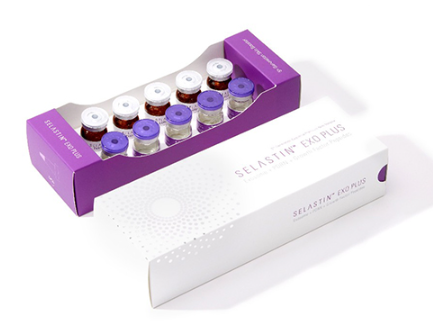
Many exosome injectables share a format feature with glutathione: they are commonly presented as a freeze-dried (lyophilized) powder with a separate solvent for reconstitution, and the reason is again stability. A biological particle preparation is fragile, and drying it for storage with reconstitution shortly before use is a way of preserving the material until the point of use. As with glutathione, the format is therefore not incidental but a consequence of what the material is, which makes it another free, no-equipment reading a buyer can perform.
This means format literacy carries over as an authenticity signal. An exosome product presented as a powder-plus-solvent set is behaving consistently with the fragility of the material, while a product making strong stability claims that seem at odds with the delicacy of a vesicle preparation is worth a harder look. The format should make sense for a fragile biological material, and a format that seems too robust for what the product claims to be is a discrepancy to resolve rather than a convenience to enjoy.
The handling story that comes with the format is part of the same reading, because a lyophilized biological product depends on being stored and reconstituted correctly. A genuine exosome product arrives with a coherent account of cold-chain handling, storage, and reconstitution consistent with a fragile preparation, and a product whose handling story is missing or incoherent is compromised regardless of how it started. We treated the label and date side of this in reading an injectable's label, and for exosomes the handling chain deserves the same scrutiny as the characterization, because a well-characterized product that was mishandled is no longer what its characterization said.
What to read on an exosome product
Bringing the axes together gives a compact reading you can apply to any exosome offering, sorted by what it tells you and where it comes from. The table below lays out the checkpoints so an exosome product can be assessed on evidence rather than on the strength of the word exosome alone. As with all verification, no single row is decisive; the confidence comes from several of them agreeing.
| Checkpoint | What a genuine product shows | Why it matters |
|---|---|---|
| Source cell | A clear, accountable statement of the derivation | The source is the product's identity |
| Particle count and size | Counts and size distribution by tracking analysis | The quantitative description of the material |
| Marker profile | Vesicle markers such as CD9, CD63, CD81, TSG101, ALIX | Confirms identity rather than asserting it |
| Format | Freeze-dried powder with separate solvent, consistent with fragility | Format matching chemistry is an authenticity signal |
| Handling chain | Coherent cold-chain, storage, and reconstitution story | A fragile particle is only as good as its handling |
| Provenance | An accountable, describable supply chain | The chain everything else depends on |
Regulatory ambiguity, and why it raises the sourcing bar
The regulatory picture for exosome aesthetic products is genuinely unsettled, and that is a fact a careful buyer should factor into how hard they verify rather than ignore. Reviews of extracellular vesicles in skin applications note that the clinical evidence is still developing and that the field does not yet have the settled, uniform footing of a mature category.2 A developing evidence base and a variable regulatory landscape are not reasons to dismiss the category, but they are reasons the burden of verification falls more heavily on the buyer.
The logic is straightforward: where regulation is uniform and mature, some verification work is effectively done for you by the system, and where it is ambiguous, more of that work reverts to you. An exosome product's regulatory standing should therefore be read specifically and carefully, for exactly what it covers in which market, rather than assumed from a general claim of approval. This is the same discipline that applies to any product with an unsettled status, and it applies here with particular force because the category is both variable and immature.
Practically, ambiguity raises the value of everything else in this guide. When the regulatory floor is uncertain, the source statement, the characterization evidence, the format, the handling chain, and the accountability of the vendor become the load-bearing signals, because they are what remains verifiable when a simple approval stamp is not available to lean on. A buyer who leans harder on provenance and characterization in an ambiguous category is responding correctly to the environment rather than overcomplicating it.
Red flags specific to exosome products
Exosomes have their own cluster of warning signs, and they follow directly from the science. The first is the missing or vague source: because the source cell is the product's identity, an exosome product that will not say clearly what its vesicles were derived from is missing the single most important piece of information, and that absence is a red flag on its own regardless of what else the label promises.
The second is characterization by assertion rather than evidence, meaning a product that uses the word exosome and perhaps a large particle number but offers no real multi-method characterization behind it. Because the consensus is that identity should be demonstrated by size, count, morphology, and marker evidence rather than assumed, a product that skips all of that and simply asserts it is asking for trust the science says should be earned.1 A confident label is not characterization, and treating it as if it were is exactly the mistake the category invites.
The third is overreaching claims paired with format or handling that do not fit a fragile biological particle. Strong, specific promises in a category whose evidence is still developing are a marketing red flag, and a stability or handling story that seems too robust for a delicate vesicle preparation is a scientific one, and the two often travel together. We described the general stakes of getting authenticity wrong in how to verify an authentic Korean skin booster, and for exosomes the specific version is that claims outrunning both evidence and chemistry are a signal to slow down.
How to read an exosome injectable, step by step
Put together, reading an exosome injectable is a provenance-first sequence that anyone can run, because it depends on asking the right questions rather than performing any test yourself. The order reflects what gates what: identity and source come first, then the evidence that supports the identity, then the format and handling, then the channel that carries all of it. A failure early in the sequence makes the later steps moot, so there is no need to proceed past one.
- Ask the source first: what cell type were these vesicles derived from, stated clearly and accountably rather than left vague.
- Look for real characterization: particle count and size distribution by tracking analysis, morphology, and vesicle marker confirmation, not just the word exosome and a number.
- Check the format: a freeze-dried powder with a separate solvent, consistent with the fragility of a biological particle preparation.
- Read the handling chain: a coherent cold-chain, storage, and reconstitution story appropriate to a delicate material.
- Test the channel: can the vendor describe source, characterization, and provenance specifically, and does the regulatory standing read accurately for what it actually covers.
The reason this order works is that exosomes fail most often at the top of it. A missing source or absent characterization ends the inquiry before format or price ever matter, which is efficient as well as rigorous. A product that passes all five is not proven by any single step but is supported by a converging picture of identity, evidence, chemistry, and accountability, which is the most a verification reading can and should deliver in a category this variable.
So the close is the discipline the whole category demands. Put source and characterization first, treat the word exosome as a claim to be substantiated rather than a fact to be accepted, and treat an unaccountable channel as disqualifying no matter how polished the product looks. Exosome products vary enormously precisely because the material is defined by provenance and demonstrated by evidence, and reading one well means insisting on both. The label says exosome. The verification decides whether that word was earned.
Frequently asked questions
Frequently asked
What are exosomes, and why does sourcing matter so much?
Exosomes are a type of extracellular vesicle, tiny cell-released particles historically characterized in roughly the 40 to 160 nanometer range. Crucially, an exosome is defined by the cell it came from rather than by a fixed formula, so the source cell is the product's identity. That is why sourcing is the central question: a product vague about its source is vague about what it actually is, and no packaging compensates for not knowing the origin of the particles.
What should an exosome product's characterization show?
Consensus guidance says characterization should not rely on a single assay. A genuine product reports particle size and count, typically by nanoparticle tracking analysis, documents vesicle morphology, and confirms identity with a marker panel including tetraspanins such as CD9, CD63, and CD81 along with proteins like TSG101 and ALIX. You do not need to run these tests, but knowing they are the expected basis lets you tell demonstrated identity from an asserted one.
Why do exosome products often come freeze-dried?
Because a biological particle preparation is fragile, so many exosome products are presented as a freeze-dried powder with a separate solvent, reconstituted shortly before use, to preserve the material. This makes the format an authenticity signal: a powder-plus-solvent presentation is consistent with the fragility, while strong stability claims that seem at odds with a delicate vesicle preparation are worth a harder look. The handling and cold-chain story matters for the same reason.
Are exosome skincare products regulated?
The regulatory picture is unsettled, and the clinical evidence in aesthetics is still developing. That does not dismiss the category, but it does shift more of the verification burden onto the buyer, because a uniform approval stamp is not available to lean on. Read any regulatory standing specifically for what it covers in which market, and lean harder on source, characterization, format, handling, and vendor accountability, which are the signals that remain verifiable in an ambiguous landscape.
Disclaimer. This article is general educational information about the identity, characterization, and provenance of exosome products, current as of its publication date, and is not medical advice or a treatment recommendation. It makes no claim that exosome products treat, rejuvenate, regenerate, or otherwise affect skin, and no efficacy claim about any product. Exosome aesthetic products are professional-use products in a developing regulatory landscape; suitability and permission are decisions for a qualified professional and the relevant authorities.
Sources & references
- "Exosome-Based Therapeutics in Dermatology and Beyond: A Narrative Review" (extracellular vesicle nomenclature and size ranges; characterization by particle count and size via nanoparticle tracking analysis, morphology, and marker panels including CD9, CD63, CD81, TSG101, and ALIX, per MISEV consensus). PMC. ncbi.nlm.nih.gov
- "Effectiveness of Extracellular Vesicle Application in Skin Aging Treatment and Regeneration: Do We Have Enough Evidence from Clinical Trials?" (clinical evidence for EVs in skin applications is still developing). PMC. ncbi.nlm.nih.gov
From a sourcing standpoint, this is why KSTATION treats an exosome product as a provenance-and-characterization question before anything else, because in a category defined by source and demonstrated by evidence, that is where authenticity actually lives. The exosome and vesicle-based products this reading applies to sit within the special functionals range, sourced through an accountable channel that can speak to derivation, characterization, and handling rather than rely on the word exosome alone. What KSTATION does not do is make any efficacy claim for exosome products or decide their appropriateness for you: whether a given product is suitable or permitted remains a matter for a qualified professional and your local authority.