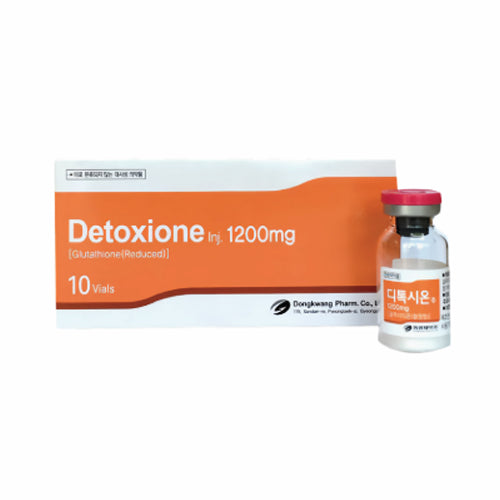
The printing on an injectable box looks like packaging, but it is closer to a specification sheet. Every field on it, the volume in milliliters, the amount in milligrams, a molecular weight in kilodaltons, a potency in units, a manufacture date, an expiry, and a lot number, is a specific piece of information that a genuine product states because it has to. Learning to read those fields does two things at once: it tells you what you are actually holding, and it turns the label from something you trust into something you can check. This is a plain-language walk through what each field means.
The box is a specification sheet, not decoration
The most useful shift in reading a label is to stop seeing it as branding with some numbers on it and start seeing it as a set of declared facts. A legitimate injectable carries this information because regulators, distributors, and clinicians all need it to be true and traceable, which means each field is a claim the manufacturer is standing behind. The reader's job is to understand what each claim says, so that a missing, vague, or inconsistent field becomes visible as the warning it is.
This framing matters because counterfeits and grey-market products very often fail at exactly this level. A fake can copy a logo and a color scheme convincingly, but the boring, structured data, matching lot numbers across box and vial, a coherent manufacture-and-expiry pair, a sensibly stated concentration, is harder to fake consistently because it has to be internally consistent to survive scrutiny. A reader who knows what the fields mean is reading the part of the label that is hardest to counterfeit well.
None of this requires clinical training, which is the encouraging part. Most of the fields describe simple, checkable things: how much liquid is in the vial, how much of the active is in it, when it was made and when it expires, and a code that ties the specific unit back to a production batch. The vocabulary is unfamiliar rather than difficult, and once the words are decoded the label reads like any other spec sheet. The sections that follow take the fields one at a time.
Volume and concentration: mL, mg, and what "per vial" really means
The first pair of numbers to separate is volume and amount, because they answer different questions and are easy to confuse. Volume, stated in milliliters (mL) or cubic centimeters (cc, which is the same measure), tells you how much liquid the vial or syringe contains. Amount, stated in milligrams (mg), tells you how much of the active material is present. A product described as, for example, a certain mg in a certain mL is telling you both the quantity of active and the volume it is dissolved or suspended in, and neither number alone gives you the full picture.
Concentration is the relationship between those two, and it is where careless reading causes real misunderstanding. Two products can list the same milligram figure while differing in volume, which means their concentration differs, or list the same volume while differing in milligrams, which again changes concentration. When a label pairs an amount with a volume, it is defining a concentration, and comparing products on amount alone, ignoring the volume, compares them on an incomplete basis. The habit worth building is always reading the two numbers together as a ratio rather than fixating on the larger figure.
The phrase per vial adds a third layer that trips people up in multi-unit boxes. A carton might state a per-vial volume and amount and then a vial count, so the total in the box is the per-vial figure multiplied by the number of vials. Reading a total figure as if it were per-vial, or the reverse, produces a large error, so it is worth checking whether a number describes one vial or the whole box. Genuine packaging generally makes this explicit, and packaging that leaves it ambiguous is itself a small signal worth noting.
From a sourcing standpoint, the reason to be precise here is that concentration and count are exactly the specifications a serious product states clearly and a careless or fake one blurs. A label that gives you a clean, unambiguous statement of volume, amount, concentration, and count is behaving like a real specification sheet. One that gives you a big impressive number without the context to interpret it is doing marketing, and the difference is visible once you are reading the fields as a ratio rather than a headline.
Molecular weight (kDa): what the number describes, and what it does not
Molecular weight, when it appears, is stated in kilodaltons (kDa), and it is one of the most misread figures on any label because buyers treat it as a quality score. A dalton is a unit of molecular mass, and a kilodalton is a thousand of them, so kDa is simply a way of describing how large the molecules of a material are. For a material like polydeoxyribonucleotide (PDRN), the literature describes it as a mixture of DNA fragments across a broad molecular-weight range, which is exactly why a molecular-weight figure is a description of the material rather than a grade of it.1
The trap is the intuition that a bigger kDa number is a better product, and that intuition does not hold. Molecular weight is a property that different products specify differently on purpose, because the right profile is a matter of a product's design rather than a race to a larger figure. A material with a controlled, specified molecular-weight profile is giving you information and consistency; a material that simply advertises a large number without describing how controlled that profile is may be offering a headline. The meaningful question is whether the profile is characterized and controlled, not whether the number is high.
This is why kDa belongs in the reading-the-label habit as a specification to understand rather than a leaderboard to win. When a booster states a molecular weight, the useful reading is to note that the product is claiming a particular material profile, and then to ask whether the rest of the label and the seller support that claim with the kind of characterization that makes it meaningful. We went deeper into how molecular weight and purity work together in reading a PDRN skin booster, and the principle generalizes: a number is only as informative as the control and context stated around it.
Units (IU) on a botulinum toxin: potency, not volume
Botulinum toxin labels introduce a different kind of number, the unit, and it is unlike every other figure on this page because it measures biological potency rather than mass or volume. A unit of a botulinum toxin is defined by the specific preparation and the assay method used to measure it, which has a consequence that regulators state explicitly: units are not interchangeable between different botulinum toxin products. The FDA-approved labeling for these products carries the statement that potency units are specific to the preparation and assay and cannot be compared to or converted into the units of any other botulinum toxin product.2
That non-interchangeability is the single most important thing to understand about the unit figure, because it means a unit count on one product is not a common currency you can carry to another. Differences in manufacturing, formulation, and the assay used to define units mean the products behave differently, which is why each has its own nonproprietary name and its own unit definition.3 Reading a toxin label therefore means reading the unit figure strictly within that one product's own system, never as a number to be compared across brands.
Everything about dosing and administration for these products is a clinical matter for a licensed practitioner, and nothing here is dosing guidance. What the label reader can take away is narrower and still useful: the unit is a potency measure tied to that specific product, the product name and its unit system belong together, and any source treating units as freely convertible between brands is misrepresenting how these products work. Botulinum toxins are professional-use products, and the unit figure is one more reason their identity has to be exact rather than approximate.
Every field, and what it is telling you
Pulling the fields together into one view makes the label legible as a whole, because each one answers a specific question and, taken together, they describe both what the product is and whether it is internally consistent. The table below lays out the common fields, what each means, and what a careful reader checks, so a label can be read field by field rather than glanced at as a picture.
| Field | What it means | What to check |
|---|---|---|
| Volume (mL / cc) | How much liquid is in the vial or syringe | Whether it is per vial or per box |
| Amount (mg) | How much active material is present | Read together with volume as a concentration |
| Molecular weight (kDa) | The size profile of the material's molecules | Whether the profile is characterized, not just large |
| Units (IU) | Biological potency, specific to that product | Never compared across different products |
| Manufacture date | When the batch was produced | Coherent with the expiry date |
| Expiry date | The end of the stated shelf life | In date, and sensibly spaced from manufacture |
| Lot / batch number | A code tying the unit to a production batch | Matches between box and vial |
Expiry, manufacture date, and why both matter
The date fields are where a label most often reveals a problem, because a genuine product carries a coherent pair and a suspect one frequently does not. The manufacture date states when the batch was made, and the expiry states the end of its stated shelf life, and the two together imply a shelf-life window that should look sensible for the product type. A reader who checks both, rather than the expiry alone, is looking at the internal consistency of the label, which is exactly the kind of structured fact that is hard to fake convincingly.
An expiry date is not a soft suggestion, and this is worth stating plainly for a category where people are sometimes tempted to treat it loosely. The expiry marks the end of the period for which the manufacturer stands behind the product as stated, and a product past that date is outside the window its own maker vouches for. For sterile injectable materials, that boundary is not a place to improvise, and an in-date product is a baseline expectation rather than a bonus.
The manufacture-to-expiry relationship also catches a specific kind of anomaly worth watching for. A product arriving with an implausibly short remaining shelf life, or with dates that do not sit sensibly relative to each other, is telling you something about how it was stored, handled, or produced before it reached you. Genuine, well-handled stock generally arrives with a coherent and reasonable date window, and dates that feel off are a reason to slow down and ask questions rather than to assume the best.
Lot numbers, traceability, and why they must match
The lot number, sometimes called a batch number, is the field that connects an individual box to the specific production run it came from, and it is the backbone of traceability. If a manufacturer or regulator ever needs to identify or recall a particular batch, the lot number is how that batch is found, which means it is not decorative but functional. A genuine product carries a lot number precisely because the whole system of accountability depends on being able to trace a unit back to where and when it was made.
The single most useful check a non-specialist can do with a lot number is confirm that it matches between the outer box and the vial or syringe inside. On genuine product the codes correspond, because they describe the same batch, and a mismatch between the box and the primary container is a serious inconsistency that legitimate packaging does not produce. This is one of those structured-data checks that is easy to perform and hard for a counterfeit to pass, which is exactly why it is worth doing.
Traceability is also where the label connects to the broader verification habit, because the lot number is only meaningful inside an accountable supply chain. A code that ties back to a real manufacturer and a real batch is an asset; a code on a product with no accountable origin ties back to nothing. We laid out the product-side and vendor-side checks in how to verify an authentic Korean skin booster and, for toxins specifically, in how to verify an authentic Korean botulinum toxin, and the lot number is a thread that runs through both.
How to read a label like a verification step
Put together, reading a label is less about memorizing definitions and more about running a short, repeatable pass over the fields. Read volume and amount together as a concentration rather than fixating on one number. Treat molecular weight as a described profile, not a score. Read a toxin's units strictly within that one product. Check that the manufacture and expiry dates are coherent and in date. And confirm the lot number matches between box and vial. Each step is simple, and together they turn a glance into an inspection.
The value of doing this is that it moves the label from something you trust to something you have checked, which is a meaningful difference when authenticity is the whole game. A genuine product rewards this reading by being internally consistent across every field, and a problematic one tends to reveal itself in exactly these structured details, the mismatched lot, the incoherent dates, the impressive number with no context. The fields that are boring to read are the fields that are hard to fake, which is precisely why they are worth reading.
So the practical close is the same discipline that runs through all careful sourcing. Decode the fields, read them together rather than in isolation, and treat internal consistency as the thing you are verifying. A label was always a set of declared facts rather than a picture, and reading it that way means the box stops being packaging you accept and becomes a specification you can hold the product to. The information was there the whole time. Reading it is the skill.
Frequently asked questions
Frequently asked
What do the numbers on an injectable box actually mean?
They are declared specifications. Volume in mL or cc is how much liquid is present, milligrams is how much active material, and the two together define concentration. A molecular weight in kilodaltons describes the size profile of the material. On a toxin, units describe potency. Dates state when it was made and when it expires, and the lot number ties the unit to a production batch. Read together, these fields describe what the product is and whether the label is internally consistent.
What does kDa mean on a skin booster?
kDa stands for kilodalton, a unit of molecular mass, so it describes how large the molecules of a material are. For materials like PDRN, which the literature describes as a mixture of fragments across a broad molecular-weight range, the figure is a description of the material rather than a quality grade. A larger number is not automatically better. What matters is whether the molecular-weight profile is characterized and controlled, not whether it is high.
Can I compare unit counts between two botulinum toxins?
No. Units are defined by each product's own preparation and assay method, and regulators state that they are not interchangeable between botulinum toxin products. A unit on one product cannot be compared to or converted into a unit on another. Read a toxin's unit figure strictly within that single product's system, and treat any source that converts units across brands as misrepresenting how these products work. Dosing itself is a clinical decision for a licensed practitioner.
Why does the lot number need to match between the box and the vial?
The lot number identifies the specific production batch, and it is the basis of traceability and recalls. On genuine product the code corresponds between the outer box and the primary container because they describe the same batch. A mismatch is a serious inconsistency that legitimate packaging does not produce, which makes this one of the simplest and most revealing checks a non-specialist can do.
Is an expiry date on an injectable a hard limit?
Treat it as one. The expiry marks the end of the period for which the manufacturer stands behind the product as stated, and for sterile injectable materials that boundary is not a place to improvise. Also check the manufacture date alongside it: a coherent, sensibly spaced date pair is a sign of genuine, well-handled stock, and dates that feel off are a reason to ask questions before anything else.
Disclaimer. This article is general educational information, current as of its publication date, and is not medical, dosing, or treatment advice. It explains what the fields on an injectable label mean and makes no efficacy or outcome claim about any product. Injectable aesthetic products, including botulinum toxins, are professional-use products; administration and suitability are decisions for a qualified practitioner, and whether a product is registered or permitted for use is decided by the relevant authorities.
Sources & references
- Squadrito F. et al., "Pharmacological Activity and Clinical Use of PDRN" (PDRN as a mixture of DNA fragments described across a broad molecular-weight range). PMC. ncbi.nlm.nih.gov
- U.S. Food and Drug Administration, approved product labeling for a botulinum toxin (potency units are specific to the preparation and assay method and are not interchangeable with other botulinum toxin products). accessdata.fda.gov. accessdata.fda.gov
- "Botulinum toxin type A products are not interchangeable: a review of the evidence" (differences in manufacturing, formulation, and assay mean units and profiles are not interchangeable; each product carries its own nonproprietary name). Biologics: Targets and Therapy. dovepress.com
From a sourcing standpoint, this is why KSTATION treats a label as something to be read and checked rather than taken on faith. A genuine product states its volume, amount, molecular-weight profile where relevant, potency where relevant, coherent dates, and a matching lot number, and an accountable seller should be able to speak to those fields rather than deflect from them. The boosters and injectables this reading applies to sit within the skin boosters and ampoules range and the wider catalog. What KSTATION does not do is make dosing or suitability decisions for you: reading the label is a check anyone can learn, but administration and appropriateness remain matters for a qualified professional and your local authority.