Almost every injectable in the aesthetic catalog is sold, at some point, with the word firming attached to it. The problem is that firming is not a single thing, and the products that claim it are not doing the same job underneath. Some aim to build new collagen over months. Some deposit water and matrix materials that improve how skin behaves in the short term. And one of the most common terms in the category, mesotherapy, is not an active at all but a way of delivering one. This is a map of what those different mechanisms actually target, so a firming claim stops being a mood and becomes a specification you can read.
What "tightening" and "firming" actually describe
The first source of confusion is linguistic, because tightening and firming are consumer words layered on top of several different biological changes. Skin that reads as firm is doing a few things at once: its dermal matrix, principally collagen and elastin, is providing structural support, and its hydration and surface quality are giving it bounce and light. When people say skin has lost firmness, they are usually describing some combination of reduced structural support and reduced surface quality, and those two are not the same target even though they produce a similar complaint.
This distinction matters because different injectable categories aim at different parts of it. A product that sets out to rebuild structural support is working on the collagen side of the equation, a slow and gradual process by nature. A product that improves hydration and matrix quality is working on a different axis, one that changes how skin looks and feels without necessarily rebuilding its scaffold. Both can be described as improving firmness in marketing copy, and both can be legitimate, but they are answering different questions, and a buyer who conflates them is comparing things that were never the same.
Biostimulators: collagen as the target
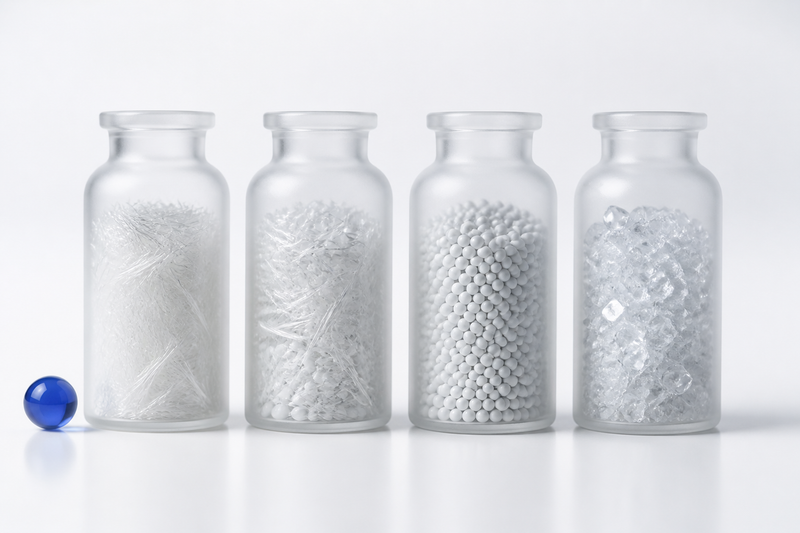
Biostimulators are the category whose entire premise is the structural axis, because their aim is not to add volume directly but to provoke the skin into producing new collagen. The materials in this group, most commonly poly-L-lactic acid (PLLA), its variant poly-D,L-lactic acid (PDLLA), polycaprolactone (PCL), and calcium hydroxylapatite (CaHA), share a working logic: they are placed in the dermis or subdermis, and the body's response to them over time is what generates the collagen, rather than the material itself standing in for lost tissue. This is why they are described as collagen stimulators rather than fillers.
The mechanism, taking PLLA as the best-studied example, runs through a controlled biological response. The literature describes PLLA stimulating collagen production through a foreign-body response in which the gradual degradation of the material and the surrounding cellular activity, involving fibroblasts and macrophages, drives new collagen synthesis over a period of months.1 Animal-model work on PLLA fillers similarly reports a significant inflammatory response accompanied by collagen regeneration following injection, supporting the idea that a controlled inflammatory process is central to how these materials work.2 The key word throughout is gradual: a biostimulator is not an on-switch, it is a prompt.
From a sourcing standpoint, the biostimulator label is also where material specifics matter most, because PLLA, PDLLA, PCL, and CaHA are genuinely different materials with different particle characteristics and handling requirements. We have laid out those material differences in the biostimulator map by material, and the short version is that the specific polymer, its particle profile, and its reconstitution handling are all part of what a serious biostimulator product is, not incidental details. A firming claim on a biostimulator is a claim about a collagen-stimulating mechanism, and the material behind it is the thing to read.
Skin boosters: hydration, and the quality that reads as firmness
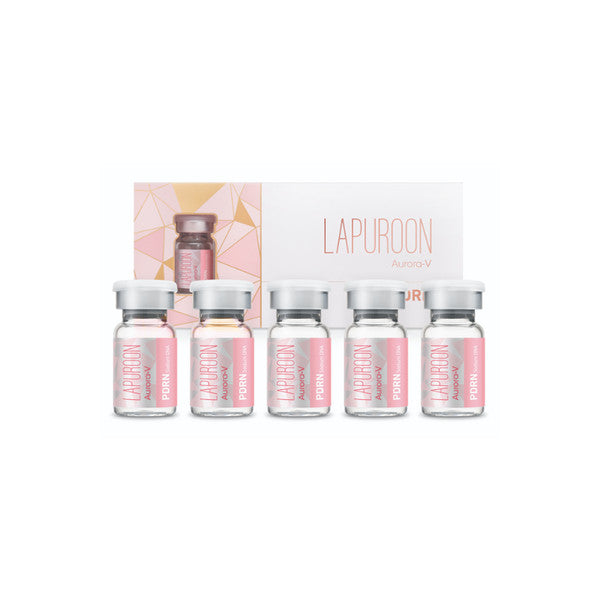
Skin boosters occupy a different axis entirely, because their premise is skin quality and hydration rather than collagen scaffolding. A booster is generally a formulation of hydrating and matrix-supporting materials, often hyaluronic acid (HA) or regenerative actives such as polydeoxyribonucleotide (PDRN), delivered into the skin to improve how it holds water and behaves, rather than to provoke a long collagen-building response or to add contouring volume. The result people describe from this category is often bounce, glow, and a smoother surface, which the marketing vocabulary frequently files under firmness even though the mechanism is not structural in the biostimulator sense.
The reason a hydration mechanism can read as firmness is worth spelling out, because it is genuine rather than a trick. Well-hydrated dermis with a supported matrix has more turgor and reflects light differently than dry, depleted skin, and that change in surface quality can make skin feel and look firmer to the person experiencing it. This is a real effect on skin quality, but it is a different effect from rebuilding the collagen scaffold, and honest reading keeps the two separate. A booster improving hydration is not the same event as a biostimulator prompting new collagen, even when both are described with the same adjective.
The regenerative actives in some boosters add another layer to this picture without collapsing it into the biostimulator category. PDRN, for example, is a polymer of DNA fragments, commonly salmon-derived, described in the literature as sitting in the regenerative category and associated with tissue repair and skin quality rather than volumizing.3 That places PDRN boosters in a recovery-and-quality frame, which overlaps with the general idea of healthier-looking skin but is still distinct from the specific, months-long collagen-stimulation mechanism that defines a PLLA-type biostimulator.
We have written the active-by-active breakdown of this category in the skin booster family by active, and the throughline is that a booster is defined by what it delivers and the skin-quality axis it works on. When a booster is marketed for firmness, the accurate way to read the claim is as a statement about hydration and skin quality, which is a legitimate axis, rather than as a claim to be doing what a collagen biostimulator does.
Mesotherapy: a technique, not an active
Mesotherapy is the term that breaks the pattern, because it is not a category of active at all but a method of delivery. Mesotherapy refers to injecting small quantities of a substance into the superficial layers of the skin across an area, and the substance can be any of a range of actives, including hydrating cocktails, vitamins, or other materials. Calling something a mesotherapy product describes how it is placed, not what mechanism it carries, which is exactly why it cannot sit on the same axis as biostimulators or boosters in a mechanism map.
Reading mesotherapy correctly means separating the two layers every time: first the technique, which is superficial multi-point injection, and then the active, which is whatever formulation is being delivered and which carries the actual mechanism. We have compared the technique against a different delivery method in mesotherapy versus microneedling, and the same principle applies here. If you want to know whether a mesotherapy offering firms skin in the structural sense or the hydration sense, you have to look past the technique to the active it delivers, because the technique alone does not tell you.
The three mechanisms side by side
Laying the three approaches next to each other makes the mechanism distinctions concrete, and it shows why a single firming claim can point at very different things. The table below compares them not on results, which is a clinical matter outside the scope of this map, but on what each one targets, how its mechanism is characterized, and what a buyer is actually looking at when they read the label.
| Approach | What it is | Axis it targets | Character of the mechanism |
|---|---|---|---|
| Biostimulator | A material (PLLA, PDLLA, PCL, CaHA) that prompts the body | Structural: new collagen synthesis | Gradual and cumulative, over months |
| Skin booster | A delivered formulation (HA, PDRN, and others) | Skin quality: hydration and matrix support | Deposits materials that support the dermis directly |
| Mesotherapy | A delivery technique, not an active | Depends entirely on the active delivered | Carries whatever mechanism the formulation has |
| How to read the claim | Identify which of the above it actually is | Match the claim to the axis it can plausibly affect | Verify the material behind the marketing word |
Why "more collagen" and "more water" are different goals
The deepest reason to keep these mechanisms separate is that they answer different goals, and a buyer who is clear about their goal can read the category far more accurately. Wanting the skin to rebuild its own structural support is a collagen goal, which points toward the biostimulator mechanism and its gradual timeline. Wanting the skin to hold water better and look and feel better in quality is a hydration goal, which points toward the booster axis. These are not competing answers to one question; they are answers to two different questions that happen to share a marketing vocabulary.
How to read a firming claim like a sourcing question
Put together, the method for reading a firming claim is to convert the adjective back into a specification in three steps. First, identify what the product actually is: a biostimulating material, a delivered booster formulation, or a mesotherapy technique carrying some active. Second, match the firming claim to the axis that product can plausibly affect, structural collagen or skin-quality hydration, and notice when a claim reaches across axes it does not mechanistically support. Third, verify the material itself, because a mechanism only means something if the product genuinely contains what it says it does.
Frequently asked questions
Frequently asked
What actually tightens skin?
It depends on which aspect of firmness you mean. The structural axis, rebuilding the collagen scaffold, is what biostimulators such as PLLA are described as targeting, through a gradual collagen-stimulating mechanism over months. The skin-quality axis, hydration and matrix support, is what skin boosters address. They are different mechanisms aimed at different things, and neither is a universal answer. Whether any product is appropriate is an individual clinical decision, and this is not a claim that any of them tightens skin.
Do skin boosters firm skin?
Skin boosters work on hydration and skin quality rather than on rebuilding the collagen scaffold. Better-hydrated, better-supported dermis can read as firmer in look and feel, which is a real effect on skin quality, but it is a different mechanism from the collagen stimulation that defines a biostimulator. When a booster is marketed as firming, read the claim as a statement about hydration and quality, not about structural collagen building.
What is the difference between a biostimulator and a skin booster for firming?
A biostimulator is a material, such as PLLA, PDLLA, PCL, or CaHA, that prompts the body to produce new collagen gradually over months. A skin booster is a delivered formulation, often HA or PDRN, that supports hydration and skin quality directly. One works on the structural axis, the other on the quality axis. They are not competitors for one job but approaches to two different goals, which is why professionals often think in terms of matching mechanism to goal rather than picking a single winner.
Is mesotherapy a treatment or a technique?
Mesotherapy is a technique, a way of injecting small amounts of an active into the superficial skin across an area, not an active in itself. Its mechanism depends entirely on what is delivered. To know whether a mesotherapy offering works on the structural or the hydration axis, you have to look at the specific formulation it carries, because the technique name alone does not tell you.
Does more collagen mean firmer skin?
Collagen is part of the skin's structural support, so the collagen axis is one legitimate target for firmness. But firmness as people experience it also involves hydration and skin quality, which is a separate axis addressed by different products. Treating firmness as a single collagen problem misses half of what the word describes. The accurate view is that firmness is multifactorial and different mechanisms target different parts of it.
Disclaimer. This article is general educational information, current as of its publication date, and is not medical advice or a treatment recommendation. It explains the mechanisms different injectable categories are described as working through and makes no efficacy, outcome, or duration claim about any product, nor any comparison of results between categories. These are professional-use products; suitability is an individual clinical decision for a qualified professional, and whether a product is registered or permitted for use is decided by the relevant authorities.
Sources & references
- "Unveiling the Mechanism: Injectable Poly-L-Lactic Acid's Evolving Role, Insights From Recent Studies" (PLLA stimulates collagen through a foreign-body response involving fibroblasts and macrophages, generating collagen gradually over months). PMC. ncbi.nlm.nih.gov
- "Effects of Poly-L-Lactic Acid Fillers on Inflammatory Response and Collagen Synthesis in Different Animal Models" (PLLA injection associated with a significant inflammatory response and collagen regeneration). PMC. ncbi.nlm.nih.gov
- Squadrito F. et al., "Pharmacological Activity and Clinical Use of PDRN" (PDRN as a mixture of DNA fragments, commonly salmon-derived, described in the regenerative category associated with tissue repair). PMC. ncbi.nlm.nih.gov
From a sourcing standpoint, this is why KSTATION treats a firming claim as something to trace to a mechanism rather than repeat. The biostimulator materials this map describes sit within the biostimulators range, and the hydration-and-quality boosters sit within the skin boosters and ampoules range, two different axes kept as two different shelves on purpose. What an accountable seller should be able to tell you is which mechanism a given product actually rests on and whether the material behind it is genuine, which is the question this article is built to help you ask. What KSTATION does not do is decide suitability for you: whether a given product and mechanism are appropriate remains a matter for a qualified professional and your local authority.