Mesotherapy is one of those words that sounds like a single, specific treatment and turns out to be nothing of the kind. It names a technique, a way of delivering something into the skin, and almost every confusion around it comes from mistaking the technique for a product, an ingredient, or a rival procedure. The clearest way to understand mesotherapy is therefore to define it tightly and then spend equal time on what it is not, because the boundaries are where the real understanding lives.
What mesotherapy actually is
Mesotherapy is a delivery technique that places a substance into the skin through a series of small injections. More precisely, it is a method of depositing material into the dermis, the living layer beneath the surface, using a short, fine needle to make many shallow micro-injections across an area rather than a single deep one. The defining action is intradermal placement: putting a substance where it is meant to act instead of relying on a topical to work its way down from the surface.
The word is not a modern coinage. The French physician Michel Pistor proposed the term mesotherapy in 1958 to describe inoculating agents into the thickness of the skin, and that founding idea, delivery into the skin by micro-injection, has remained the constant definition ever since.1 Everything that has changed around it, the substances used and the settings it appears in, sits on top of that stable core. When you strip away the marketing, mesotherapy is that technique and only that technique.
The placement is not incidental, it is the whole point, because delivering a substance into the dermis changes how it behaves. Material deposited intradermally is exposed locally and released gradually as it diffuses from the deposit, rather than being cleared quickly the way a surface application or a systemic route would be.1 That local, sustained exposure is the reason the technique exists as its own method: it is a way to keep a chosen material in contact with the tissue it is meant to reach.
Holding this tight definition in mind is what makes the rest of the topic tractable. Mesotherapy is a verb more than a noun, a way of doing rather than a thing you buy, and once that is clear the common confusions resolve almost on their own. The sections that follow are really just that one definition, tested against the things mesotherapy keeps getting mistaken for.
What mesotherapy is not
Because mesotherapy is a technique, the most useful thing to say about it is often what it is not. It is not a product, so there is no single bottle or vial that is mesotherapy; there are only substances that a mesotherapy technique might deliver. It is not an ingredient, so it does not name a specific active the way hyaluronic acid or a polynucleotide does; the ingredient is a separate choice from the method. And it is not a single fixed treatment with one recipe, because the technique can carry different materials for different purposes.
It is also not the same as microneedling, though the two are constantly filed together. Microneedling is a stimulation technique that creates controlled micro-injuries and relies on the skin's own repair response, whereas mesotherapy is a delivery technique that deposits a substance. One is about what you make the skin do, the other about what you put into it, and we separated them in full in mesotherapy versus microneedling. Naming them as opposites on that one axis, stimulation versus delivery, is the quickest way to stop conflating them.
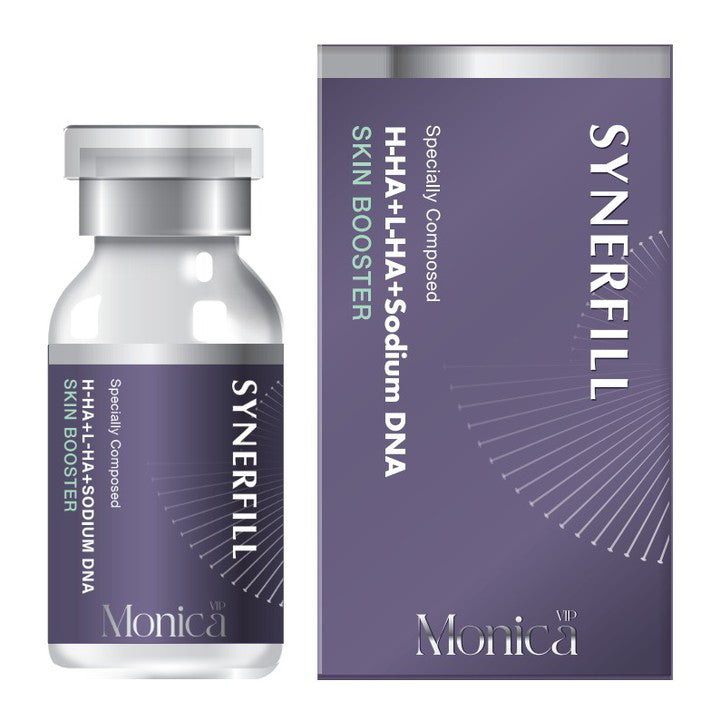
And it is not a synonym for a skin booster, even though the two words are swapped freely. A skin booster is a category of product, something that gets delivered; mesotherapy is a method of delivering. A booster can be administered by a mesotherapy technique, which is exactly why the terms blur, but they sit at different levels: one is the what and the other is the how. We untangled that specific pair in mesotherapy versus skin boosters, and the distinction is the same one that runs through this entire explainer.
Listing the negatives is not pedantry, it is the fastest route to the concept. Each thing mesotherapy is not, a product, an ingredient, a fixed treatment, microneedling, a booster, is a specific confusion that sends buyers looking for the wrong thing or comparing things that are not comparable. Clearing them away leaves the clean definition standing: a technique for delivering a chosen substance into the dermis, nothing more and nothing less.
| Mesotherapy is | Mesotherapy is not | |
|---|---|---|
| A technique | A method of delivering a substance into the dermis by micro-injection | A specific product, bottle, or vial you can buy as "mesotherapy" |
| Method, not material | Separate from whatever substance it delivers | An ingredient like HA or a polynucleotide |
| Delivery, not stimulation | Placing a substance into the skin | Microneedling, which creates injury for the skin to repair |
| A how, not a what | A way to administer a product | The same thing as a skin booster, which is a product category |
The technique and the cocktail: two separate decisions
The most important structural fact about mesotherapy is that the technique and the substance are two independent decisions, and keeping them separate dissolves most of the remaining confusion. The technique is fixed in its essence: intradermal micro-injection to place material in the dermis. The substance, often called a cocktail, is an entirely separate choice that can vary widely, and it is the substance, not the technique, that determines what is actually being introduced into the skin.
This separation is why two mesotherapy sessions can share a method and share almost nothing else. One might deliver a hydrating, conditioning material and another something quite different, and both are accurately described as mesotherapy because the word refers to the delivery, not the contents. Asking "what does mesotherapy contain" is therefore a category error in the same way asking "what does a syringe contain" would be: the answer depends entirely on what someone put in it, and the method does not specify.
The practical consequence is that evaluating a mesotherapy treatment means evaluating the cocktail, not just the technique. Because the substance is what enters the skin, the substance is where the questions of formulation, quality, and sourcing land, and a considered treatment is one where the material has been chosen and verified rather than treated as an afterthought behind an impressive-sounding method. The technique is the vehicle; the cocktail is the cargo; and it is the cargo that a buyer and a professional most need to know about.
A short history, from Pistor to aesthetics
Understanding where the word came from helps explain why it covers so much ground today. When Michel Pistor introduced mesotherapy in 1958, he was describing a general principle of depositing agents into the skin, and the technique was applied across a range of medical uses, including localized therapy, long before it became a fixture of aesthetic conversation.12 The founding idea was about the route of delivery itself, which is precisely why it was never tied to a single substance or purpose.
That breadth is inherited. Because the original concept was a delivery method rather than a specific therapy, mesotherapy naturally extended into aesthetic contexts as a way to deliver conditioning materials into the skin, carrying its wide, method-based definition with it. The modern aesthetic usage is not a departure from the original meaning but a continuation of it: the same technique of intradermal micro-injection, now applied with materials chosen for skin-related goals.
The history matters for a reader because it explains the ambiguity rather than apologizing for it. Mesotherapy sounds like it should name one thing because most treatment words do, but it was defined from the start as a method, and a method can host many purposes. The vagueness people feel when they try to pin the word down is not a failure of their understanding; it is the accurate reflection of a term that was always broad by design. Knowing that lets a buyer stop searching for a single definition of the treatment and start asking the better question of what a given mesotherapy treatment actually delivers.
Where the confusion comes from
It is worth naming why mesotherapy generates so much muddle, because the reasons are systematic rather than random. The first is the technique-versus-product ambiguity that runs through this whole piece: a word that names a method gets used as if it names a thing, so people look for the product called mesotherapy and cannot find a stable one. The second is proximity: mesotherapy sits next to microneedling and skin boosters on the same clinic menus, and adjacency breeds conflation even when the concepts are distinct.
The third source is marketing incentive. A method-based word is flexible, and flexibility is useful to anyone who wants a familiar term to attach to a particular offering, so mesotherapy gets stretched to cover things in ways that further blur its edges. None of this is necessarily deceptive, but the cumulative effect is a word that means slightly different things in different mouths, which is exactly the condition a careful reader has to correct for by returning to the core definition each time.
The correction is always the same and always simple. When you encounter mesotherapy used loosely, translate it back to the technique, intradermal micro-injection to deliver a substance, and then ask the two clarifying questions the definition implies: what substance is being delivered, and how does this differ from a stimulation technique like microneedling or a product category like a booster. Those questions cut through almost any ambiguous usage, because they force the loose word back onto the precise concept underneath it.
Is mesotherapy the same as a skin booster?
No, and this is the single most common confusion, so it is worth answering directly. A skin booster is a product, a category of material intended to be delivered into the skin. Mesotherapy is a technique, a method of delivering. They belong to different levels of the same process, one the cargo and one the vehicle, and treating them as synonyms collapses a distinction that actually matters for evaluating a treatment.
The reason the two get merged is that they frequently appear together: a skin booster is often administered by a mesotherapy-style technique, so in practice a person may encounter both words describing the same session. But describing the same session does not make them the same word. One is answering "what is being put into the skin" and the other "how is it being put there," and a clear-eyed buyer keeps both questions open rather than letting one word stand in for both answers.
Keeping them separate has a practical payoff, which is that it tells you where to direct your scrutiny. The technique question is about the method and the professional performing it; the product question is about the material, its formulation, and its sourcing. Both deserve attention, and merging the words tends to make one of them disappear, usually the product question, which is the one where authenticity and quality actually live. We give the full breakdown in mesotherapy versus skin boosters, and this explainer is really the same lesson stated as a definition.
What mesotherapy means for sourcing
The definition has a direct practical implication once you accept that mesotherapy is delivery and the substance is separate: the sourcing question belongs to the substance, not the method. Because the material is what actually enters the skin, it is the material whose identity, formulation, and provenance decide the quality and safety stakes, and the method, however it is described, does not answer any of those. A mesotherapy treatment is only as sound as the cocktail it delivers.
That points a buyer's attention in a specific direction. The things worth verifying are the properties of the injected material: whether it is genuine, how it was formulated, and whether it came through an accountable channel, which are the same questions that govern skin boosters generally, since a booster is frequently what a mesotherapy technique delivers. We covered how to think about selecting such a material in choosing a skin booster by concern, and the sourcing logic there is the sourcing logic here.
So the explainer closes where the definition began, on the separation of technique and substance. Understand mesotherapy as the method it is, keep the substance as the distinct decision it is, and direct the quality and sourcing questions at the material rather than at the impressive method-name. Do that, and mesotherapy stops being a vague catch-all and becomes what it always was: a precise technique whose value, in any given case, is decided by the specific thing it is used to deliver.
Frequently asked questions
Frequently asked
What is mesotherapy?
Mesotherapy is a delivery technique that places a substance into the dermis through a series of small intradermal micro-injections, rather than relying on a topical to penetrate from the surface. The term was proposed by the French physician Michel Pistor in 1958 to describe inoculating agents into the skin, and that core meaning, delivery into the skin by micro-injection, has stayed constant. It names a method, not a product or an ingredient.
Is mesotherapy the same as a skin booster?
No. A skin booster is a product, a category of material intended to be delivered into the skin, while mesotherapy is a technique for delivering. They often appear together because a booster can be administered by a mesotherapy-style technique, which is why the words get swapped, but they sit at different levels: one is what is delivered, the other is how. Keeping them separate tells you where to direct your scrutiny, the professional for the technique and the material for the product.
Is mesotherapy the same as microneedling?
No. Microneedling is a stimulation technique that creates controlled micro-injuries and relies on the skin's own repair response, while mesotherapy is a delivery technique that deposits a substance into the dermis. One is about what you make the skin do, the other about what you put into it. They can be combined in a hybrid, but on their core definitions they are opposites on the axis of stimulation versus delivery.
Where did the term mesotherapy come from?
The French physician Michel Pistor proposed the term in 1958 to describe inoculating agents into the thickness of the skin. It was defined from the start as a general delivery method rather than a single treatment, which is why it was applied across a range of uses and later extended naturally into aesthetic contexts. Its breadth today is a direct inheritance of that method-based origin.
Disclaimer. This article is general educational information, current as of its publication date, and is not medical advice, a diagnosis, or a treatment recommendation. It defines a technique and does not describe technique, depth, materials, or use, and it makes no claim about any outcome. Whether mesotherapy or any injected material is appropriate is an individual clinical decision for a qualified professional, and whether a product is registered or permitted for use is decided by the relevant authorities.
Sources & references
- Sivagnanam G. et al., "Mesotherapy: From Historical Notes to Scientific Evidence and Future Prospects" (mesotherapy as intradermal micro-injection to deposit material in the dermis; term proposed by Michel Pistor in 1958; intradermal deposit modulates kinetics with local, prolonged exposure). PMC. ncbi.nlm.nih.gov
- Mammucari M. et al., on intradermal therapy (mesotherapy) in clinical practice (mesotherapy as intradermal micro-injection applied to localized conditions, illustrating the method's origin as a general delivery technique beyond aesthetics). PMC. ncbi.nlm.nih.gov
From a sourcing standpoint, the whole point of defining mesotherapy as a technique is that it redirects attention to where sourcing actually matters, which is the material being delivered. That material is what a sourcing platform is accountable for: authentic stock, an accountable channel, and appropriate handling. The conditioning cocktails and boosters that a mesotherapy technique commonly delivers sit within the skin boosters and ampoules range. What KSTATION does not decide is whether mesotherapy or any given material is appropriate or permitted for you, which remains a matter for a qualified professional and your local authority.