Ask the internet to compare INNOTOX, Nabota, and Botulax and you get a wall of ranking, this one lasts longer, that one acts faster, a third is the value pick. Most of it is opinion dressed as fact, and none of it is something a buyer can verify before purchase. This map takes the opposite approach. It compares the major Korean botulinum toxins only on attributes that are checkable, who makes them, what form they come in, and how they are approved abroad, and it deliberately refuses to rank them by effect, because effect is a clinical matter and not a shelf attribute.
Why "which is best" is the wrong axis for a buyer
The instinct to rank toxins by performance is understandable, but it points at the one axis a buyer cannot verify and a general article should not assert. How a specific product behaves in a specific person is a clinical outcome that depends on the individual, the indication, the professional, and many variables, and it is not a fixed property you can read off a brand name. Any blanket claim that one Korean toxin simply outperforms another is making a promise the format cannot support, which is exactly the kind of claim this map avoids.
What a buyer can verify is different and more useful: the manufacturer behind a brand, the physical form the product takes, and its regulatory standing in various markets. These are facts rather than opinions, they are stable rather than case-dependent, and they are the attributes that actually matter for a sourcing decision. A comparison built on them tells you what you are actually choosing between, which is more honest and more practical than a leaderboard of effects nobody can confirm from a listing.
This reframing also protects the reader from marketing. A great deal of toxin comparison content exists to sell a preferred brand, so it leans on effect claims that are hard to check and easy to assert. Anchoring on maker, form, and approval instead gives a buyer a set of questions with real answers, and a way to evaluate a product and a seller that does not require trusting anyone's ranking. The goal here is not to tell you which to want, but to let you see clearly what each one is.
For the products this map covers, we have also written individual monographs on INNOTOX and Nabota that go deeper on each. This piece sits above them as the comparison layer, placing the brands side by side on the verifiable axes so the differences between them, rather than the details within each, come into focus.
The maker behind the name
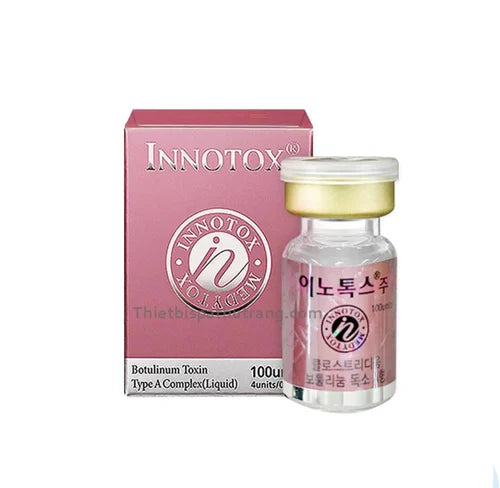
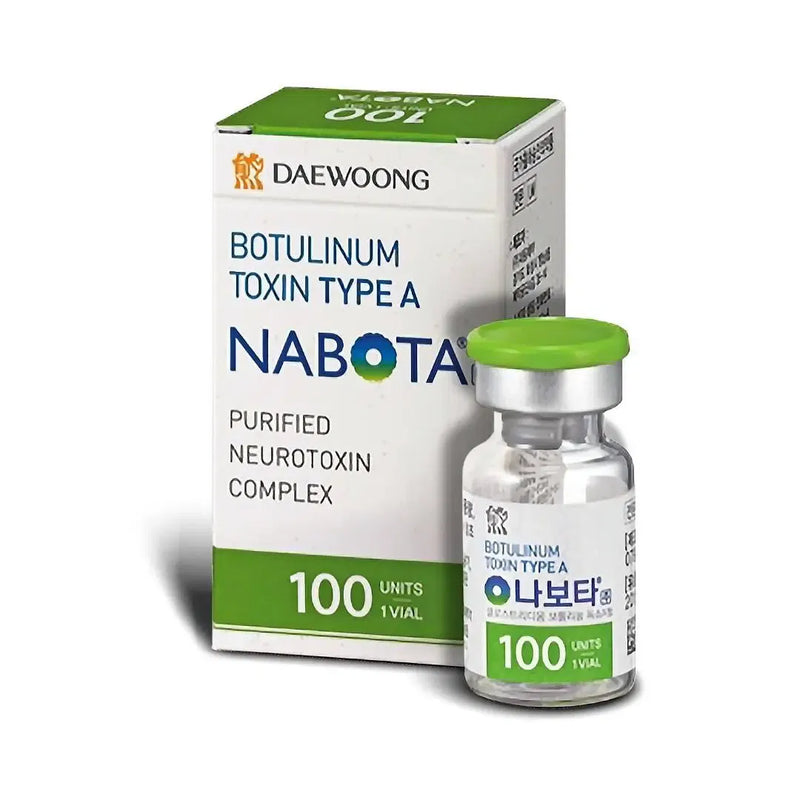
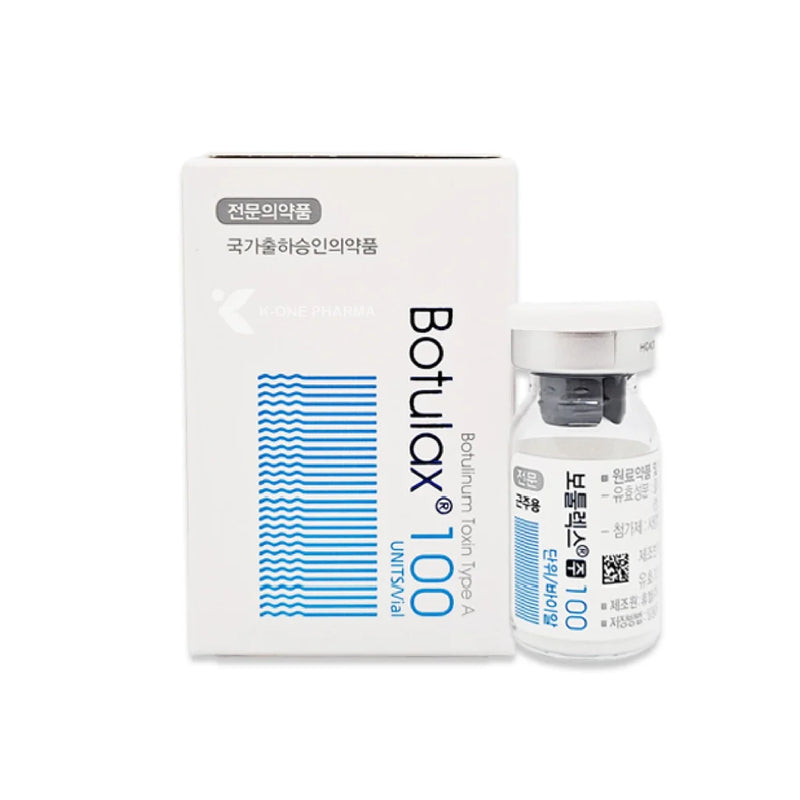
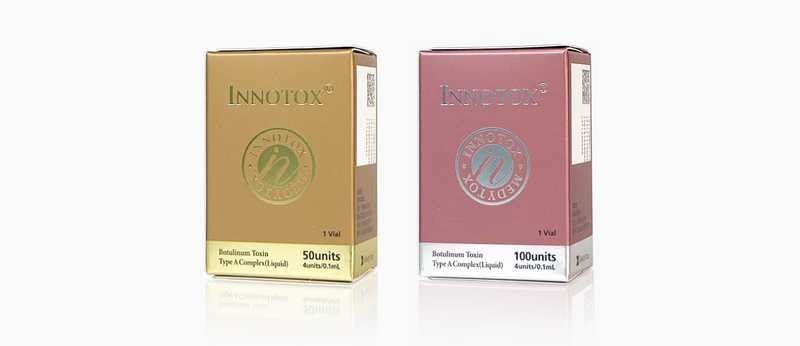
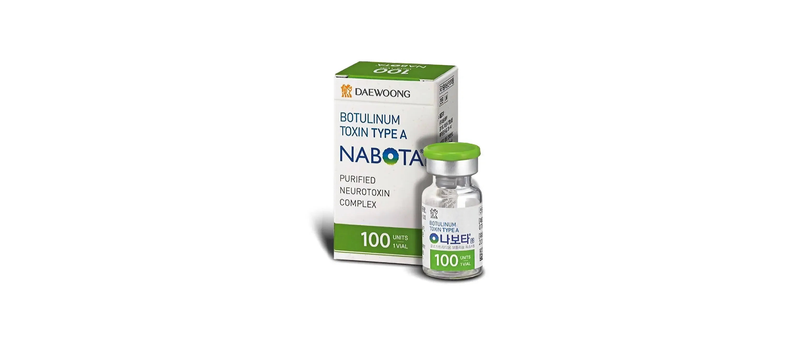
The first verifiable attribute is manufacturer, because a botulinum toxin brand is the product of a specific company's process, and the maker is a stable fact rather than a matter of opinion. Among the most discussed Korean toxins, INNOTOX is a Medytox product, Nabota is made by Daewoong Pharmaceutical, and Botulax is made by Hugel, three of Korea's established toxin manufacturers.12 Coretox is another Medytox product, which is why the same company name recurs across more than one brand on a Korean toxin shelf.
Knowing the maker matters for sourcing in a concrete way, because authenticity and traceability are ultimately anchored to the manufacturer. When verification asks whether a unit matches the maker's standard presentation, or whether an authentication feature checks out with the manufacturer, it is the maker that is the reference point. A brand whose manufacturer you can name is a brand you can trace back to a real company with a real process, which is the foundation the whole authenticity question rests on.
It also clarifies the landscape, because the Korean toxin market is broader than the three or four names that dominate search. KSTATION's own range spans additional brands beyond these, and the point of naming makers is not to catalog every one but to show that each legitimate product traces to an identifiable manufacturer. Where a maker cannot be identified at all, that absence is itself a warning, because a genuine product does not come from nowhere. The maker is the first thing an accountable product can tell you about itself.
The form factor: liquid, vacuum-dried, freeze-dried
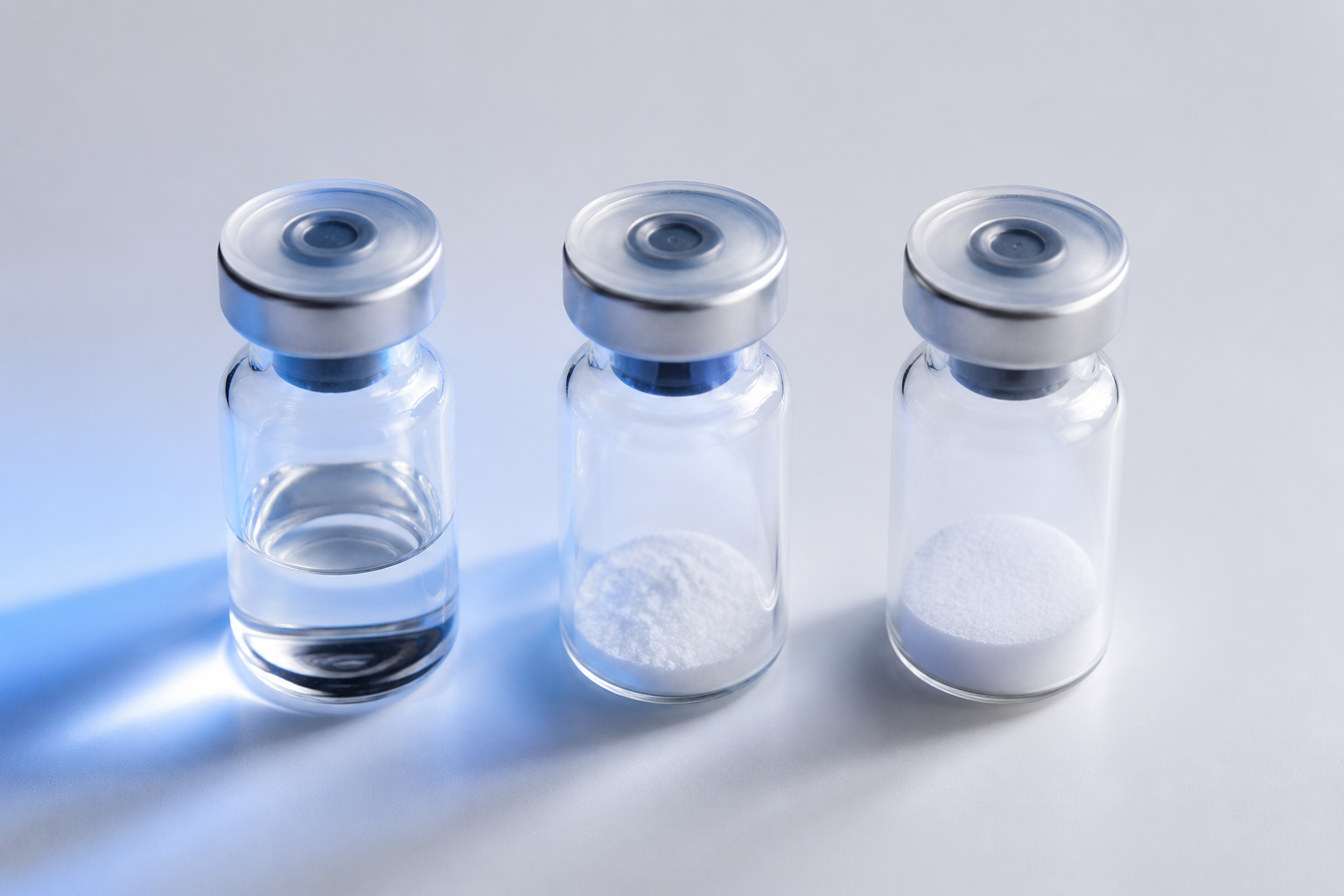
The second verifiable attribute, and the one that most cleanly separates the brands, is physical form. Botulinum toxin type A products are presented in a few distinct formats, and the format is something a buyer and a professional can actually see. INNOTOX is notable for being a liquid, ready-to-use presentation that does not require reconstitution, which is its most-cited distinguishing feature. Most other Korean toxins, including Botulax and Coretox, are supplied as freeze-dried (lyophilized) powders, while some, such as Nabota, are prepared by a vacuum-drying process, so the vial may appear nearly empty.
Form is worth foregrounding precisely because it is objective and checkable, unlike the effect claims that dominate other comparisons. A liquid product should be a liquid, and a powder product should present as the powder format its maker uses, so form becomes one of the consistency checks that authenticity relies on. It is not a quality ranking, a liquid is not inherently superior to a powder or vice versa, it is a real, physical difference between products that a buyer can confirm with their eyes rather than take on faith.
The practical value of the form axis is that it converts an abstract brand choice into a concrete, inspectable attribute. When someone asks what actually differs between INNOTOX and Botulax, the honest, verifiable answer starts here: different makers, and different forms, one a ready-to-use liquid and the other a freeze-dried powder. That is a real distinction a buyer can hold onto, as opposed to a claim about performance they would have to accept without evidence. The table below lays the axis out across the most-discussed brands.
| Brand | Maker | Form | US-approved as |
|---|---|---|---|
| INNOTOX | Medytox | Liquid, ready-to-use | Not US-approved under this brand |
| Nabota | Daewoong | Vacuum-dried powder | Jeuveau (2019) |
| Botulax | Hugel | Freeze-dried powder | Letybo (2024) |
| Coretox | Medytox | Freeze-dried powder | Not US-approved under this brand |
Regulatory status abroad: same class, different approvals
The third verifiable attribute is regulatory standing, and it produces one of the most useful and least understood facts about Korean toxins: the active from more than one of these makers has been approved in the United States, but under a different brand name. Daewoong's toxin is US-approved as Jeuveau (prabotulinumtoxinA-xvfs), which the FDA approved in 2019 for moderate to severe glabellar lines, with the product manufactured by Daewoong.3 Hugel's toxin is US-approved as Letybo (letibotulinumtoxinA), approved in 2024 for the same indication.1
This is the point that resolves a lot of confusion. A Korean brand name and its US-approved counterpart are not always the same word, so "is Nabota FDA-approved" and "is Botulax FDA-approved" both have careful answers: the underlying toxin is US-approved under Jeuveau and Letybo respectively, while the Nabota and Botulax brand presentations are authorized under their own markets' regulators, including Korea's Ministry of Food and Drug Safety. Same maker, same class of active, different brand and different market authorization.
For a cross-border buyer, this distinction is not trivia, it is the crux of admissibility. As we set out in the piece on the US customs squeeze on imported aesthetics, a product's US admissibility follows the US-approved presentation and channel, not the reputation of the underlying molecule. Knowing that a maker's toxin is approved abroad under another name is useful context, and it does not by itself make a differently-branded vial admissible. The regulatory axis tells you the standing of each brand in each market, which is exactly the information the import question turns on.
Botulax and Nabota, side by side
Of all the pairings in this category, these two names get placed next to each other more often than any other, and the three-way map above answers that pairing only indirectly. So it is worth setting them out against each other directly, using the same verifiable axis rather than a ranking.
| Botulax | Nabota | |
|---|---|---|
| Maker | Hugel | Daewoong Pharmaceutical |
| Presentation | Freeze-dried powder | Vacuum-dried powder |
| Active approved in the US as | Letybo | Jeuveau |
| Unit options in this range | 100, 200, 300 | 100, 150, 200 |
| Overlapping unit counts | 100 and 200 only | |
The first three rows repeat what the wider map already establishes, and none of them separate the two products in a way a buyer can act on. Both are Korean-manufactured toxins from established makers, both arrive as a dried powder requiring reconstitution, and both have an active that has cleared a US review under a different brand name. On those axes the honest answer is that they are peers.
The fourth row is where a real difference sits, and it is the one least often mentioned. The two brands do not offer the same ladder of unit counts. Botulax is available here at 100, 200 and 300 units; Nabota at 100, 150 and 200. Only two rungs are common to both. A buyer who has standardised on 300 units cannot move that standard to Nabota without changing the quantity they order, and a buyer who wants 150 units has one option rather than two.
That matters more in practice than the drying process does, because it changes the order line rather than the product. Unit counts are how these products are priced, stocked and reordered, so a brand switch that also forces a step change in unit count is not a like-for-like substitution even when the products are peers on every other axis. It is worth checking before a substitution is agreed, not after.
What the row does not mean is that one ladder is better. A wider range of unit counts is a packaging decision by the manufacturer, and it says nothing about the product inside the vial. The comparison here stays on what is verifiable: who made it, how it is dried, where its active has been reviewed, and what quantities it comes in.
The brands beyond the headline three
The names that dominate search, INNOTOX, Nabota, and Botulax, are only part of the Korean toxin landscape, and a buyer who has done real sourcing will encounter others. KSTATION's own range extends past the most-Googled brands to include products such as Coretox, Liztox, Metox, Toxta, Wondertox, Kamomis, and Finetox, and their presence raises a fair question: does a less globally famous name mean a lesser product, or a better-value one. The honest answer is neither by default, and treating fame as a proxy for quality is its own kind of error.
A brand being less discussed internationally is not evidence about the product one way or the other. It often reflects marketing reach, export history, and how long a brand has been building an English-language reputation, none of which is the same as the maker, form, or regulatory facts that this map is built on. A lesser-known brand still traces to a manufacturer, still comes in a definable form, and still has a regulatory standing in its markets, so the same three verifiable axes apply to it exactly as they apply to the headline names.
Where a difference does appear is in how much public, English-language regulatory footprint a brand has, and that is a reason for more diligence rather than a verdict. A brand without a familiar overseas-approved counterpart is not thereby illegitimate, but it does mean a buyer has to do more of the work of establishing the maker and the market standing themselves, rather than leaning on a recognizable foreign approval as shorthand. The scrutiny scales with how much you can take for granted, and for a less-documented brand you can take less for granted, which is a call for care, not for suspicion.
The practical upshot is that the method does not change across the range, only the effort does. Whether the vial says Botulax or a name a buyer has never seen, the questions are identical: who makes it, what form is it, what is its regulatory standing, is this specific unit genuine, and may it be used where it is going. The full range sits in the botulinum toxins collection, and every brand in it earns the same set of questions, no more for the famous ones and no less for the rest.
So which Korean toxin is the best?
The question has no honest single answer, and the reason is built into everything above. "Best" implies a ranking on effect, and effect is not a fixed property of a brand that a general comparison can assign, because it depends on the individual case and the professional judgment applied to it. A source that confidently names one Korean toxin as the best for everyone is telling you about its preferences or its incentives, not about a verifiable fact, and the map in this article is deliberately built to avoid making that move.
A more useful reframing replaces "best" with "right and real." The right product for a given situation is a clinical determination made by a qualified professional for a specific person and indication, not something a buyer selects by brand reputation. And the real product is the one that is genuine, sourced through an accountable channel, and admissible where it will be used. Those two questions, the clinical fit and the sourcing integrity, are answerable, and they are the ones worth asking in place of an unanswerable ranking.
Seen that way, the comparison in this article is not a disappointment for failing to crown a winner, it is the correct output. It gives a buyer the verifiable coordinates of each brand, maker, form, and regulatory standing, and it leaves the clinical judgment to the professional and the eligibility judgment to the authorities and the buyer. That division is not a dodge. It is where the real decisions actually live, and pretending a comparison chart can make them is how buyers end up trusting the wrong things.
What the comparison means for sourcing
The verifiable axes double as a sourcing checklist, which is the practical payoff of comparing on facts rather than effects. A product you are considering should have an identifiable maker, a form that matches that maker's standard presentation, and a regulatory standing you understand for the market you are in. If any of those cannot be established, the gap is a sourcing risk regardless of how attractive the brand or the price, because each unanswered attribute is a place where a counterfeit or an inadmissible product can hide.
From there the routine is the familiar one. Verify that the specific unit is genuine using the toxin-specific checks in how to verify an authentic Korean botulinum toxin, confirm the seller and channel are accountable, and confirm separately that the product is admissible and appropriate for your situation. The comparison tells you what each brand is; the verification tells you whether the unit in front of you actually is that brand; and the eligibility check tells you whether you may use it. Three questions, and this map answers the first of them cleanly.
That is the honest role of a comparison like this one. It will not choose for you, and it is not trying to, because the choice runs through professional and regulatory judgment that a chart cannot replace. What it does is give the choice a factual foundation, so that whatever is decided is decided on top of verifiable coordinates rather than on the strength of a ranking someone else had a reason to write. Know the maker, the form, and the approval, verify the unit, confirm the eligibility, and the brand question stops being a guess.
Frequently asked questions
Frequently asked
What is the difference between INNOTOX, Nabota, and Botulax?
The verifiable differences are maker, form, and regulatory standing. INNOTOX is a Medytox product supplied as a ready-to-use liquid. Nabota is made by Daewoong as a vacuum-dried powder and its active is US-approved as Jeuveau. Botulax is made by Hugel as a freeze-dried powder and its active is US-approved as Letybo. This article deliberately does not compare them by effect, which is a clinical matter that depends on the individual case rather than a fixed property of the brand.
Which Korean botulinum toxin is the best?
There is no honest single answer, because "best" implies a ranking on effect, and effect depends on the individual, the indication, and the professional rather than being a fixed attribute of a brand. A more useful frame is "right and real": the right product is a clinical decision for a qualified professional, and the real product is the one that is genuine, accountably sourced, and admissible where it will be used. Those questions are answerable, whereas a universal ranking is not.
Who makes the main Korean botulinum toxins?
Among the most discussed brands, INNOTOX and Coretox are Medytox products, Nabota is made by Daewoong Pharmaceutical, and Botulax is made by Hugel. The Korean toxin market includes additional brands beyond these, but each legitimate product traces to an identifiable manufacturer, which is the reference point that authenticity and traceability ultimately depend on.
Which Korean toxins are FDA-approved abroad, and under what names?
The active from Daewoong is US-approved as Jeuveau (prabotulinumtoxinA-xvfs), approved in 2019, and the active from Hugel is US-approved as Letybo (letibotulinumtoxinA), approved in 2024, both for moderate to severe glabellar lines. Importantly, the US approval attaches to the US brand, not to a vial labeled Nabota or Botulax, so a differently-branded product's US admissibility is a separate question that the foreign approval does not automatically answer.
What do Koreans use instead of Botox?
"Botox" is one specific brand of botulinum toxin type A, made by Allergan/AbbVie. In Korea, clinics predominantly work with domestically manufactured products of the same class: brands such as INNOTOX and Coretox from Medytox, Nabota from Daewoong, and Botulax from Hugel, each authorized in their home market by Korea's Ministry of Food and Drug Safety. In other words, the answer is not a different secret ingredient but locally made botulinum toxin brands, which this article maps by maker, form, and approval, and that is a statement about what the products are, not about how any of them perform.
What are the main Korean Botox brands?
Strictly speaking, "Botox" is itself a brand name, so the accurate phrase is Korean botulinum toxin brands. The names most discussed internationally are INNOTOX, Nabota, Botulax, and Coretox, made by Medytox, Daewoong Pharmaceutical, and Hugel, and the wider market includes brands such as Liztox, Metox, Toxta, Wondertox, Kamomis, and Finetox. Every legitimate product traces to an identifiable manufacturer, which is a more useful sourcing signal than how famous the name is, and the table in this article sets out the maker, form, and US-approval status of the headline brands.
Botulax vs Nabota: what actually differs?
Maker, drying process, the brand under which the active was reviewed in the US, and the unit counts each is offered in. Botulax comes from Hugel as a freeze-dried powder with a US-approved active marketed as Letybo; Nabota comes from Daewoong as a vacuum-dried powder with a US-approved active marketed as Jeuveau. The practical difference for ordering is the unit ladder: 100, 200 and 300 for one, 100, 150 and 200 for the other, overlapping only at 100 and 200.
Is Botulax the same as Botox?
No. Botox is a brand name owned by Allergan for its own botulinum toxin type A product. Botulax is a separate product manufactured by Hugel and authorized in its home market by Korea's Ministry of Food and Drug Safety. They belong to the same class of product and are not the same brand, and neither name should be used as a generic term for the other.
Disclaimer. This article is general educational information, current as of its publication date, and is not medical, legal, or regulatory advice. It compares products by manufacturer, form, and regulatory status only, and makes no claim about the effect, onset, duration, potency, or relative performance of any product. Botulinum toxin is a prescription product for administration by a qualified, licensed professional. Regulatory status and import eligibility differ by market and change over time and are decided by the relevant authorities; confirming eligibility is the buyer's responsibility.
Sources & references
- U.S. Food and Drug Administration, Drug Trials Snapshots: LETYBO (letibotulinumtoxinA, Hugel; FDA approval 2024 for moderate to severe glabellar lines). fda.gov
- U.S. Food and Drug Administration, BLA 761225 approval letter, Hugel, Inc. (US approval of Hugel's letibotulinumtoxinA product). accessdata.fda.gov
- U.S. Food and Drug Administration, JEUVEAU (prabotulinumtoxinA-xvfs) prescribing information (initial US approval 2019; product manufactured by Daewoong Pharmaceutical; indicated for moderate to severe glabellar lines). accessdata.fda.gov
From a sourcing standpoint, a neutral map is also the most useful thing a responsible seller can offer, because it hands a buyer verifiable coordinates instead of a ranking. KSTATION carries several of the brands mapped here, including INNOTOX, Nabota, and Botulax, within the broader botulinum toxins range, all sourced through an accountable channel. What KSTATION does not do is rank them by effect or decide which is right for you: the clinical choice belongs to a qualified professional, and whether a given product may be imported and used remains a matter for you and your local authority.