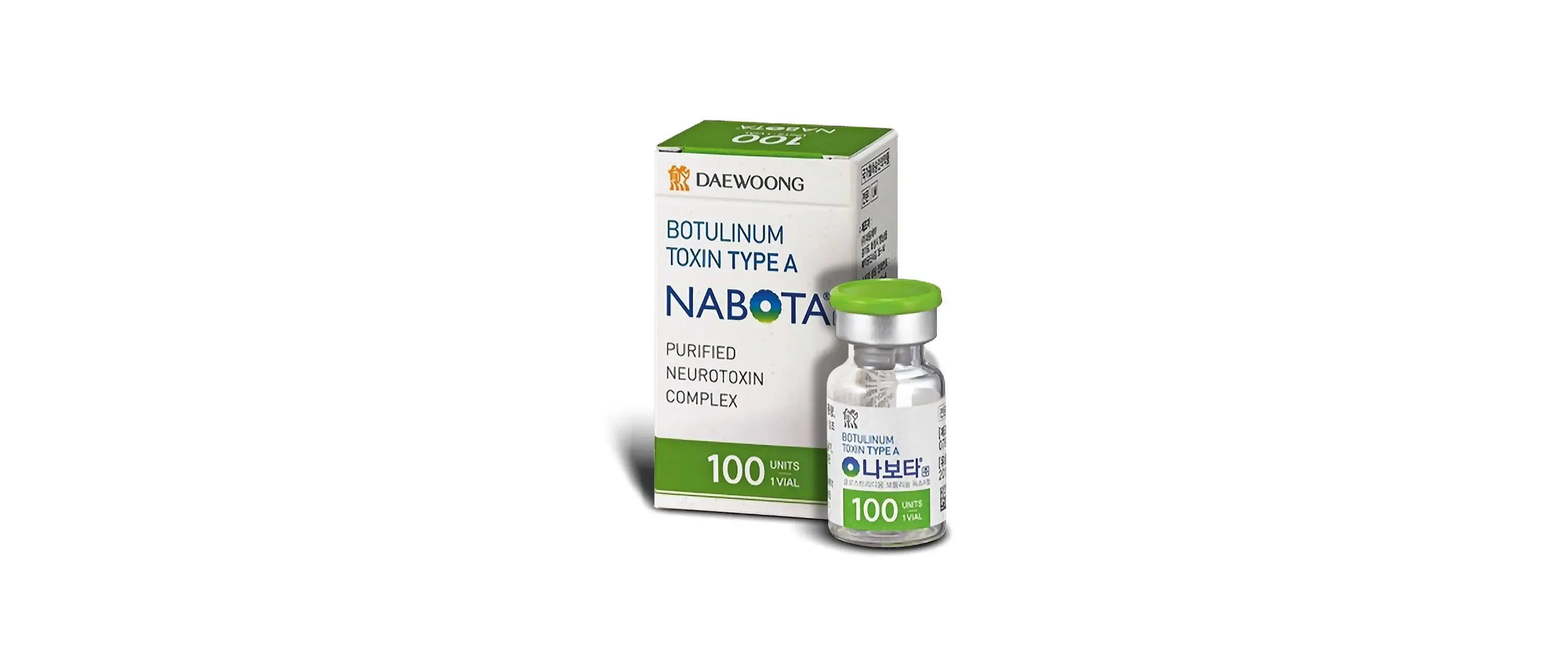
Nabota is one of the three Korean botulinum toxins a sourcing buyer meets first, alongside INNOTOX and Botulax, and it carries a detail the others do not: it is the Korean toxin that reached the United States on its own approval, sold there under a different name. This profile covers what Nabota is, where it sits among the Korean options, and how to verify that a specific vial is genuine.
The frame here is sourcing, not treatment. Nabota is a prescription product for administration by trained professionals, and this piece describes what it is and how to source it authentically; it does not describe dosing, administration, or expected results, which are clinical questions for the treating clinician and outside what a distributor can responsibly speak to.
What Nabota is
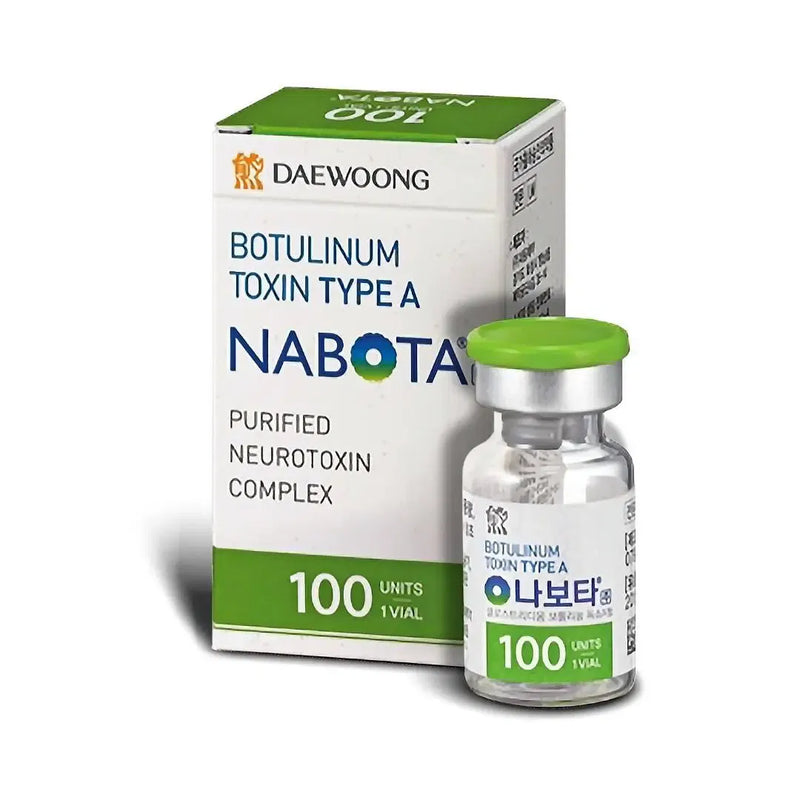
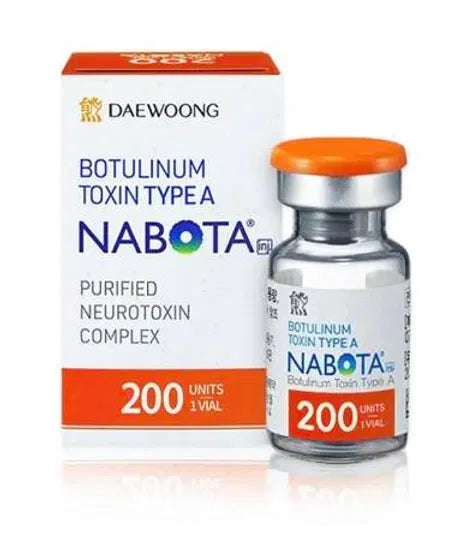
Nabota is a botulinum toxin type A made by Daewoong Pharmaceutical, one of Korea's larger pharmaceutical companies, and it is supplied as a lyophilized powder that is reconstituted before use rather than as a pre-mixed liquid. That powder format is the one most botulinum toxins have used for decades, and it is worth registering early because it quietly shapes everything downstream of the factory. A lyophilized vial is stable in a particular way, it ships and stores under specific conditions, and the reconstitution step happens at the clinic rather than on the production line, which is part of why the physical state of a genuine vial is itself a thing worth checking.
Like every aesthetic toxin, Nabota is a neuromodulator and a prescription drug, not a cosmetic, and it is regulated as a drug in the markets that regulate it. In Korea it is approved and marketed under the Ministry of Food and Drug Safety (MFDS), which places it inside the country's drug framework along with the manufacturing certification, license-holder, and traceability requirements that come with that status. None of this is unusual on its own; the three main Korean toxins all share that regulatory baseline, and on the molecule alone Nabota is one powder-format type A among several.
What sets Nabota apart on a sourcing map, then, is less about the molecule and more about its regulatory path abroad. Read purely as a product, it sits comfortably beside its peers. Read as a sourcing case, it is the one Korean toxin with a second identity in a major Western market, which is where the next section picks up and where most of the practical nuance lives.
The Jeuveau connection
Nabota is the same product that is marketed in the United States as Jeuveau, where the FDA approved it in 2019 for the temporary improvement of glabellar lines, under the nonproprietary name prabotulinumtoxinA.1 That approval is genuinely unusual in context. Most Korean toxins are not FDA-approved for aesthetic use, so Nabota's arrival in the United States, through a partner brand, gives it a distinct and cleared identity in a market where its domestic peers do not have one. For anyone mapping the category, it is the closest thing to a Korean type A that cleared a major Western regulator on its own file.
The nuance that matters for sourcing sits exactly there, and it is easy to get wrong. The U.S.-approved Jeuveau and the Korean-market Nabota are distinct regulatory products for distinct markets, even though they trace to the same manufacturer and the same toxin. A vial of Korean-market Nabota is not a U.S.-approved product simply because a related brand is approved in the United States, because approval attaches to a specific product registered for a specific market, not to a molecule or a maker. Reading approval across from one brand to another is the kind of shortcut that turns a compliance question into a compliance problem, and it is worth naming plainly before it becomes an assumption.
Where Nabota sits among the Korean toxins
The neutral way to place the Korean toxins side by side is by maker and formulation rather than by claimed effect, because effect is a clinical matter while maker and format are checkable facts on the carton. The three names a sourcing buyer meets most often are Nabota, INNOTOX, and Botulax, each from a different Korean manufacturer, and the cleanest single axis to separate them on is how the product is actually presented in the vial.
| Product | Manufacturer | Formulation |
|---|---|---|
| Nabota | Daewoong | Lyophilized powder |
| INNOTOX | Medytox | Liquid, ready-to-use |
| Botulax | Hugel | Lyophilized powder |
The clearest neutral split is formulation. Nabota and Botulax are lyophilized powders reconstituted before use, while INNOTOX is supplied as a ready-to-use liquid, and that difference shows up both in handling and in what a genuine vial should physically look like. That second consequence doubles as a verification cue: a Nabota that appears pre-mixed, or a liquid sold under a brand that only makes powder, is an internal contradiction and a reason to stop before going further.
None of this ranks the three against each other, and it is not meant to. It is a way to read the shelf by facts a buyer can confirm rather than by claims a buyer cannot. For the liquid option in depth, see our profile of INNOTOX and how to source it authentically, and for the category overview and the full stocked range the Botulinum Toxins guide.
How to source an authentic Nabota
Because a toxin's safety and value depend entirely on it being the genuine, correctly handled product, and because counterfeits and parallel-imported stock are a documented risk in this category, verification is best treated as a chain of checkable details rather than a single glance. No one feature proves authenticity on its own, since a hologram can be imitated and a lot number can be copied onto a box, but the whole chain is hard to fake at once. For Nabota specifically, that chain runs like this:
- An intact, tamper-evident holographic seal, and a QR or DataMatrix code that resolves to an official manufacturer page rather than a dead link or a generic site.
- Korean MFDS serialization, a GS1 DataMatrix code encoding the product identifier, serial number, lot, and expiry, which reflects the regulatory reality behind genuine packaging.
- A lot number and expiration printed on the vial that match the carton exactly.
- MFDS approval and KGMP manufacturing certification, with a designated Korea license holder standing behind the product.
- Maintained cold chain, since botulinum toxin is temperature sensitive, at 2 to 8 degrees Celsius from factory to clinic.
- A documented purchase from an authorized channel; untraceable origin or unusual pricing are reasons to stop.
Two of these deserve extra weight for a powder toxin like Nabota. Cold chain matters because botulinum toxin is a temperature-sensitive protein, so a vial that broke its 2 to 8 degrees Celsius handling somewhere in transit is functionally different from the one described on its label, even when the box itself is genuine. Provenance matters because a documented, authorized purchase path is the single most reliable signal in the whole list, and its absence, in the form of untraceable origin or a price well below the market floor, is usually the first thing wrong with a lot. For the full toxin-specific method, see how to verify an authentic Korean botulinum toxin, and for injectables broadly, how to distinguish authentic Korean injectables from counterfeits.
Where KSTATION fits
KSTATION does not promise what any toxin will do for a patient, because that is a clinical judgment for the treating professional and not something a distributor is positioned to make. What a sourcing platform can genuinely stand behind is narrower and more useful: sourcing genuine products through official channels and keeping that provenance traceable, with cold-chain handling for temperature-sensitive toxins and compliant shipping for licensed professionals. That is the one variable that actually decides whether the vial in a clinician's hand is the same one the manufacturer released.
The stocked Nabota options, NABOTA 100 Units and NABOTA 200 Units, sit within the wider botulinum toxins range, all intended for use by trained professionals. Which one suits a given practice, and whether it is cleared for a given market, stays a clinical and regulatory question rather than a checkout one.
Frequently asked questions
Frequently asked
Is Nabota the same as Jeuveau?
They trace to the same manufacturer, Daewoong, and the same toxin, and Nabota is the product marketed in the United States as Jeuveau, FDA-approved in 2019 under the name prabotulinumtoxinA. But the U.S. Jeuveau and the Korean-market Nabota are distinct regulatory products for distinct markets.1
Is Korean-market Nabota FDA-approved?
No. The U.S.-approved product is Jeuveau, a separate regulatory item. A Korean-market Nabota vial is approved as a drug in Korea under the MFDS and is not itself a U.S.-approved product. Confirm the specific product and market with the relevant authority.
How is Nabota different from INNOTOX?
The clearest neutral difference is maker and formulation. Nabota (Daewoong) is a lyophilized powder reconstituted before use, while INNOTOX (Medytox) is supplied as a ready-to-use liquid. Effect is a clinical question, not a product claim.
How do I verify an authentic Nabota?
Check the whole chain: an intact holographic seal, a code that resolves to the manufacturer, a lot and expiry that match between vial and carton, MFDS and KGMP marks, maintained 2 to 8 degrees Celsius cold chain, and a documented purchase from an authorized channel.
Disclaimer. This article is general educational information, not medical advice, and describes a product and how to source it rather than what it will do for an individual. Botulinum toxins are prescription products for administration by trained and licensed professionals; this page does not describe dosing or administration. Regulatory status and approvals vary by country and change over time; confirm current status with the relevant authority.
Sources & references
- U.S. FDA approval of Jeuveau (prabotulinumtoxinA-xvfs), Evolus, 2019, for temporary improvement of glabellar lines. accessdata.fda.gov
- U.S. FDA, Counterfeit Version of Botox Found in Multiple States (risks of unlicensed sources; importation oversight). fda.gov