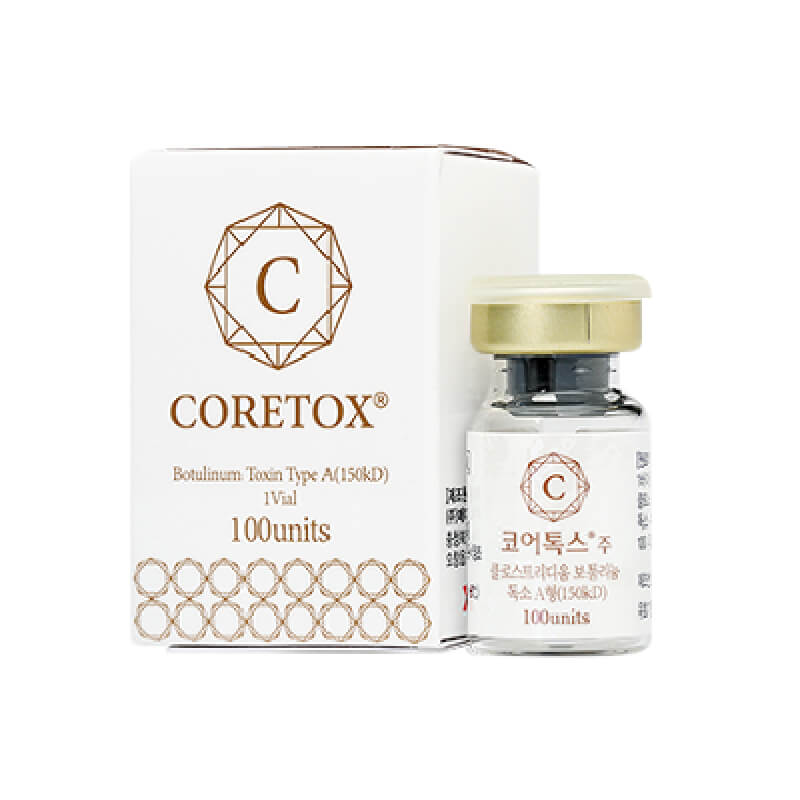
CORETOX is usually described by something it leaves out. Listings call it protein-free or animal-free. The Korean drug register says something narrower and more useful: among the additives Medytox declares for CORETOX, there is no albumin. That puts it in a group of six among the 59 valid toxin licences in Korea, and it is the clearest single fact for telling a genuine CORETOX record apart from its neighbours.
What CORETOX is, as the Korean register records it
CORETOX is a botulinum toxin type A injection licensed in Korea to Medytox as a prescription-only medicine. It exists as a single filing at a single unit size. There is no 50 or 200 unit CORETOX licence.
| Licensed product name | 코어톡스주 (클로스트리디움보툴리눔독소A형(150kDa)) |
|---|---|
| Export name on file | Coretox Inj. |
| Licence holder | Medytox (no separate manufacturer named) |
| Granted | 24 June 2016 |
| Units per vial | 100, one vial per box |
| Declared active | Clostridium botulinum toxin type A, 150 kDa, Hall strain |
| Declared additives | Sodium chloride, polysorbate 20, sucrose, L-methionine |
| Dosage form on file | White freeze-dried powder in a clear vial |
| Shelf life on file | 36 months from manufacture |
| Registered barcodes | 8806755000706, 8806755000713 |
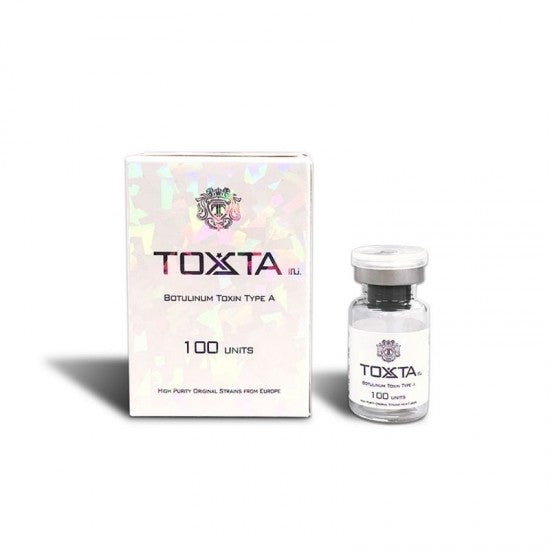
Two things in the name are worth knowing. The 150 kDa written into the licensed product name records the size of the toxin preparation, and in our earlier count it was one of three Korean filings that put a molecular weight in the product name, the other two being Xeomin licences. We covered that detail in ten toxin brands, one ingredient line. The export name, Coretox Inj., is recorded inside the licence itself, so a register search by the name on the carton finds it directly. Not every toxin works that way: our TOXTA monograph describes one that is filed under a different name entirely.
The additive list, against every other Korean toxin
An injectable toxin is never supplied as the toxin alone. The licence declares the other ingredients that hold the product together, and for Korean toxins that list is short and very repetitive. We read the declared additives on every currently valid filing whose active ingredient is botulinum toxin type A, 59 in all.
| Declared additives | Filings | Licence holders |
|---|---|---|
| Albumin (human serum albumin in most) with sodium chloride, or with sucrose or lactose | 53 | Most Korean toxin holders |
| L-histidine, sucrose, hydrochloric acid, sodium chloride, poloxamer 188 | 4 | Chong Kun Dang Bio |
| L-methionine, sodium chloride, water for injection, polysorbate 20 | 1 | Medytox (INNOTOX) |
| L-methionine, sucrose, sodium chloride, polysorbate 20 | 1 | Medytox (CORETOX) |
Fifty-three of the 59 declare albumin. Six do not, and they come from only two companies. Four are Chong Kun Dang Bio filings built on a different set of additives altogether. The other two are Medytox's INNOTOX and CORETOX.
That is the precise content behind the shorthand. When a listing describes CORETOX as protein-free or animal-free, the register fact underneath is that no albumin, the protein most Korean toxins use as an additive, is declared. The toxin itself is a protein, so "protein-free" is not literally what the record says. The register states which additives are present. It does not state what their presence or absence means for treatment, and neither do we.
CORETOX and INNOTOX, read side by side
The two Medytox products in that group of six are close relatives on paper. Both declare L-methionine, polysorbate 20 and sodium chloride. They differ by one ingredient each, and the difference lines up exactly with their physical form.
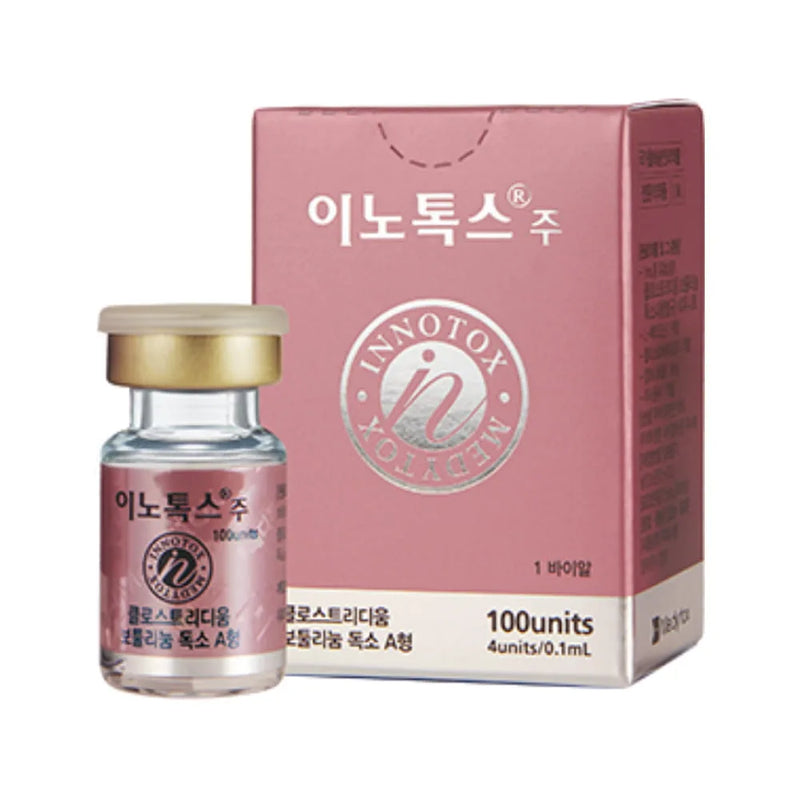
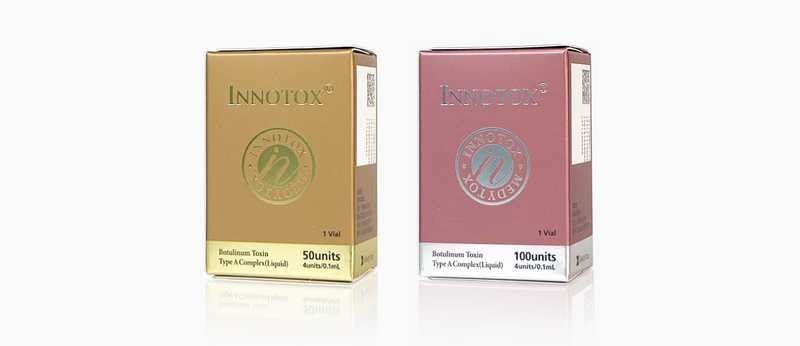
CORETOX adds sucrose and is recorded as a freeze-dried powder. INNOTOX adds water for injection and is a ready-to-use liquid in its vial, which we describe in our INNOTOX monograph. Sucrose is a common component of freeze-dried preparations. Water for injection is what a liquid presentation needs. The shared core of methionine and polysorbate 20, with no albumin, is what separates both from almost every other toxin licensed in Korea.
They remain separate licences. INNOTOX was granted in December 2013 and CORETOX in June 2016, they carry different barcodes, and their active ingredients are recorded differently, with CORETOX's naming the 150 kDa preparation. A supplier who treats one as a stand-in for the other is offering a different licensed product.
One licence, revised several times
Because CORETOX has only one filing, its change history is easy to read in full. The record shows revisions to its storage and shelf-life entry in February 2017, to its dosage form description in October 2018, and to its indications, dosage and precautions text in March 2020, October 2021 and June 2024. The register does not publish the earlier wording, so it cannot tell you what each field said before.
What this means at the carton is modest. An insert or carton printed before one of those dates may not read word for word like a current one, while belonging to the same licence. The barcodes and the additive list are the steadier references.
How to verify CORETOX before it ships
Confirm the company. The only CORETOX licence is held by Medytox, which makes the product itself. No contract manufacturer is named. Documentation presenting another licence holder, or a separate maker, does not match the register.
Check the unit content. CORETOX is licensed at 100 units per vial, one vial per box, and nothing else. A CORETOX carton stating 50, 150 or 200 units does not correspond to any Korean licence.
Read the additive list. If the carton or insert lists the ingredients, they should be the four in the record: sodium chloride, polysorbate 20, sucrose and L-methionine. Albumin listed on a CORETOX carton is a contradiction with the register.
Match the barcode. The two registered codes are 8806755000706 and 8806755000713. A code that matches neither, or that matches INNOTOX or another Medytox product, is the most direct sign of a relabelled carton. A barcode-scanning app returning nothing is not a warning sign; we explain why in this week's question on blank barcode scans.
Read listing claims for what they are. Phrases such as protein-free, animal-free or low resistance are descriptions, not register fields. What you can confirm is the additive list above.
Sourcing CORETOX
KSTATION supplies CORETOX 100 Units through official Korean channels. For readers comparing it with other Korean toxins, INNOTOX 100 Units is its liquid sibling from the same maker, and how the main brands differ by maker and form is covered in Korean botulinum toxins compared. The full range sits under botulinum toxins.
Frequently asked
What is CORETOX?
CORETOX is a botulinum toxin type A injection licensed in Korea to Medytox as a prescription-only medicine, in a single filing at 100 units per vial. Its licensed name records a 150 kDa preparation, and its export name, Coretox Inj., is written into the licence.
Does CORETOX contain albumin?
No albumin is declared among its additives. The register lists sodium chloride, polysorbate 20, sucrose and L-methionine. Of 59 currently valid Korean toxin licences, 53 declare albumin and six do not, two of them from Medytox.
What is the difference between CORETOX and INNOTOX?
Both are made by Medytox and both declare L-methionine, polysorbate 20 and sodium chloride without albumin. CORETOX adds sucrose and is a freeze-dried powder. INNOTOX adds water for injection and is a ready-to-use liquid. They are separate licences with different barcodes.
How do you verify authentic CORETOX?
Check that Medytox is the licence holder, that the carton states 100 units, that any listed additives match the four in the record with no albumin, and that the barcode is 8806755000706 or 8806755000713.
Sources and references
- Ministry of Food and Drug Safety (MFDS), Korean drug product licence register, detailed record for 코어톡스주, including export name, declared active and additives, dosage form, barcodes and change history, retrieved 1 October 2026.
- MFDS drug product licence register, active ingredient queries for botulinum toxin type A, 59 currently valid filings, detailed records read for declared additives, retrieved 1 October 2026.
- KSTATION product record for CORETOX 100 Units, retrieved 1 October 2026.
- KSTATION editorial policy, on how product and register facts are separated in our writing.
Register figures are a reading taken on 1 October 2026. Licences and their detailed records change without notice. This article describes licence holders, declared ingredients, barcodes and carton facts for professional buyers. It says nothing about what the product is indicated for, how it is prepared or used, or how it compares clinically with other products.