This week's question comes from a buyers' community thread. Someone checking a Korean injectable had scanned the barcode on the carton, sometimes got no result, and wanted to know whether that meant the product was fake. It is the most natural check to try, and the blank screen is unsettling. The short answer is that a blank result tells you about the database the app searched, not about the carton in your hand.
The question
Paraphrased from the thread: How do I check whether Korean injection products are authentic? I scanned the barcode, and sometimes nothing showed up.
What we tested
Rather than answer from assumption, we ran the check ourselves. The Korean drug register records the barcodes that belong to each licensed product, so we took the registered codes for ten Korean medicines: eight botulinum toxin filings across six brands, two glutathione injections, a thioctic acid injection and a placenta product. That gave 24 barcodes, every one of them assigned by its licence holder and recorded against a valid licence.
We then looked up all 24 in three public barcode databases of the kind that barcode-scanning apps and product search tools draw on: UPCitemdb, Open Beauty Facts and Open Food Facts.
None of the 24 came up in any of the three. To make sure the databases were working, we also looked up an ordinary supermarket product, a soft drink barcode, which two of the three returned straight away. The third, Open Beauty Facts, covers cosmetics, so a drink not appearing there is expected.
| Database | Registered Korean medicine codes looked up | Found | Control (soft drink) |
|---|---|---|---|
| UPCitemdb | 24 | 0 | Found |
| Open Food Facts | 24 | 0 | Found |
| Open Beauty Facts | 24 | 0 | Not listed (cosmetics only) |
So a genuine, licensed Korean injectable can produce exactly the result the question describes. These databases are built around retail goods that shoppers scan in stores, and prescription injectables sold to professionals are not what fills them. We tested three databases, not every app in existence, and a different tool may hold a few of these codes. The pattern is clear enough that a blank result should be read as normal rather than as a warning.
Where the code is actually recorded
For a Korean medicine, the place a barcode is recorded against a product is the licence record in the Ministry of Food and Drug Safety (MFDS) drug register. Each filing lists the barcodes registered to it. Every filing in our sample listed at least two. That is the reference to check against, and it can be searched by product name or licence holder.
The method for doing that check, and the limits of what a match proves, are set out in our guide to the barcode on a Korean injectable carton, checked against its licence. In short: read the thirteen digits off the carton, find the licence for the product named on the carton, and see whether the digits appear in that licence's barcode list.
One practical point catches people out. Some products are sold under a name the register does not use, so searching by brand returns nothing there either. We walked through one example in our TOXTA monograph: the carton says TOXTA, the register says JETEMA THE TOXIN, and the barcodes on file are what connect the two. If a product name search comes back empty, search by the company that holds the licence.
When a barcode result does mean something
A blank app result is not a signal. These are:
The digits are not on the licence for the product named on the carton. If the carton names a product and unit size, and its barcode does not appear among the codes registered to that licence, the carton contradicts the public record.
The digits belong to a different product. A code that does appear in the register, but on another product's licence or a different unit size, is the clearest sign of a relabelled carton.
The carton has no barcode, or a sticker covers it. Every licence in our sample had registered codes, so a carton without one, or with the printed code obscured, removes the check rather than passing it. Ask the supplier why.
None of these depends on a scanning app. All of them depend on reading the printed digits and comparing them with the register, which anyone can do.
What a match still does not prove
A barcode that matches the licence shows the packaging is consistent with a licensed product. It does not show what is inside, because a code can be printed on any box. That is why the barcode check sits alongside the other carton checks, the product name, unit content, batch number and expiry date, rather than replacing them. Our walk through reading an injectable label covers those fields.
Checking Korean injectables before you buy
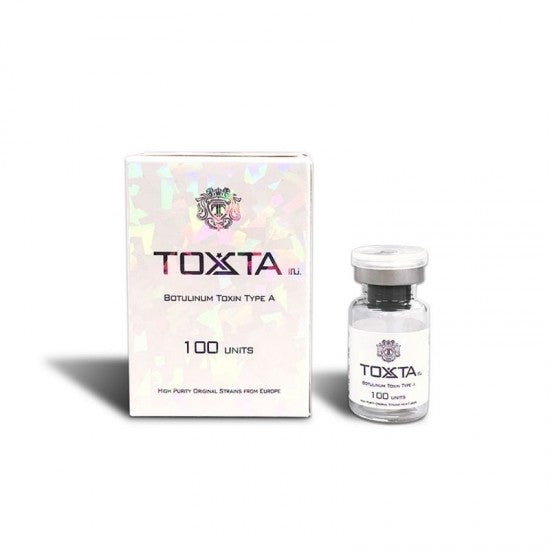
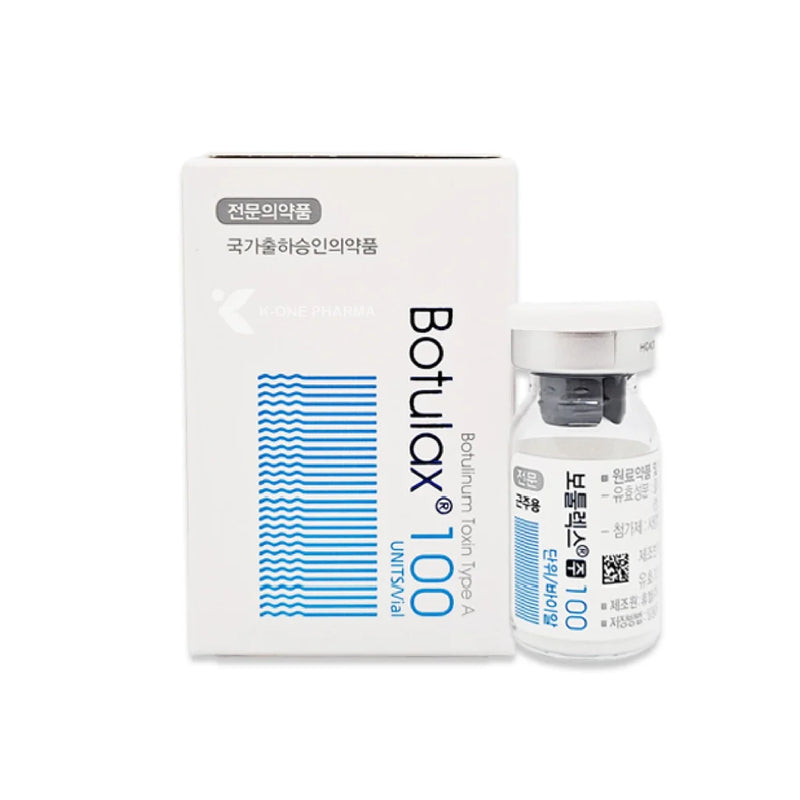
We source the injectables in our range through official Korean channels, and our product monographs set out the licence details a buyer can check for themselves. Toxins in the range include BOTULAX 100 Units and TOXTA 100 Units. The full toxin range sits under botulinum toxins. Whoever you buy from, the barcode on the carton and the licence it belongs to are public, and checking one against the other takes a few minutes.
Frequently asked
Why does a barcode scan show nothing for a Korean injectable?
Because the database behind the app usually does not hold it. We looked up 24 barcodes registered to licensed Korean medicines in three public barcode databases, and none of them came up, while an ordinary supermarket barcode did. These databases are built around retail goods, not prescription injectables.
Does a barcode that does not show up mean a product is fake?
No. A blank result says nothing either way. What matters is whether the printed digits appear on the Korean licence for the product named on the carton.
Where are Korean drug barcodes registered?
In the licence records of the MFDS drug register. Each filing lists the barcodes registered to that product, and the register can be searched by product name or by licence holder.
If the barcode matches the licence, is the product genuine?
A match shows the packaging is consistent with a licensed product. It does not prove the contents, because a code can be printed on any box. Use it together with the product name, unit content, batch number and expiry date on the carton.
Sources and references
- Ministry of Food and Drug Safety (MFDS), Korean drug product licence register, detailed records (registered barcodes) for ten products: 보툴렉스, 나보타, 이노톡스, 원더톡스, 리즈톡스, 제테마더톡신 (three filings), 신델라, 디톡시온, 루치온 and 라에넥피오, retrieved 1 October 2026.
- UPCitemdb, Open Food Facts and Open Beauty Facts public product lookups for the same 24 codes and one control code, run 1 October 2026.
- The community question is paraphrased from a public buyers' thread, without identifying details.
- KSTATION editorial policy.
Database results are a reading taken on 1 October 2026 and may change as databases are updated. This article explains what a barcode lookup can and cannot tell you. It does not judge any individual product as genuine or counterfeit.