Mesotherapy and microneedling get named in the same breath, marketed on the same menus, and confused constantly, which is odd because at heart they answer two different questions. One asks what to put into the skin. The other asks what to make the skin do. Reading them as a substance and an injury, rather than as two flavors of the same treatment, is the fastest way to understand why they feel similar, why they are combined, and why the difference still matters.
What mesotherapy is: a substance placed in the dermis
Mesotherapy is a delivery technique. It uses a short, fine needle to deposit a substance directly into the dermis, the living layer beneath the surface, as a series of micro-injections spread across an area. The term is not new marketing language: the French physician Michel Pistor proposed it in 1958 to describe inoculating agents into the thickness of the skin, and the core idea has not changed since.1 The defining move is placement. Rather than relying on a cream to work its way down from the top, mesotherapy puts the material where it is meant to act.
That placement changes how the material behaves. When a substance is deposited intradermally rather than swallowed or spread on the surface, its kinetics shift: absorption slows and the local action is prolonged, because the deposit sits in the tissue and diffuses outward gradually instead of being cleared quickly.1 In an aesthetic context this is the logic behind injecting hydrating and conditioning cocktails into the skin, where the point is local exposure rather than a systemic effect. The technique is the vehicle. What rides in the vehicle is a separate decision entirely.
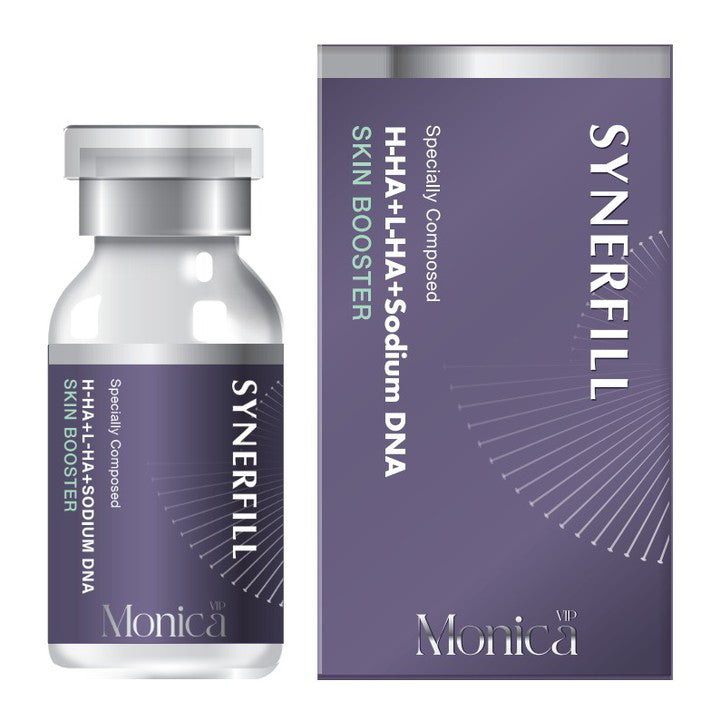
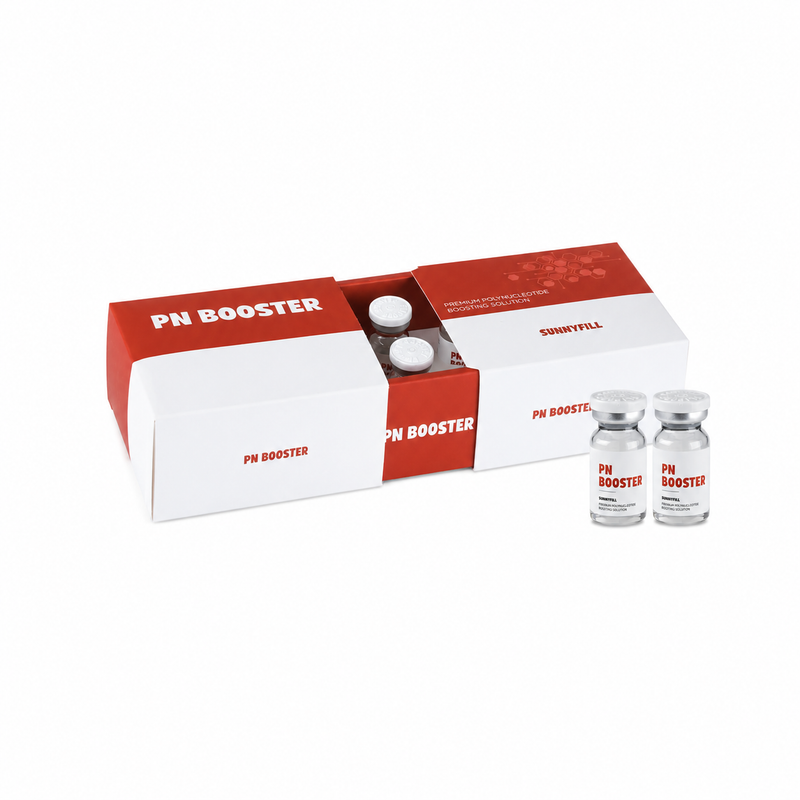
This is why mesotherapy is inseparable from the question of what is being injected. A mesotherapy session is only as considered as its cocktail, which might center on hyaluronic acid, polynucleotides, vitamins, or other conditioning agents depending on the goal and the market. The technique does not specify the contents, and two mesotherapy treatments can share a method while sharing almost nothing about what actually enters the skin. That gap between method and material is exactly where sourcing and formulation start to matter, a theme we return to below.
It is also worth separating mesotherapy the technique from the skin booster the product, because the two are routinely merged in conversation. We pulled those apart in mesotherapy versus skin boosters, where the short version is that mesotherapy is a way of delivering, a skin booster is a category of what gets delivered, and a booster can be administered by a mesotherapy technique without the two words meaning the same thing.
What microneedling is: a controlled injury the skin answers
Microneedling works from the opposite direction. Instead of depositing a substance, it uses an array of fine needles to create controlled mechanical micro-injuries in the skin, and the treatment relies on the skin's own response to those injuries. The process is non-ablative, meaning it disrupts the dermis while largely preserving the epidermis, which is part of why it is associated with less pigmentary disturbance than more aggressive resurfacing.2 The needles are the instrument, but the tissue does the work.
What follows the injury is a cascade the skin runs on its own. Controlled micro-wounds initiate a wound-healing sequence: fibroblasts are activated, new collagen is laid down (neocollagenesis), the extracellular matrix is remodeled, and a set of growth factors including platelet-derived growth factor, transforming growth factor beta, and vascular endothelial growth factor are released as part of the repair.2 The clinical reviews describe this as the mechanistic core of microneedling: the device provokes a repair response, and the repair response is the point.3 Nothing needs to be injected for that cascade to begin.
Depth is set by needle length and is matched to intent rather than fixed. Shorter needles, on the order of 0.5 to 1 mm, are typically associated with skin aging and fine lines, while longer needles, around 1.5 to 2 mm, are associated with the routine treatment of scarring, with facial insertion depths often in a shallower range than the neck or décolletage.3 The adjustable depth is a feature: the same instrument covers different jobs by changing how far the injury reaches, which is a very different kind of control from choosing what fluid to inject.
There is a second, quieter mechanism worth naming, because it is where the two techniques start to reach toward each other. The same micro-channels that trigger repair also transiently increase the permeability of the stratum corneum, the skin's outer barrier.2 That is, microneedling does not only stimulate; it briefly opens a path for topical material to penetrate more readily than it otherwise would. Hold that detail, because it is the hinge on which the hybrid treatments turn.
| Dimension | Mesotherapy | Microneedling |
|---|---|---|
| Core idea | Place a substance into the dermis | Create a controlled injury the skin repairs |
| What enters the skin | A chosen cocktail (for example HA, polynucleotides, vitamins) | Nothing by default; needles only, unless combined with a topical |
| Primary mechanism | Local exposure and slow diffusion of the deposited material | Wound-healing cascade: fibroblasts, neocollagenesis, growth factors |
| Depth control | Set by injection into the dermis | Set by needle length, matched to the goal |
| The variable that matters most | What is in the cocktail, and its sourcing | Device, depth, and technique |
| Overlap | Combined as microneedling mesotherapy, where channels aid topical uptake | |
The core difference: delivery versus stimulation
Set side by side, the two techniques separate cleanly along one axis: mesotherapy is about delivery, microneedling is about stimulation. Mesotherapy's active ingredient is whatever is in the syringe, and the technique exists to place that material accurately. Microneedling's active ingredient, if the phrase even fits, is the skin's own healing response, and the technique exists to provoke it. One imports something from outside; the other conscripts a process from inside.
That single distinction explains most of the downstream differences without needing to memorize them. It explains why mesotherapy is discussed in terms of formulations and cocktails while microneedling is discussed in terms of needle depth and passes. It explains why the biggest quality question for mesotherapy is what is being injected and where it came from, while the biggest quality question for microneedling is the device and the hand using it. And it explains why the two produce different conversations about safety, since injecting a substance and wounding tissue carry different considerations even when the visible tools look alike.
It also reframes a question people often ask backward. The useful question is rarely "which one is better," because they are not competing to do the identical job. The useful question is "which problem am I trying to solve, delivery or stimulation," and the honest answer sometimes turns out to be both, which is precisely why the hybrid exists. Treating the two as rivals obscures that they are frequently complementary, each covering a gap the other leaves open.

Where the two blur: microneedling mesotherapy
The reason these words are so often tangled is that there is a real, common treatment that genuinely combines them. In microneedling mesotherapy, the device creates the micro-channels and a topical serum or cocktail is applied so that it can travel through those transiently opened paths into the skin. This leans on the permeability effect noted earlier: the channels that trigger repair also let externally applied material penetrate more readily than an intact barrier would allow.2 The result is a procedure that stimulates and delivers at once.
It is worth being precise about what that hybrid is and is not. It is not full mesotherapy, because much of the material is applied topically and drawn in through channels rather than injected as a discrete intradermal deposit, so the placement and kinetics are not identical to a true micro-injection. And it is not plain microneedling, because a chosen active is deliberately introduced rather than relying on the wound response alone. It sits between the two definitions, borrowing the stimulation from one and a softer version of the delivery from the other, which is exactly why a single clinic menu can list all three and mean three different things.
For a reader trying to keep the categories straight, the hybrid is less a fourth thing to memorize than a demonstration of the framework. Once you hold the axis of delivery versus stimulation, microneedling mesotherapy is easy to place: it is the treatment that decided not to choose, using the injury to stimulate and to open a path for the substance in the same session. The blur is not a failure of definitions. It is two clear ideas being used together on purpose.
How the choice tends to map to a goal
Because the two techniques act through different mechanisms, they tend to be discussed in relation to different goals, and holding the mechanism in mind makes those associations legible rather than arbitrary. Mesotherapy, as a delivery method, is naturally centered on goals where the point is to introduce a specific conditioning material into the skin, so the conversation revolves around what that material is and what it is meant to address locally. The method is chosen because delivery is the objective.
Microneedling, as a stimulation method, is naturally centered on goals tied to the skin's structural repair response, since its whole mechanism is the collagen-and-remodeling cascade that follows controlled injury.3 When the objective is to prompt the skin to rebuild rather than to deposit an ingredient, the injury-based approach is the one whose mechanism matches. The adjustable depth then lets the same technique be tuned toward finer or deeper repair targets, which is why it is described as a versatile instrument rather than a single-purpose one.
The important caution is that mechanism-to-goal mapping is a way to understand the categories, not a promise of results or a substitute for assessment. Real cases are individual, outcomes depend on many variables, and a responsible answer to "which should I choose" runs through a qualified professional who can evaluate the specific skin and objective in front of them. The framework tells you why a technique is plausibly relevant to a goal. It does not tell you what will happen, and it does not replace the person qualified to make that call.
Can you combine mesotherapy and microneedling?
In practice they are frequently combined, and microneedling mesotherapy is the named version of exactly that combination, using the channels from one technique to assist the uptake of a topical active while the injury drives a repair response.2 Beyond that specific hybrid, the two can also feature in a broader plan at different times for different purposes, since a delivery step and a stimulation step are not mutually exclusive objectives. The mechanisms are compatible, which is why the pairing is common rather than contradictory.
What combination does not do is erase the considerations that belong to each part. Introducing an active still raises the question of what that active is and where it was sourced, and creating micro-injuries still raises the questions of device, depth, and technique. A combined treatment inherits both sets of considerations rather than averaging them away, so the vetting that applies to each technique individually continues to apply when they are used together. Combining methods is a reason to be more careful about inputs, not less.
The sequencing, spacing, and suitability of any combined approach are again clinical decisions rather than things a general article can prescribe. The takeaway here is conceptual: because one technique delivers and the other stimulates, they slot together without conflict, and the existence of the hybrid is the clearest proof that the two were never really rivals. They were always two different answers that a single session can decide to use at once.
What each technique means for sourcing
The delivery-versus-stimulation split lands directly on where quality risk sits, and the two techniques put it in different places. For mesotherapy, the risk concentrates in the material, because the technique is only a vehicle and the substance is what actually enters the skin. That makes the identity, formulation, and sourcing of the injected cocktail the decisive quality question, and it is the same question that governs skin boosters generally, since a booster is frequently what a mesotherapy technique is delivering.
For microneedling on its own, the material question mostly falls away, because nothing is injected by default and the mechanism is the skin's response to the device. The quality question shifts to the instrument and the hands: the device, its condition, the depth selected, and the technique of the operator. When microneedling is combined with a topical in the hybrid form, the material question returns for whatever is being applied, since a channel that improves penetration improves it for good and bad inputs alike.
This is the practical reason the categories are worth keeping straight even for a buyer who will never hold a device. If a treatment centers on what is placed in the skin, the sourcing of that substance is the thing to scrutinize, and the checks that apply to any injectable apply here too, from reading the product to reading the seller. We covered how to select a booster in relation to a goal in choosing a skin booster by concern, and the same logic feeds the mesotherapy side of this comparison: know the technique, then scrutinize the material it delivers.
Frequently asked questions
Frequently asked
What is the difference between mesotherapy and microneedling?
Mesotherapy is a delivery technique that deposits a chosen substance into the dermis through fine micro-injections, so its effect depends on what is injected. Microneedling is a stimulation technique that creates controlled micro-injuries and relies on the skin's own wound-healing response, including new collagen formation, without injecting anything by default. In short, one is about what you put into the skin, the other about what you make the skin do.
Is microneedling the same as mesotherapy?
No. They are often listed together and can be combined, but they work through different mechanisms. Microneedling provokes a repair cascade through controlled injury; mesotherapy places a substance into the dermis for local exposure. The combined treatment called microneedling mesotherapy uses the channels created by needling to help a topical active penetrate, which borrows from both but is identical to neither.
Can you combine mesotherapy and microneedling?
Yes, and the combination is common enough to have its own name, microneedling mesotherapy, where the micro-channels from needling transiently increase skin permeability so an applied serum or cocktail can penetrate more readily while the injury drives a repair response. Combining them inherits the considerations of both, so the sourcing of any active and the device and technique of the needling both still matter. Sequencing and suitability are clinical decisions.
How do I choose between mesotherapy and microneedling?
Start from the objective rather than the name. If the aim is to introduce a specific conditioning material into the skin, that is the delivery question mesotherapy is built around. If the aim is to prompt the skin's structural repair response, that is the stimulation question microneedling is built around. The right choice for an individual, including depth, materials, and whether to combine them, is an assessment a qualified professional makes, not something a general guide can decide.
Which matters more for quality, the technique or the product?
It depends on which technique. For mesotherapy the injected material is decisive, so its formulation and sourcing carry the quality risk. For plain microneedling the device, depth, and operator carry it, since nothing is injected. For the hybrid, both apply. That is why keeping the categories straight is useful even if you never handle a device: it tells you where to point your scrutiny.
Disclaimer. This article is general educational information, current as of its publication date, and is not medical advice, a diagnosis, or a treatment recommendation. It describes how the techniques work and does not claim a specific result for either. Suitability, technique, depth, and any injected or applied material are decisions for a qualified professional based on individual assessment. Whether a given device or injectable is registered or permitted for use is decided by the relevant authorities in each market.
Sources & references
- Sivagnanam G. et al., "Mesotherapy: From Historical Notes to Scientific Evidence and Future Prospects" (mesotherapy as intradermal micro-injection; term proposed by Michel Pistor in 1958; intradermal deposit slows absorption and prolongs local action). PMC. ncbi.nlm.nih.gov
- "Physiological Mechanisms and Therapeutic Applications of Microneedling: A Narrative Review" (controlled micro-injury; fibroblast activation, neocollagenesis, extracellular matrix remodeling, growth factors PDGF, TGF-beta, VEGF; increased stratum corneum permeability; non-ablative). PMC. ncbi.nlm.nih.gov
- "Microneedling in Dermatology: A Comprehensive Review of Applications, Techniques, and Outcomes" (needle-length ranges by indication; depth matched to target). PMC. ncbi.nlm.nih.gov
From a sourcing standpoint, the split in this comparison is also the split in where KSTATION fits. Microneedling is a device-and-technique procedure, which is a clinic's domain rather than a supplier's. Mesotherapy is a delivery method whose quality rides on the injected material, and that material is what a sourcing platform is accountable for: authentic stock, an accountable channel, and handling appropriate to the product. The conditioning cocktails and boosters that a mesotherapy technique commonly delivers sit across the skin boosters and ampoules range. What KSTATION does not decide is whether a given product or technique is appropriate or permitted for you, which remains a matter for a qualified professional and your local authority.