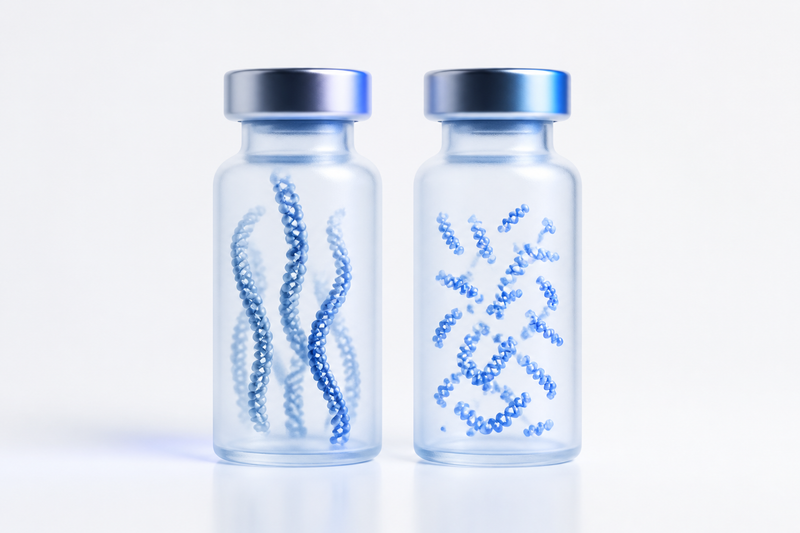
Two very different products share the word filler, and the difference is not a detail. A hyaluronic acid filler adds volume the moment it goes in, and it can be dissolved if anyone changes their mind. A biostimulator adds almost nothing on day one; instead it asks the skin to build its own collagen over the following weeks, and that process cannot be undone. For anyone reading a catalog rather than a marketing line, that single split is the thing to understand first.
Two jobs hiding under one word
When a product is described as a filler, it is doing one of two jobs. The first is direct volumization: a gel sits in the tissue and holds space, and the result is visible immediately. The second is biostimulation: a material is placed in the skin not to occupy space itself but to provoke a controlled, low-grade healing response that lays down new collagen. The first is a material you can see and remove. The second is a process you start and then wait on. Most of the practical questions, about timing, reversibility, and which concern a product suits, fall out of which job it was designed to do.
What hyaluronic acid actually does
Hyaluronic acid (HA) is a polysaccharide the body already makes, formulated into a cross-linked gel for injection. It works by physical presence and water-binding: it occupies space and draws water to it, so the correction appears at once and can be shaped precisely during the session. Its defining advantage is not volume but reversibility. An HA gel can be broken down on demand with the enzyme hyaluronidase, which is why HA is the category clinicians reach for when reversibility, precision, or a safety margin against vascular events matters.1 HA does not stimulate the skin to make its own collagen in any meaningful way; what it gives is what you injected.
What a biostimulator actually does
A biostimulator is built around a different idea. Microparticles of a biodegradable material are placed in the deeper skin, where the body's ordinary response to them, a macrophage-led, low-grade reaction, activates fibroblasts to deposit new type I collagen around the particles.2 The visible change therefore arrives gradually, as that collagen accumulates, and the material itself slowly degrades. Three chemistries dominate the category, and they are not interchangeable.
PLLA (poly-L-lactic acid)
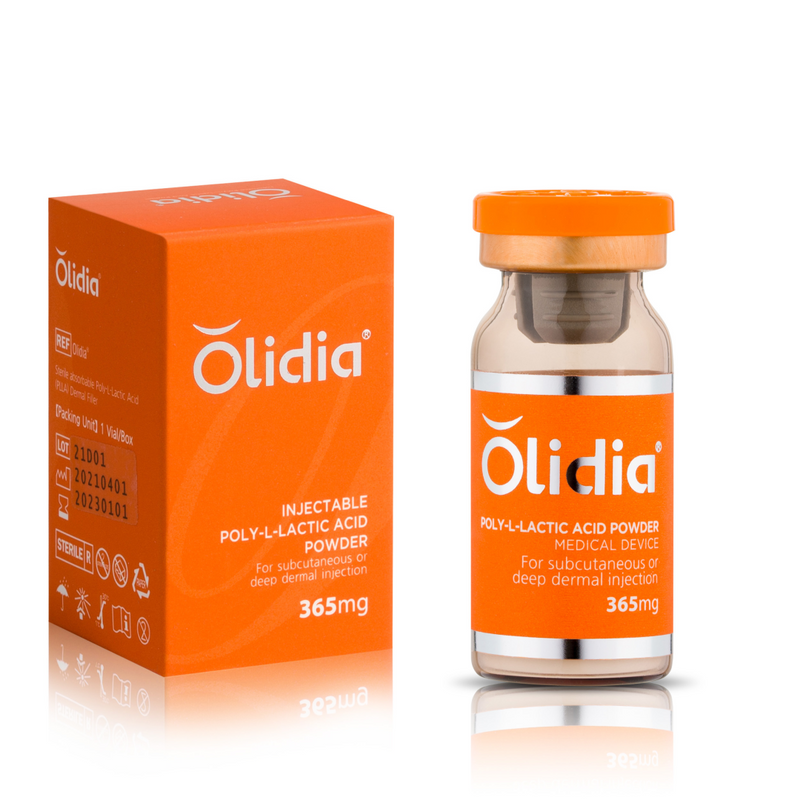
PLLA is supplied as a lyophilized powder that is reconstituted before use and placed in the deep dermis or subcutis. It contributes little immediate volume; the effect builds as fibroblasts respond and lay down collagen over weeks to months.2 The original branded PLLA, Sculptra, is FDA-approved, and Korean PLLA lines such as OLIDIA sit in the same chemical family.
CaHA (calcium hydroxylapatite)
CaHA is different in one important way: its microspheres are suspended in a carrier gel, so it gives an immediate lift on the day, and then stimulates collagen as the gel resorbs and the spheres remain.3 It is therefore the one biostimulator that also behaves a little like a traditional filler at first. The branded CaHA, Radiesse, is FDA-approved for facial and hand augmentation.
PCL (polycaprolactone)
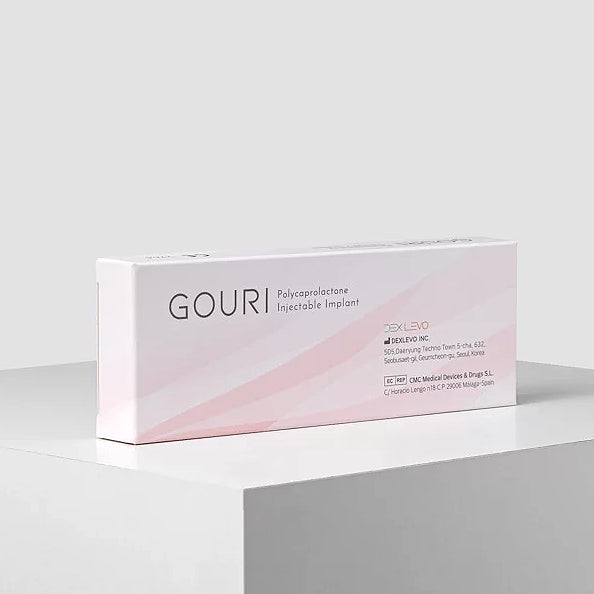
PCL is a slowly biodegradable polymer, formulated as microspheres in a gel, designed to drive collagen formation over a longer arc than PLLA or CaHA as the polymer degrades. PCL fillers are widely used in Korea and other markets, including liquid-PCL lines such as GOURI, but as of writing PCL is not FDA-approved in the United States, which matters for anyone reasoning across regulatory borders.
The comparison, at a glance
The table below holds the working differences in one view. Treat the duration column as the general range reported in manufacturer and clinical literature, not a promise: real outcomes depend on the patient, the product, the depth, and the hands placing it.
| Property | HA filler | PLLA | CaHA | PCL |
|---|---|---|---|---|
| Active material | Hyaluronic acid gel | Poly-L-lactic acid particles | Calcium hydroxylapatite microspheres | Polycaprolactone microspheres |
| Primary action | Adds volume directly | Stimulates collagen | Immediate lift, then collagen | Stimulates collagen |
| Onset | Immediate | Gradual, weeks to months | Immediate plus gradual | Gradual |
| Dissolvable | Yes, with hyaluronidase | No | No | No |
| Reported range | About 6 to 18 months | About 18 to 24 months | About 12 to 18 months | Varies by version, roughly 1 to 4 years |
| US FDA status | Approved (many products) | Approved (Sculptra) | Approved (Radiesse) | Not approved |
Reversibility is the line that matters most
If you remember one structural fact, make it this one. An HA result can be dissolved; a biostimulator result cannot. That is not a verdict on quality, it is a property of the chemistry. HA's reversibility buys a margin of safety and second chances, which is part of why it remains the default for many indications. A biostimulator, by contrast, is a commitment: the collagen it provokes is the patient's own tissue, and there is no enzyme that unwinds it on request. This is exactly why patient selection, conservative dosing, and an experienced injector weigh more heavily with biostimulators than with HA.

Choosing is about the goal, not a ranking
There is no universal best here, and any source that names one is selling something. The honest framing is that each tool answers a different question, and the choice is a clinical one made for a specific face and goal:
- When the goal is immediate, shapeable correction with a route to reverse it, HA is the natural fit.
- When the goal is gradual improvement in skin quality and collagen over a wider area, a biostimulator is the relevant family.
- When some immediate lift and longer-term stimulation are both wanted, CaHA occupies that middle ground.
- When longevity is the priority and the regulatory market allows it, PCL is the longest-acting of the three.
None of this is a recommendation for an individual. It is the map a clinician works from, and the actual decision belongs in the consultation, not in a catalog.
Where the supply side fits
For a distributor, the useful contribution is not to crown a winner but to make sure the material in the box is genuinely what its label claims. Biostimulators are powder-and-polymer products whose behavior depends on correct manufacturing, intact formulation, and proper handling, so provenance is not a nicety here, it is part of the product. A specialist distributor curates authentic, official-channel Korean fillers and biostimulators and keeps sourcing traceable, which is the variable a practitioner cannot verify from a syringe alone.
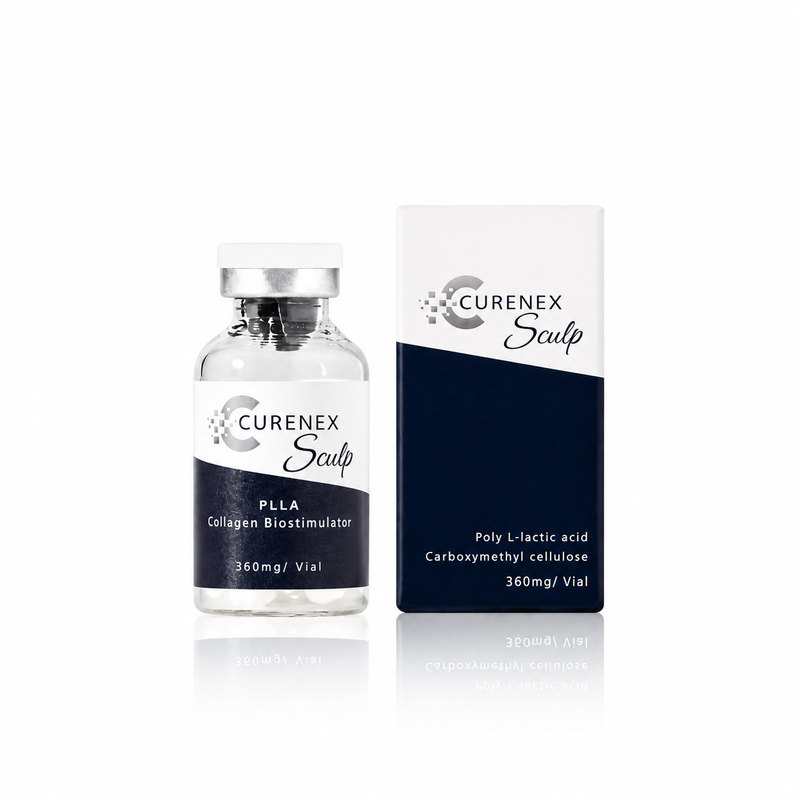
For readers mapping the category, PLLA, PCL, and related lines such as OLIDIA, GOURI, and CURENEX Sculp sit within the broader skin firmness and lifting range. Which chemistry suits a given case, and whether it is approved in a given market, is a clinical and regulatory question, not a checkout one.
Frequently asked questions
Frequently asked
Is a biostimulator a filler?
It is grouped with fillers, but it works differently. A traditional HA filler adds volume directly, while a biostimulator adds little at first and instead prompts the skin to build its own collagen over time.2
Can a biostimulator be dissolved like HA?
No. HA can be broken down with hyaluronidase, but PLLA, CaHA, and PCL results come from the patient's own collagen and the material's slow degradation, and there is no enzyme that reverses them on demand.1
How soon do PLLA and CaHA show?
PLLA builds gradually over weeks to months as collagen forms. CaHA is the exception that also gives an immediate lift on the day from its carrier gel, then continues to stimulate as the gel resorbs.3
PLLA vs CaHA vs PCL, what is the difference?
Different chemistries with different timelines: PLLA is gradual with no immediate volume, CaHA gives immediate lift plus stimulation, and PCL is the longest-acting polymer. Regulatory status also differs by market, so the right choice is clinical, not a ranking.
Are these FDA-approved?
In the United States, PLLA (Sculptra) and CaHA (Radiesse) are FDA-approved; PCL is not approved as of writing, though it is widely used in Korea and other markets. Always confirm current status for the specific product and country.
Disclaimer. This article is general educational information and is not medical advice or a recommendation for any individual. It describes how these material categories work and how they are regulated, not what any specific product will do for a given patient; outcomes and durations vary and are not guaranteed. Regulatory approval differs by country and changes over time, so confirm current status with the relevant authority.
Sources & references
- A Scoping Review of Hyaluronidase Use in Managing the Complications of Aesthetic Interventions (hyaluronidase dissolves HA filler and manages complications including vascular occlusion; the reversibility unique to HA). pmc.ncbi.nlm.nih.gov
- Effect of Hyaluronic Acid and Poly-L-Lactic Acid Dermal Fillers on Collagen Synthesis: an in vitro and in vivo study (PLLA neocollagenesis mechanism). pmc.ncbi.nlm.nih.gov
- Morphological analysis of calcium hydroxylapatite and poly-L-lactic acid biostimulator particles (CaHA carrier gel and particle behavior). pmc.ncbi.nlm.nih.gov