Hyaluronic acid is the rare ingredient that shows up in a five-dollar drugstore serum and in a clinic-grade dermal filler, and the same three letters, HA, cover both. That range is exactly what makes it confusing. The molecule is identical in name across daily cosmetics and advanced fillers, but the format, the molecular size, and the professional context change what it is actually doing. This is Part 15, and the goal here is to read HA across that whole spectrum rather than from any single product claim.
From a sourcing standpoint, the first useful move is to separate the word from the format. HA is not one thing you buy. It is a naturally occurring molecule that the body already makes, which the cosmetic and medical aesthetic industries have engineered into three distinct application categories: topical cosmetics, injectable skin boosters, and crosslinked dermal fillers. Each format answers a different question, and conflating them is where most marketing overreach begins.
What hyaluronic acid actually is
Hyaluronic acid is a glycosaminoglycan, a long unbranched sugar chain built from repeating disaccharide units, and it occurs naturally throughout the human body with roughly half the total amount residing in the skin, alongside high concentrations in the joints and the eyes.1 Its carboxyl groups give it a negative charge that is strongly hydrophilic at physiological pH, which is the structural reason it binds water and forms viscous, lubricating networks.2 In the body it helps keep tissue hydrated and well lubricated, and in eye surgery and osteoarthritis care it is used precisely for those lubricating and space-filling properties.1 None of that is a claim about what a cream will do. It is simply what the molecule is, and that is the right place to start.
The "1000x its weight in water" claim, qualified
You will see it everywhere: HA holds a thousand times its weight in water. It is worth being honest about this number because it does not hold up well under measurement. Laboratory work on actual water-binding capacity has found saturation closer to roughly 20 to 30 times the polymer weight for high and low molecular weight HA, far below the marketed figure, and reviewers describe the 1000x line as a legacy marketing claim repeated without primary experimental support.3 The original article in this series carried an even larger version of the same idea, the claim that one gram of HA holds six liters of water, and that figure should be read as illustrative shorthand rather than a measured constant. HA is genuinely a powerful humectant. It simply does not need an inflated multiplier to be worth using.
Molecular weight, and why it matters
HA is not a single size. It is commonly grouped into low molecular weight (often cited around 6 to 200 kDa), medium molecular weight, and high molecular weight above roughly 1000 kDa, and that size shapes behavior.2 On the skin surface, high molecular weight HA tends to sit on top as a hydrating film, while lower molecular weight chains have been shown by Raman spectroscopy to penetrate further into the stratum corneum, with the smallest fragments passing through where the large ones cannot.4 There is also a quieter biological wrinkle worth knowing: in laboratory studies, high molecular weight HA is associated with calmer, anti-inflammatory signaling, while very low molecular weight fragments can act as pro-inflammatory signals through receptors such as TLR4 and CD44.5 The practical lesson is that "low molecular weight" on a label is a trade-off, not a straight upgrade.
Topical HA versus injectable HA
This is the line that matters most for reading any product. Topical cosmetic HA, the kind in serums, creams, and masks, works as a humectant at and near the skin surface, drawing and holding moisture in the upper layers and helping limit transepidermal water loss for an immediate, temporary plumping feel.4 Injectable HA is a different category entirely. It is placed into the skin by a trained professional and is regulated as a medical product, with crosslinked HA dermal fillers cleared by the U.S. FDA as medical devices rather than as cosmetics.6 The two share a molecule and almost nothing else about how they are used, who handles them, or how they are regulated. Injectable HA belongs to clinical practice and should be administered by qualified professionals, and it is distinct from the topical HA you apply at home.
From hydration to volume: crosslinking and fillers
To turn short-lived liquid HA into a structural gel that lasts, manufacturers crosslink the chains, most commonly using BDDE (1,4-butanediol diglycidyl ether). Under alkaline conditions the BDDE epoxide reacts with HA to form stable ether bonds, weaving the linear chains into a three-dimensional network that behaves like an elastic, solid gel rather than a liquid.8 That network resists enzymatic breakdown, which is why crosslinked fillers are generally described as lasting on the order of months to a couple of years depending on the product, while the body still clears them over time.8 Crosslinking is the single chemical step that separates a hydrating serum ingredient from a contouring implant, and BDDE-crosslinked HA has a long clinical safety record behind it.8 One practical advantage follows from the chemistry: because the gel is still HA, the enzyme hyaluronidase can be injected to dissolve it, which is the basis of HA filler reversibility.7
HA in skin boosters
Between topical serums and structural fillers sits a third format that often gets blurred into "filler" but is mechanistically distinct. Skin boosters use non-crosslinked or only lightly crosslinked HA, injected to distribute through the dermis rather than to hold a fixed shape. Because the HA is not locked into a rigid crosslinked matrix, it spreads more evenly and is intended to support the skin's hydration and overall condition rather than to add contour or volume.2 The goal is the quality of the skin, not the shape of the face, and like other injectables this is a professional procedure. Reading a product honestly starts with knowing which of the three buckets it falls into, because the same two letters, HA, describe very different intentions.
Where the supply side fits
This is the part a distributor can actually stand behind. We do not promise what HA will do for your skin, because the spectrum above is exactly why no honest sourcing partner should flatten cosmetic, booster, and filler into one promise. What we do is curate official-channel Korean products by category and keep provenance traceable, with cold chain handling and shipping across the US and EU, so the product that reaches a practitioner is the genuine article it claims to be.
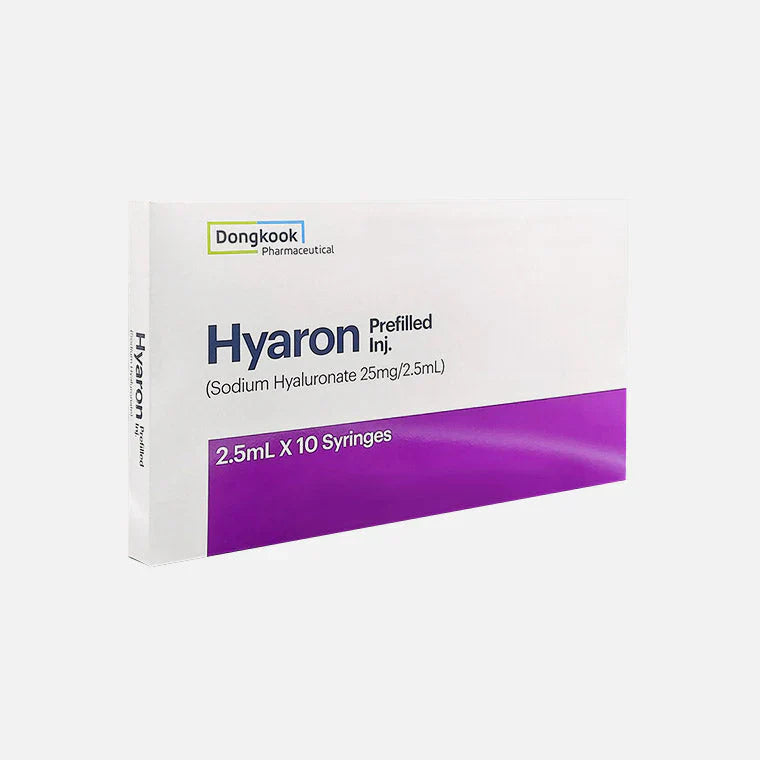
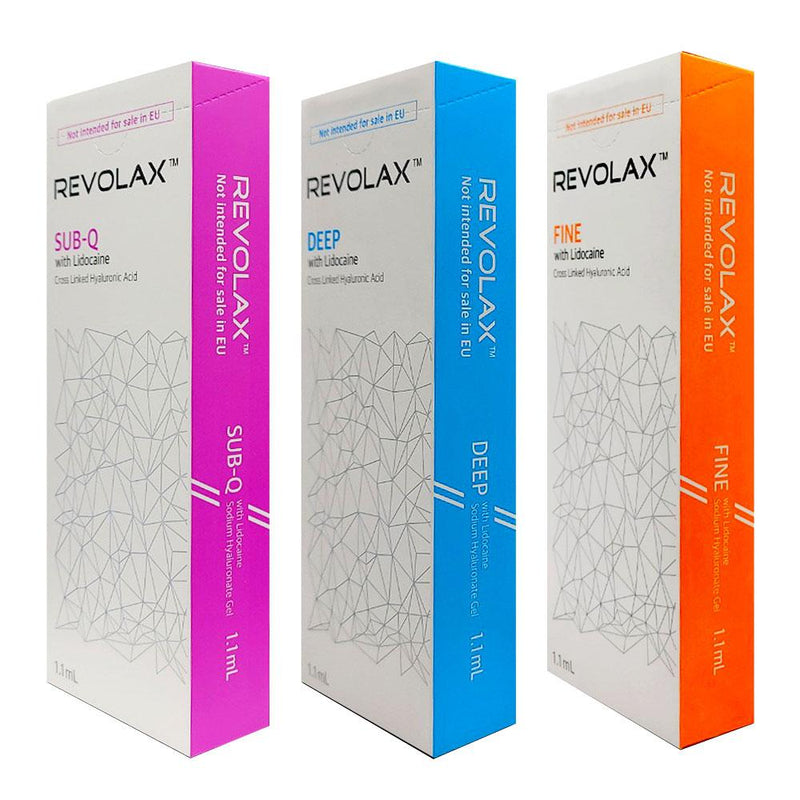
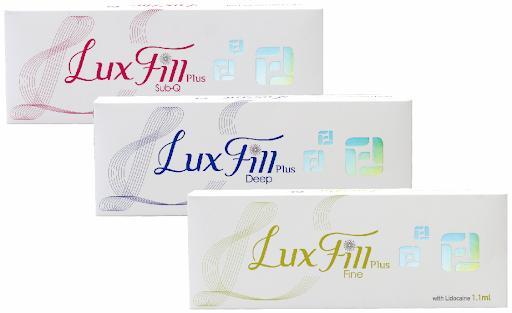
For readers mapping how HA appears in practice, the hydration end of the range includes the skin booster Hyaron Prefilled, while the crosslinked, volume end includes fillers such as REVOLAX and Luxfill, alongside others like NEURAMIS. Boosters sit under Skin Boosters and Ampoules and crosslinked products under Derma Fillers, all intended for professional use.
Frequently asked questions
Frequently asked
What is hyaluronic acid?
Does HA really hold 1000 times its weight in water?
That figure is not well supported. Laboratory measurements put actual water-binding capacity closer to roughly 20 to 30 times the polymer weight, and the 1000x line is widely described as a legacy marketing claim. HA is a strong humectant regardless, but the multiplier is overstated.3
What is the difference between topical and injectable HA?
Topical HA is a cosmetic humectant that works at and near the skin surface to hold moisture. Injectable HA is a medical product placed into the skin by a trained professional, and crosslinked HA fillers are regulated by the FDA as medical devices, not cosmetics.6
Disclaimer. This article is general information for educational purposes and is not medical advice. It describes what hyaluronic acid is and how it is used and regulated across cosmetic, skin booster, and dermal filler formats, not what any product will do for an individual. Injectable HA products referenced are intended for administration by trained professionals and are distinct from topical cosmetic HA. Cosmetic and medical device rules vary by country and change over time; confirm current requirements with the relevant authority.
Sources & references
- Hyaluronic Acid: A Powerful Biomolecule with Wide-Ranging Applications, A Comprehensive Review (distribution in skin, joints, eyes; lubrication; clinical uses). pmc.ncbi.nlm.nih.gov
- Hyaluronic Acid: The Influence of Molecular Weight on Structural and Physico-Chemical Properties (glycosaminoglycan structure, charge, hydrophilicity, MW classes). pmc.ncbi.nlm.nih.gov
- The Fallacy of Hyaluronic Acid Binding a Thousand Times Its Weight In Water (measured saturation ~20 to 30x; critique of the 1000x claim). chemrxiv.org
- Essendoubi et al., Human skin penetration of hyaluronic acid of different molecular weights as probed by Raman spectroscopy. pubmed.ncbi.nlm.nih.gov
- Reviews on molecular-weight-dependent HA signaling (HMW anti-inflammatory; LMW pro-inflammatory via TLR4 / CD44). ncbi.nlm.nih.gov
- U.S. FDA, FDA-Approved Dermal Fillers (crosslinked HA injectable fillers regulated as medical devices). fda.gov
- The Degradation of Hyaluronan in the Skin (short HA half-life; hyaluronidases HYAL1, HYAL2, TMEM2, CEMIP). pmc.ncbi.nlm.nih.gov
- Comparative Physicochemical Analysis among BDDE Cross-Linked Hyaluronic Acid Dermal Fillers (BDDE ether bonds, 3D network, durability, safety record). pmc.ncbi.nlm.nih.gov