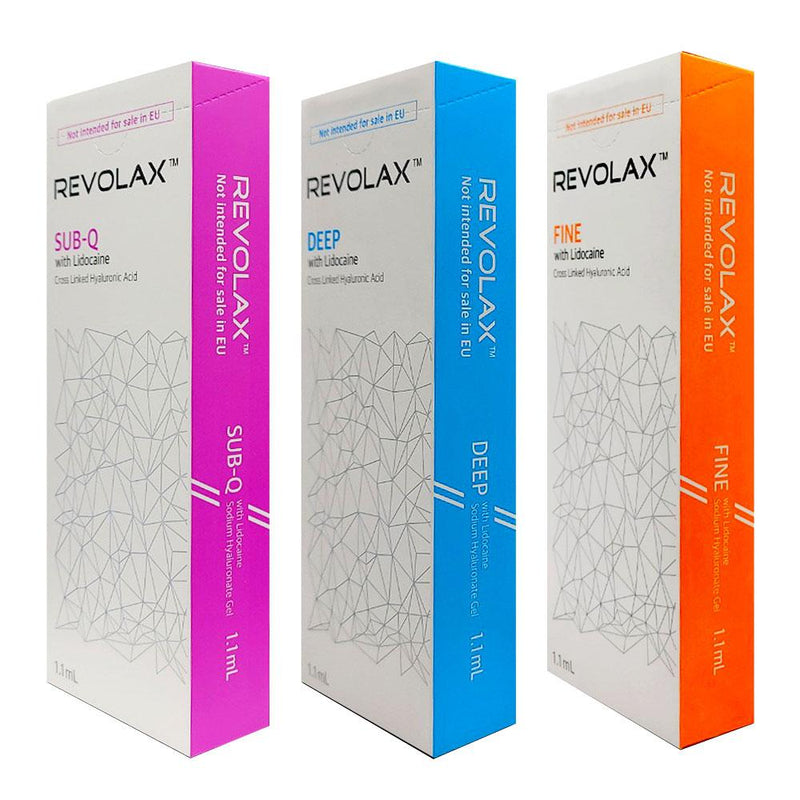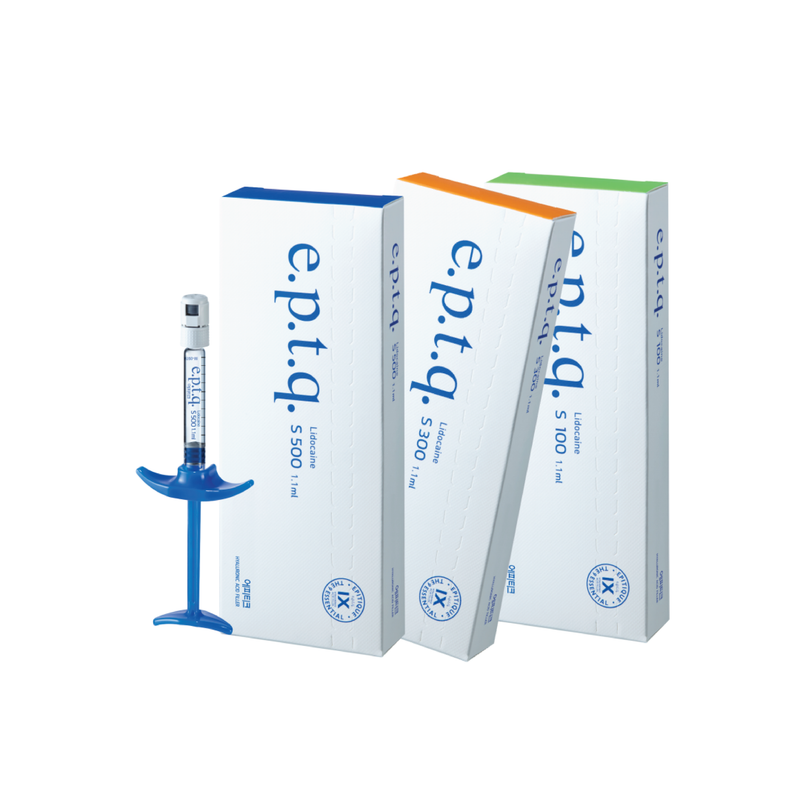
"How long does filler last" sounds like a question with a number for an answer, and the honest reply is that it is really three questions wearing one coat. What you can see in the mirror, what is physically still under the skin, and when a professional would consider treating again are three different clocks, and they do not stop at the same time. Before any single figure means much, it helps to know which clock a filler is on, and what actually moves the hands.
Why "how long does it last" has more than one answer
A filler result has a beginning, a plateau, and a long tapering end, and the word "last" can point to any part of that curve. There is the moment the visible correction looks its best, the longer stretch where a meaningful amount of it is still doing work, and the final tail where a little material lingers without changing how anything looks. Ask three people how long their filler lasted and you may get three sincere, different answers, because each is describing a different point on the same slope.
This matters because most published longevity figures describe the middle of that curve rather than its end, and readers often hear them as a hard stop. A filler does not switch off on a date. Hyaluronic-acid gels, the most common family, are gradually broken down by the body over time, which is exactly why their effect fades rather than vanishes.1 The result softening is not a product failing early; it is the material behaving the way an absorbable material is designed to behave.
So the useful version of the question is narrower: how long does a given type of filler, placed in a given area, tend to keep a visible result, in the range that studies and manufacturers report. That framing keeps the honest uncertainty in view. It also sets up the real subject of this guide, which is not a single number but the handful of factors that decide where inside a wide range any particular treatment lands.
Everything below is written at the level of the product family and the biology, not the individual result, because that is the level at which the question can be answered responsibly. A duration figure is a reasonable expectation, not a guarantee, and the sections that follow are as much about the size of the range as about the middle of it.
What actually sets the clock
Filler longevity is not one property; it is the sum of several, some of them about the product and some of them about you and where the product goes. Understanding which is which is what lets you read two different duration claims without assuming the longer one is simply better. The main drivers sort into a short list.
The material family. This is the single largest factor. A hyaluronic-acid gel, a calcium-based filler, and a collagen-stimulating polymer are not the same kind of thing wearing different labels; they persist by different mechanisms and on different timescales. The family sets the broad band, and everything else fine-tunes within it. We keep the family comparison as its own subject in how biostimulators differ from HA fillers, and it is the first thing to establish before any number is worth interpreting.
How the product is built. Within the HA family especially, gels differ in concentration, in how heavily they are cross-linked, and in their rheology, the physical stiffness and cohesivity that let a gel hold its shape under pressure. More heavily cross-linked, firmer gels tend to resist breakdown longer, which is part of why a robust deep-injection product and a soft, lightly-linked one from the same maker can sit at opposite ends of a duration range. The mechanics of that are the whole subject of reading an HA filler by its cross-linking and cohesivity, and they explain more of the longevity spread than most people expect.
Where it is placed, and how much moves. A filler in a highly mobile, expressive area is worked constantly by the muscles around it, and mechanical movement speeds the breakdown of gel. The same product placed deep over bone in a relatively still region behaves differently from the way it behaves in the lips, where near-constant motion is the norm. Depth matters too: deeper placement in a stable plane tends to be kinder to longevity than superficial placement in a busy one.
The person. Metabolism varies, and a faster individual metabolism can shorten how long an absorbable filler persists. Activity level, and other individual factors influence the pace as well. Two people given the identical product in the identical spot can land in genuinely different places within the reported range, and neither result is wrong.
How much was used, and how it was placed. Amount and technique are part of the equation, which is one reason longevity is not a product specification you can read off a box. The same syringe in skilled hands, placed in the right plane and quantity for the goal, is working under better conditions than it would otherwise. This is also why longevity belongs to a treatment, performed by a qualified professional, rather than to a product in the abstract.
| Family | Commonly reported range* | What primarily drives duration |
|---|---|---|
| HA, soft / lightly cross-linked (e.g. lips, fine lines) | Around 6 to 12 months | Low cross-linking plus placement in mobile areas; broken down gradually by the body |
| HA, robust / heavily cross-linked (deep, structural) | Around 12 to 18+ months | Higher cross-linking and cohesivity resist breakdown; deeper, stiller placement helps |
| Calcium-based (CaHA) | Around 12 months, sometimes longer | Gel carrier resorbs while stimulating some collagen; a two-part effect over time |
| Collagen-stimulating polymer (e.g. PLLA) | Reported up to ~2 years | Works by prompting the skin's own collagen over months, not by holding gel volume |
*Ranges are broad, widely-reported expectations for the family, not a promise for any product or person. Individual results vary, and duration is not guaranteed.
HA fillers: one family, a wide range
Hyaluronic acid is the most familiar filler material, and it is also the one whose longevity varies the most from product to product, which confuses people who expect "HA filler" to mean a single duration. It does not. The family spans everything from a soft gel meant to sit lightly in the lips to a firm, structural gel meant to hold a deep contour, and those two live at opposite ends of the range for good mechanical reasons rather than marketing ones.
The reason the whole family is temporary in the first place is that HA is a substance the body already makes and already knows how to break down. An HA filler is a cross-linked, stabilized version of that molecule, engineered to resist enzymatic breakdown for a while, but "a while" is the operative phrase; the material is gradually resorbed, and the visible result tapers as it goes.1 Heavier cross-linking buys more time by making the gel harder to break down, which is why firmer products aimed at deep structural work tend to report longer durations than soft, expressive-area gels.
Placement then interacts with all of that. A robust gel placed superficially in a mobile area will not necessarily outlast a softer gel placed deep in a still one, because movement and depth are pulling in the opposite direction from cross-linking. This is the practical takeaway of the HA range: a longevity figure only means something once you know both the product's build and where it is going. The spec-sheet half of that story, cross-linking and cohesivity and how to read them, is covered in depth in the HA filler reading guide, and the broader material context in the HA overview.
One more property sets HA apart from the other families, and it is worth knowing even though it is not strictly a longevity question: many HA gels can be dissolved by an enzyme if a correction is needed. That reversibility is a safety feature of the family, and it also means the "clock" on an HA result is not entirely one-directional in the way a non-HA material's is. It does not make HA last longer; it makes the family more forgiving while it does last.

Biostimulators: a different clock entirely
Collagen-stimulating fillers work on a logic that inverts the HA model, and treating them as "just a longer-lasting filler" misses what they actually do. Where an HA gel provides volume directly and then fades as it resorbs, a biostimulator such as a poly-L-lactic-acid polymer provides relatively little immediate volume and instead prompts the skin to build its own collagen gradually over months. The material itself is designed to be broken down; what persists is the tissue response it triggered.2
That changes how longevity even reads. A biostimulator result tends to appear slowly, build over a series of sessions, and then hold on a longer timescale, with reported durations that can reach around two years for some products. But the number is describing the collagen effect, not a gel sitting in place, which is why the onset feels so different: there is no instant plateau to fade from, and the "last" question is about how long the stimulated collagen persists rather than how long a filler resists breakdown.
The families are also built for different jobs, and longevity is downstream of that. A biostimulator suits gradual, diffuse volume and skin-quality goals; a robust HA suits a defined structural correction you want to see immediately and, if needed, adjust. Longer is not automatically the goal: a reversible, immediately-visible HA is the right tool for some plans precisely because it is not permanent. The mechanism-level contrast, and where each family fits, is the subject of the biostimulator versus HA comparison, and it is the context that makes a two-year figure and a nine-month figure both make sense rather than compete.
How to read a longevity claim without being misled
Once you know the drivers, a duration claim becomes readable rather than persuasive, and a few habits keep it that way. The first is to notice which part of the curve a claim describes. "Lasts up to eighteen months" is an upper bound under favorable conditions, not an average, and the word "up to" is doing quiet work. A responsible figure is usually a range, and a range is more trustworthy than a single confident number precisely because it admits the variation that really exists.
The second habit is to attach every figure to an area. A duration quoted for deep structural placement does not transfer to the lips, and a lip figure does not transfer to a cheek. When a claim floats free of where the product goes, it has dropped one of the two variables that determine the answer, and it should be read as a headline rather than a specification.
The third is to keep family and figure together. A long duration attached to a collagen-stimulator is a different kind of claim from a long duration attached to an HA gel, because they persist by different mechanisms, and comparing the raw numbers as if they were interchangeable compares two different clocks. The families are not ranked on a single ladder of "how long," and a guide that presents them that way is flattening the part that matters.
The last habit is the plainest: treat longevity as one property among several, alongside how a product feels, how it is placed, whether it can be adjusted, and what the goal actually is. A filler that lasts a shorter time but is reversible and immediately correctable is the better choice for some plans, and the longest-lasting option is not a default. Reading the claim well means holding it next to the goal, not chasing the biggest number on the page.
Longevity by family, at a glance
Pulling the threads together, a short mental model does most of the work:
- Family sets the band. Soft HA sits at the shorter end, robust HA in the middle-to-long, calcium-based around a year and often beyond, collagen-stimulators on the longest reported timescale, each by a different mechanism.
- Build fine-tunes it. Within HA, cross-linking, concentration, and cohesivity move a product along its band; firmer, more heavily linked gels generally resist breakdown longer.
- Placement and movement adjust it further. Mobile, expressive areas shorten duration; deeper, stiller placement tends to extend it, sometimes enough to outweigh the product's own build.
- The person and the technique decide where inside the range you land. Metabolism, amount, and skilled placement are why identical products give non-identical timelines.
None of this replaces a consultation, and it is not meant to. The purpose of understanding the drivers is to make that consultation better: to arrive able to ask why a particular family fits your goal, what range is realistic for the area in question, and what the trade-offs are between a longer-lasting choice and a reversible, immediately-adjustable one. For the category as a whole, the fillers overview is the pillar that sits above this piece, and the family and spec guides linked throughout go a level deeper on each branch.
Frequently asked questions
Frequently asked
How long do dermal fillers last?
It depends most on the material family and where the filler is placed, so the honest answer is a range rather than a single figure. Soft hyaluronic-acid gels in mobile areas are commonly reported to last around six to twelve months, robust HA gels in deeper placements around twelve to eighteen months or more, calcium-based fillers around a year and sometimes longer, and collagen-stimulating polymers up to roughly two years. These are typical expectations, not guarantees, and individual metabolism, movement, amount, and technique all shift the result within the range.
Why do some fillers last longer than others?
Because they persist by different mechanisms. HA gels provide volume directly and are gradually broken down by the body, so how heavily a gel is cross-linked and how firm it is changes how long it resists breakdown. Collagen-stimulating fillers instead prompt the skin to build its own collagen, so their duration reflects that tissue response rather than a gel holding volume. On top of the family and the product's build, placement, movement, and individual factors move any given result along its range.
Do lip fillers wear off faster than cheek fillers?
Often, yes, and movement is a large part of why. Lips are one of the most mobile areas of the face, and constant motion mechanically speeds the breakdown of an HA gel, while a filler placed deeper in a stiller region is worked less. The product also tends to differ: lips usually take a softer, more lightly cross-linked gel, which sits at the shorter end of the HA range to begin with. Area and product build compound each other here.
How long do biostimulator fillers last compared to HA?
Collagen-stimulating fillers are commonly reported to last longer, up to around two years for some products, but the comparison is not apples-to-apples. A biostimulator's duration describes how long the collagen it prompted persists, and its result builds slowly over months rather than appearing at once. An HA filler gives immediate volume and can often be dissolved if a correction is needed. Longer is not automatically better; the reversible, immediate HA is the right tool for some goals and the gradual biostimulator for others.
Can anything make filler last longer?
The largest levers are chosen before treatment: the family and product suited to the area, and skilled placement at the right depth and amount by a qualified professional. Beyond that, duration is mostly a function of biology and how much the area moves, which is not something a routine reliably controls. Be cautious with claims that a product or add-on dramatically extends longevity; the reliable variables are family, build, placement, and technique, and a realistic range set with your injector beats chasing a maximum.
Disclaimer. This article is general educational information, current as of its publication date, and is not medical advice. Dermal fillers are medical treatments that should be selected and administered by a qualified, licensed professional. Longevity figures are broad, commonly-reported ranges, not guarantees; individual results vary. Whether a given product is registered, importable, or permitted for use is decided by the relevant authorities in your market, and confirming eligibility is the buyer's responsibility.
Sources & references
- U.S. Food & Drug Administration, Dermal Fillers (Soft Tissue Fillers): most dermal fillers are temporary because they are made from materials the body eventually breaks down and absorbs; effects and duration vary by material and product. fda.gov
- U.S. Food & Drug Administration, Filling in Wrinkles Safely (consumer information on filler types, including collagen-stimulating materials, and that results are not permanent). fda.gov/consumers
Longevity is one lens on a filler, not the whole of it. The KSTATION catalog spans the HA families discussed here through to collagen-stimulating options, and each product page states the material and form so a duration question can be read against the specifics rather than a slogan; the full range lives in the dermal fillers collection. What a longevity figure never settles is whether a given product is right, or permitted, for you. That stays a conversation for you and a qualified injector, and, where import is involved, a question for your local authority.