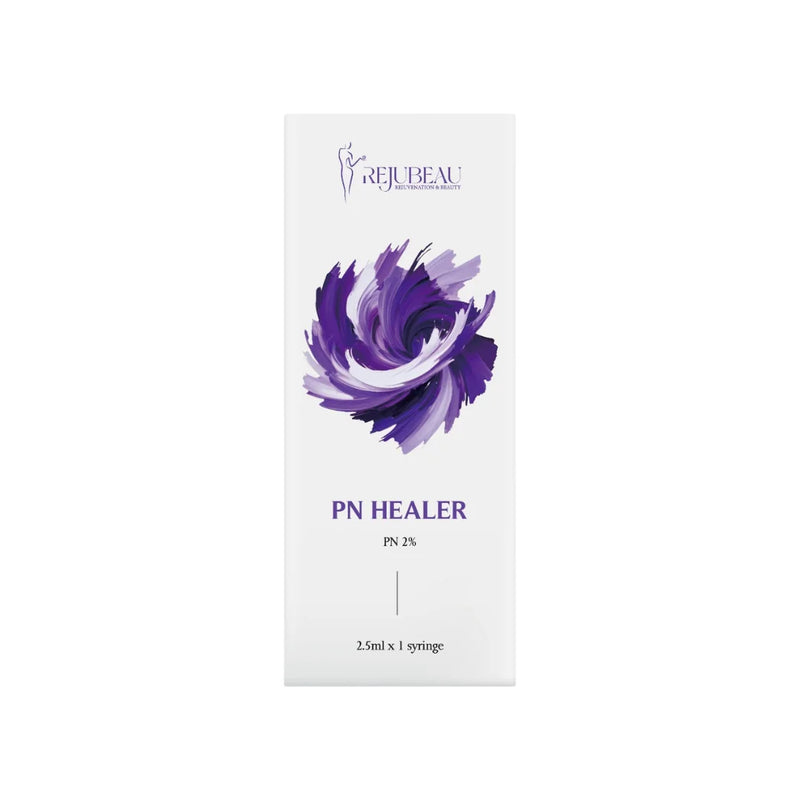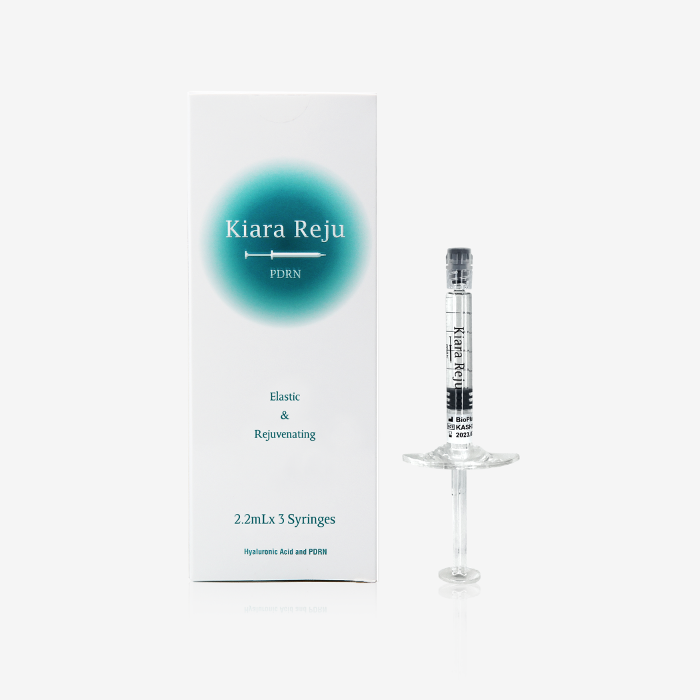
Two vials on a shelf can both say PDRN and still be different products. The label names a family of molecules, not a specification, and what separates one salmon-DNA booster from another is a short list of numbers and provenance facts. Learning to read them is how a buyer stops comparing a price and starts comparing a product.
This is an ingredient-first companion to our PDRN hub, and it takes a narrower job than the overview there. Rather than defining PDRN again, it walks through the variables that actually appear on a spec sheet, and what each one tells you. Nothing here is a claim about results. It is a reading guide for the label.
Molecular weight and fragment size
The defining spec for a nucleic-acid polymer is chain length, reported as molecular weight. PDRN (polydeoxyribonucleotide) and PN (polynucleotide) are the same salmon-derived DNA chemistry at different fragment lengths, and the standardizing 2025 reviews draw the line at roughly 1,500 kilodaltons: below it the material is labeled PDRN, at or above it PN. Within the PDRN range, preparations are often cited across 50 to 1,500 kDa, with the bulk of the distribution lower down.
What this means for reading a label: a molecular-weight range or a fragment-size figure is more informative than the word PDRN on its own. It tells you where on the spectrum the product sits, and a product that states its range is giving you more to verify than one that states only a category.
Concentration and volume
After chain length, the next figures are how much and in what format. PDRN products are typically presented as pre-filled syringes or vials of solution, and the useful facts are the concentration and the fill volume, since those set what a session actually delivers. A spec that states concentration and volume is specifiable and comparable; one that states only a milliliter count leaves the active amount unstated.
Source species and purity
PDRN is extracted from the gonadal tissue of salmonid fish, usually salmon or trout, and purified. Two things are worth confirming: the source species, and the purity of the preparation. Because the material is biological, its identity depends on the extraction and purification being what the label says, which is a manufacturing-and-provenance question rather than a marketing one.
Regulatory status by market
Status differs by country and belongs on any honest spec reading. In South Korea, polynucleotide skin boosters are cleared under a regulated medical framework by the Ministry of Food and Drug Safety (MFDS). In the United States, no PDRN or PN injectable is FDA-approved for aesthetic use; topical PDRN can be sold as a cosmetic as long as no drug-like claims are made. Confirm current status with the relevant authority, since these rules change over time.
A reading checklist
The variables above collapse into a short checklist. Treat every row as a question to ask of a product, not a ranking of one product over another.
| Variable | What to look for |
|---|---|
| Molecular weight | A stated range or fragment size, not just the word PDRN |
| PDRN or PN | Which end of the length spectrum, near the ~1,500 kDa line |
| Concentration | Active amount, so sessions are comparable |
| Format and volume | Syringe or vial, fill volume, reconstitution if any |
| Source and purity | Species, purification, provenance you can trace |
| Regulatory status | Cleared for the destination market and use |
Where sourcing fits
A DNA-fragment polymer is only itself when it arrives intact and correctly stored, which is why, for this class, cold-chain handling and traceable provenance sit right next to the spec. From a sourcing standpoint the reading guide and the supply chain are the same discipline: the numbers on the label only mean something if the product in the box is the one that was tested. KSTATION curates official-channel PDRN and PN lines and keeps provenance traceable, and our method is set out in the Editorial & Sourcing Policy. For the ingredient overview and the products themselves, see the PDRN hub; for the neighboring categories, our exosome vs growth factor vs PDRN regeneration map and the deeper PN vs PDRN piece pick up where this leaves off.
Frequently asked questions
Frequently asked
What molecular weight should a PDRN product be?
There is no single correct figure. The standardizing reviews reserve PDRN for chains below about 1,500 kDa and PN for longer chains, and PDRN preparations are often cited across 50 to 1,500 kDa. What matters when reading a label is that a range is stated at all, so you know where the product sits on the spectrum.
How can I tell PDRN and PN apart on a label?
By chain length, not by source. Both come from the same salmon or trout DNA. A product near or above roughly 1,500 kDa is positioned as PN; below it, as PDRN. A stated molecular-weight range is the clearest signal.
Why does provenance matter for a PDRN booster?
Because it is a biological preparation whose identity depends on extraction, purification, and storage being what the label claims. A product handled poorly in transit, or one whose origin cannot be traced, may not match its own spec, which is why sourcing sits next to the numbers.
Disclaimer. This article is general educational information and is not medical advice. It describes how PDRN products are specified and regulated, not what any product will do for an individual, and products referenced are intended for professional use. Regulatory status varies by country and changes over time; confirm current requirements with the relevant authority.
Sources & references
- From Polydeoxyribonucleotides (PDRNs) to Polynucleotides (PNs): Bridging the Gap (2025), size-based definitions and molecular-weight thresholds. pmc.ncbi.nlm.nih.gov
- Pharmacological Activity and Clinical Use of PDRN (molecular-weight distribution, 50 to 1,500 kDa). ncbi.nlm.nih.gov
- U.S. FDA, Is It a Cosmetic, a Drug, or Both? (Or Is It Soap?), structure/function vs. drug claims. fda.gov