PDRN is sold as one thing. A single active with a single story, offered in vials, syringes, creams and eye drops as though the format were a packaging decision. The Korean drug register does not see it that way. It licenses PDRN as two separate regulatory products with opposite supply classifications, and it files them under class codes that have nothing to do with each other.
We swept the register in full on 7 August 2026 and it returned 50 records under this active, of which 46 are live.1 This article is what those 46 licences say about how Korea classifies the material, who holds the licences, and where new ones have been going lately. It does not address what PDRN does, which is a clinical question, or how one product differs from another in specification, which the register does not record at all.
Two products, one active
Sort the live licences by route of administration and the register splits cleanly down the middle. Not approximately. Completely.
| Injectable | Non-injectable | |
|---|---|---|
| Live licences | 28 | 18 |
| Supply classification | Prescription only, 28 of 28 | Over the counter, 18 of 18 |
| Register class | Other agents affecting tissue and cell function, 28 of 28 | Ophthalmic 12, dermatological 6 |
| Licence holders | 25 companies | 13 companies |
| Oldest live licence | 4 September 2008 | 5 December 2014 |
| Licences naming export use | 0 | 0 |
Twenty-eight of twenty-eight and eighteen of eighteen. There is no overlap, no partial category, nothing that needs interpreting. If a PDRN product is injectable, Korea classifies it as prescription only. If it is a cream or an eye drop, Korea classifies it as over the counter, which in practice means it sits on a pharmacy shelf.
The class codes make the divide sharper still. Every injectable licence falls under a category the register names as other agents affecting tissue and cell function, which is a residual therapeutic bucket rather than a dermatological or cosmetic one. The non-injectable licences are filed as ophthalmic preparations or as topical dermatological preparations. These are not neighbouring classifications with a shared parent. They are different parts of the register entirely.
One company held the whole category for seven years
The oldest live licence in the set dates to 4 September 2008 and belongs to a single Korean company. So does the second, granted more than six years later in December 2014. So do the third and fourth, both from 2015.
For more than seven years after the first grant, that one holder was the only entity with a PDRN licence of any kind in Korea, and it built out all three formats itself: the injectable in 2008, the cream in 2014, the single-use eye drop in 2015. The category did not begin as a field with an early leader. It began as one company's product line, and the register records nobody else in it until February 2016.
What happened in 2016 happened quickly. Five new injectable licences were granted between 26 February and 4 March, across four different holders, which is a fortnight that quintupled the number of companies in the category. That burst is the moment PDRN stops being one firm's product and becomes an industry.
And then 2020
The register's single busiest year is 2020 by a wide margin. Sixteen records carry a 2020 grant date, thirteen of which are still live, split eight injectable and five non-injectable. That is roughly a quarter of the entire register arriving inside twelve months, six years after the category opened to more than one holder.
The same year accounts for something less flattering and worth reporting alongside it. Four licences in the whole register have been withdrawn, and three of those four were granted in 2020. Withdrawal is an ordinary administrative event with no implication about any product's safety, but the concentration is real: the year of fastest entry is also the year that produced most of the exits.
Where the new licences are going
Here is the finding that a snapshot count would hide entirely. The two halves of this register are not growing at the same rate, and they have not been for some time.
| Period | Injectable | Non-injectable |
|---|---|---|
| 2008 to 2015 | 2 | 2 |
| 2016 to 2019 | 9 | 1 |
| 2020 to 2023 | 14 | 6 |
| 2024 to 2026 | 3 | 9 |
Half of every live over-the-counter PDRN licence in Korea was granted in the last two years. On the injectable side, the same window produced three. The direction reversed somewhere after 2023, and it reversed hard. The turn is sharp enough to have a visible hinge: the register records no live grant at all in 2024, in either column, and then resumes in 2025 with the topical side leading.
Read the product names in that recent group and the shift is even plainer than the counts. Of the ten most recent grants in the register, eight are creams or single-use eye drops and two are injectables. New entrants are not filing for prescription injectables any more. They are filing for pharmacy-shelf topicals, which is a different business with a different customer and a different regulatory burden.
Two qualifications before anyone builds a forecast on this. The first is that a licence is permission to sell, not evidence of sales, so the register describes where companies are placing bets rather than where revenue is. The second is that the register is a Korean domestic instrument, and Korean filings respond to Korean conditions. Neither of those makes the pattern less real, but both limit what it can be used to predict.
Every eye drop is single use, without exception
The ophthalmic side of the register carries a uniformity that is easy to miss and hard to dismiss once seen. Fourteen PDRN eye drop licences exist, twelve of them live, and all fourteen state single-use in the licensed product name itself. Not most. All of them, across ten years and every holder who has filed one.
A multi-dose bottle needs a preservative to stay safe once opened, and preservative choice is a formulation decision a company makes product by product. When an entire category of licences declines that decision uniformly, the pattern is not fourteen companies happening to agree. It is a category where the single-use format is effectively the entry condition, whether by regulatory expectation or by settled industry practice.
For a buyer the practical value is a floor rather than a ranking. A PDRN eye drop presented as a multi-dose bottle has no counterpart anywhere in the Korean register, live or withdrawn, which makes that a question worth asking rather than a specification worth assuming.
The cream side sat still for eleven years
Six cream licences exist in the register. The first was granted in December 2014. The second was granted in September 2025.
Between them lies almost eleven years in which not one company filed for a topical PDRN cream in Korea. Then five arrived inside fourteen months, from four different holders, several of them large domestic pharmaceutical names rather than aesthetics specialists. That is the clearest single expression of the shift described above: the format that was dormant for a decade is now the one attracting filings.
The name tells you the route before any lookup
One incidental but useful property of this register: Korean licensed product names encode the dosage form as a suffix, and PDRN licences follow it without deviation. An injection carries the character for injection, a prefilled syringe says so, an eye drop carries the word for ophthalmic solution, and a cream says cream. Across all 50 records there is not one ambiguous name.
Because supply classification in this category is determined entirely by route, and route is legible from the name, the licensed product name alone tells you whether a given PDRN product is prescription only in Korea. That is a rare case where a single field settles a regulatory question, and it is worth knowing precisely because it does not generalise: for most actives the name will not carry the answer, which is the situation we describe in reading an injectable label.
Filed in a residual class, not a category of its own
It is worth dwelling on where the register actually puts the injectable side, because the choice is more informative than the label suggests. Hyaluronidase, to take a category we swept the same week, sits under enzyme preparations. That is a positive classification: the register has a bucket for what the substance is, and it goes in it.
PDRN injectables do not get that. All twenty-eight sit in a class the register names as other agents affecting tissue and cell function, where the operative word is other. It is a residual bucket, the place a register puts things that are therapeutically real but do not fit an existing category cleanly.
Nothing follows from this about efficacy, and it should not be read as a judgment in either direction. What it does record is a fact about regulatory history: when these products were first licensed, Korea did not have a category that described them, and it has not since created one. Eighteen years and twenty-eight licences later, the classification is still the residual. For anyone reading Korean licence documentation, that is the difference between a class code that tells you what a product is and one that tells you what it is not.
Not a single export-named licence
Korean licences sometimes carry export wording inside the licensed product name, marking the product as designated for export. Across all 46 live PDRN licences, that wording appears zero times.
That is unusual enough to be worth setting against the categories we have swept alongside it. Four of thirty-two live hyaluronidase licences carry export wording. Ten of sixteen live injectable tranexamic acid licences do. Eighteen of thirty live injectable lidocaine licences do. PDRN, with a comparable number of licences to the first of those, carries none at all.
The honest reading is narrow. Export designation is a licensing category chosen by the holder for a particular filing, and its absence does not mean product does not leave Korea through ordinary channels. What it does mean is that the Korean register contains no PDRN licence whose stated purpose is export, so anyone citing a Korean export licence for a PDRN product is citing something the register does not contain.
A note on how the holders are distributed
Twenty-eight injectable licences sit with twenty-five holders, so only three companies hold more than one. Two of those three hold what is recognisably a pair: the same product licensed once as a vial and once as a prefilled syringe, filed on the same day. The third is the original holder, whose two injectable licences are genuinely different products granted seven years apart.
That distribution says something about the category's shape. This is not a market where a few large holders maintain broad portfolios. It is twenty-five companies with one licence each, which is the structure you get when a category opens to everyone at once and everyone files a single entry.
What the register does not tell you
The register settles classification. It settles almost nothing else that determines whether one PDRN product differs from another, and the gap is worth naming precisely because the register's authority on the first question invites over-reading on the rest.
- Molecular weight. Not a register field. It is the single most discussed specification in this category and the record is silent on it. We cover it in PN versus PDRN by molecular weight.
- Source and purification. Not recorded. The register names an active and a holder, not an origin or a process.
- Concentration and presentation. Not recorded, beyond what a holder happens to write into the licensed product name.
- Anything comparative. Two licences under the same class code are the same thing to the register and may be very different things in a vial. That comparison belongs to specification documents, which we walk through in reading a PDRN skin booster.
- Anything clinical. The register records what a product is classified as, never what it achieves.
Used for what it does settle, though, it answers questions that otherwise get argued from assertion. Whether a PDRN product is prescription only in Korea is not a matter of opinion. It depends on one thing, the route, and the register gives the same answer 46 times out of 46.
How KSTATION applies this
Licensing and manufacturer details are checked against the MFDS register before a product is listed, and where a supplier sheet and the register disagree, the register wins. We stock officially sourced products only, and the method is set out in our Editorial & Sourcing Policy.2
The practical consequence for this category is a division of labour between two kinds of check. Classification questions go to the register, which answers them definitively. Specification questions go to manufacturer documentation, because the register has nothing to say about them. Treating either as a substitute for the other is how a product ends up verified on the wrong axis.
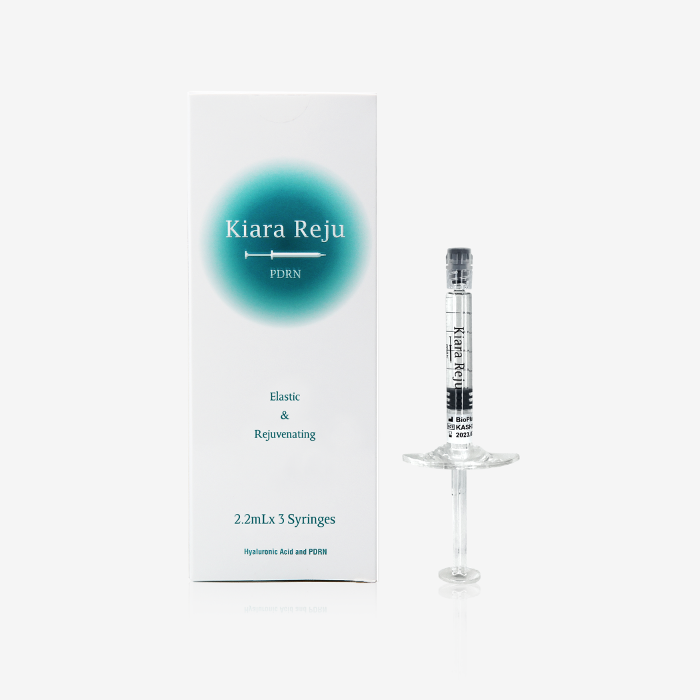
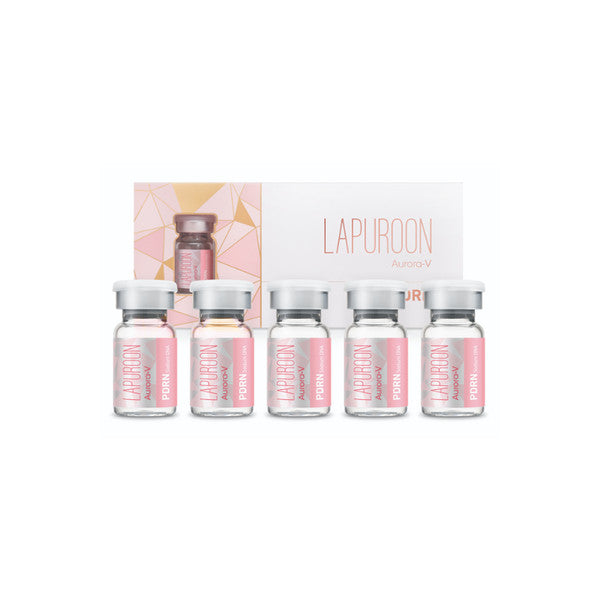
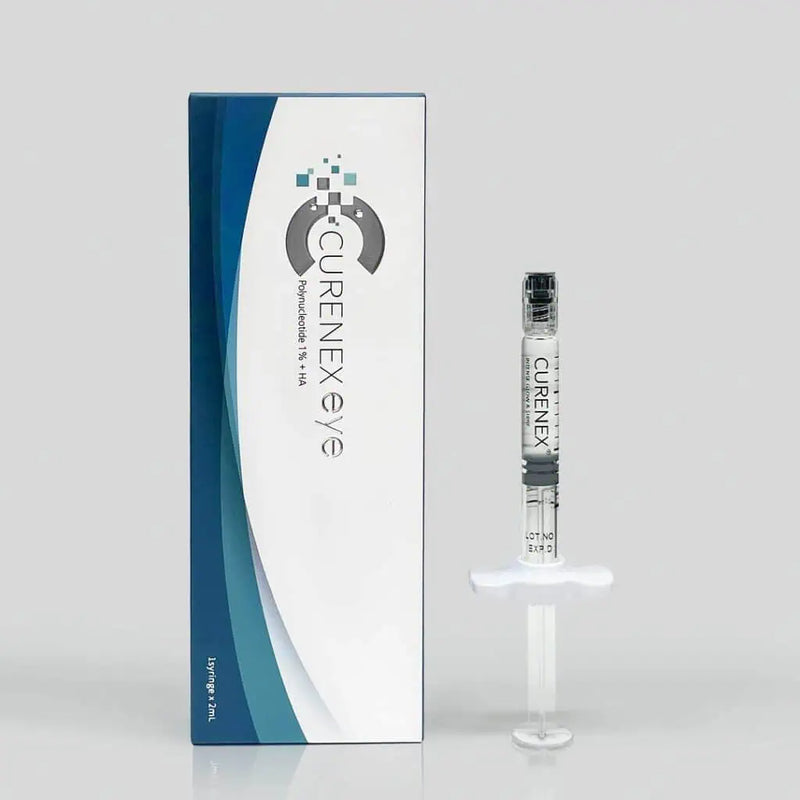
Our stocked range sits under skin boosters and ampoules and skin recovery and regeneration, with lines such as KIARA REJU, LAPUROON AURORA Vivid and CURENEX eye. For how price and specification relate in this category, see cheaper versus premium PDRN. For the same register read on a different active, see reading a hyaluronidase vial.
Frequently asked questions
Frequently asked
Is PDRN prescription only in Korea?
It depends entirely on the route. All 28 live injectable licences are classified prescription only. All 18 live non-injectable licences, meaning creams and single-use eye drops, are classified over the counter. There are no exceptions in either direction as of 7 August 2026. Korean classification is a fact about Korea and does not determine status in any other market.
How many PDRN products are licensed in Korea?
The register returned 50 records under this active on 7 August 2026, of which 46 are live and 4 withdrawn. The live licences split 28 injectable and 18 non-injectable, held by 25 and 13 companies respectively.
What class does the Korean register file PDRN under?
Injectables are filed under a category the register names as other agents affecting tissue and cell function, uniformly across all 28 live licences. Non-injectables are filed as ophthalmic preparations, 12 of 18, or as topical dermatological preparations, 6 of 18. The injectable and non-injectable classifications sit in different parts of the register rather than being variants of one category.
Who holds the oldest PDRN licence in Korea?
The oldest live licence dates to 4 September 2008 and belongs to a single Korean company, which also held the next three licences granted in the category. For more than seven years no other holder appears in the register at all. The field opens in February 2016, when five injectable licences are granted across four new holders inside a fortnight.
Does the register tell me a product's molecular weight or purity?
No. Molecular weight, source, purification method and concentration are not register fields. The register settles classification, supply status, holder and grant date, and is silent on everything that distinguishes one PDRN product from another in specification. Those answers come from manufacturer documentation.
Disclaimer. This article is general educational information and is not medical advice. It describes how products containing this active are classified, licensed, and recorded in a public register; it makes no claim about what any product does, achieves, or is suitable for, and it is not a selection, preparation, or administration guide. Products referenced are intended for professional use by trained practitioners. Regulatory and customs requirements vary by country and change over time; confirm current requirements with the relevant authority.
Sources & references
- Ministry of Food and Drug Safety (MFDS), drug product approval register, queried on the active ingredient field for "Polydeoxyribonucleotide" on 7 August 2026, all pages retrieved (50 records; 46 live, 4 withdrawn). Route, supply classification, register class, grant dates, licence holders and export wording were read from the licence records themselves. Comparative export-wording figures for hyaluronidase, tranexamic acid and lidocaine come from full sweeps of the same register on the same date. data.go.kr
- KSTATION, Editorial & Sourcing Policy (official-channel sourcing and traceable provenance). kstations.com/pages/editorial-policy