A buyer does the responsible thing. They take the name of a Korean hyaluronic acid filler, go to the Ministry of Food and Drug Safety approval register, search for it, and find nothing. No licence, no holder, no grant date. The natural conclusion is that something is wrong with the product. The actual conclusion is that they are reading the wrong register.
Korean HA fillers are not drugs. They are medical devices, and Korea keeps devices in a separate register with separate fields and a separate numbering scheme. Absence from the drug register is not a finding about a filler. It is the expected result, and a filler that did appear there would be the surprising case. This article shows what actually sits in each register, using a full sweep of the drug register taken on 7 August 2026 and a full sweep of the device register updated on 14 September 2026.1
What hyaluronic acid looks like in the drug register
The drug register is not empty on this molecule. Queried on sodium hyaluronate as an active ingredient, it returns 302 records, of which 266 are live. That is a substantial category. It is simply not the category anyone shopping for a filler is looking for.
| Group | Live licences | What the class codes say they are |
|---|---|---|
| Non-injectable | 153 | Ophthalmic 141, dental and oral 5, ear and nose 4, wound protectant 3 |
| Injectable | 113 | Metabolic agent not otherwise classified 94, ophthalmic 19 |
| Dermal filler | 0 | No class code in the drug register corresponds to one |
Read the classes rather than the counts and the picture resolves immediately. The 141 non-injectable ophthalmic licences are eye drops. The 19 injectable ophthalmic licences are surgical viscoelastics. The 94 filed as metabolic agents are the joint injections. Every one of the 266 is a real product with a real licence, and none of them is a filler.
The oldest live injectable licence in that set dates to 8 April 1993, and the oldest live non-injectable to 31 May 1996. So Korea has been licensing sodium hyaluronate as a drug for more than thirty years, which is longer than it has been licensing fillers at all. The molecule was never the thing that determined which register a product lands in.
Where fillers actually sit
HA fillers are licensed in the medical device register under a product category whose Korean name translates as tissue repair biomaterial. Swept in full across every spelling of its item names, the category holds 1,167 records: 944 live and 223 that have ended.
Those 944 live licences are held by 196 companies. That is a crowded category by any measure, and the ratio is worth pausing on: an average of four to five licences per holder, with the largest domestic holder carrying twenty-nine and the next three carrying twenty-seven, twenty-five and twenty-two. The Korean filler market is not a handful of manufacturers with long catalogues. It is a wide field with a mild concentration at the top.
The ending figure deserves the same attention. About one record in five in this category is no longer live. The device register records each ending with a date and one of three ending-type codes that the public data does not label. An ending is an ordinary administrative event and carries no implication about any product's safety, but the rate tells you something structural: licences in this category are taken out and given up at a pace the drug register does not match. A licence you were shown last year is worth re-checking rather than assuming.
One caveat on that number
The category is called tissue repair biomaterial, not HA filler, and the distinction is not pedantic. It is defined by what a product does structurally rather than by what it is made of, so it holds more than hyaluronic acid. The oldest records in the category are imports from 1999, among them an imported collagen product licensed in June 1999 that ended in 2005, followed within months by imports from European and Japanese makers that have since ended. One import licence from March 1999 remains live.
So 944 live licences is the correct count for the category HA fillers belong to, and it is an overcount if you read it as the number of HA filler licences specifically. We report it as the former because that is what the register actually indexes: there is no separate HA filler category to query. Anyone quoting a tighter figure is either filtering by something the register does not record or counting brands rather than licences, and the two are very different numbers.
The useful consequence is a check rather than a caution. When a supplier cites a licence, the category name on that licence tells you which register field they are drawing on, and a filler that does not sit in this category is a product worth asking more questions about.
The device register asks different questions
This is the part that matters most for anyone trying to verify a filler using habits learned from injectables. The two registers do not record the same facts, so a check that works in one has no equivalent in the other.
| Field | Drug register | Device register |
|---|---|---|
| Supply classification | Yes: prescription only or over the counter | No such field |
| Active ingredient index | Yes, keyed in English | No such field |
| Class code | Numeric therapeutic class | Product category name |
| Licence route | Not distinguished in the number | Yes, encoded in the licence number prefix |
| Named manufacturing site | Not a field | Yes, where it differs from the holder |
| Traceability designation | Not applicable | Yes, a yes or no flag per licence |
Two of those rows have no counterpart on the drug side at all, and they are the two that do the most work.
The licence number tells you where it was made
Korean device licence numbers carry a prefix that encodes how the licence was obtained. One prefix marks domestic manufacture and another marks import. It sits at the front of the number printed on the carton, so it is legible before any database lookup at all.
Across the 944 live licences in this category, the split is lopsided:
| Route | Live licences | Share |
|---|---|---|
| Domestic manufacture | 890 | 94 percent |
| Import | 54 | 6 percent |
The category is overwhelmingly a domestic manufacturing category. That is not a marketing impression, it is the register's own count, and it explains something buyers notice without being able to name: the reason Korean filler catalogues are so deep is that Korean companies hold the licences rather than distributing someone else's.
The import side is small and highly recognisable. Its licences are concentrated in the Korean subsidiaries of the large international filler companies, with the single largest holding twelve and the next holding seven. Those are the global brands entering Korea, which is the mirror image of the traffic most readers of this site are thinking about.
Every import names its manufacturer, most domestic licences do not
The device register carries a manufacturing site field separate from the licence holder, and it is filled in with striking consistency along exactly one line. All 54 import licences name a manufacturing site. Of the 890 domestic licences, 98 do, and in 87 of those the named site is a company other than the holder.
The pattern needs reading with care. Where the holder is a Korean subsidiary or importer and the maker is a foreign plant, the register records both, which is why every import names a site. On domestic licences the field is filled far less often, and when it is filled it usually names a different Korean company that manufactures for the holder. An empty field on a domestic licence does not by itself establish that holder and maker are the same company. The reliable import signal is the licence number prefix, not the manufacturer field.
One incidental detail from the same field is worth reporting because we have written about the identical problem in our own records. The same foreign manufacturer appears under two different capitalisations of its own name, counted separately by any naive query. Register data is entered by people over decades, and normalising it is part of reading it rather than something the source does for you.
The category began as an import category
Sort the live licences by grant year and the direction of travel is unambiguous.
| Period | Domestic | Import | What changed |
|---|---|---|---|
| 1999 to 2009 | 1 | 5 | Imports dominate; the few early domestic licences have almost all ended |
| 2010 | 8 | 9 | Domestic and import grants reach parity |
| 2011 to 2014 | 78 | 20 | Domestic pulls decisively ahead |
| 2015 to 2023 | 491 | 14 | Import grants shrink to a handful a year, none in 2023 |
| 2024 to September 2026 | 312 | 6 | Fastest domestic growth on record; imports resume in 2025 |
For its first decade the category was an import channel. Domestic licences appear from December 2004, but only eight were granted before 2010 and just one of those is still live. Domestic and import grants reach parity in 2010, domestic licences pull ahead from 2011, and from 2015 imports fall to a handful a year, with no new import licence at all in 2023 or 2024 before six more were granted in 2025 and 2026.
That arc is the entire reason a Korean filler industry exists to buy from. It also sets a limit on a common assumption. A Korean filler is not Korean because Korea is where fillers come from. It is Korean because, over about fifteen years, Korean companies took out their own licences instead of importing under someone else's.
One correction on this table, stated plainly. An earlier version of this article said the public device dataset thinned out after 2023 and limited its figures to grants through that year. A fuller reading shows the recent grants are present: from 2021 onward the register files most new licences in this category under a spaced spelling of the item name, which a single-string query does not return. The figures above combine every spelling and run to 14 September 2026.
Fillers are not traceability-managed devices
The device register carries a flag marking whether a licence falls under Korea's traceability management scheme, which imposes additional obligations for following individual units after they leave the manufacturer. Across all 944 live licences in this category, the flag is set on zero.
Because a universal negative invites the suspicion that the field is simply unpopulated, we checked it against controls. Silicone gel breast implants return the flag set on 13 of 19 records. Implantable cardiac pacemakers return it set on 40 of 40. The field works, and the zero is a real property of this category rather than a gap in the data.
What follows is narrow and worth stating without inflation. It does not mean fillers are untraceable: lot numbers, expiry dates, and manufacturer records all exist and are the ordinary basis of a recall. It means the additional statutory tracking layer that applies to certain implanted devices does not apply here, so the practical reachability of any given unit rests on the distribution chain that handled it. For a cross-border buyer that is an argument for documented channel rather than an argument about the product, and it is the same argument we make in what a counterfeit injectable actually costs.
What to check instead
Putting it together, verifying a Korean filler is a different exercise from verifying an injectable drug, and the habits do not transfer cleanly.
- Use the device register, not the drug register. A filler will never appear in the latter. Its absence there is not evidence of anything.
- Read the licence number prefix. It tells you domestic manufacture or import before you look anything up, and it is printed on the carton.
- Expect no supply classification. There is no prescription-only field on a device licence. Any listing citing one for a filler is citing something that does not exist, unlike the situation for enzymes and injectables where the classification is real and uniform.
- Name the holder, and check it is still live. With about one record in five ended, currency matters more here than in categories with lower churn.
- Do not read the manufacturer field as a quality signal. It is filled on every import and on about one domestic licence in nine, where it usually names a company manufacturing for the holder. Its absence does not by itself establish that holder and maker are the same company.
- Confirm destination-market status separately. Korean device licensing governs Korea. What your own market permits is decided by your own authority, and device rules frequently differ from drug rules within the same country.
How KSTATION applies this
Licensing and manufacturer details are checked against the relevant MFDS register before a product is listed, which for fillers means the device register rather than the drug register. Where a supplier sheet and the register disagree, the register wins and the listing is corrected. We stock officially sourced products only, and the method is set out in our Editorial & Sourcing Policy.2
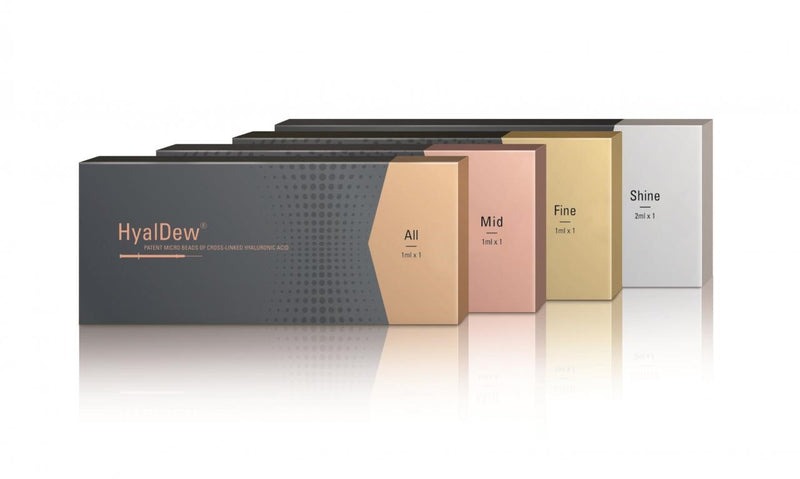
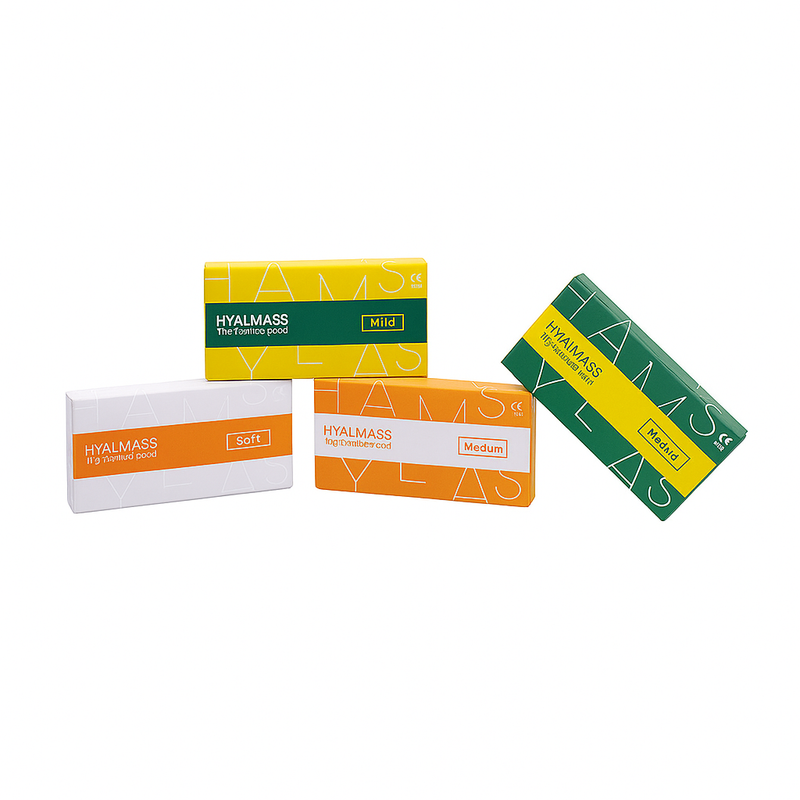
Our stocked HA range sits under derma fillers and body volume augmentation, with lines such as HYALDEW and Hyalmass. For the material properties that distinguish one filler from another once the licensing question is settled, see reading an HA filler and cross-linked versus uncross-linked HA. For how the Korean system fits together across both registers, see inside Korea's MFDS regulation.
Frequently asked questions
Frequently asked
Why is my Korean filler not in the MFDS drug register?
Because HA fillers are regulated as medical devices in Korea, not as drugs, and the two are kept in separate registers. A filler will never appear in the drug register regardless of how legitimate it is. Its absence there is the expected result rather than a warning sign.
What is in the drug register under hyaluronic acid, then?
266 live licences as of 7 August 2026, none of them fillers. Reading the class codes, 141 are ophthalmic non-injectables, 94 are injectables classed as metabolic agents, 19 are injectable ophthalmics, and the remainder are dental, ear and nose, and wound protectant products. The same molecule, entirely different product categories.
How many HA filler licences exist in Korea?
The device items that fillers sit in held 1,167 records when read across every spelling of their names on 14 September 2026, of which 944 were live and 223 had ended. The live licences are held by 196 companies. Recent grants are fully represented once the spaced spelling of the item name used from 2021 onward is included.
What does the prefix on a Korean device licence number mean?
It encodes how the licence was obtained, distinguishing domestic manufacture from import. Among live licences in the filler category, 890 are domestic manufacture and 54 are import. The prefix is printed on the carton, so it can be read before any database lookup.
Are Korean fillers subject to unit-level tracking?
Not under Korea's traceability management designation. The flag is set on zero of 944 live licences in this category, which we confirmed is a real property rather than missing data by checking controls where the flag is set: 13 of 19 silicone gel breast implant records and 40 of 40 implantable pacemaker records. Lot numbers, expiry dates, and manufacturer records still exist; the additional statutory tracking layer does not apply.
Updated 14 September 2026. Device register figures were recounted across every spelling of the tissue repair item names, which added licences missed by the original single-spelling query, including most grants since 2021. The live count, holder count, route split, manufacturer field reading and period table were revised accordingly, and a statement that recent grants were missing from the public data was withdrawn. Drug register figures are unchanged.
Disclaimer. This article is general educational information and is not medical advice. It describes how products in this category are classified, licensed, and recorded in public registers; it makes no claim about what any product does, achieves, or is suitable for, and it is not a selection, preparation, or administration guide. Products referenced are intended for professional use by trained practitioners. Regulatory and customs requirements vary by country and change over time; confirm current requirements with the relevant authority.
Sources & references
- Ministry of Food and Drug Safety (MFDS), open data registers, both swept in full on 7 August 2026. Drug product approval register queried on the active ingredient field for "Sodium Hyaluronate" (302 records; 266 live). Medical device approval register queried on every spelling of the tissue repair item names (1,167 records; 944 live), re-read 14 September 2026. Class codes, licence routes, holder and manufacturer fields, traceability flags and grant dates were read from the licence records themselves. Control queries for the traceability flag used silicone gel breast implants and implantable cardiac pacemakers. data.go.kr
- KSTATION, Editorial & Sourcing Policy (official-channel sourcing and traceable provenance). kstations.com/pages/editorial-policy