Most of the lines we read as aging are not damage but movement, the soft creases that years of frowning, squinting, and smiling press into the skin around the eyes and brow. Botulinum toxin type A is the category built to ease that movement, and understanding it well begins with separating the famous brand name from the broader class of medicines a distributor actually supplies to professionals.
This is the second part of our series on injectable aesthetics, and it carries a clarification that matters from the first sentence. These are prescription, professional-use biologic medicines, not cosmetics, and nothing below is a how-to. The aim is education: what the category is, how it behaves, why Korea has become central to its global supply, and the questions a serious sourcing partner and the practitioners it serves actually weigh.
What is Botox? (Botulinum toxin type A)
The first thing worth getting right is the vocabulary. "Botox" is a brand, the registered trade name owned by Allergan, now part of AbbVie, whose generic active is onabotulinumtoxinA.1 The category itself is botulinum toxin type A, a family of injectable biologic medications derived from Clostridium botulinum.2 A distributor does not supply Botox; it supplies authentic Korean botulinum toxin type A brands, which sit in that same class but are distinct products with their own names and licenses.
Used in aesthetics, these medicines address dynamic expression areas, the glabellar lines between the brows, forehead lines, and the crow's feet beside the eyes, by gently reducing the muscle contraction that folds the skin there. The pedigree is broader than cosmetics, though. The same active that softens a frown line is FDA-approved for a list of therapeutic uses including chronic migraine, cervical dystonia, hyperhidrosis, overactive bladder, and spasticity.3 The aesthetic application is one branch of a well-established medical tree.
How does it work?
The mechanism is precise and, importantly, temporary. Botulinum toxin type A enters the nerve terminal by binding SV2 and gangliosides on the surface, after which it is taken into the cell and its light chain goes to work.4 That light chain cleaves SNAP-25, one of the SNARE proteins the neuron needs to fuse its vesicles and release acetylcholine at the neuromuscular junction. With that release blocked, the signal that tells the muscle to contract does not arrive, and the muscle relaxes.5
The timing follows a recognizable curve. Cosmetic onset can appear as early as 24 hours, with a median of roughly two to four days.6 Maximum effect typically settles in within two to four weeks.7 For glabellar lines, duration commonly runs about three to six months.7 The effect is reversible by design: as new nerve terminals sprout and SNAP-25 is replaced, signaling returns and movement comes back, which is why the category is understood as a maintained rather than permanent intervention.
Why Korea leads in botulinum toxin
Korea has moved from follower to front-runner in this category, and the regulatory record shows it. Daewoong's Nabota, generically prabotulinumtoxinA, won US FDA approval as Jeuveau in February 2019 for glabellar lines, a Korean-developed toxin clearing one of the world's strictest agencies.8 Hugel followed with Letybo, letibotulinumtoxinA-wlbg, which received US FDA approval on February 29, 2024 for moderate-to-severe glabellar lines.9
Domestically, a deep field of brands is licensed by Korea's MFDS, names such as Botulax, Innotox, Coretox, and Meditoxin. A careful distinction belongs here. Those MFDS-licensed brand SKUs are generally not themselves FDA-approved; the Korean toxins cleared in the US reach that market rebranded as Jeuveau and Letybo.9 The breadth of Korea's manufacturing and the depth of its regulatory portfolio are real, but the two approval systems are separate, and honest sourcing keeps them straight.
Units and why products aren't interchangeable
One of the most consequential and least understood facts in this category concerns potency units. It is tempting to treat a "unit" as a universal measure, the way a gram is a gram. It is not. The FDA states plainly that botulinum toxin potency units are specific to each product and are not interchangeable from one to another.3 A unit of one brand does not equal a unit of another.
This is a concept worth understanding rather than a technique to apply. It is precisely why these are prescription medicines placed in trained professional hands, and why product identity, labeling, and provenance carry real weight. The differences in formulation and assay between brands are exactly the kind of detail a clinician evaluates and a reader should not attempt to navigate alone.
Where the supply side fits
This is the part a distributor can stand behind without overpromising. We do not guarantee any aesthetic outcome, because the mechanism above makes clear that results depend on the practitioner, the patient, and the clinical context, not on the supplier. What we can stand behind is authentic, official-channel sourcing: genuine Korean botulinum toxin type A obtained through proper channels, handled under cold chain so a temperature-sensitive biologic remains the medicine on its label, and shipped to professionals across the US and EU.
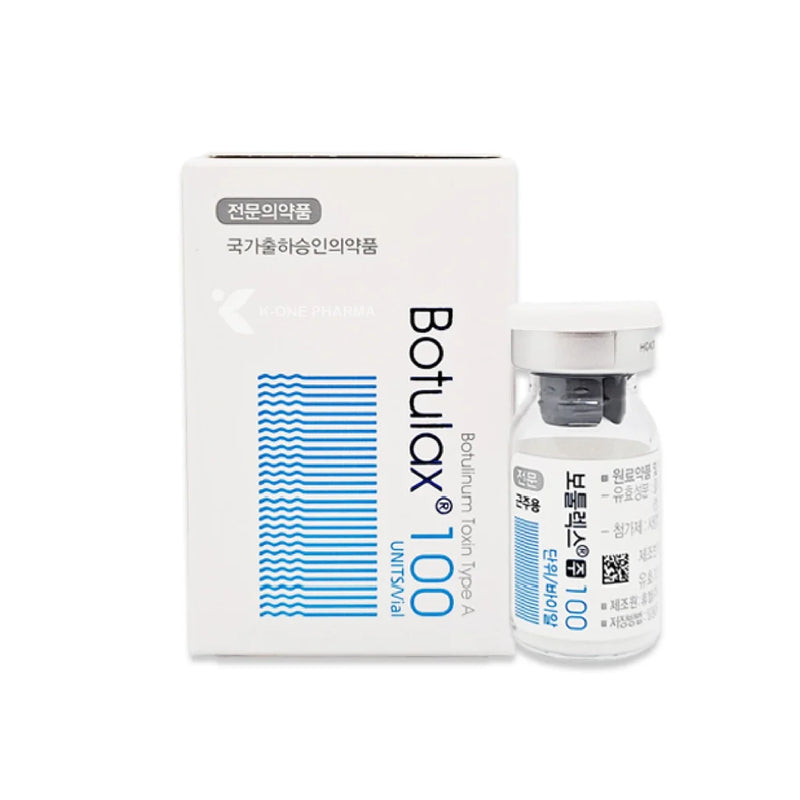
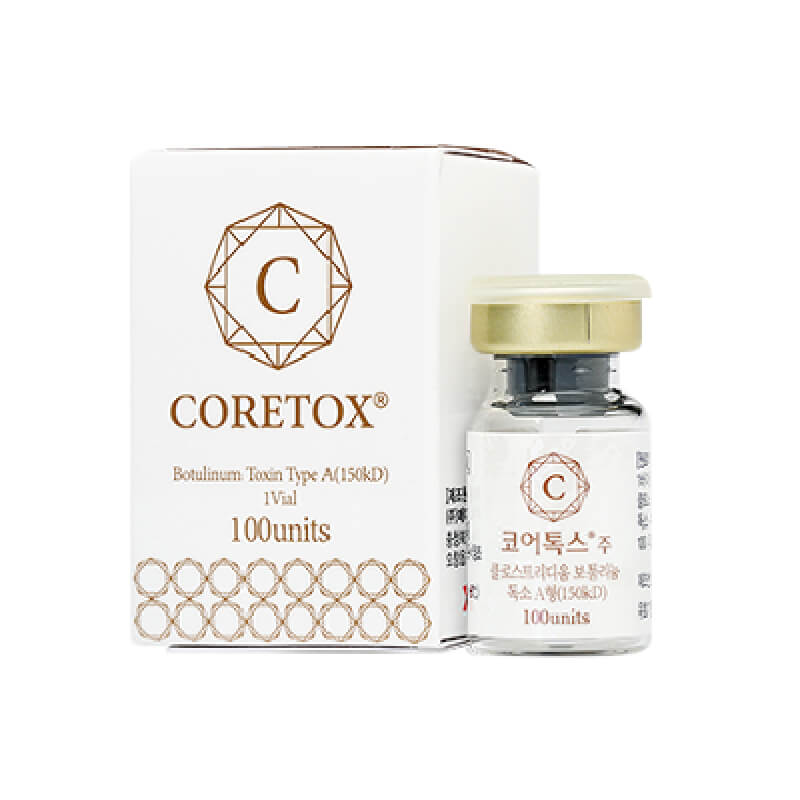
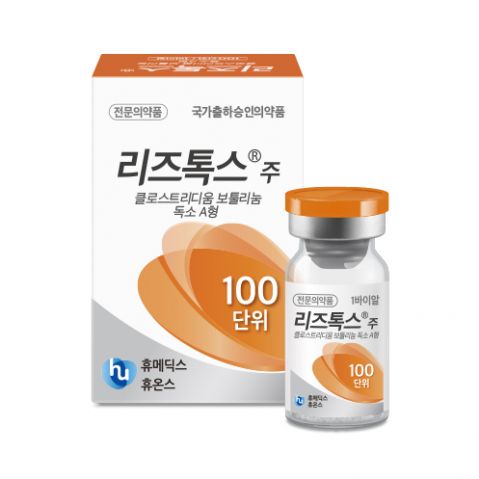
For professionals mapping the authentic Korean range, in-stock examples include BOTULAX 100 Units, CORETOX 100 Units, and LIZTOX 100 Units. The fuller category sits under botulinum toxins, intended for trained professional use only.
Frequently asked questions
Frequently asked
Is Botox the same as the Korean brands?
How fast does it work and how long does it last?
Are Korean botulinum toxin brands FDA-approved?
Why aren't potency units comparable across products?
Because the FDA defines botulinum toxin potency units as specific to each product and not interchangeable between them. Differences in formulation and assay mean a unit of one brand does not equal a unit of another, which is one reason these remain prescription medicines for trained professionals.3
Disclaimer. This article is general information for educational purposes and is not medical advice. It describes what botulinum toxin type A is, how it works, and how it is regulated, not what any product will do for an individual, and it contains no injection guidance. The products referenced are prescription, professional-use biologic medicines intended for trained practitioners only. Regulatory status and product availability vary by country and change over time; confirm current requirements with the relevant authority.
Sources & references
- Wikipedia, Botulinum toxin ("Botox" as Allergan brand; onabotulinumtoxinA generic; botulinum toxin as the class). en.wikipedia.org
- U.S. FDA, BOTOX prescribing information (injectable biologic derived from Clostridium botulinum). accessdata.fda.gov
- U.S. FDA, BOTOX prescribing information (therapeutic indications; units are product-specific and not interchangeable). accessdata.fda.gov
- Pirazzini et al., on BoNT/A entry via SV2 and gangliosides, endocytosis, and light-chain cleavage of SNAP-25. sciencedirect.com
- Peer-reviewed mechanism of botulinum toxin type A (SNAP-25 cleavage blocking acetylcholine release at the neuromuscular junction). pubmed.ncbi.nlm.nih.gov
- Peer-reviewed data on cosmetic onset (as early as 24 hours; median ~2-4 days). pmc.ncbi.nlm.nih.gov
- Peer-reviewed review on maximum effect within 2-4 weeks and glabellar duration of ~3-6 months. pmc.ncbi.nlm.nih.gov
- Drugs.com history (Daewoong Nabota / prabotulinumtoxinA FDA-approved as Jeuveau, February 2019). drugs.com
- U.S. FDA, Drug Trials Snapshots: Letybo (letibotulinumtoxinA-wlbg approved February 29, 2024 for glabellar lines). fda.gov