Hair loss is common, and it is rarely caused by a single thing. Part 12 of this series looks at why hair thins, what the evidence actually supports, and where the line sits between a treatment a regulator has approved and one that is still experimental. The scalp is living skin, and like skin it ages, inflames, and cycles, but understanding the mechanism is what separates an honest plan from a hopeful one.
From a sourcing standpoint, the most useful framing is that hair loss is multifactorial. Genetics, hormones, the hair growth cycle, nutrition, stress, and inflammation all contribute in different proportions for different people. That is why no single product is a cure, and why anyone selling a guarantee of regrowth is overstating the science. What follows is the mechanism first, then the options ranked by how strong the evidence behind them is.
The hair cycle, and what goes wrong
Every follicle runs on a cycle with three main phases. Anagen is the active growth phase, lasting roughly two to eight years, and at any moment around 90 percent of scalp follicles are in it. Catagen is a brief transition phase of a couple of weeks. Telogen is the resting phase, usually about three months, affecting somewhere in the range of 10 to 15 percent of scalp hairs, after which the old hair sheds and a new anagen begins.1 Losing 50 to 100 hairs a day is normal turnover, not loss.
Hair loss happens when this cycle is disrupted. In telogen effluvium, a stressor such as illness, surgery, childbirth, rapid weight loss, or certain medications pushes an unusually large share of follicles into telogen at once, and the shedding shows up two to three months later. It is usually temporary, and most people recover within several months once the trigger resolves.2 The more persistent pattern is something else entirely.
Androgenetic alopecia, the most common cause
The pattern thinning that affects most men and a large share of women is androgenetic alopecia, and its mechanism is well characterized. In genetically susceptible follicles, the enzyme 5-alpha-reductase converts testosterone into dihydrotestosterone (DHT), a more potent androgen. DHT binds the androgen receptor in the dermal papilla cells at the base of the follicle, and over successive cycles it progressively shortens the anagen phase and drives follicle miniaturization, in which follicles produce thinner, shorter, less pigmented hairs until they effectively stop.3
Two details matter for understanding treatment. First, the Type II isoform of 5-alpha-reductase predominates in the outer root sheath of scalp follicles, which is why drugs that inhibit it target hair loss.3 Second, genetics sets the susceptibility, so this is a progressive, heritable condition rather than a lifestyle problem. That biology is exactly why the strongest evidence sits with treatments that act on the hormonal pathway or the cycle itself.
Evidence-based options, ranked by approval
Only two drugs currently hold U.S. FDA approval for androgenetic alopecia, and it is worth being precise about each.4 Minoxidil is available over the counter and applied topically to the scalp. Its sulfated metabolite opens potassium channels and is associated with increased blood flow and a prolonged anagen phase, though the exact mechanism in the follicle is still not fully proven.5 It is studied for slowing loss and supporting regrowth, but it does not reverse the underlying genetics and requires continued use.
Finasteride is a prescription oral medication, FDA-approved for male pattern hair loss in men. It selectively inhibits Type II 5-alpha-reductase and lowers DHT, with serum DHT reductions reported around 65 to 70 percent at standard dosing.6 Because it works upstream on the hormone that drives miniaturization, it is often combined with minoxidil. Both are real drugs with real indications and real side-effect profiles, which is precisely why finasteride is prescription only and a clinician should oversee it.
The frontier: exosomes and PRP for the scalp
Beyond the approved drugs sits a set of newer scalp procedures that generate a lot of attention and a lot of overstatement. Exosomes are nanoscale extracellular vesicles that carry signaling molecules between cells, and they are being studied for hair density. But the regulatory status is unambiguous: there are no FDA-approved exosome products for hair loss or any human use, the FDA regulates them as drugs and biologics, and the agency has issued public safety notifications after serious adverse events from unapproved exosome products.78 They are experimental.
Platelet-rich plasma (PRP), prepared from a patient's own blood and injected into the scalp, has more clinical literature behind it but is likewise not FDA-approved for androgenetic alopecia; it is used off-label, and systematic reviews describe its benefit as moderate and still being characterized.9 The same caveat applies to PDRN scalp protocols. These are areas of active research that may support hair health for some people, administered by professionals, but they are not substitutes for evidence-based, approved therapy, and they should never be sold as guaranteed regrowth.
Where the supply side fits
This is the part a distributor can actually stand behind. We do not prescribe medication and do not promise regrowth, because the science above is exactly why no honest sourcing partner should. What we do is curate authentic, official-channel Korean scalp and regenerative products and keep provenance traceable, supplied to the US and EU and intended for use by trained professionals alongside, not in place of, evidence-based care.
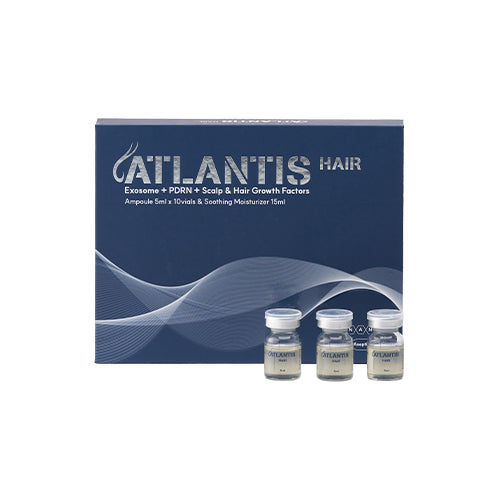
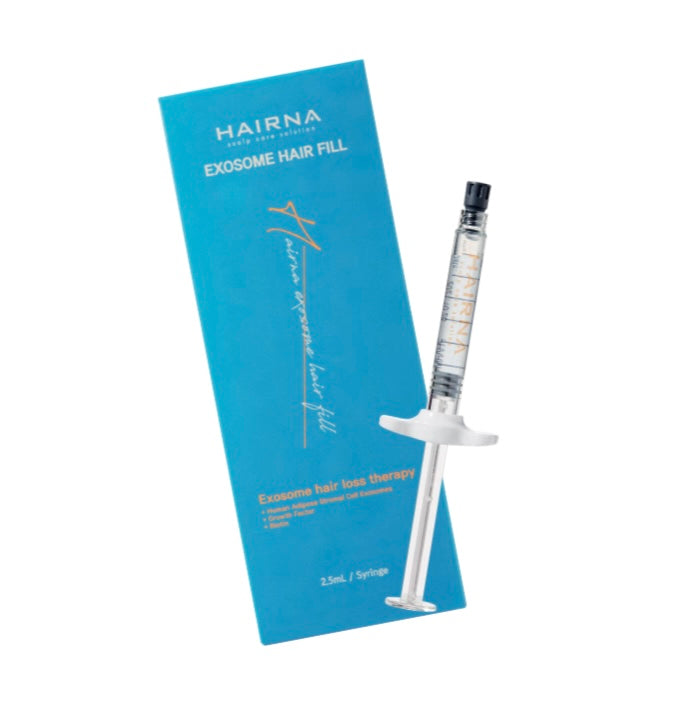
For readers mapping the professional scalp-care landscape, a few items in the K-derma range include Atlantis Hair, VELASH EXO Plus, and HAIRNA EXOSOME HAIRFILL. The fuller set sits under Hair Treatments and Scalp Care, intended for professional use. Genuine product, correctly stored, is the one variable a distributor can control; the rest belongs to the clinician and the evidence.
Frequently asked questions
Frequently asked
What is the most common cause of hair loss?
Androgenetic alopecia. In genetically susceptible follicles, 5-alpha-reductase converts testosterone to DHT, which binds the androgen receptor in the dermal papilla, shortens the anagen phase, and progressively miniaturizes follicles into thinner, shorter hairs.3
Which hair-loss treatments are actually FDA-approved?
Are exosome and PRP scalp treatments FDA-approved?
Is sudden shedding always permanent?
Often not. Telogen effluvium pushes many follicles into the resting phase after a stressor such as illness, childbirth, or rapid weight loss, with shedding appearing two to three months later. It is usually temporary, and most people recover once the trigger resolves.2
Disclaimer. This article is general information for educational purposes and is not medical advice. It describes how hair loss works and how treatments are evaluated and regulated, not what any product will do for an individual, and it does not promise regrowth. Minoxidil and finasteride are regulated drugs; exosome and PRP scalp treatments are experimental and not FDA-approved for hair loss. Products referenced are intended for use by trained professionals. Consult a qualified clinician for diagnosis and treatment, and confirm current requirements with the relevant authority.
Sources & references
- Hair growth cycle phases and follicle distribution (anagen, catagen, telogen), dermatology overview. healthline.com
- Telogen effluvium: definition, triggers, timeline, and recovery review. pmc.ncbi.nlm.nih.gov
- Androgenetic alopecia: DHT, 5-alpha-reductase (Type II), androgen receptor, and follicle miniaturization. StatPearls (NCBI). ncbi.nlm.nih.gov
- FDA-approved indications for androgenetic alopecia (minoxidil and finasteride only). emedicine.medscape.com
- Minoxidil mechanism of action on hair growth (potassium channels, anagen, blood flow). ncbi.nlm.nih.gov
- Finasteride, a Type 2 5-alpha-reductase inhibitor, in men with androgenetic alopecia (DHT reduction). pubmed.ncbi.nlm.nih.gov
- U.S. FDA, Public Safety Notification on Exosome Products (no FDA-approved exosome products; adverse events). fda.gov
- U.S. FDA, Public Safety Alert on marketing of unapproved stem cell and exosome products. fda.gov
- Systematic review comparing exosome therapy, PRP, and minoxidil for androgenetic alopecia (PRP off-label, moderate benefit). pmc.ncbi.nlm.nih.gov