Every Korean drug licence says how the product should be kept, in a single line of the licence record. For a buyer, that line answers practical questions before a shipment is booked: does this need refrigeration, does it need to be kept from light, and what should arrive intact. Across 151 injectable licences for vitamin C, glutathione, thioctic acid, hydroxocobalamin and placenta extract, the answers are sharper than most people expect. Every glutathione licence says room temperature and none mentions light. Most single-ingredient vitamin C licences say refrigerate and keep dark.
Where the storage condition lives
The detailed record behind each Korean drug licence, published by the Ministry of Food and Drug Safety through Korea's public data portal, includes a storage method field. It is usually short and formulaic: a type of container followed by a temperature condition. 밀봉용기 means a sealed container. 차광밀봉용기 means a light-resistant sealed container. The temperature is given either as room temperature, 실온, which the records usually state in brackets as 1 to 30°C, or as a refrigerated range, typically 2 to 8°C.
That field is the storage condition the product was licensed under. It is also the condition its shelf life assumes. How long a product is licensed to last is set out in a separate field, which we covered in the shelf life written into a Korean injectable licence. The two belong together: a shelf life is only meaningful if the product has been kept as its storage condition describes.
We read the storage field for every currently valid injectable filing in five ingredient groups: glutathione, ascorbic acid, thioctic acid, hydroxocobalamin and human placenta extract. That is 151 filings.
The phrases you will see on the record
The storage line is written in a small, fixed vocabulary. Six phrases cover almost everything in these 151 licences, and knowing them makes the Korean record readable without translation software.
밀봉용기, sealed container. In Korean pharmacopoeial usage this is the strictest of the container terms, a hermetic container that keeps out air and contaminants. It appears on almost every licence in the set.
차광밀봉용기, light-resistant sealed container. The same container requirement with light protection added. This is the phrase that separates the groups in the table below.
기밀용기, airtight container. A less strict container term. It appears on one placenta extract licence in the set.
실온, room temperature. Usually followed by the range in brackets, 1 to 30°C, written with a tilde, a hyphen or a wave dash depending on the record.
냉장 or 2~8℃, refrigerated. Some records use the word, most simply give the range.
질소로 치환, replaced with nitrogen. An added instruction that the air in the container be displaced by nitrogen. It appears on three ascorbic acid licences, all of them at room temperature.
What the licences say, group by group
| Ingredient group | Valid filings | Room temperature | Refrigerated (2 to 8°C) | Light-resistant container |
|---|---|---|---|---|
| Glutathione | 38 | 38 | 0 | 0 |
| Ascorbic acid, single ingredient | 36 | 8 | 27 | 32 |
| Ascorbic acid, combinations | 10 | 8 | 2 | 2 |
| Thioctic acid | 29 | 29 | 0 | 29 |
| Hydroxocobalamin | 12 | 12 | 0 | 12 |
| Human placenta extract | 26 | 26 | 0 | 23 |
One single-ingredient ascorbic acid filing states only a sealed container, without a temperature condition, and is counted in neither temperature column. Three ascorbic acid filings add a further instruction, that the air in the container be replaced with nitrogen, and all three are room temperature filings.
Glutathione: sealed and room temperature, every time. All 38 licences specify a sealed container at room temperature. Not one specifies a light-resistant container or refrigeration. This is the most uniform result in the set, across 26 different licence holders.
Thioctic acid and hydroxocobalamin: dark, but not cold. Every licence in both groups, 41 in total, specifies a light-resistant sealed container at room temperature. None calls for refrigeration.
Placenta extract: room temperature, mostly dark. All 26 are room temperature. Twenty-three specify a light-resistant container and three do not.
Ascorbic acid: the one group that divides. Among single-ingredient ascorbic acid injections, 27 of 36 are licensed for refrigerated storage and 32 of 36 for light-resistant containers. Combination products that include ascorbic acid, mostly multivitamin injections, run the other way: 8 of 10 are room temperature and only 2 specify light protection.
The dosage form explains most of it
The storage split lines up closely with another field in the same record: the description of the dosage form. Each licence describes what the product physically is, and the descriptions fall into two kinds. Some describe a freeze-dried powder or porous solid in a vial, to be dissolved before use. The rest describe a liquid, ready in an ampoule or vial.
Sorting the 151 licences by that description:
| Described dosage form | Licences | Refrigerated | Not refrigerated |
|---|---|---|---|
| Freeze-dried powder or porous solid | 46 | 1 | 45 |
| Liquid | 105 | 28 | 77 |
Of the 29 refrigerated licences, 28 describe a liquid. Of the 46 powder licences, only one is refrigerated. Every glutathione licence describes a freeze-dried or porous solid, which is why the glutathione result is so uniform. Among ascorbic acid licences, the eight that describe a powder are all but one licensed at room temperature, while the liquids carry nearly all of the refrigerated conditions.
The register does not give reasons for storage conditions, but the pattern is consistent with the general principle we described for glutathione: removing water from a product that degrades in solution is itself a way of stabilising it. For a buyer, the practical point is simpler. If a licence describes a freeze-dried product in these groups, a refrigerated condition would be the exception. If it describes a ready solution of ascorbic acid, refrigeration is the norm, and a room temperature condition is the exception to look up.
What a licence requires and what handling advice suggests
The storage field records the condition the product was approved under. It is a requirement attached to the licence. General handling advice, including ours, often goes further on the basis of the chemistry. We have written, for example, in why glutathione ships as a freeze-dried powder, that reduced glutathione is sensitive to air and light in solution, and that keeping a dry powder sealed, dry and away from light fits its stability profile. That remains sensible handling. What the register adds is that no Korean glutathione injection licence makes light protection a licensed requirement. The licences settle on a sealed container at room temperature.
The same distinction runs the other way for vitamin C. Its sensitivity to light, air and heat, which we covered in reading an injectable vitamin C, shows up directly in the licences: most single-ingredient products are licensed both refrigerated and light-protected. Here the licence and the chemistry say the same thing.
Same substance, different conditions
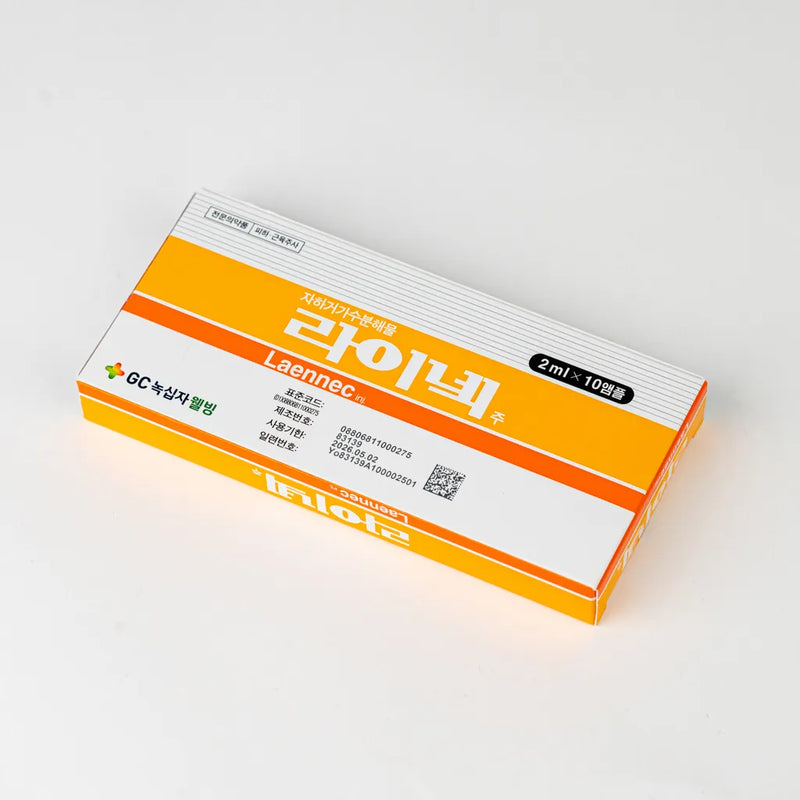
Placenta extract shows it plainly. The LAENNEC licence held by GC Wellbeing specifies a light-resistant sealed container at room temperature. The MELSMON licence held by Korea Melsmon specifies a sealed container at room temperature, with no light condition. Two long-established placenta extract products, both room temperature, and only one licensed with light protection.
Ascorbic acid shows it more widely. Nine of the 36 single-ingredient licences are not refrigerated, and three ascorbic acid licences replace the air in the container with nitrogen instead. A licence that relies on nitrogen in the container is addressing oxidation by excluding air rather than by cooling, and it is licensed at room temperature accordingly. Two products that both declare ascorbic acid can therefore arrive under different, and equally correct, conditions.
What this means for a shipment
Know the condition before the order ships. For a refrigerated licence, a buyer should expect the goods to travel under temperature control and should ask how. For a room temperature licence, refrigeration is not required by the licence, and the relevant range is the one stated on the record, usually 1 to 30°C, which excludes both freezing and sustained heat.
Check that the container matches the licence. A licence that specifies a light-resistant container means the primary container itself is meant to keep light out. A product licensed for a light-resistant container that arrives in clear, unprotected glass is inconsistent with its licence and worth a question. The reverse is not a concern: glutathione licences do not require light-resistant containers, so clear vials there are consistent with the record.
Read the carton alongside the record. The storage statement printed on a Korean carton should match the storage field on the licence, allowing for the fact that licences can be revised. Where the two differ, the licence's change log shows whether the storage section has been revised and when, which we covered in reading the change log on a Korean drug licence. The printed fields on a carton are explained in reading an injectable label.
Plan around the refrigerated item. Within these five groups, only ascorbic acid injections carry a refrigerated licence condition. An order that mixes a refrigerated vitamin C with room temperature glutathione or placenta products has one item that sets the shipping requirement for the whole consignment, and it is worth knowing which one before the order is placed.
Where the storage line has been revised
Storage conditions are not permanent features of a licence. The change log attached to each licence records revisions to the section covering storage and period of use, and in these five groups the rate of revision differs sharply.
Fourteen of the 26 placenta extract licences show at least one revision to that section, more than half. Twelve of the 46 ascorbic acid licences do, nine of the 38 glutathione licences, and five of the 29 thioctic acid licences. None of the twelve hydroxocobalamin licences shows a revision to it.
The log does not say what changed within the section, and the section covers shelf life as well as storage, so a revision there may concern either. What it does tell a buyer is where to be careful about older stock. For a placenta extract product with a revised storage section, the condition printed on a carton made some years ago may not match the licence today, and the carton's manufacture date against the revision date is the way to tell whether a difference is explained.
Across our range
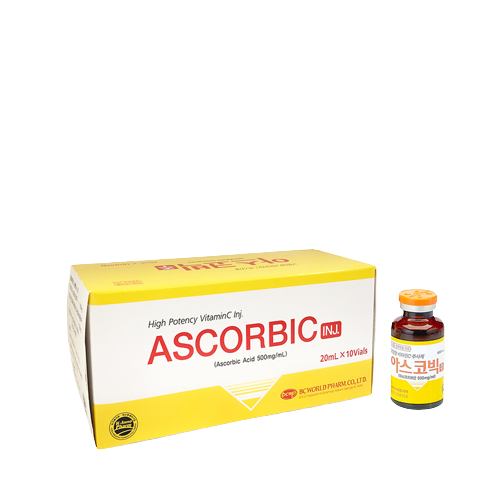
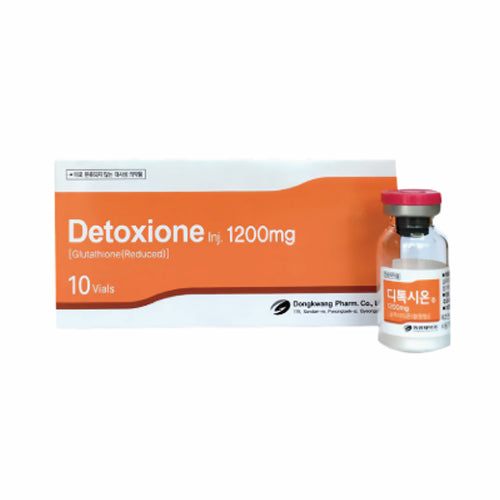
The licences behind several products in our catalogue illustrate the pattern directly. The BC World Pharm ascorbic acid licence behind BC ASCORBIC Inj specifies a light-resistant sealed container at 2 to 8°C. The licence behind LAENNEC specifies a light-resistant sealed container at room temperature. The licences behind Detoxione Inj 1200mg and Luthione 1200mg specify a sealed container at room temperature. If you want to know how a specific order containing a refrigerated product will travel, ask our team before the order is placed. The wider range is under vitamins and injectables.
Frequently asked
Do Korean vitamin C injections need refrigeration?
Most single-ingredient ones do, according to their licences. Of 36 currently valid single-ingredient ascorbic acid injection licences, 27 specify storage at 2 to 8°C and 32 specify a light-resistant container. Some are licensed at room temperature, including licences that replace the air in the container with nitrogen. Check the licence for the specific product.
How should Korean glutathione injections be stored according to their licence?
All 38 currently valid glutathione injection licences specify a sealed container at room temperature, stated as 1 to 30°C. None specifies refrigeration or a light-resistant container. Keeping the product away from light is sensible handling, but it is not a licensed requirement.
Do placenta extract injections need to be refrigerated?
Not according to their licences. All 26 currently valid placenta extract injection licences specify room temperature. Twenty-three also specify a light-resistant container, and three do not.
Sources and references
- Ministry of Food and Drug Safety (MFDS), Korean drug product licence register, active ingredient queries for Glutathione, Ascorbic Acid, Thioctic Acid, Hydroxocobalamin and Human Placenta, injectable filings only, detailed records read for the storage method field, retrieved 21 October 2026.
- KSTATION editorial policy, on how register facts are separated from handling advice in our writing.
Register figures are a reading taken on 21 October 2026. Storage conditions on licences can be revised. This article describes the storage conditions recorded on licences for unopened products in five ingredient groups. It does not describe preparation, use, or conditions after opening.