It is easy to think of a licence as a fixed document: granted once, filed, done. The Korean drug register says otherwise. Each licence carries a change log, a dated list of which sections of the approved text have been revised since the product was licensed. Across the injectables most often bought for aesthetic practice, three licences in four show at least one revision, and some of those revisions landed on the same day across dozens of products at once.
Where the change log lives
The detailed record behind each Korean drug licence, published by the Ministry of Food and Drug Safety through Korea's public data portal, includes a field that lists revisions to the licence. Each entry is a pair: the name of the section that changed and the date it changed. Entries run newest first.
The sections named are the ones that make up the approved text of a product: its name, its description, its indications, its dosage and administration, its precautions, and its storage conditions together with its period of use. The log does not reproduce the old or new wording. It records that a section changed and when.
The section names in the log changed style during 2021. Older entries use labels ending in 변경, change, such as 효능효과변경 for a change to indications. Newer entries use the section title alone, such as 효능·효과. The two styles overlap for about six months, from mid 2021 to the end of that year. Nothing substantive turns on it, but it is worth knowing so that two labels for the same section are not read as two different kinds of change.
To see how much this field carries, we read it for every currently valid injectable filing in six ingredient groups: botulinum toxin type A, glutathione, ascorbic acid, thioctic acid, hydroxocobalamin and human placenta extract. That is 208 filings. One of them, a long-established toxin licence, has a log long enough to be cut off in the published record, so every count below is a minimum.
How much changes after a licence is granted
Of the 208 filings, 156 show at least one recorded revision. The share varies by ingredient group, and in one group it is every licence.
| Ingredient group | Valid filings | With a recorded revision |
|---|---|---|
| Botulinum toxin type A | 58 | 45 |
| Glutathione | 38 | 23 |
| Ascorbic acid (incl. combinations) | 45 | 37 |
| Thioctic acid | 29 | 16 |
| Hydroxocobalamin | 12 | 12 |
| Human placenta extract | 26 | 23 |
| Total | 208 | 156 |
By section, revisions are spread across the whole approved text rather than concentrated in one part of it. Counting filings with at least one revision to each section: indications 83, precautions 74, product name 71, storage and period of use 72, description 66, dosage and administration 63. The earliest entry in the set dates from 1980. The most recent is from this month.
Two readings follow. For a buyer, the practical one is that the licence text you look up today is the current version, and for most of these products it is not the version that existed when the licence was granted. For anyone comparing products, the other is that a licence with no recorded revision is not necessarily cleaner or more settled than one with many. Older licences have simply had more time to accumulate entries, and some revisions are imposed on a whole class at once, as the next section shows.
The age effect is visible in the data rather than assumed. Every one of the 8 filings granted before 2000 shows at least one revision, with a median of ten or eleven entries each. For the 44 granted in the 2000s the median is four. For the 107 granted in the 2010s and the 49 granted since 2020 the median is one, and roughly a third of those have none at all. A long log mostly means a long life.
Revisions that land on the same day across a class
Twenty-nine of the 45 ascorbic acid filings show a revision to indications dated 23 December 2021. All twelve hydroxocobalamin filings show revisions to both indications and dosage dated 2 May 2020. The 29 ascorbic acid filings belong to 25 different licence holders, none with more than three of them, and the twelve hydroxocobalamin filings belong to twelve different holders. A revision recorded on the same date across that many unrelated holders is the signature of an action applied to a class of products rather than a change requested product by product.
Korean regulators can require changes to approved text across a class, for example following a re-evaluation of a substance, and a date cluster like these is consistent with that kind of action. The open record does not name the cause, and we have not traced the notices behind these particular dates, so we describe the clusters and leave the reason unstated.
What matters for sourcing is the consequence. If a whole class was revised on one date, then every carton of every product in that class manufactured before that date may carry product information that differs from the current licence text in the same section. That is expected, and it is not a sign that any one product is irregular. The date in the log is what lets you tell the difference.
Revisions that follow a product family
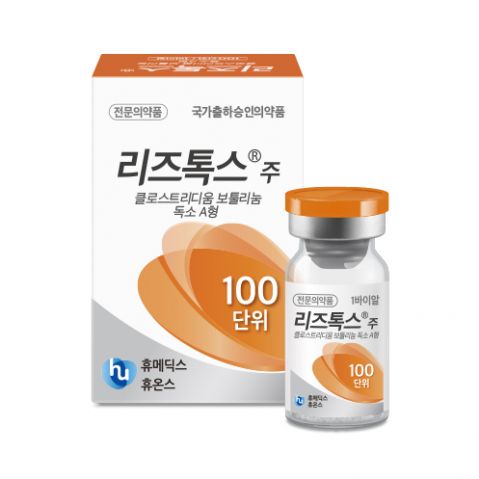
Seven toxin filings show a revision to precautions dated 4 October 2024. They are the three LIZTOX filings held by Huons BioPharma, the three WONDERTOX filings held by Chong Kun Dang, and one filing held by Humedix. Those seven are exactly the toxin filings in this set whose product is made by Huons BioPharma, either as licence holder or as the named contract manufacturer. No other toxin filing shows a revision on that date.
We covered the manufacturing relationship behind WONDERTOX in WONDERTOX: what it is and how to source it. The change log adds a second line of evidence that these licences move together. When the approved text for products from one plant changes, it can change for every licence that plant supplies on the same day, regardless of whose name is on the licence.
What changed in the last twelve months
History matters less to a buyer than recency. A revision from the 1990s is baked into every carton now on the market. A revision from last spring may not be, because stock made before it is still moving through the supply chain.
Twenty-seven of the 208 filings show at least one revision dated within the twelve months before we read the register. The sections involved lean one way: storage and period of use on 13 filings and precautions on 12, with description on 6, product name and dosage on 3 each, and indications on 2. By group, 16 of the 27 are toxin filings, 8 are placenta extract and 3 are glutathione. None of the ascorbic acid, thioctic acid or hydroxocobalamin filings shows a revision in that window.
The dates cluster here too, on a smaller scale. One filing shows five sections revised on 20 November 2025, and three dates in 2026, 28 April, 8 May and 31 July, each carry three. The WONDERTOX filings are among those with entries in 2026, which is consistent with the family pattern described above.
Names change too
The section of the log that surprises buyers most is the product name. Seventy-one of the 208 filings show at least one change to the licensed product name. Fifty-two changed once, twelve twice, and a handful between three and seven times.
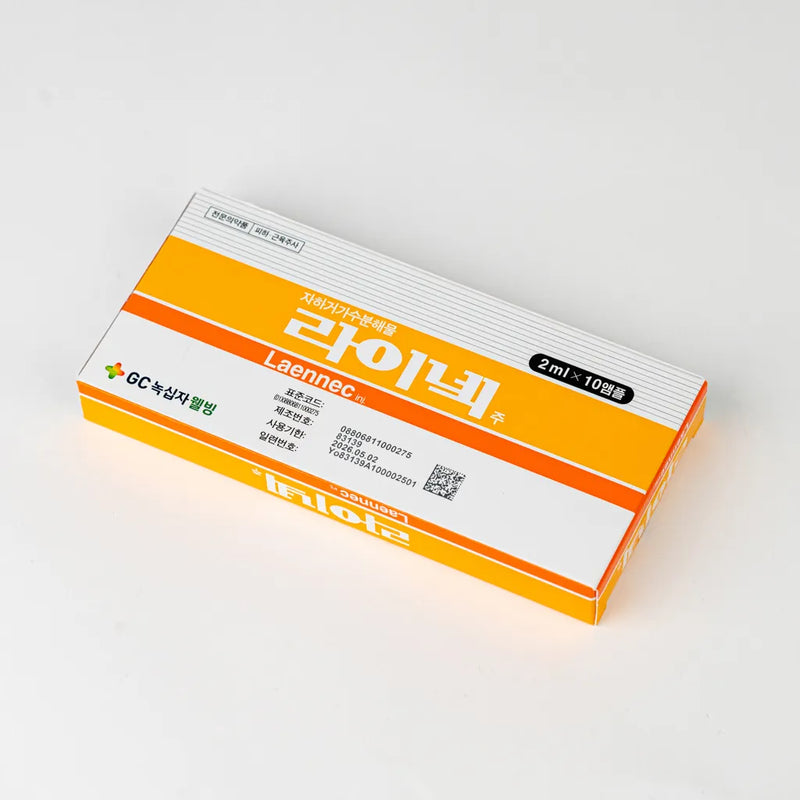
LAENNEC is a familiar example. The log for 라이넥주, the ampoule filing held by GC Wellbeing, records product name changes in 2005, 2010 and 2016, alongside revisions to storage and period of use in 2007, 2008, 2012 and 2013. The product has a long history in the record, and the name on a carton or document from some years ago need not match the name on the licence today.
This is one of the practical reasons to identify a product by its licence and its registered codes rather than by its name alone. An older document that uses an earlier name is not evidence of a different product, and a current name on a carton does not by itself prove the carton is current. The thirteen digit product code, which we covered in the barcode on a Korean carton, checked against its licence, is a steadier reference than a name that has changed three times.
Using the change log when you check a product
Read the current licence, then read its log. The current text tells you what is approved now. The log tells you which parts of it are recent.
Compare revision dates with the manufacture date on the carton. A carton made before a revision may carry product information that differs from the current text in the revised section. A carton made after it should match. The manufacture date and the other printed fields are explained in reading an injectable label.
Note which sections changed, not just whether anything did. A revision to the product name bears on how the carton should be identified. A revision to storage and period of use bears on the shelf life check. A revision to precautions bears on the leaflet. Each points you to a different field on the carton.
Treat unexplained differences as questions. A leaflet that differs from the current licence in a section the log shows as recently revised, on a carton made before that date, is explained. A leaflet that differs in a section with no revision on record, or on a carton made after the revision, is a question for the supplier.
Across our range
Several products in our catalogue carry long logs, including LAENNEC Inj and the toxins in the Huons BioPharma family, WONDERTOX and LIZTOX. If a leaflet in a box you received from us differs from the current licence text and you want to know whether the log explains it, send our team the product, the batch and the manufacture date and we will look at it with you. The wider toxin range is under botulinum toxins.
Frequently asked
Do Korean drug licences change after approval?
Yes, often. Of 208 currently valid injectable filings in six ingredient groups, 156 show at least one recorded revision to their approved text, covering indications, precautions, product name, storage and period of use, description, and dosage.
Why would the leaflet in a box differ from the current Korean licence?
Most commonly because the carton was made before a revision. Some revisions were applied on the same day across a whole class, for example 29 ascorbic acid filings on 23 December 2021. Compare the manufacture date with the revision dates in the log to see whether a difference is explained.
Can a Korean product's licensed name change?
Yes. Seventy-one of the 208 filings show at least one change to the licensed product name, and some have changed it several times. Identifying a product by its licence and registered barcode is more reliable than by name alone.
Sources and references
- Ministry of Food and Drug Safety (MFDS), Korean drug product licence register, active ingredient queries for Botulinum (covering every type A toxin filing), Glutathione, Ascorbic Acid, Thioctic Acid, Hydroxocobalamin and Human Placenta, injectable filings only, detailed records read for the change history field, retrieved 18 September 2026.
- MFDS detailed licence records for 라이넥주 (GC Wellbeing) and for the LIZTOX, WONDERTOX and Humedix toxin filings, including the contract manufacturer field, retrieved 18 September 2026.
- KSTATION editorial policy, on how register facts are separated from product claims in our writing.
Register figures are a reading taken on 18 September 2026 and are minimums, since one change log in the set is truncated in the published record. This article describes which sections of approved text were revised and when. It does not describe what any section says or how any product is used.