Vitamin C is the rare active that everyone recognizes and almost no one specifies. On a serum it is a marketing word; on an injectable label it is a molecule with a form, a concentration, and a shelf life measured against light and air. Reading one is less about the vitamin and more about how it was kept intact on the way to the vial.
What injectable vitamin C is
Injectable vitamin C is L-ascorbic acid, the same water-soluble antioxidant found throughout the body, prepared for parenteral use rather than topical application. In the Korean range it usually appears inside a compounded ampoule, often alongside other nutrients, and is grouped by its composition in the vitamins and injectables category rather than by any claimed effect. This page keeps to what it is and how it is specified. It does not describe what it does for skin, because that is a clinical and regulatory question rather than a sourcing one.
It is worth setting expectations plainly at the start. In the United States, no injectable vitamin C is FDA-approved for aesthetic or skin-related use, and topical ascorbic acid is sold as a cosmetic only while no drug-like claim is attached. Those boundaries are the reason this reading guide stays on composition and provenance.
Form and stability: the whole problem in one molecule
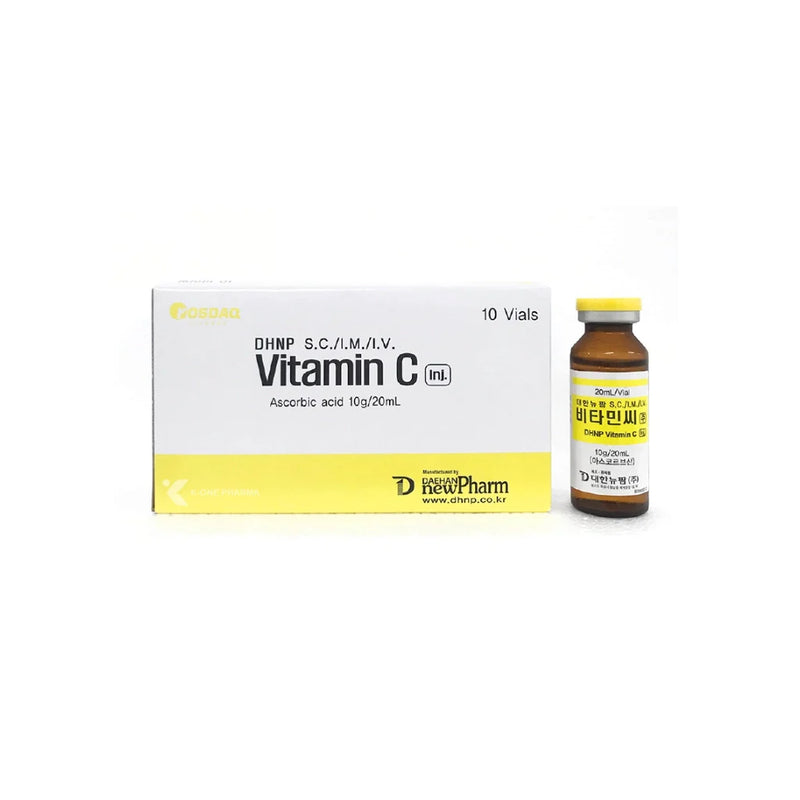
The defining fact about ascorbic acid is that it is unstable. It oxidizes on contact with light, air, heat, and certain metal ions, converting to forms that no longer behave the way fresh vitamin C does. That single property drives almost every packaging decision you will see: amber or opaque ampoules, sealed single-use formats, and, in some products, a powder that is reconstituted immediately before use rather than a solution left standing. The logic is the same one that puts reduced glutathione into a freeze-dried vial. An antioxidant that reacts with its environment has to be protected from that environment until the moment it is used.
For reading a label, this means stability cues are not incidental. A product that states its form, its packaging, and its handling requirements is telling you it was built around the molecule's fragility. One that says only vitamin C, with no word on how it is kept from oxidizing, has left the most important variable unstated.
Reading the label
Injectable vitamin C rarely arrives alone. Many Korean products are compounded ampoules that pair ascorbic acid with other ingredients, so the useful reading is of the whole formula, not a single line. A few variables carry most of the information.
| Variable | What to look for |
|---|---|
| Form of vitamin C | L-ascorbic acid or a stabilized derivative, stated by name |
| Concentration | The ascorbic acid amount, so ampoules are comparable |
| What else is in the amp | The full compounded formula, not just the headline vitamin |
| Format and packaging | Sealed ampoule, light-protected, powder-and-reconstitute if any |
| Regulatory status | Cleared for the destination market and intended use |
Injectable and topical are not the same product
Because the same two words appear on a face serum and on an ampoule, it is worth being precise: they are different products with different delivery and different regulation. A topical ascorbic acid is a cosmetic that sits on the skin surface; an injectable is a parenteral preparation for administration by a trained professional. The vitamin may be chemically the same, but the format, the handling, and the legal status are not, and a reading guide for one does not transfer to the other.
Where sourcing fits
An antioxidant that degrades in light and air is only itself if it was kept from both, which is why, for this class, storage and traceable provenance sit right beside the spec. From a sourcing standpoint the label and the supply chain are one discipline: the concentration on the ampoule only means something if the ampoule in the box is the one that was filled, sealed, and kept protected. KSTATION curates official-channel vitamin injectables and keeps provenance traceable, and the method is set out in the Editorial & Sourcing Policy. The product-level authenticity checks sit in our guide to verifying an authentic Korean skin booster, and the neighboring antioxidant, injectable glutathione, has its own hub.
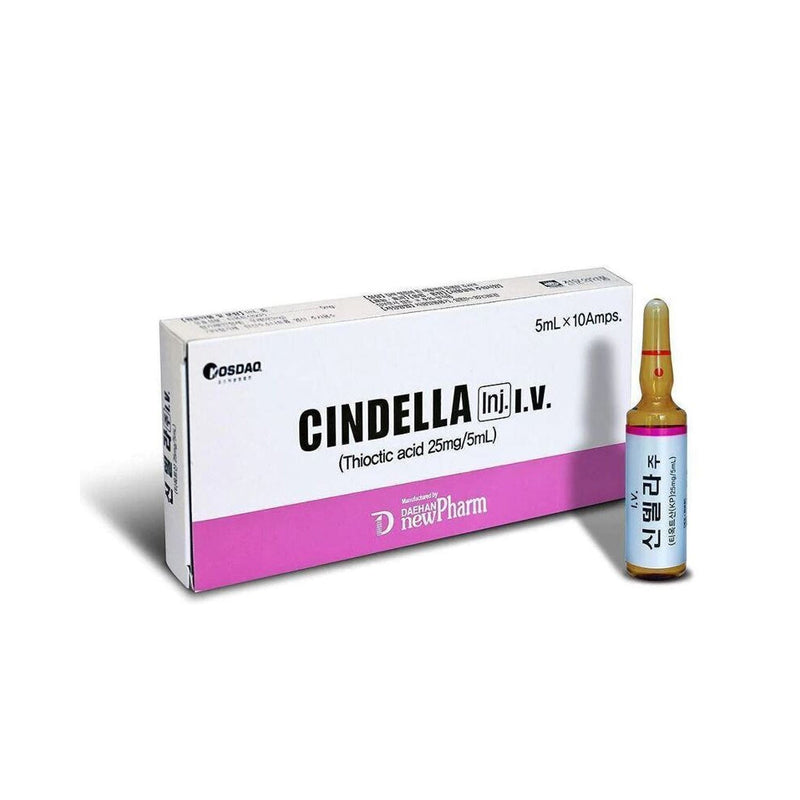
The stocked vitamin injectables sit in the vitamins and injectables collection, from compounded ampoules such as CINDELLA Inj to single-syringe formats such as Cindella i. The point of reading the label first is the same across all of them: know the form and how it was kept before you compare a price.
Frequently asked questions
Frequently asked
What form of vitamin C is in an injectable?
Usually L-ascorbic acid, the water-soluble antioxidant form, prepared for parenteral use. Some products use a stabilized derivative. A label that names the form is more specifiable than one that says only vitamin C, because the form affects how it is handled and stored.
Why is injectable vitamin C packaged in dark or sealed ampoules?
Because ascorbic acid oxidizes on contact with light, air, and heat, turning into forms that behave differently from fresh vitamin C. Light-protected, sealed, single-use packaging, and in some cases a powder reconstituted before use, all exist to keep the molecule intact until the moment it is administered.
Is injectable vitamin C the same as the vitamin C in a serum?
The molecule can be the same, but the products are not. A serum is a topical cosmetic applied to the skin surface; an injectable is a parenteral preparation for professional administration, with different handling and different regulatory status. One is not a substitute for the other.
Is injectable vitamin C FDA-approved?
No injectable vitamin C is FDA-approved for aesthetic or skin-related use in the United States. Confirm the specific product and its legal status in the destination market with the relevant authority before sourcing, since rules differ by country and change over time.
Disclaimer. This article is general educational information and is not medical advice. It describes how injectable vitamin C is specified, packaged, and regulated, not what any product will do for an individual, and products referenced are intended for professional use where lawful. It makes no claim that vitamin C lightens or changes skin, or that it is safe or effective for any use. Regulatory status varies by country and changes over time; confirm current requirements with the relevant authority.
Sources & references
- Telang PS. Vitamin C in dermatology. Indian Dermatology Online Journal, 2013 (ascorbic acid chemistry, instability, and oxidation). pmc.ncbi.nlm.nih.gov
- U.S. FDA, Is It a Cosmetic, a Drug, or Both? (Or Is It Soap?), structure/function vs. drug claims. fda.gov
- KSTATION, Editorial & Sourcing Policy (official-channel sourcing and traceable provenance). kstations.com/pages/editorial-policy