Every carton of a Korean injectable carries two dates, one for manufacture and one for expiry. The gap between them is not something a manufacturer chooses box by box. It is written into the product's licence as a single line, a number of months counted from the date of manufacture, and it is public. Across the injectables most often bought for aesthetic practice, that line says 24 months on some licences and 36 on others, and a few licences say more than one thing at once.
Where the shelf life lives in the Korean record
A Korean drug licence has a detailed record behind the summary line most people see. That record includes the dosage form, the pack units, the declared additives, and a field for the period of use. For almost every filing it is written the same way: 제조일로부터, from the date of manufacture, followed by a number of months.
That field is the licensed shelf life. It is the maximum span between the day a batch is made and the last day it can be used, as approved for that product. The expiry date printed on a carton is supposed to follow from it: take the manufacture date, add the licensed term, and you arrive at the latest expiry the licence allows.
It is worth separating this from a different idea that uses similar words. A licence itself can come to an end, and one of the ways it ends is the expiry of the licence's own validity period. That is a question about whether the product is still licensed at all, and we have set out how to check it in re-checking a Korean filing after purchase. The shelf life in this article is about something narrower: how long a unit of a currently licensed product is approved to last after it is made. A product can be fully licensed and still be past its shelf life on a particular carton, and the reverse is also possible.
What 207 injectable licences say
We read the detailed record for every currently valid injectable filing in the Korean drug register across six ingredient groups that account for much of what aesthetic practices buy from Korea: botulinum toxin type A, glutathione, ascorbic acid, thioctic acid, hydroxocobalamin and human placenta extract. Injectable means filings whose licensed product name identifies an injection. For ascorbic acid the set includes combination products whose declared ingredients include it, since the register indexes them together. There are 207 filings in total and no filing appears in more than one group.
| Ingredient group | Valid filings | 36 months | 24 months | 18 months | More than one term |
|---|---|---|---|---|---|
| Botulinum toxin type A | 57 | 47 | 6 | 1 | 3 |
| Glutathione | 38 | 32 | 3 | 2 | 1 |
| Ascorbic acid (incl. combinations) | 45 | 10 | 31 | 2 | 2 |
| Thioctic acid | 29 | 13 | 16 | 0 | 0 |
| Hydroxocobalamin | 12 | 12 | 0 | 0 | 0 |
| Human placenta extract | 26 | 11 | 14 | 0 | 1 |
| Total | 207 | 125 | 70 | 5 | 7 |
One thioctic acid filing states its term as three years rather than thirty-six months and is counted under 36 months. Nothing in the set runs shorter than 18 months, and the only term longer than 36 months appears on two filings that state two terms, covered below.
Two things stand out. The first is that 36 months is the most common term overall, but it is not a default. Ascorbic acid runs the other way, with 24 months on 31 of 45 filings. Thioctic acid and placenta extract are split close to evenly. Hydroxocobalamin is the only group where every filing says the same thing.
The second is that the ingredient does not settle the term. Within every group except hydroxocobalamin, filings for the same substance carry different shelf lives. Two ascorbic acid injections from the same company can differ, and they do: one Daewon Pharmaceutical ascorbic acid filing states 36 months and another states 24. The term belongs to the licensed product, not to the molecule.
Newer licences lean longer
If the ingredient does not set the term, something else is moving it, and one pattern is visible in the grant dates. Sorting the 207 filings by the decade their licence was granted, the share stating a single 36 month term rises over time.
| Licence granted | Valid filings | Single 36 month term | Single 24 month term | Other |
|---|---|---|---|---|
| Before 2000 | 8 | 4 | 4 | 0 |
| 2000 to 2009 | 44 | 18 | 21 | 5 |
| 2010 to 2019 | 107 | 69 | 33 | 5 |
| 2020 onwards | 48 | 34 | 12 | 2 |
Filings granted in the 2000s split slightly towards 24 months. Filings granted since 2010 lean clearly towards 36, and more than seven in ten of those granted since 2020 state it. The register does not record why, and the shift runs across all six groups combined rather than inside any one of them, so it should be read as a description of the record and not as a trend in any single product.
The term on an older licence is also more likely to have been revised since it was granted. The detailed record for each filing carries a log of the sections that have changed, and 71 of the 207 filings show at least one recorded revision to the section that covers storage and the period of use. The log records that the section changed and when. It does not record, in the open data, what the earlier term was.
One licence, more than one shelf life
Seven of the 207 filings state more than one term. They fall into three patterns, and each one changes how a carton should be read.
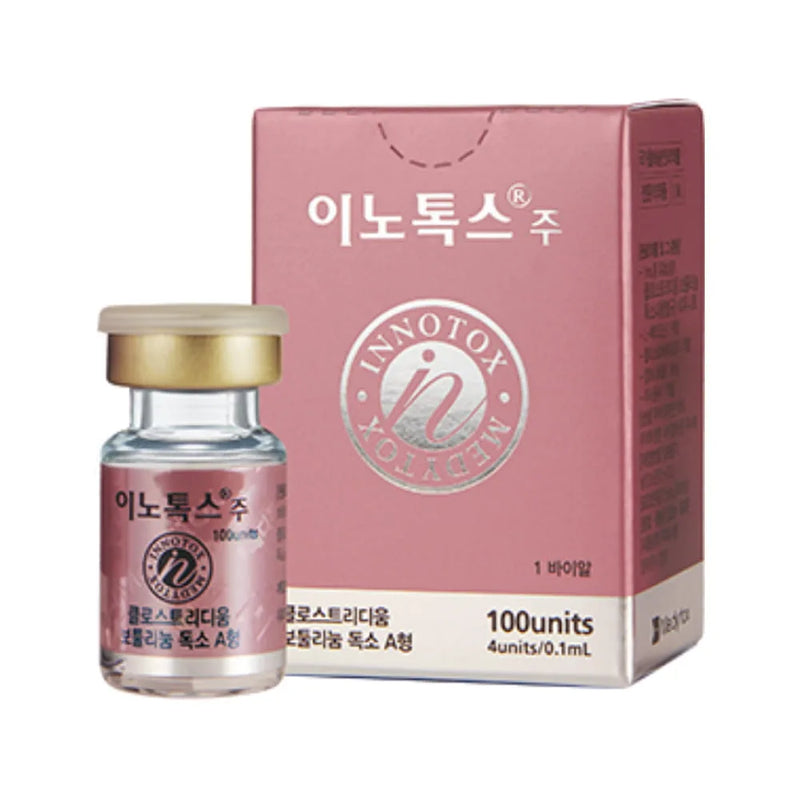
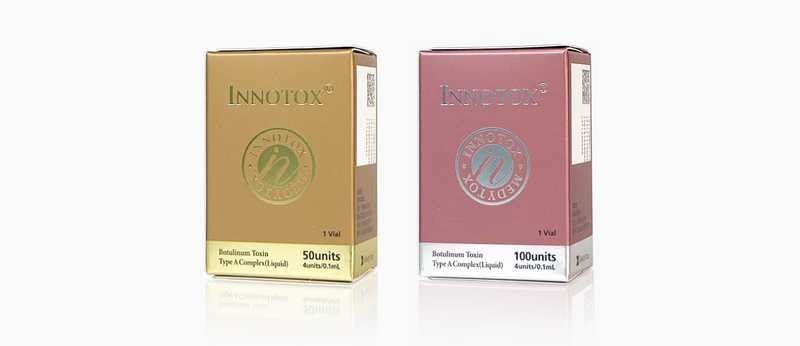
By presentation within a single licence. The INNOTOX licence held by Medytox covers three vial sizes under one filing and states the shelf life separately for each: 36 months for the 25 unit vial, 36 months for the 50 unit vial, and 24 months for the 100 unit vial. The same licence, the same product name, and a year's difference depending on which vial is in the box. KSTATION stocks both the INNOTOX 50 unit and INNOTOX 100 unit presentations, which means two cartons of the same brand from the same licence can legitimately show different gaps between manufacture and expiry. A buyer who checks one against the other and concludes that one of them is wrong has made the comparison the register warns against. We have covered the INNOTOX licence more broadly in INNOTOX: what it is and how to source it.
By market. One ascorbic acid filing held by Myungmoon Pharmaceutical states its term as 24 months for the domestic product and 36 months for the export product. A placenta extract filing from BC World Pharm, 큐라센주, lists both 24 and 36 months against a pack list that separates domestic and export presentations. For a buyer outside Korea this is the pattern that matters most, because the carton in hand may be an export presentation with a term the domestic product does not have.
Two terms without a stated split. Both Korean Xeomin filings, held by Merz's Asia Pacific company, list 48 months and 36 months side by side, and one ascorbic acid filing and one glutathione filing do the same with other pairs. The detailed record in the open data does not say which term applies to what. Where that happens, the licence has told you the range of terms that exist, not which one your carton follows, and the product's own labelling is the place to resolve it.
Different strengths, different licences, different terms
A related pattern sits one level up. Where a company holds separate licences for different strengths of what buyers think of as one product, those licences can carry different shelf lives.
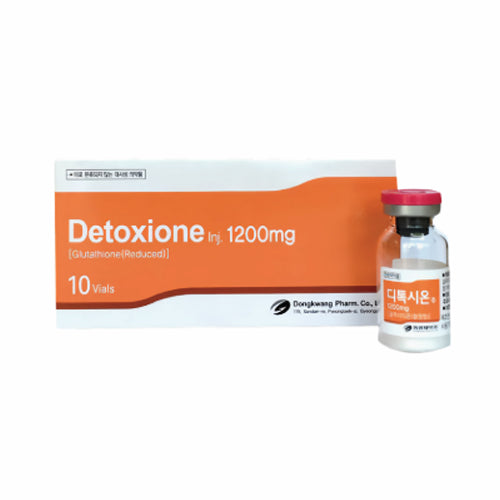
Dong Kwang Pharmaceutical's Detoxione is an example that touches our own range. The filing for 디톡시온주, Detoxione Inj., states 36 months. The filing for 디톡시온주1200mg, Detoxione Inj. 1200mg, states 24 months. Same company, same brand, same declared substance, and a twelve month difference between the two licences. Detoxione Inj 1200mg in our catalogue is the 1200mg product, so the reference term for it is the 24 month one.
Glutathione shows the same thing more widely. Two glutathione filings state only 18 months, both of them 1200mg products, and a third lists 18 months alongside 36, while 32 state 36 months. Nothing about the name glutathione, or even the strength, tells you which applies. The licence does.
How to check a carton against its licence
Identify the licence and the presentation. Read the full product name, the strength or unit count, and where it applies, whether the carton is a domestic or an export presentation. The fields printed on a Korean carton, including the batch number and the dates, are set out in reading an injectable label.
Find the licensed term. The period of use on the licence for that product, and for that presentation if the licence splits it.
Compare the printed span to the term. The distance from the manufacture date to the expiry date on the carton should not exceed the licensed term. In practice it usually equals it. A span that is longer than the licence allows is inconsistent with the licence, whatever the reason, and is a question to put to the supplier before the product is used.
Do not read a shorter span as a problem on its own. Where a licence states more than one term, or where the carton belongs to a presentation with a shorter term, a shorter span is exactly what the register predicts. The mismatch to look for runs in one direction only.
Then look at what is left. The licence tells you the maximum life of a batch. How much of that life remains when goods arrive depends on how long the stock has been in the supply chain, and that is a reasonable thing to ask about before an order ships rather than after it lands. Remaining shelf life is a supply question, not a regulatory one, but the licensed term is what makes it measurable.
Shelf life across our range
Several products in our catalogue sit inside these six groups, and the licences behind them do not share one term. Where a licence splits its term by presentation, as INNOTOX does, each presentation should be read against its own reference rather than against its sibling.
Frequently asked
How long is the shelf life of Korean injectables?
It depends on the licence rather than the ingredient. Across 207 currently valid injectable filings in six ingredient groups, 125 state 36 months from manufacture, 70 state 24 months, 5 state 18 months and 7 state more than one term. The longest term recorded is 48 months, on two filings that also list 36.
Why does INNOTOX 100 units have a shorter shelf life than 50 units?
The INNOTOX licence states the term separately for each vial size: 36 months for 25 and 50 units, and 24 months for 100 units. The register records the terms but not the reasoning behind them. For a buyer, the consequence is that the two presentations should each be checked against their own term.
Does a longer shelf life mean a better product?
No. The licensed term is a limit approved for one product under its labelled conditions. It is not a comparative measure of quality or stability between products, and filings for the same substance often carry different terms.
Sources and references
- Ministry of Food and Drug Safety (MFDS), Korean drug product licence register, active ingredient queries for Clostridium Botulinum Toxin Type A, Glutathione, Ascorbic Acid, Thioctic Acid, Hydroxocobalamin and Human Placenta, injectable filings only, detailed records read for the period of use field, retrieved 18 September 2026.
- MFDS detailed licence records for INNOTOX (Medytox), Detoxione and Detoxione 1200mg (Dong Kwang Pharmaceutical), and the Xeomin filings (Merz Asia Pacific), retrieved 18 September 2026.
- KSTATION editorial policy, on how register facts are separated from product claims in our writing.
Register figures are a reading taken on 18 September 2026. Licensed terms can be revised after a licence is granted. This article describes the period of use recorded on licences and how to compare it with a carton. It says nothing about how any product should be stored, prepared or used.