Some Korean licensed product names end with a word about export. It appears often enough that most people sourcing from Korea have seen it, and it is explained to them often enough that most have picked up a belief about what it means. Usually that belief is that export designation is a grade. We swept ten actives in full and counted every licence carrying that wording, and the register does not support that reading. It also does not support several of the other readings, including one we had drifted toward ourselves.
The sweep covered 1,952 records on 10 August 2026, of which 1,578 are live.1 Two hundred and forty-six of the live licences carry export wording inside the licensed product name. That is one in six. This article is about what those 246 have in common, which turns out to be less than expected, and about four inferences that the distribution rules out.
It is two markings, not one
The first thing to fix is that export wording on a Korean licence is not a single thing. There are two distinct forms, and treating them as interchangeable produces a specific and consequential error.
| Marking | What the register is recording | Live licences |
|---|---|---|
| 수출용 | The licence is designated for export | 188 |
| 수출명 | The name the product carries when exported | 36 |
| Both, on one licence | Designated for export, and an export name recorded | 22 |
| Neither | 1,332 |
The second marking is a naming convention. It records what a product is called abroad, and it attaches to licences that stand on their own terms. Read it as the first and you will describe a domestically licensed medicine as export only, which is wrong in a way that matters when the question is what a Korean licence covers.
The clearest proof that they are different things is the third row. Twenty-two live licences carry both markings at once. If the two meant the same thing, no licence would ever need both, and the register would not have 22 of them.
The oldest of the 22 shows what that looks like in practice. 대화데카비타민연질캡슐(수출용)(수출명:비타폴테연질캡슐), granted to 대화제약 in January 1988, carries the export designation in one parenthesis and the name it travels under in the next. Two separate pieces of information, recorded separately, inside a single product name. Fourteen of the 22 are ascorbic acid licences.
Not a quality tier
The most common belief about export designation is that it marks a better product, made to a higher standard for foreign buyers. Nothing in the register supports this and nothing in the distribution looks like it.
The 246 export-marked live licences split 151 over the counter and 95 prescription only. They span 54 years of grants, from that 1972 capsule to a hyaluronate injectable granted on 16 July 2026. They sit across the same class codes as everything else. There is no field on these licences that is absent from the others, no additional designation, and no grade recorded anywhere.
Export-marked and unmarked licences are issued under the same regime, and the register treats them as the same kind of object. A product being export designated tells you about the licence category it sits in. It does not tell you it was made differently, and no licence in this sweep says otherwise.
Not approval in your market
The second belief is subtler and more consequential: that a Korean export designation is a form of clearance for the destination, or at least evidence that the product was intended to satisfy it.
A Korean licence describes standing in Korea. That is the whole of what any entry on this register does, export-marked or not. Whether a product may be imported into a given market, by whom, and under what conditions is decided by the authority in that market applying its own framework, and it may reach a different answer about the same product. An export marking is a Korean administrative category recorded by a Korean regulator. It is not a foreign approval, and it is not evidence of one.
Not a route story
Here is where our own reading needed correcting. Looking at tranexamic acid alone, ten of 16 injectable licences carry export wording against two of 14 non-injectable ones, which is a strong enough split to suggest that export designation concentrates on injectables. It is a tempting story: injections travel, topicals stay home.
It does not survive the wider sweep. Across all ten actives, 62 of 366 injectable licences carry export wording, which is 16.9 percent, against 184 of 1,212 non-injectable licences, which is 15.2 percent. Those two numbers are effectively the same.
Tranexamic acid is real, but it is one molecule, and the pattern inside it is not a pattern across the register. Export designation is not decided by route.
Not a signal that a licence will lapse
The fourth correction is the one we would have got wrong if we had not checked, and it is worth showing the working.
Writing about tranexamic acid we noted that three of that active's five exited licences were export-designated injectables. That is a striking concentration in a small set, and the natural next thought is that export licences are more disposable, kept alive only while a particular shipment relationship lasts. We ran it across all 1,952 records, live and exited, to find out.
| Records | Exited | Exit rate | |
|---|---|---|---|
| Carries export wording | 286 | 40 | 14.0% |
| No export wording | 1,666 | 334 | 20.0% |
The opposite of the hypothesis. Export-marked licences have left the register less often than unmarked ones, not more. The tranexamic acid observation was true about tranexamic acid and told us nothing about the register, which is what a five-record sample usually does.
We are reporting the failed hypothesis rather than the finding we expected because the alternative is publishing a plausible pattern that a wider count refutes. This register rewards counting everything and punishes reasoning from the interesting cases, which are interesting precisely because they are unrepresentative.
They also leave differently
The rate is only half of it. The register records why each exited licence left, and the two groups do not leave the same way.
Of the 40 export-marked records that have exited, 38 were withdrawn by the holder, one lapsed at the end of its validity period and one ended when the company closed. Withdrawal accounts for 95 percent. Among unmarked records the split runs the other way: of 334 exits, 181 lapsed at the end of a validity period and 138 were withdrawn, with the remaining 15 accounted for by company closures and administrative cancellations. Passive expiry is the single largest route out.
Export-marked licences, in other words, are not quietly allowed to run down. They are given up on purpose. That is a different kind of fact from the exit rate and arguably a more informative one, because it says something about how holders treat these licences: as positions they decide to close rather than ones they forget to renew.
What it does track
Having ruled things out, here is what the distribution actually shows.
It varies enormously by active. Export-marked share of live licences runs from zero to 40 percent across the ten.
| Active | Live licences | Export-marked | Share |
|---|---|---|---|
| Tranexamic acid | 30 | 12 | 40.0% |
| Lidocaine | 222 | 64 | 28.8% |
| Heparin | 52 | 11 | 21.2% |
| Glutathione | 73 | 14 | 19.2% |
| Ascorbic acid | 611 | 99 | 16.2% |
| Hyaluronidase | 32 | 4 | 12.5% |
| Thioctic acid | 158 | 18 | 11.4% |
| Dexpanthenol | 88 | 7 | 8.0% |
| Sodium hyaluronate | 266 | 17 | 6.4% |
| Polydeoxyribonucleotide | 46 | 0 | 0% |
One active has none at all. Polydeoxyribonucleotide returns zero export-marked licences out of 46, across injectables, creams and eye drops, and across every holder in the category. In a register where one live licence in six carries the marking, a clean zero across a whole active is worth noticing. We are not going to explain it, because the register does not, but anyone told that a Korean PDRN product is export grade should know that no such Korean licence exists.
It concentrates in particular companies. The 246 export-marked live licences are held by 83 companies, and the distribution is uneven: one holder carries 15 of them, another 11, another nine, with several more in the seven-to-eight range.
Look at what those holdings contain and the picture sharpens. 제일제약 holds 15 live licences across these ten actives and nine of them are export-marked, spread across six different actives: lidocaine, thioctic acid, hyaluronidase, ascorbic acid, dexpanthenol and heparin. 한국코러스 carries 15 export-marked licences out of 32, 동구바이오제약 11 out of 23. When a single holder marks half its portfolio for export across half a dozen unrelated molecules, the marking is describing the company rather than the product.
And it is generational. Group the live licences by the decade they were granted in and the export-marked share falls almost monotonically.
| Granted | Live licences | Export-marked | Share |
|---|---|---|---|
| Before 1990 | 30 | 12 | 40.0% |
| 1990 to 1999 | 75 | 39 | 52.0% |
| 2000 to 2009 | 360 | 86 | 23.9% |
| 2010 to 2019 | 709 | 77 | 10.9% |
| 2020 onward | 404 | 32 | 7.9% |
Over half of the surviving 1990s licences carry export wording, against under eight percent of those granted since 2020. One caveat belongs with that table: it counts licences that are still live, so it blends how often the marking was used in a given era with which licences from that era survived. It is not a clean measure of filing practice over time. But a drop from 52 percent to 7.9 percent is large enough that survivorship alone is unlikely to explain it, and the direction is consistent across four consecutive cohorts.
What to do when you see it
Read which marking it is. If the wording sits inside a parenthesis describing what the product is called abroad, the licence is a domestic one with an export name attached, and the product's Korean standing is whatever the rest of the record says. If the licence is designated for export, that is a category of Korean licence and nothing more.
Then ignore it for the purposes you were probably about to use it for. It does not upgrade a product, it does not clear anything at the destination, and it does not predict whether the licence will still exist next year. The fields that do carry information are the ones we have been reading throughout this series: the ingredient string, the class code, the supply classification, the holder and the grant date.
And if a supplier offers export designation as a selling point, that is worth noting for what it says about the supplier rather than the product.
Licensing and manufacturer details are checked against the MFDS register before a product is listed, and where a supplier sheet and the register disagree, the register wins. We stock officially sourced products only, and the method is set out in our Editorial & Sourcing Policy.2
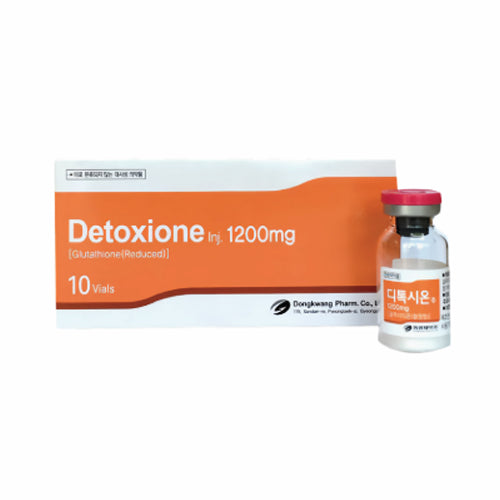
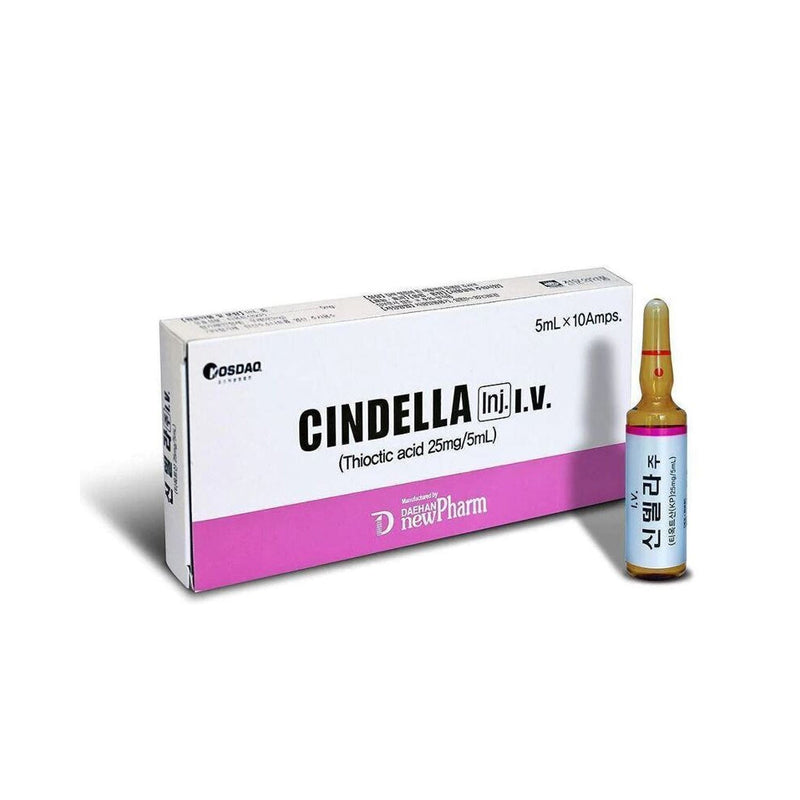
Our stocked range sits under vitamins and injectables and skin boosters and ampoules, including Detoxione Inj and CINDELLA Inj. For the field that does behave predictably, see what prescription only means when you import. For the register read on individual molecules, see what the register calls tranexamic acid, reading a thioctic acid injectable and reading a hyaluronidase vial. For the register's structure generally, see inside Korea's MFDS regulation.
Frequently asked questions
Frequently asked
Is an export-designated Korean product higher grade?
No. The register records no grade, and export-marked licences carry no field that unmarked ones lack. The 246 export-marked live licences in our sweep span both supply classifications, 54 years of grants and the same class codes as everything else. Export designation describes a licence category, not how a product was made.
Does a Korean export licence mean approval in my country?
No. A Korean licence describes standing in Korea only. Import eligibility and professional supply rules are decided by the authority in the destination market applying its own framework, and it can reach a different conclusion about the same product. An export marking is a Korean administrative category, not foreign clearance and not evidence of it.
What is the difference between 수출용 and 수출명?
The first indicates the licence is designated for export. The second records the name a product carries when exported, and attaches to licences that exist on their own terms. Among live licences we counted 188 with the first, 36 with the second, and 22 carrying both at once, which is the clearest evidence that they are not interchangeable.
Are export licences more common on injectables?
No, despite appearances in individual actives. Across ten actives, 16.9 percent of injectable licences carry export wording against 15.2 percent of non-injectable ones. Tranexamic acid alone shows a much sharper split, ten of 16 injectables against two of 14 non-injectables, but that pattern does not hold once the sample widens.
Do export-designated licences get withdrawn more often?
The opposite, in our data. Across all 1,952 records, 14.0 percent of export-marked licences have exited the register against 20.0 percent of unmarked ones. We tested this because a five-record observation in one active suggested otherwise, and it did not replicate. The manner of exit differs too: 38 of the 40 export-marked exits were withdrawn by the holder, whereas unmarked licences more often simply lapse at the end of a validity period.
Is export wording still being used on new Korean licences?
Less than it once was. Among live licences, 52 percent of those granted in the 1990s carry export wording against 7.9 percent of those granted since 2020, with the share falling across four consecutive cohorts. That count is of surviving licences, so it mixes usage with survival, but the direction is consistent and the size of the drop is hard to attribute to survivorship alone. New export-designated licences are still being granted: the most recent in our sweep dates to 16 July 2026.
Why does one active have no export-marked licences at all?
The register does not say, and we are not going to guess. What can be stated is the count: polydeoxyribonucleotide returns zero export-marked licences out of 46 live, across every format and every holder in that category, in a register where roughly one live licence in six carries the marking.
Disclaimer. This article is general educational information. It is not legal, regulatory or medical advice, and it is not a guide to importing or exporting any product. It describes how export wording appears in Korean licensed product names and how those licences are distributed; it does not interpret Korean export law, and it makes no claim about what any active does or is suitable for. Products classified as prescription only are intended for professional use by trained practitioners. Import eligibility and customs requirements vary by country and change over time; confirm current requirements with the relevant authority in the destination market before acting.
Sources & references
- Ministry of Food and Drug Safety (MFDS), drug product approval register, queried on the active ingredient field on 10 August 2026 for ten actives: Lidocaine, Tranexamic, Glutathione, Thioctic Acid, Hyaluronidase, Polydeoxyribonucleotide, Ascorbic Acid, Sodium Hyaluronate, Dexpanthenol and Heparin. All pages retrieved for each; 1,952 records in total, 1,578 live. Export wording was read from licensed product names and separated into the two forms; supply classification, class code, holder, grant date and withdrawal status were read from the licence records themselves. Figures are complete counts of that result set, not samples. data.go.kr
- KSTATION, Editorial & Sourcing Policy (official-channel sourcing and traceable provenance). kstations.com/pages/editorial-policy