Placenta injectables are usually discussed as one category, as though every ampoule labelled that way contained the same thing. The Korean drug register disagrees. It files them under two separate ingredient entries, gives those entries different classification codes, and splits the oral and injectable forms so cleanly that there is not a single exception across forty-three licences. None of that is visible on a product photo, and most of it is not visible on an English label either. This piece reads the register instead.
One category name, two register entries
Search the Korean drug register for placenta as an ingredient and forty-three licences come back, forty-one of them currently valid. That single number is where most descriptions stop, and it is where the useful part begins, because those forty-three are not one population. They are two, and the register keeps them apart with different ingredient names.
The larger entry is human placenta extract, filed in Korean as 자하거추출물, with thirty-eight licences and not one withdrawal among them. The smaller entry is human placenta hydrolysate, 자하거가수분해물, with five licences of which three remain valid and two have been withdrawn. Thirty-eight against five is not a rounding difference. It is the difference between a crowded category and a category held by essentially one manufacturer, and a buyer who treats the two names as synonyms will misread both.
The distinction is a processing one. An extract separates soluble components from placental tissue; a hydrolysate takes that further by cleaving peptide bonds, which shifts the molecular profile of what ends up in the ampoule. The register does not describe the process, and it does not need to, because it does something more useful for a buyer: it assigns the two a different regulatory identity and then applies different rules to each. Whatever the marketing on a given box says, the register has already decided which of the two it is dealing with.
That decision is worth checking against the product in front of you, because the two names travel differently in English. Extract and hydrolysate are both routinely rendered as "placenta injection" in export-facing copy, and the Korean ingredient name is the only place the distinction is guaranteed to survive. If a supplier can tell you which of the two entries a product sits under, they are reading the register. If they cannot, they are reading a brochure.
The oral and injectable split, with no exceptions
Within each ingredient entry, the register splits by route of administration, and this is where the pattern becomes unusually clean. Across human placenta extract, fourteen licences are oral and twenty-four are injectable. Every one of the fourteen oral licences is classified as an over-the-counter medicine. Every one of the twenty-four injectable licences is classified as prescription-only. The same split holds in the hydrolysate entry: its single oral licence is over-the-counter, and both of its injectable licences are prescription-only.
Forty-one valid licences, two ingredient entries, and zero exceptions to the rule. That is rarer than it sounds. Most ingredient families in the register have edge cases, a low-dose form that slipped into the over-the-counter column or a topical that borrowed a classification from somewhere else. Placenta has none. Route of administration determines supply class completely.
The practical consequence is that the question "is placenta a prescription product in Korea" has no single answer, and anyone who gives one has flattened the register. The oral solutions sold in Korean pharmacies and the ampoules used in clinical settings are the same declared ingredient under the same regulatory family, separated by a line that the register draws at the route rather than at the substance. What that classification means for someone importing a prescription-only product is a separate question with its own answer, covered in what prescription-only means when you import.
There is a second pattern in the dates that is worth recording without over-reading. The most recent injectable licence in the extract entry was granted in October 2022. Since then, three new licences have been added to the same entry, and all three are oral: one in 2023, one in 2024, and one in 2025. The register does not say why new activity has moved to the oral column, and guessing would be inventing a cause for a real observation. What can be said is narrower and still useful: the injectable side of this category has not admitted a new licence holder in roughly three years, so the twenty-four injectable licences in circulation today are a settled field rather than a growing one.
What the classification codes separate
Korean drug licences carry a classification code, and the two placenta entries do not share one. Every injectable licence under human placenta extract sits in [03250], the protein and amino acid preparations class. Both injectable licences under human placenta hydrolysate sit in [03260], the organ preparations class. On the oral side the two entries converge again: all fifteen oral licences across both ingredients sit in [03290], filed among the general tonic and restorative preparations.
A note of caution belongs here, because this field is easy to misread and we have misread it before. A Korean classification code describes the therapeutic area a product is filed under, not its dosage form or its composition. Reading [03250] as a statement about protein content, or [03260] as a claim about organ tissue in the ampoule, would be reading a filing category as a spec sheet. What the codes tell you is administrative: the regulator considers these two placenta preparations to belong in different parts of the pharmacopoeia, and that is a fact about the licence rather than about the liquid.
Even read narrowly, the split is informative for sourcing. Two products that a distributor lists side by side under the same heading may be filed in different classes, held by different licence holders, and governed by different documentation. When a supplier says two placenta ampoules are equivalent, the classification code is one of the few places you can check that claim against a public record rather than against their word.
| Human placenta extract (자하거추출물) | Human placenta hydrolysate (자하거가수분해물) | |
|---|---|---|
| Total licences | 38 (38 valid, 0 withdrawn) | 5 (3 valid, 2 withdrawn) |
| Oral licences | 14, all over-the-counter | 1, over-the-counter |
| Injectable licences | 24, all prescription-only | 2, both prescription-only |
| Injectable classification | [03250] protein and amino acid preparations | [03260] organ preparations |
| Injectable licence holders | 22 separate companies | 1 company |
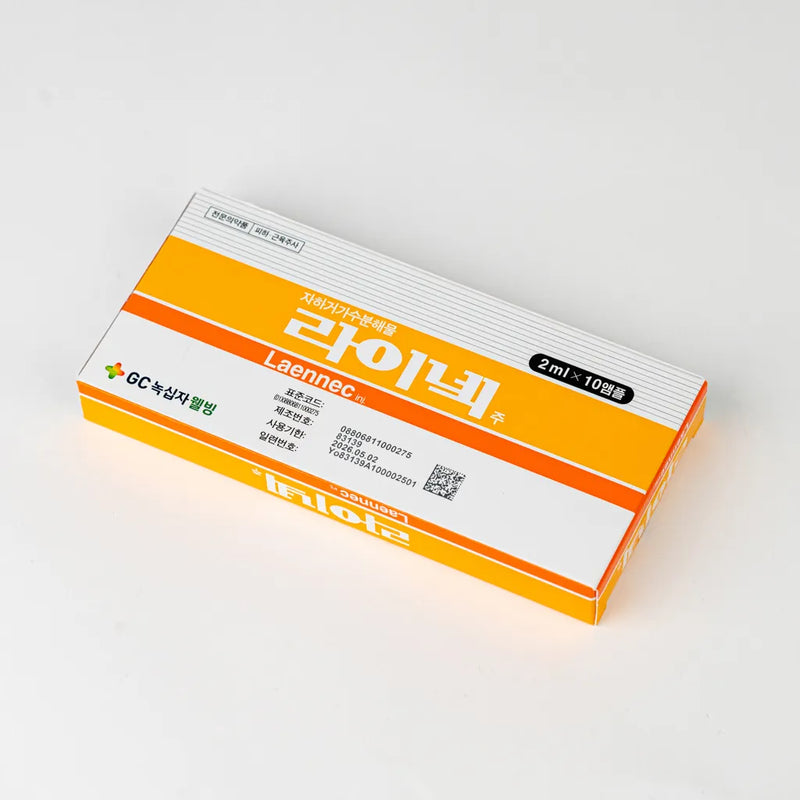
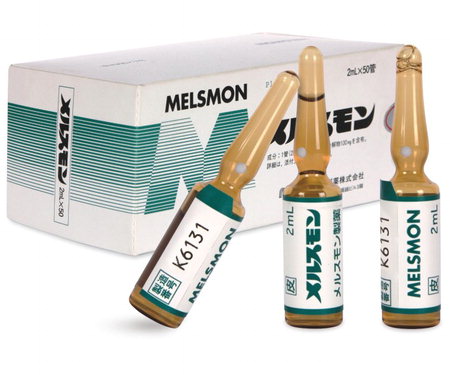
| Oldest injectable licence | 2003-05-30, 멜스몬주(자하거추출물) | 2005-04-13, 라이넥주(자하거가수분해물) |
Twenty-four injectables, twenty-two licence holders
The extract entry's injectable column contains twenty-four licences spread across twenty-two separate companies. Almost every holder has exactly one. That is a market structure worth pausing on, because it is the opposite of what the branding suggests: a category that presents to buyers as a handful of recognisable names is, on the register, a wide field of single-licence manufacturers.
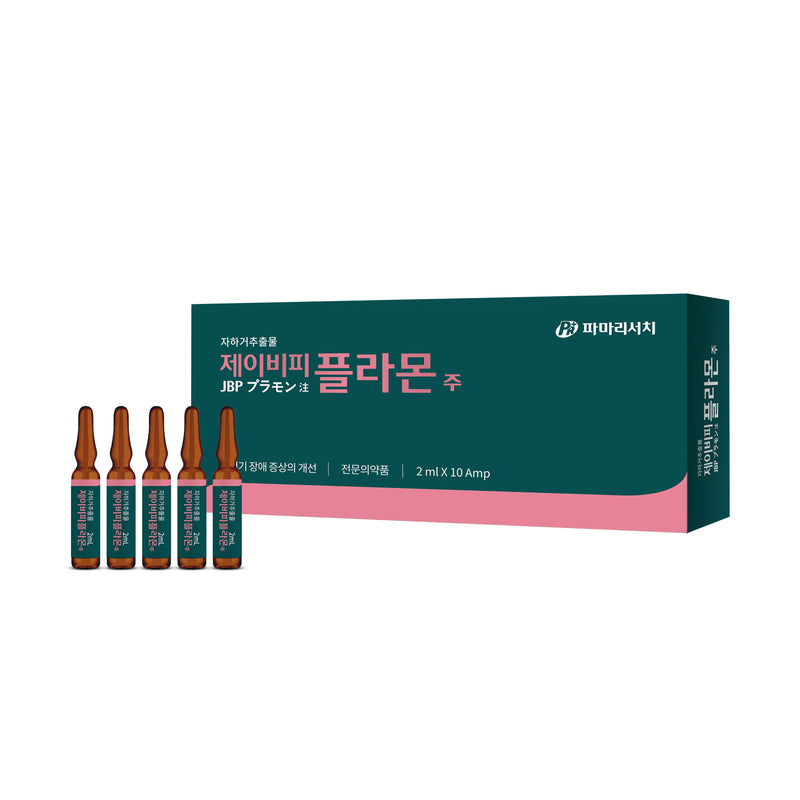
The brand names themselves make the point. Among the injectable licences alone the register lists 멜스몬주, 메르스몬주, 프라세인엠주, 하라센씨주, 큐라센주, 제이비피플라몬주, 플라젠시아주, 홀스몬주, 제이플라주, 하니자하거주, 플라센주, 호리넌주, 신풍에스푸라몬주, 헤스티아주, 헤베스주, 리쥬베주, 광동뷰라센주, 유영베라센주, 구주멜라민주 and 경동자하거주, among others. Every one of those declares the same ingredient. None of them shares a brand root with the next. A buyer working from product names alone has no way to tell that these are one declared substance, and a buyer working from the register has no way to miss it.
The hydrolysate entry is the mirror image. Its two injectable licences are held by a single company, 녹십자웰빙, and its one valid oral licence is held by 파마리서치. Where the extract side is twenty-two companies deep, the hydrolysate side is effectively one, which is why the two entries should never be reasoned about with the same assumptions. Scarcity on one side and abundance on the other are facts about the licence field, and they shape what counterfeiting and substitution look like in each.
There is a clustering in the grant dates that a careful reader will notice and should treat carefully. Four extract injectable licences were granted on the same day, 2 May 2017, and three more on 9 November 2017. The register records the coincidence and not its cause. Batch grants of this kind can follow a regulatory review cycle, a shared application window, or something else entirely, and the honest position is that the pattern is visible and unexplained rather than that it means anything in particular.
Reading the name on the ampoule
Korean product names are not decorative. They are assembled from parts, and once you know the parts, a name tells you most of what the register would tell you. In the extract entry the correspondence is exact: all fourteen oral licences carry the 액 suffix, which marks a solution taken by mouth, and none of them prints the ingredient name in the product name. All twenty-four injectable licences carry the 주 suffix for an injection, and every single one prints (자하거추출물) after the brand name. Fourteen out of fourteen, and twenty-four out of twenty-four, with no exceptions in either direction.
That means a Korean placenta product name is self-classifying. 인프라센액 and 메가센타액 are oral over-the-counter solutions and announce it twice, through the suffix and through the absence of a parenthetical ingredient. 멜스몬주(자하거추출물) and 큐라센주(자하거추출물) are prescription-only injectables and announce that twice as well. No lookup is required to make the distinction, only the knowledge that the convention exists.
The convention is not universal, though, and the exception is instructive. In the hydrolysate entry, every licence prints the ingredient parenthetical, including the oral one: 라에넥피오(자하거가수분해물)(수출용) is an oral product that names its molecule anyway. So the rule "oral products do not print the ingredient" is a property of how one ingredient family's names were built, not a law of Korean labelling. This is exactly the failure mode to guard against when reading any register convention, including the ones in this article: a pattern that holds perfectly within one entry can break at the boundary of the next.
A third naming element appears throughout both entries and carries real weight for anyone importing. Several licences append (수출용), the export-only marker, and several also record an export name in a separate parenthetical. These are not the same thing, and conflating them is a common error: a product can carry an export name while being licensed for the domestic market, and a product marked export-only is licensed on the condition that it is not sold domestically at all. The mechanics of that marker, and what it does and does not imply about a product's status, are set out in what the export-only suffix means on a Korean licence.
What the register does not record
Everything above comes from a public licence database, and the limits of that source matter as much as its contents. The register records the declared ingredient, the route, the supply classification, the classification code, the licence holder, the grant date, and the export markers. It is authoritative on all of those and silent on everything else.
It does not record what a product does. There is no efficacy field, no indication text in the searchable record, and no outcome data of any kind, which means the register cannot support or refute a single claim about results. That silence is not an oversight to be filled in from elsewhere. For a distributor it is the boundary of what can honestly be said, and this article stays inside it.
It does not record the manufacturing process. Whether a given extract was prepared one way or another, at what concentration, or under what in-process controls, is documentation held by the manufacturer and the regulator, not a public field. The extract and hydrolysate distinction tells you which family a product belongs to, and nothing finer than that.
It also does not record sourcing and consent arrangements for the starting material. That is a real question for a product of this origin, and precisely because it is real it should be answered from manufacturer documentation rather than inferred from a licence entry that does not speak to it. A supplier who answers it by pointing at the register is answering a different question from the one asked.
A checklist for a placenta ampoule
Five checks cover most of what a register lookup can settle before a purchase.
- Which ingredient entry. Extract or hydrolysate, in the Korean ingredient name rather than the English marketing copy. These are separate register entries with different classification codes, different licence-holder counts, and different market structures. A supplier who cannot name which one applies has not checked.
- Route and supply class, together. The two move as a pair with no exceptions across all forty-one valid licences: oral is over-the-counter, injectable is prescription-only. A description that pairs them any other way is describing something the register does not contain.
- Licence holder, not brand. Twenty-two companies hold the twenty-four extract injectables, mostly one apiece. The holder is the checkable entity; the brand name is not, since no two of them share a root.
- The parenthetical in the Korean name. For the extract family, (자하거추출물) after the brand marks an injectable, and its absence with an 액 suffix marks an oral solution. Treat this as a strong convention inside that entry rather than a universal rule, since the hydrolysate family prints the ingredient on its oral product too.
- Export markers, read separately. (수출용) and a recorded export name are different fields answering different questions. Check which one is present before drawing a conclusion about where a product may lawfully be sold.
What none of these five checks will do is tell you whether a product suits a given use. That decision sits with a licensed practitioner, and every injectable discussed here is a prescription-only product in its home market for exactly that reason.
Placenta injectables at KSTATION, and what is checked before listing
Three placenta injectables sit in the current range, and they are not interchangeable on the register. LAENNEC Inj belongs to the hydrolysate entry, the one with a single injectable licence holder and the [03260] organ preparations classification. MELSMON Inj and JBP PLAMON Inj belong to the extract entry, filed under [03250], where the oldest injectable licence on record is Melsmon's own 2003 entry. All three are prescription-only in Korea and are supplied for professional use.
Before a product of this kind is listed, the declared ingredient name, the licence holder, and the supply classification are checked against the Korean register rather than against a supplier's product sheet, and the method is set out in the Editorial and Sourcing Policy. The check matters most in exactly the situation this article describes: a category where twenty-two licence holders sell the same declared ingredient under twenty-two unrelated brand names, and where two ingredient entries are routinely translated into the same three English words. Related products sit in the wider vitamins and injectables range.
Frequently asked
What is the difference between placenta extract and placenta hydrolysate?
They are two separate ingredient entries in the Korean drug register, not two words for one thing. Human placenta extract carries 38 licences, and human placenta hydrolysate carries 5. Their injectable forms are filed under different classification codes, [03250] for extract and [03260] for hydrolysate, and the extract entry has 22 injectable licence holders against the hydrolysate entry's one. The distinction is a processing one, with hydrolysis cleaving peptide bonds that extraction alone does not.
Is placenta injection prescription only in Korea?
Every injectable placenta licence in the register is prescription-only, and every oral one is over-the-counter, across both ingredient entries and all 41 valid licences with no exceptions. So the answer depends entirely on the route: the injectable ampoules are prescription-only products, while the oral solutions sold under names ending in 액 are not.
How many placenta products are licensed in Korea?
Forty-three licences appear under placenta as an ingredient, of which 41 are currently valid. They split into 38 under human placenta extract, all still valid, and 5 under human placenta hydrolysate, of which 3 are valid and 2 have been withdrawn. By route, 15 are oral and 26 are injectable.
Why do Korean placenta products have so many different brand names?
Because the licences are held by many separate companies rather than a few. Twenty-two companies hold the 24 injectable licences in the extract entry, mostly one each, and each markets under its own brand. The declared ingredient is identical across them, which is why the register entry rather than the brand name is the thing to check.
Can I tell from the Korean product name whether it is oral or injectable?
Within the extract entry, yes. All 14 oral licences end in 액 and omit the ingredient name, and all 24 injectable licences end in 주 and print (자하거추출물) after the brand. The convention is not universal though: the hydrolysate entry prints the ingredient parenthetical on its oral product as well, so treat the pattern as a strong signal inside one entry rather than a rule across the register.
Sources & references
- Ministry of Food and Drug Safety (MFDS), Korean drug product licence register, ingredient query "Human Placenta Extract" (38 licences, full enumeration), retrieved 2026-08-24. data.go.kr
- MFDS Korean drug product licence register, ingredient query "Human Placenta Hydrolysate" (5 licences, full enumeration), retrieved 2026-08-24. data.go.kr
- MFDS Korean drug product licence register, ingredient query "Placenta" (43 licences, used as a cross-check against the sum of the two entries), retrieved 2026-08-24. data.go.kr
- KSTATION, Editorial & Sourcing Policy (register-first verification of ingredient name, licence holder and supply classification). kstations.com
Disclaimer. This article is general educational information and is not medical advice. It describes how placenta preparations are recorded in the Korean drug licence register, including ingredient naming, route of administration, supply classification and licence holders. It makes no claim about what any product does, and it does not provide dosing or administration guidance. The injectable products referenced are prescription-only in Korea and are supplied for professional use by licensed practitioners. Regulatory status varies by country and changes over time.