Every medical device on the Korean market came in through one of three doors. Some were notified, which means a file was submitted and accepted. Some were certified, which means a designated body checked them against a standard. The rest were licensed, which means the Ministry of Food and Drug Safety reviewed them itself. In English sales copy all three tend to collapse into a single word, approved, and that single word hides the one question a buyer most needs answered. Dermal fillers are an unusually clean case: across 944 live filings, every one came through the same door.
Four risk classes, three procedures
Korea sorts medical devices into four classes by potential risk to the body. Class 1 covers devices that do not touch the body, or touch it with almost no potential for harm. Class 2 covers devices whose failure could cause harm but is unlikely to threaten life or cause serious loss of function. Class 3 covers devices placed inside the body for a period, or otherwise carrying high potential risk. Class 4 covers devices implanted permanently, devices in direct contact with the heart, central nervous system or central circulation, and devices made from animal tissue or from materials whose safety information is incomplete.
The classes map onto procedures, and the procedures are what the register actually records. A class 1 device is notified: the maker or importer files a notification through the device e-filing system, and it is accepted. A class 2 device is certified: a body designated under the device regulations reviews it against the applicable standard. If a class 2 device requires clinical data, it goes to a full licence instead. Class 3 and class 4 devices are licensed by the Ministry after review of the technical file.
| Class | Broad description | Procedure | Who reviews |
|---|---|---|---|
| 1 | No body contact, or contact with negligible potential harm | Notification | Filing accepted by the designated institute |
| 2 | Low potential risk; failure unlikely to threaten life | Certification (licence if clinical data required) | Designated body, against standards |
| 3 | Inserted for a period, or high potential risk | Licence | Ministry of Food and Drug Safety |
| 4 | Permanent implants, contact with heart or central systems, animal-derived or insufficiently characterised materials | Licence | Ministry of Food and Drug Safety |
The register makes the procedure visible without anyone having to look up a class. A standard filing number begins with two Korean syllables. The first says where the product comes from: 제 for manufactured in Korea, 수 for imported. The second says which door: 허 for a licence, 인 for a certification, 신 for a notification. A filler filed as 제허 is a Korean-made, licensed device. A dressing filed as 수인 is an imported, certified one.
That is the whole code, and it is more useful than it looks, because it answers a question that no product brochure answers directly. The brochure says the product is approved. The first two syllables of its filing say which kind of approval, and by whom.
Where dermal fillers sit: one door, no exceptions
Fillers are classified under two device items in Korea, tissue-repair biomaterial and tissue-repair material, and both are class 4. That classification settles the door before any individual product is filed: a class 4 device can only be licensed.
The register confirms it with no noise at all. We read every filing under both items, including a second spelling of the first item that the register began using for newer filings, which a single-string query does not return. The combined total is 1,167 filings, of which 944 are live. Every one of the 944 carries a licence prefix. There is not a single certification and not a single notification among them.
| Device item | Live filings | Licensed (domestic / import) | Certified | Notified |
|---|---|---|---|---|
| Tissue-repair biomaterial and tissue-repair material (fillers) | 944 | 890 / 54 | 0 | 0 |
| Polydioxanone sutures | 400 | 398 / 2 | 0 | 0 |
| Facial tissue fixation threads | 190 | 189 / 1 | 0 | 0 |
The same holds for the two thread-type items. Polydioxanone sutures and facial tissue fixation threads are, between them, 590 live filings, and 590 of them are licences. The implantable end of aesthetic practice is uniformly licensed territory.
The practical reading is simple and worth stating directly. If a product is presented as a Korean dermal filler, there is exactly one legitimate kind of Korean filing it can have, and it is a licence. A filler described as certified, or as notified, is either being described carelessly or is not filed as a filler. Neither of those is a verdict on the product; both are reasons to ask for the filing itself.
Why implantable items never split between doors
The uniformity is not a coincidence of which companies happen to file fillers. It follows from how class 4 is defined. A device that stays in the body, or that is made from animal-derived material, or whose raw materials are not fully characterised, lands in class 4 on the definition alone, and every filler, suture and fixation thread in the table meets at least one of those conditions.
That gives the item a floor. A dressing can be simple or complex, so its item can span several classes. A filler cannot become a lower-risk version of itself by being smaller, cheaper or differently packaged, because the property that puts it in class 4, remaining in tissue, does not change with any of those. The door is fixed by what the object does, not by who makes it or how it is sold.
For a buyer this is a quiet reassurance about the paperwork rather than about any product. Whatever else varies between two Korean fillers, the category of review behind their Korean filings does not. The comparison worth making is between holders, dates and live status, not between kinds of approval.
Device families that split across doors
Once you leave the implantable items, the picture stops being tidy, and it stops being tidy in a way that is instructive. The same device item can hold licences, certifications and notifications side by side.
| Device item | Live filings | Licensed | Certified | Notified |
|---|---|---|---|---|
| Wound dressings | 998 | 270 | 724 | 4 |
| Direct drug injection devices | 209 | 12 | 197 | 0 |
| Personal heating devices | 193 | 46 | 147 | 0 |
| Injection needles, sterile and non-sterile | 176 | 17 | 84 | 75 |
Wound dressings are the largest example. Of 998 live filings, roughly a quarter are licences and nearly three quarters are certifications, with four notifications dating from 1998 and 1999. A dressing is not one kind of object. A simple absorbent pad and a dressing designed for a deep or chronic wound can share an item name while sitting in different risk classes, and the procedure follows the class rather than the name.
Injection needles are the most fragmented, and the split runs along a second item name. Sterile injection needles hold 101 live filings: 84 certifications and 17 licences. Non-sterile injection needles hold 75, and every one of them is a notification. Twenty-six of those notifications use an older number format in which a regional name precedes the two syllables, and their numbers date from 2010 to 2015. The register does not explain the regional names, and we do not interpret them here beyond noting that the filings exist, are live, and are notifications like the rest.
The lesson for anyone reading a filing is that the item name tells you what kind of object it is, and the prefix tells you how it was reviewed. The two are related through the class, but they are not interchangeable, and for many families you cannot predict one from the other.
One device, two doors: what the register shows about change
Because a filing records a procedure at a point in time, the register occasionally shows a single company moving the same kind of product from one door to another. The clearest case in our reading involves a dental whitening light filed by a Korean device maker. A licence for it was granted in February 2015 and has since ended. A certification for the same device item, from the same company, was granted in August 2015 and is live.
The register records that sequence and nothing else. It does not say whether the product changed, whether the classification applied to it changed, or whether the company chose to refile. Reading a reason into the sequence would be inventing one. What the sequence does establish is that the door a device came through is a fact about a specific filing on a specific date, not a permanent property of the device family.
A second pattern is subtler. Two device items with near-identical names, both describing skin stimulators intended to aid the absorption of a drug, sit in the register with opposite dominant procedures. The older item name holds 13 live filings, ten of them licences. The newer item name holds 48 live filings, forty of them certifications. We draw no conclusion about the devices themselves from that; it is a reminder that when a family spans two item names, a count taken on one of them describes only that one.
What a licence, a certification and a notification each establish
The three procedures differ in who does the checking and against what, and those differences are the honest way to compare them.
A licence means the Ministry itself reviewed the device's technical documentation for that filing, and for class 4 devices that review is the most demanding the system applies. A certification means a designated body reviewed the device against the standards that apply to its item, which is the route the system considers proportionate for lower-risk devices. A notification means the required information was filed and accepted, which is the route for devices the system treats as posing negligible risk.
What all three share is that they are Korean procedures with Korean scope. A Korean licence does not register a product anywhere else, and a buyer outside Korea who needs a local registration needs it from their own authority. The procedure prefix is useful precisely because it is narrow. It tells you how the device entered the Korean market, which is the question the filing exists to answer.
Korean device labelling rules tie what is written on the container to the particulars of the licence, certification or notification on file. That makes the filing, rather than the brochure, the reference point when the two appear to disagree.
Made in Korea, or imported: the first syllable
The first syllable of a filing number is the quicker read and, for fillers, the more consequential one. Of the 944 live filler filings, 890 are domestic licences and 54 are import licences. The domestic share is overwhelming, and it has been for more than a decade. The longer history of how the category moved from imports to domestic manufacture is set out in our explainer on why an HA filler is not in the drug register.
For identification the first syllable matters because it changes who stands behind the filing. A domestic filing names a Korean manufacturer as the licence holder. An import filing names the Korean importer as holder, with the foreign manufacturer recorded separately. A buyer comparing two filler filings is therefore not always comparing two manufacturers; sometimes one of the two is an importer.
The import side is small but not static. No new import licence was granted in either filler item during 2023 or 2024. Six have been granted since the start of 2025, three in each year, to three Korean importers representing European manufacturers. The door is the same one, the licence, and it has been opening again.
Reading a filing when a product says approved
The working method that follows from all this is short. When a Korean device is described as approved, find its filing and read the first two syllables. For a filler, expect 제허 or 수허 and nothing else. For other device families, let the prefix tell you which review took place rather than assuming it from the product type.
Then read the rest of the entry for the things the prefix does not carry: the holder, the item name, the grant date and whether the filing is live. The prefix answers how the device came in. The remaining fields answer who brought it in, as what, when, and whether that entry still stands. The limits of what a public entry can confirm, and who answers the questions it leaves open, are covered in where the public record stops.
None of this requires reading Korean beyond two syllables. It does require not letting a single English word stand in for three different procedures, and it rewards the small habit of asking for the filing whenever the word appears on its own.
How KSTATION's filler range maps onto the register
Every product in our dermal filler collection belongs to the class 4 items described above, which means the Korean filing behind each one, where it can be identified, is a licence. Three examples show what that looks like at the level of a single holder.
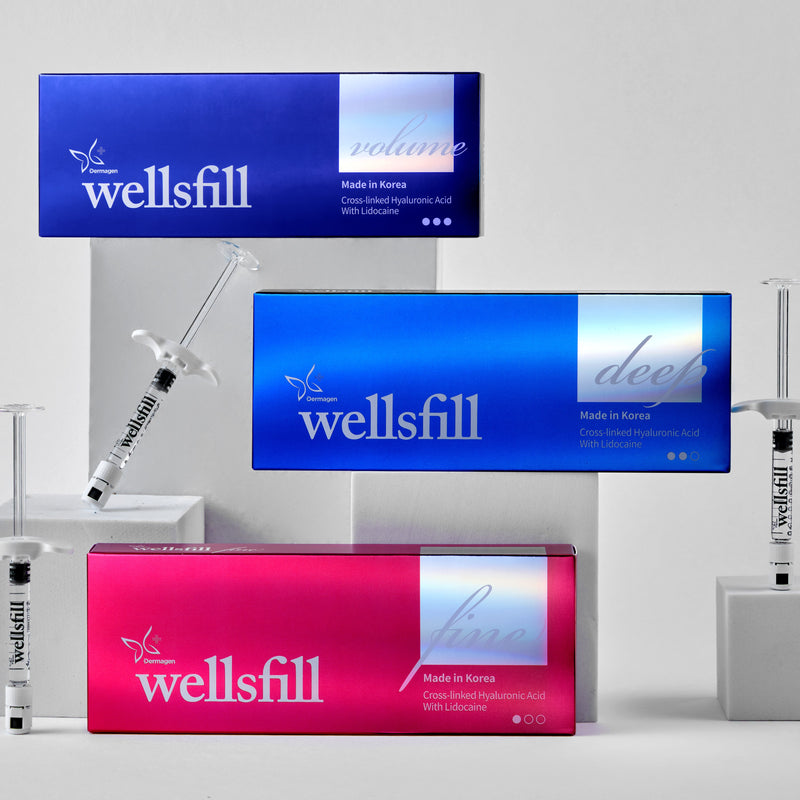
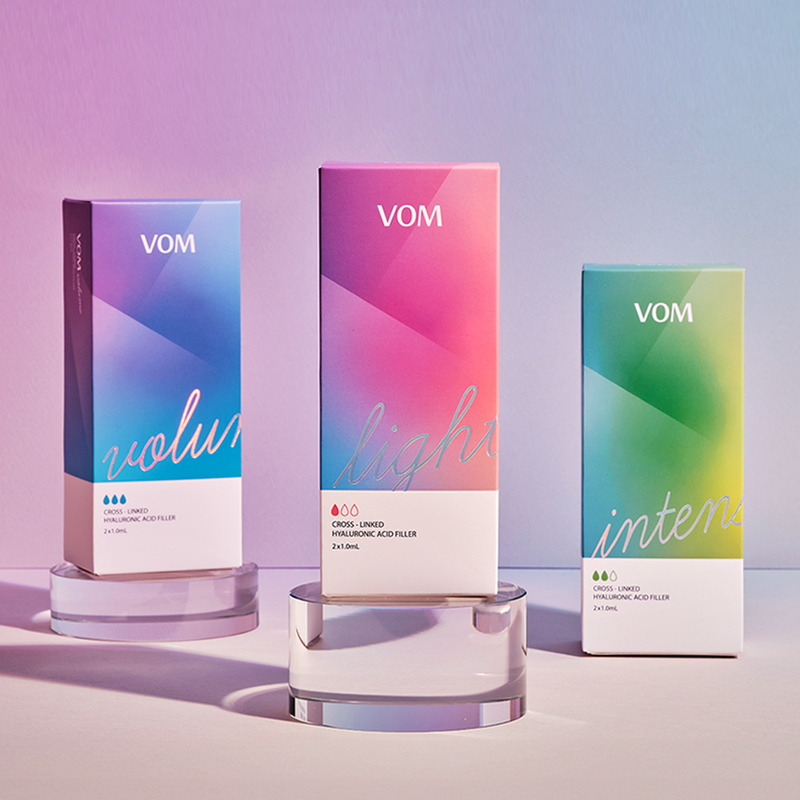
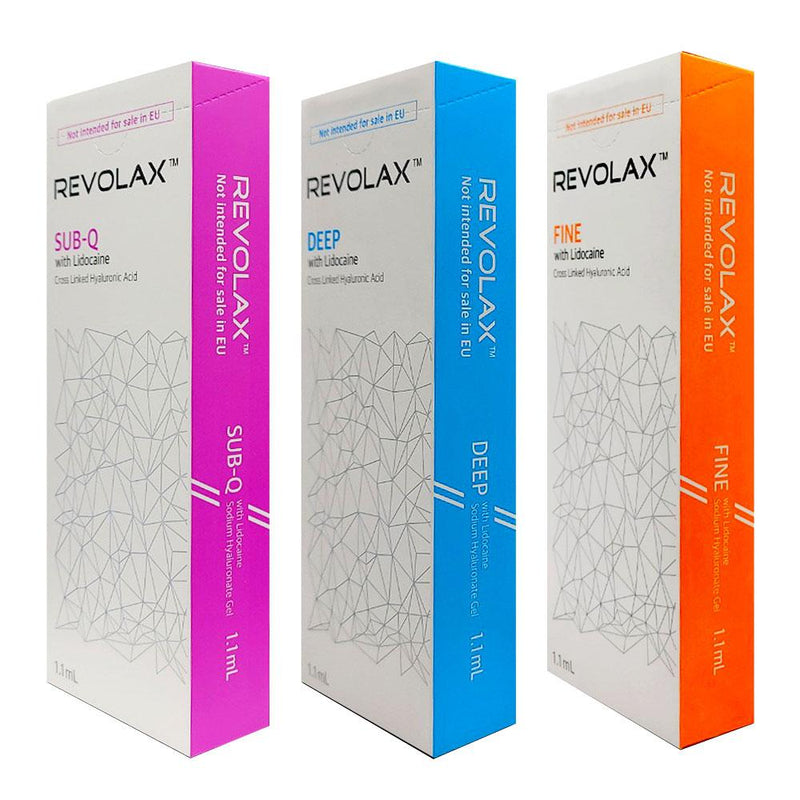
WELLSFIL is filed by its holder under a single tissue-repair biomaterial licence, 제허 22-313, granted on 17 May 2022 and live. One holder, one filing, a domestic licence prefix: the simplest case the register produces. VOM filler comes from a holder whose five live licences under the same item were all granted between May 2024 and February 2025, which places it among the newest entrants to the category. REVOLAX sits at the other end of the timeline, from a holder whose sixteen live tissue-repair licences begin in 2011.
The prefix is the same across all three, because the class is the same. What differs is everything the prefix does not carry, and those are the fields worth reading next.
Frequently asked
What is the difference between a notified, certified and licensed medical device in Korea?
They are three procedures matched to risk class. Class 1 devices are notified, meaning the required information is filed and accepted. Class 2 devices are certified by a designated body against applicable standards, or licensed if clinical data is required. Class 3 and 4 devices are licensed after review by the Ministry of Food and Drug Safety.
Which Korean device class are dermal fillers?
Class 4. Fillers are classified under tissue-repair biomaterial and tissue-repair material, both class 4, so they can only be licensed. All 944 live filler filings in the register on 14 September 2026 carry a licence prefix.
Does a Korean device certification mean the same as an MFDS licence?
No. A certification is reviewed by a designated body against standards and is the route for most class 2 devices. A licence is reviewed by the Ministry itself and is the route for class 3 and 4 devices. Neither is a comparison of quality between devices of different classes.
How can I tell which procedure a Korean device went through?
From the first two syllables of a standard filing number. The first is 제 for manufactured in Korea or 수 for imported. The second is 허 for a licence, 인 for a certification or 신 for a notification.
Can the same device item have both licences and certifications?
Yes. Wound dressings, for example, hold 270 live licences and 724 live certifications, because objects sharing one item name can fall into different risk classes. Implantable items such as fillers and polydioxanone sutures do not split this way.
Sources and references
- Ministry of Food and Drug Safety, medical device product approval information (public open data service), queried by device item name, retrieved 14 September 2026.
- Ministry of Food and Drug Safety, criteria and procedures for medical device classification (Annex 1), and the published approval process on the medical device e-filing system (emedi.mfds.go.kr).
- Regulation on medical device items and item classes, classifying tissue-repair biomaterial (B04230.01) and tissue-repair material (B04230.02) as class 4.
- Medical Devices Act, Article 20 (particulars on containers).
Register figures are a reading taken on 14 September 2026 and move as filings are granted and come to an end. This article describes regulatory procedures and filing records only. It does not describe how any device is used, and it is not legal advice on registration in any country.