A product name looks like a fixed thing. It is printed on the box, it appears on the order form, and everyone in the chain assumes they are pointing at the same object when they use it. Then you look at how the name actually gets typed, and it stops being one string. It becomes a family of near-identical strings that behave very differently, and the differences are not random.
This piece uses one catalogue's search data as the sample, because that is the only place where the question can be answered with numbers rather than intuition. What people type when they are looking for a specific Korean injectable or filler is recorded, and so is what they find. Reading a month of that record turns a vague suspicion into a measurable pattern: a single space, a hyphen, or a missing strength figure does not produce a slightly worse version of the same search. It produces a different search with a different answer.
The reason to care is not search engine optimisation. It is that the same string discipline governs purchase orders, supplier emails, and customs paperwork. If a name splits into three versions in a search box, it splits the same way in a message thread, and only one of those places gives you a visible signal when the split has happened.
The same product, typed three ways
Take a single lipolytic solution in the range. Across one month, the closed-up spelling of its name drew the largest share of impressions and converted them at close to ten percent, sitting around second position. The spaced version of the identical name, the same letters with one space inserted, drew roughly forty percent as many impressions, converted at just over two percent, and sat around sixth position.
Read that again as a description of one product. The name is the same word. The product is the same vial. The only difference is a keystroke, and across it the click rate falls to a quarter and the position drops nearly four places. Nobody made a decision that produced this. It is the mechanical consequence of two strings being treated as two things.
The brand name does the same. The closed-up form converted at nearly thirty-eight percent. The spaced form converted at just over fourteen. The hyphenated form converted at four. Three ways of writing one company name, and the outcome falls in a clean staircase from closed to spaced to hyphenated. There is no version that is wrong in any meaningful sense, and a person typing any of them means exactly the same thing.
The mechanism is worth stating because it explains why the effect is so blunt. Matching a name is a string operation before it is anything else, and a space is a character like any other. A system holding one canonical title has an exact match for one of these spellings and a fuzzy, inferred relationship to the others, and the inferred relationship is weaker every time. Nothing in that chain understands that a Korean brand name has no native word boundary to preserve. It compares characters, finds a difference, and treats the two as separate things until something else tells it otherwise.
That is also why the effect does not average out with volume. If the spaced version were simply a noisier route to the same place, the two would converge as impressions accumulated. They do not. Across a full month the gap holds its shape, because it is structural rather than statistical: one string has an exact match and the other does not, and no amount of traffic changes which is which.
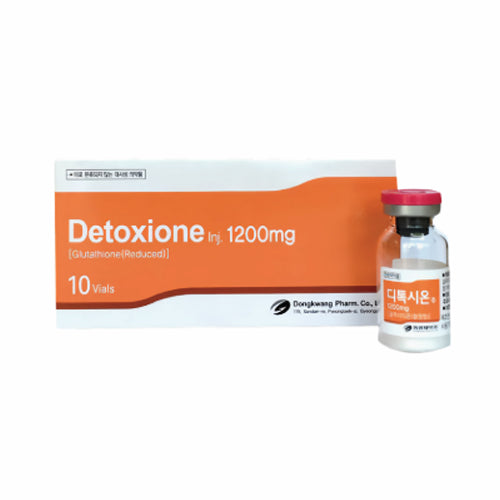
What makes this more than a curiosity is the scale underneath it. Filtering the same month's record for the fragment that appears in that lipolytic brand returns 189 distinct query variants. Filtering for the fragment shared by the glutathione lines returns 322. A catalogue that lists a few dozen items in those categories is being searched through several hundred distinct spellings of their names.
Hundreds of variants, but only a handful carry any weight
Several hundred spellings sounds unmanageable, and it would be if they mattered equally. They do not, and the shape of the distribution is the practical part. For the lipolytic brand fragment, the top three variants account for fifty-six percent of the month's impressions and the top ten account for sixty-nine. More than half of the 189 variants drew five impressions or fewer, and all of those together came to under three percent of the total. The tail is long and almost weightless.
The glutathione fragment behaves differently, and the difference is informative. Its top three variants account for only twenty-two percent, and its top ten for forty-three. Sixty-two percent of its 322 variants drew five impressions or fewer. A brand name converges on a few spellings because there is a specific object people are trying to name. An ingredient family does not converge, because the queries are not variations on one name at all: they are different questions that happen to share a fragment.
For anyone deciding how much of this to manage, that contrast sets the boundary. A brand name is worth standardising, because three to ten strings capture nearly all of it and those strings are stable. An ingredient family is not a naming problem and cannot be solved by picking a canonical spelling, because there is no single object underneath it to be canonical about.
Key takeaway
A space inside a product name does not produce a near-miss version of the same search. It produces a separate query with its own position and its own outcome, and the gap between the two versions can be a factor of four.
Adding the strength moves the result the other way
If inserting a space degrades a query, it would be reasonable to expect that adding anything else, more words, more numbers, does the same. It does not. Adding the strength figure consistently improves the outcome, and often sharply.
One glutathione product converted at just under ten percent under its bare brand name. The same brand name with its milligram figure appended converted at over seventeen, from a similar position. A generic phrasing of the same category converted at four percent around sixth position, while the identical phrase with the milligram figure added converted at nearly thirteen percent around second. A topical anaesthetic converted at five percent under its brand name alone and at twelve percent with the word cream added. A toxin brand converted at one and a half percent alone and at three and a half with its unit count attached.
The direction is consistent enough to state plainly: for these products, a more specific string performs better than a shorter one, and the specificity that matters most is the strength or presentation. This is the mirror image of the space problem. A space fragments a name into versions that compete with each other. A strength figure narrows a name onto the item it actually refers to.
There is a reason the strength figure does this much work, and it is not that longer queries are inherently better. It is that in these categories the strength is frequently the only thing separating two licensed items that share everything else. Two vials from the same holder, same active, same presentation, differing only in milligrams, are two distinct approvals. A string that omits the milligrams is not a shorter way of naming one of them. It is a string that names both, and a search engine resolving it has to guess which one the person meant, exactly as a supplier reading the same string on an order line has to guess.
That has a direct bearing on how catalogue and register naming interact. In the Korean drug register, plenty of licences carry no strength in the product name at all, because they were approved before a second strength existed to distinguish them from. Those are exactly the names that arrive at a buyer as a bare string, and a bare string is the version that performs worst and travels worst.
Where the pattern reverses, and why that matters more
A pattern that only ever runs one direction is usually a description of your own catalogue rather than a finding. This one reverses, and the reversal is the most useful part of it.
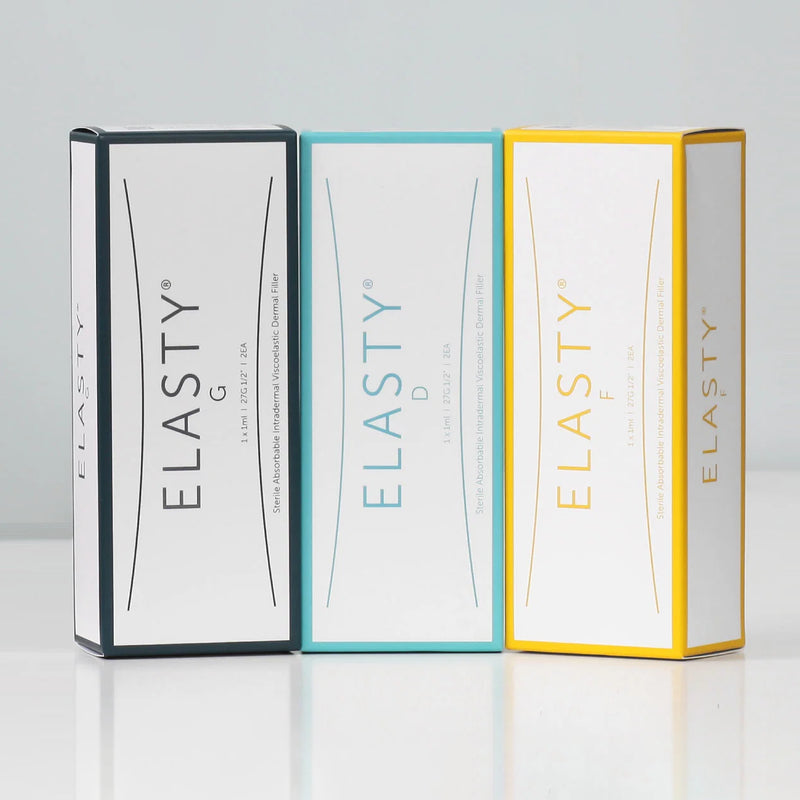
For one filler line in the range, the bare brand name sat around fifth position and produced no clicks at all across the month. The longer, more specific string naming an individual variant within that line drew more than three times the impressions, but sat around thirteenth position and produced almost nothing. Here, adding specificity made the position worse, not better.
The explanation is in how the catalogue names that line rather than in how people search it. That range is listed as two products, each of which bundles three variants inside one product title using parentheses. A buyer searching for one variant by its own name is searching for a string that does not exist as a product title anywhere, because the individual variant name is nested inside a grouped title. The search is specific and the catalogue is grouped, and the two do not meet.
It is worth being precise about why a catalogue groups variants in the first place, because the reason is a good one. Three variants that share a formulation family and differ by a single property belong on one page from a browsing point of view: a buyer comparing them wants them adjacent, not scattered across three listings that repeat the same description. The grouped title is a reasonable answer to that. Its cost only appears in the other direction, when someone arrives already knowing which variant they want and carrying its name as a string.
Which means the fix is not necessarily to split the listing. It is to make the individual variant names exist somewhere on the page as text in their own right, rather than only inside a parenthetical in the title. That satisfies both directions at once, and it costs a line rather than a restructure. The search record is what makes the omission visible; without it, a grouped title looks complete because it does contain every variant name, just not in a form anything can match.
This is the failure mode worth internalising. When a specific search underperforms a general one, the usual instinct is to treat it as a ranking problem. Often it is a naming mismatch: the string the buyer holds and the string the catalogue publishes are not the same shape, and no amount of position will fix a string that is not there.
Why a purchase order has the same problem and none of the feedback
Everything above is measurable because search leaves a record. The identical fragmentation happens in ordering, where it leaves no record at all until something arrives wrong.
Consider the three ways one name gets written, closed up, spaced, hyphenated. In a search box, each returns a result and the person can see whether it looks right. In an email confirming an order, all three read as obviously the same product to a human, and they are, so nobody flags it. The ambiguity that gets resolved silently in a search box also gets resolved silently in a message thread, but there the resolution is a person's assumption rather than a system's match.
Now add the strength. If a name carries no strength figure and the licence holder has two strengths under nearly identical names, the bare name on an order line is genuinely underdetermined. It is not sloppy writing. It is a string that does not contain enough information to identify one item, and the recipient completes it with whatever they most recently shipped or most commonly stock. That completion is invisible, correct most of the time, and wrong occasionally.
The asymmetry between the two settings is the whole problem. A search box is a bad interface with excellent feedback: you type a string, you immediately see whether the result matches your intent, and you retype if it does not. A purchase order is a good interface with almost no feedback: the string is written once, read by someone who wants to be helpful, and confirmed in language that repeats the ambiguity rather than resolving it. The place where errors are cheap gives you signal, and the place where they are expensive gives you none.
The same applies to grouped catalogue titles. When three variants share one product title, an order line naming one variant is relying on someone reading the parenthetical correctly. Parentheses are the first thing that gets dropped when a name is retyped, which is precisely why the search data shows the grouped title and the individual variant name behaving as unrelated strings.
Reading a product name as a string rather than a label
The working method that comes out of this is small and mechanical, and that is the point.
Treat the product name as a string that has to survive being retyped by three different people. Ask whether it contains a strength or presentation, and if it does not, add one on your side even if the source document omits it. Ask whether it contains grouped variants in parentheses, and if it does, expand the specific variant onto the order line rather than trusting the group. Ask whether the name has an obvious spaced or hyphenated alternative in circulation, and if it does, write the version that appears on the manufacturer's own documentation rather than the one you happen to have received.
None of this requires a system. It requires treating a name as data rather than as a label, which is a habit rather than a tool. The search record is useful here mainly because it makes visible, with numbers, a thing that is otherwise only ever noticed after a wrong box arrives.
One more setting deserves the same discipline, because it is the one where a mismatch is hardest to correct after the fact. A commercial invoice and a packing list carry the product name as free text, and they are read by people who have no way to recognise that a spaced spelling and a closed-up spelling are the same item, or that a bare brand name could refer to either of two strengths. Whatever string enters those documents becomes the description of record for that shipment. Writing the fuller version there costs nothing at the moment of writing and removes a question that is expensive to answer later.
And it points at a catalogue-side obligation too. Where a listing groups variants inside one title, or omits a strength that the register distinguishes, the listing is generating the ambiguity rather than inheriting it. That is fixable, and it is fixable without anyone changing how they search.
| What changes in the string | Effect on the result | Why |
|---|---|---|
| A space inserted mid-name | Sharply worse | Two strings are treated as two different queries |
| A hyphen instead of a space | Worse again | Third variant, thinner still |
| Strength figure added | Better | Narrows the name onto one licensed item |
| Presentation word added | Better | Same mechanism, applied to form rather than dose |
| Variant named from a grouped title | Worse | The specific string is not published anywhere |
Frequently asked
Why does the same product appear under different spellings?
Because a Korean product name is transliterated into the Latin alphabet, and transliteration does not fix word boundaries. A name that is one word in Korean can plausibly be written closed up, spaced, or hyphenated in English, and all three circulate at once. None of them is incorrect. They simply behave as separate strings wherever strings are matched.
Does one space really change what you find?
Yes, and by more than most people expect. In one month of data for a single product, the closed-up and spaced versions of the same name sat about four positions apart, and the click rate on the spaced version was roughly a quarter of the closed-up one. Same product, same letters, one keystroke.
Should a product name always include the strength?
On an order line, yes. Where a licence holder carries two strengths under closely similar names, a bare brand name does not identify one item, and the gap gets filled by assumption rather than by the document. Adding the strength costs nothing and removes the ambiguity at the point where it is cheapest to remove.
Why would a more specific search perform worse?
Usually because the specific string is not published anywhere. If a catalogue groups three variants inside one product title, the individual variant name exists on the box but not as a title, so a search for it has nothing to match exactly. That is a naming mismatch rather than a ranking problem, and it is fixed on the catalogue side.
Which spelling should we standardise on internally?
Whichever appears on the manufacturer's own documentation, rather than the one that arrived in the most recent email. The point is not that one form is correct but that a single form should travel through your own records, so that a mismatch becomes visible instead of being absorbed.
How KSTATION handles product naming across the range
We read these numbers about our own listings, which makes the catalogue-side conclusion uncomfortable and useful in equal measure. Where our own titles group several variants into one line, we are the ones creating the mismatch that the search record then shows.
The working rule on our side is that a listing should carry the strength or presentation that distinguishes it from its siblings, and that where a range genuinely groups variants, the individual variant names should be recoverable from the page rather than only from the parenthetical in the title. Our ELASTY listing is one of the grouped cases described above, and the broader filler range shows both patterns side by side.
For readers who want the register side of the same problem, our guide to reading an injectable label covers what the printed panel is obliged to carry, and the verification walkthrough for Korean toxins covers what to check when a name and a document disagree.
Sources
- Google Search Console performance data for kstations.com, web search type, 1 to 31 August 2026. Query-level impressions, clicks, click-through rate and average position. Query dimension covers approximately 48 percent of total clicks because of query anonymisation, so figures are used as within-pair comparisons rather than as totals.
- Variant counts derived from the same dataset by substring match on brand fragments: 189 distinct variants containing the lipolytic brand fragment, 322 containing the glutathione fragment.
- KSTATION product listings for the ranges described, product titles and declared presentations as published at the time of writing.
This article discusses product naming, string handling, and search behaviour. It does not describe indications, dosing, administration, or clinical outcomes. Search figures reflect one catalogue over one month and are reported as relative comparisons within matched query pairs, not as market-wide measures. Catalogue titles and listed variants reflect the range at the time of writing and may change.