Every catalogue eventually grows a category that is defined by exclusion rather than by content. It is the shelf where the items go that did not fit the other shelves, and it is usually the last one anybody audits, because from the outside it looks like a category. It has a name, a product count, and a page, and none of those things reveal that its organising principle is leftover.
The one examined here lists 24 active products and is displayed as Special Functionals, with a parenthetical narrowing it to exosomes and hair. That parenthetical is the interesting part. Of the 24, exactly three carry a product type naming exosomes or hair loss. Seventeen are typed as skin boosters or ampoules. The remaining four are injectables that are not skin boosters in any useful sense at all.
This is not a complaint about one catalogue's housekeeping. Residual categories form in every product range that grows faster than its taxonomy, and the interesting question is not whether they should exist but what happens to a buyer who trusts one. The answer is specific and mostly invisible: browsing stops working there, in a way that looks like browsing working.
A name that describes three of twenty-four
Start with the arithmetic, because it is stark. The category label names two things. Five products in it carry a hair and scalp classification, and three carry a product type that mentions exosomes or hair loss. The other nineteen were placed here for reasons the label does not express.
What is actually inside spans several unrelated material families. There are five products built on synthetic polymer biostimulators, declaring PLLA, PLA, or PDO with a milligram figure. There are three placenta-derived injectables. There is an enzyme preparation supplied in single-millilitre vials. There is a group of hair and scalp products, three of them packaged with a separate moisturiser. And there is a remainder of boosters and ampoules that could plausibly have been filed under brightening, hydration, or firmness instead.
The scale is what turns this from a tidying issue into a structural one. Twenty-four products is well over a tenth of the active range. A catalogue that presents itself as organised into eight or nine categories is, in practice, presenting one category that holds more than a tenth of everything and is defined by not being the other eight. Whatever navigational work the category structure is doing, it is not doing it for that share.
Put a buyer in front of that page with the label as their only guide and the label misleads in both directions at once. Someone looking for exosome products finds a page where most items are not exosome products. Someone looking for a polymer biostimulator has no reason to open a page named after exosomes and hair, and will not find the five that live there.
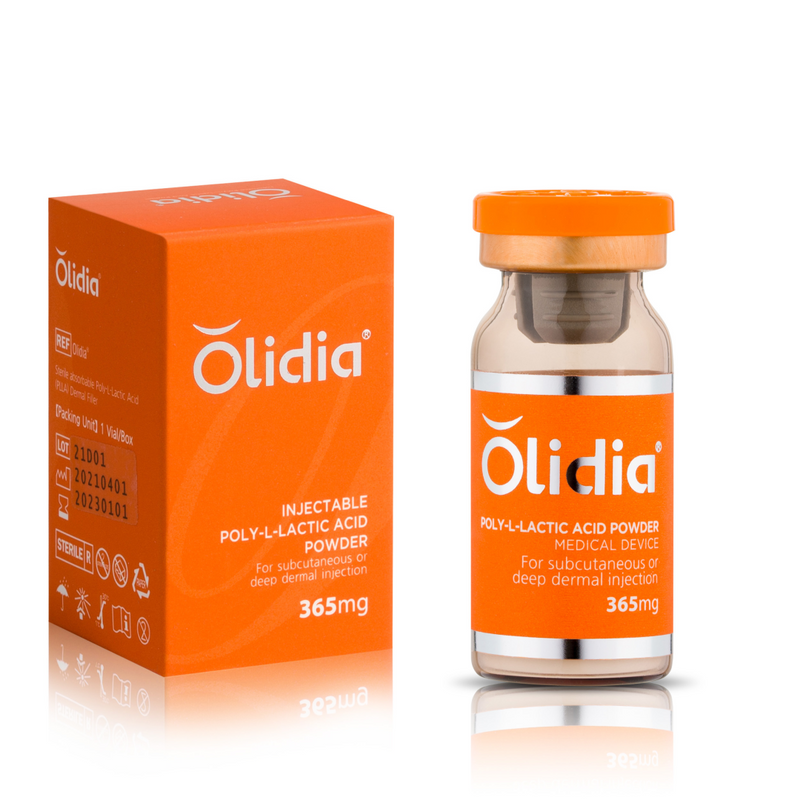
What makes the mismatch worse is that at least one genuine cluster is sitting inside, fully formed and unnamed. Five of the 24 declare a synthetic polymer with a milligram figure: one declaring PLLA at 365 milligrams, one declaring PDO at 300, and three declaring PLA at 200 and 360. These five share a material family, a presentation as a powder in a single vial, and a preparation step before use. They have more in common with each other than any of them has with a hyaluronic acid ampoule, and the catalogue has no name for the thing they share. They are only grouped here because none of them fit anywhere else either.
The same is true of the hair and scalp products, five items that carry a hair classification and, in three cases, ship packaged with a separate moisturiser. That packaging detail is itself a defining property, since a product supplied as a set behaves differently in ordering and in customs description than a product supplied as vials alone. Two coherent clusters, ten products between them, and both are invisible because the category they sit in is named after neither.
The product type field does not rescue it
The obvious fix would be to ignore the category label and read the product type instead, since that field exists precisely to say what a thing is. In this range it does not carry that weight either.
Seventeen of the 24 are typed as skin booster or ampoule. That set includes the PLLA vial declaring 365 milligrams, the PDO vial declaring 300 milligrams, and the PLA products declaring 200 and 360 milligrams. Whatever a polymer biostimulator supplied as a powder is, it is not the same class of object as a hyaluronic acid ampoule, and calling both a skin booster flattens a distinction that matters more than most of the ones the catalogue does draw.
The clearest single case is the enzyme preparation. It is typed as a vitamin or injectable, tagged for body contour and fat reduction, and filed in a category named for exosomes and hair. Three fields, three different answers, none of which is what the product is. Every one of them is defensible in isolation and the combination places it nowhere. A buyer who arrived at this page for exosome products would pass it without a second look, and a buyer who needed it would have no path here at all.
So the residual pattern repeats one level down. The category is residual against the other categories, and the dominant product type is residual against the other product types. Two fields that both look like classifications turn out to be describing what something is not.
Key takeaway
A category name and a product type field can both be residual at once. When they are, a product page can be fully and correctly filled in and still not tell you what class of thing you are looking at.
How a leftover category forms without anyone deciding to make one
It is worth being fair about the mechanism, because no one sits down and designs a miscellaneous shelf. It accumulates from a sequence of individually reasonable decisions.
A range starts with categories drawn around what it sold at the time: fillers, toxins, boosters, anaesthetics. Then a product arrives that is none of those. Creating a new top-level category for one item is worse than filing it somewhere adjacent, so it goes to the closest available shelf, or to a general one if no shelf is close. Repeat that thirty times over two years, with different people making the call each time, and the general shelf becomes the second largest thing in the catalogue without any single decision having been wrong.
The tell is the tag distribution. Across these 24 items, the number of classification tags per product runs from two to six. Three products carry the category tag plus exactly one other, so the catalogue asserts that they belong to the leftover group and makes almost no further claim. Others carry six tags spanning ageing, brightening, firmness, hydration and regeneration, which is a different failure: a product tagged with five concerns is not narrowed by any of them.
The minimal-tag case is the more revealing of the two. Three products carry the leftover tag and one other, and in two of those the other tag is a hair classification while the product type says skin booster. Read literally, such an entry says this exists, it is not one of the other things, and the two fields that remain disagree about which shelf it belongs on. That is an honest record of the filing decision and a useless one for anybody trying to find it.
Both extremes come from the same cause. When the taxonomy does not have a place for a thing, the person filing it either declines to guess, which produces the minimum, or hedges across everything plausible, which produces six. Neither is careless, and neither leaves behind information a buyer can filter on.
Why this shows up as a browsing problem and not a search problem
Search and browse fail differently here, and the difference decides where the damage lands.
A buyer who already knows a product name types it, and the category is irrelevant to whether they find it. A buyer who does not know the name, and is instead trying to see what exists in a class, has only the categories to work with. That second buyer is exactly the one a catalogue's structure is supposed to serve, and they are the one a residual category fails, because it groups by exclusion and they are searching by inclusion.
It also compounds in a way a name-based search does not. Someone browsing forms a mental model of the range from what the categories show them, and then uses that model to decide what to ask about. A buyer who concludes from this page that the range carries two polymer biostimulators, because two were visible before they stopped scrolling, will not ask about the others. The category did not just fail to show them something; it supplied a wrong count that then shapes every subsequent question.
The failure is quiet because the page works. It loads, it shows products, it looks like a browse result. Nothing signals that the organising principle behind the grouping is not the one the name implies. A buyer scanning it for polymer biostimulators will see several, conclude that this is where such things live, and never learn that others sit under body volume or firmness instead.
That partial-success property is what makes residual categories more misleading than an empty page would be. An empty category communicates its own emptiness. A residual category communicates a false completeness, and the buyer leaves with a wrong model of the range rather than no model at all.
Reading a category page for what it actually asserts
The practical adjustment is small: read a category as a claim about grouping, and check what kind of claim it is before trusting it.
A category built around a material or a mechanism, toxins, fillers, glutathione injectables, makes a substantive claim. Everything inside shares a defining property, and absence from the category is informative. A category built around a use case, brightening, firmness, hydration, makes a weaker claim: membership is a marketing judgement and products routinely belong to several at once. A residual category makes no claim at all beyond not fitting elsewhere, and its name is often a description of its two most visible members rather than of its contents.
The distinction matters most when absence is being read as evidence. A buyer who checks a material-based category and does not find a product can reasonably conclude the range does not carry it. The same conclusion drawn from a residual category is unsupported, because nothing about that category promises completeness in any direction. Treating the two kinds of absence as equivalent is how a range gets described as missing something it actually stocks.
Telling them apart takes one glance at the product type spread. If a category's members share a product type, the grouping is probably substantive. If one product type dominates while the declared actives inside it are unrelated, as here where seventeen items share a type while the declared actives across the category run from polymers to placenta extract to an enzyme, the grouping is residual and the type field is doing no work.
There is a second signal that is quicker to check than the product type spread, and it works from outside the catalogue entirely. Ask whether the category name would be recognised by someone in the field who had never seen this catalogue. Toxins, fillers, and glutathione injectables all name things that exist independently of any particular range. A name like special functionals does not refer to anything outside the catalogue that coined it, and a category whose name has no external referent is almost always describing an internal filing decision rather than a property of the products.
For a range being surveyed rather than shopped, the sequence that holds up is to work from the declared active outward. Read what the product declares, then which register or classification that active sits in, and only then look at where the catalogue filed it. Filing is the least reliable of the three and the only one that is not a matter of record.
What a catalogue owes a residual category
The conclusion cuts toward the catalogue rather than the buyer, which is the honest direction given that this is our own shelf being described.
A residual category cannot be fixed by renaming it, because the problem is not the name. Naming it accurately, calling it other or uncategorised, would be more truthful and less useful, since nobody browses a category called other. Splitting it into real categories works only where enough members share a defining property, and here at least two clusters qualify: the polymer biostimulators declaring milligrams, and the hair and scalp products.
Renaming also has a cost that is easy to miss. A category name that has been in place for years is already carrying links, saved filters, and habits, and a buyer who learned that a particular product lives under this name will look for it there again. Accuracy gained by renaming is paid for in continuity lost, which is a reasonable trade only when the new name is genuinely better rather than merely more honest about being a leftover.
Splitting has the opposite profile. It costs nothing in continuity, since the original category can remain and hold whatever does not move, and it produces two or three groupings that make substantive claims. The constraint is that a split is only worth doing where the cluster is large enough to browse: two products sharing a property make a filter, not a category. In this set the polymer group at five and the hair group at five are near that threshold, which is why they are the candidates rather than an obvious answer.
What can be done without restructuring anything is to make the declared active visible at the point where the grouping fails. If a category cannot tell a buyer what a product is, the product entry has to, in the listing rather than only on the detail page. That is the same conclusion a separate reading of this catalogue reached from the naming side, where grouped product titles hid the individual variant names that buyers were actually searching for. Different symptom, same underlying rule: when a structural field stops carrying meaning, the meaning has to be restored as visible text somewhere the buyer already looks.
| Category type | What membership tells you | Is absence informative? |
|---|---|---|
| Material or mechanism | A shared defining property | Yes |
| Use case or concern | A marketing judgement, often multiple | Weakly |
| Residual or leftover | Only that it fit nowhere else | No |
Frequently asked
What is actually in a category like this one?
In the case examined here, 24 active products spanning polymer biostimulators declared in milligrams, placenta-derived injectables, an enzyme preparation, hair and scalp sets, and a remainder of boosters and ampoules. The two words in the category name describe three of the 24.
Why do unrelated products end up grouped together?
Because creating a new top-level category for a single new item is usually worse than filing it on the nearest existing shelf. Repeat that decision often enough, with different people making it, and a general shelf accumulates into one of the largest groupings in the range without any individual call being wrong.
Can I rely on the product type field instead?
Not on its own. In this set, seventeen of 24 share a single product type that covers hyaluronic acid ampoules, polymer powders declaring milligrams, and several other classes at once. When one type dominates a group whose declared actives are unrelated, the field has stopped distinguishing anything.
How do I tell a real category from a residual one?
Look at whether members share a defining property rather than a use case, and check whether absence from the category would tell you anything. If a product could sit in three categories equally well, or if the category's name describes only its most visible members, treat membership as filing rather than as classification.
Does this affect finding a product I already know by name?
No. Search by product name is unaffected, which is part of why the problem persists. It affects the buyer surveying what exists in a class, who has only the category structure to work from and receives a grouping organised by exclusion when they are looking for one organised by inclusion.
How KSTATION is handling this shelf
The category described above is ours, and the numbers come from our own listings rather than from a survey of anyone else's. Naming that plainly seems better than writing the piece as though it were about catalogues in general.
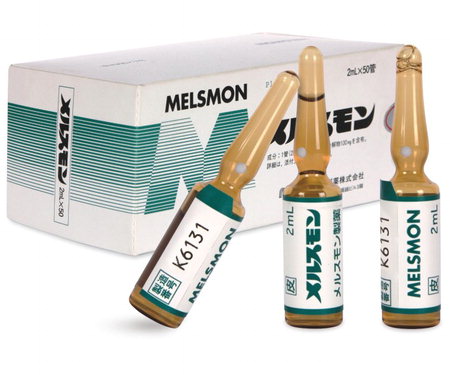
Two clusters inside it are large enough and coherent enough to be worth separating, the polymer biostimulators that declare a milligram figure and the hair and scalp sets, and that is the direction we would rather go than renaming the shelf. In the meantime the useful workaround is the one described above: read the declared active first. Products such as OLIDIA, which declares PLLA at 365 milligrams, and MELSMON, a placenta-derived injectable supplied in ampoules, sit in the same category and share almost nothing, and each product page states what it declares regardless of where it is filed.
The category page itself is worth browsing with that caveat in mind, and the boosters and ampoules range holds the products that the shared product type genuinely describes. For the material side of what several of these products declare, our guide to reading an exosome injectable and the regeneration map covering exosomes, growth factors and PDRN cover the distinctions the category label does not.
Sources
- KSTATION catalogue data for the Special Functionals collection, retrieved 8 September 2026. The collection holds 34 entries of which 24 carry active status; only those 24 are counted here, since the remainder are not publicly listed. Product titles, product type values, and classification tags as published.
- Product type distribution across the 24 active entries: 17 typed as skin booster or ampoule, 4 as vitamin or injectable, 3 as other covering exosomes and hair loss.
- Classification tag counts per product within the same set, ranging from two to six excluding operational tags such as restock and sold-out markers.
This article describes catalogue structure, category naming, and classification fields. It does not describe indications, dosing, administration, or clinical outcomes, and mentions of specific products refer only to what their listings declare. Category membership, product types and tags reflect the catalogue at the time of writing and may change.