The strange thing about a PLLA biostimulator is that its most important work happens when nothing appears to be happening. Inject it and the visible change is minimal; the mechanism it relies on unfolds over weeks and months, out of sight, in the body's own tissue. Understanding that sequence is the difference between reading a PLLA product as a slow filler and reading it as what it actually is.
A note on scope first. This piece describes the general, published mechanism of poly-L-lactic acid as a class, not a claim about what any specific product achieves in a specific person. Outcomes, indications, and suitability are clinical questions that depend on the individual and belong with a qualified professional. What follows is the material science underneath, the part that makes the category coherent. For how that translates into reading a label, see our companion on reading a PLLA biostimulator.
Filler versus biostimulator: two different jobs
A hyaluronic acid filler is a volumizer. It occupies space where it is placed, and the change is immediate because the gel itself is the result. A biostimulator is not trying to be the result; it is trying to prompt one. PLLA belongs to this second category, and the whole mechanism follows from that intention, which is why we drew the wider contrast in biostimulators versus HA fillers. The material is designed to be temporary scaffolding, not permanent occupancy.
That single design choice explains almost everything downstream, including why the effect is gradual, why the material disappears, and why the timeline matters as much as the substance. A volumizer is read by what it adds; a biostimulator is read by what it prompts and how long that takes.
The mechanism, step by step
Poly-L-lactic acid is a synthetic, biodegradable polymer used in medicine for decades in resorbable sutures and implants. As an injectable biostimulator, its published mode of action runs through a predictable sequence rather than a single event.
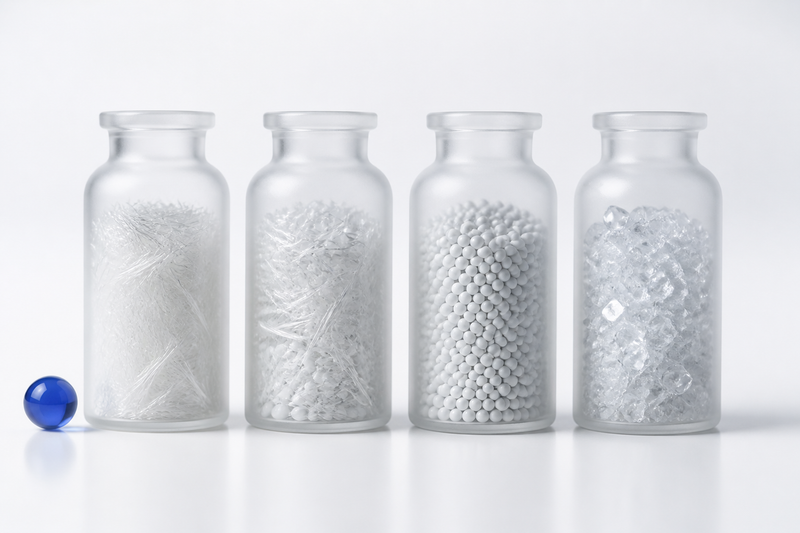
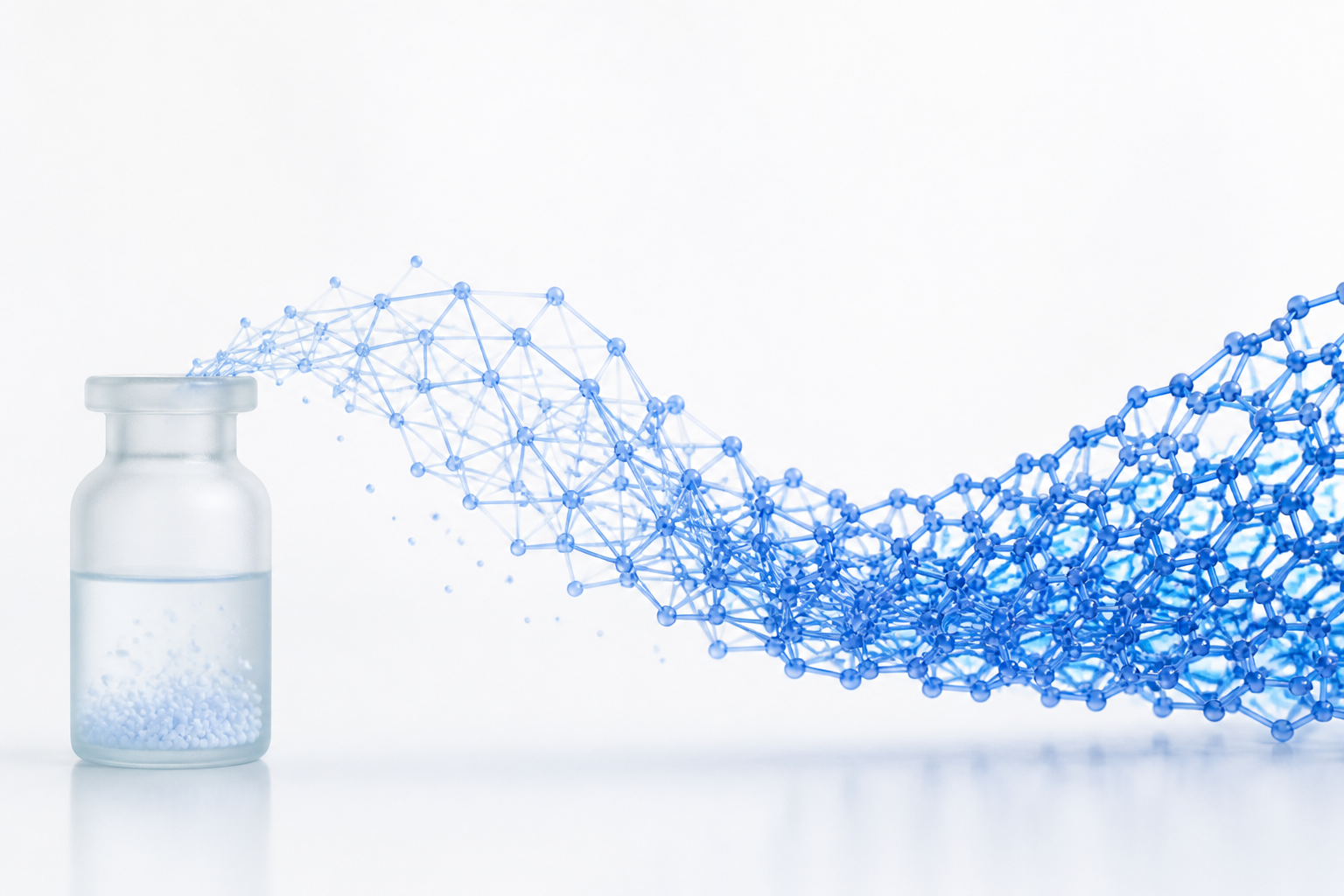
- Placement of the scaffold. The reconstituted PLLA is a suspension of microparticles, not a gel. Once injected, the fluid carrier is absorbed and the particles remain, distributed through the tissue as a temporary framework.
- A controlled tissue response. The body recognizes the particles and mounts a mild, subclinical response to them. This is the engine of the whole process: the response is what recruits the cells that follow.
- Collagen deposition over time. Fibroblasts, the cells that build connective tissue, are drawn to the scaffold and gradually lay down new collagen around and through it. This happens over weeks to months, not on the day of the procedure, which is why the timeline is measured in a series of sessions.
- Resorption of the polymer. Meanwhile the PLLA itself is broken down into lactic acid and cleared by normal metabolic pathways, so the scaffold is designed to be replaced by the body's own tissue rather than to remain in place.
Why the timeline is a feature, not a delay
Because the mechanism runs through the body's own collagen synthesis, the schedule is inherent to the material rather than a shortcoming of a given product. A biostimulator that worked instantly would, by definition, be doing something other than biostimulation. This is also why PLLA protocols are typically spaced across multiple sessions with intervals between them: the intervals are where the mechanism actually does its work, and compressing them does not compress the biology.
Reading a PLLA product with this in mind reframes what counts as a good sign. Correct reconstitution and even distribution matter precisely because the particles are scaffolding for a slow process; a well-prepared, evenly placed suspension is setting up months of tissue response, not a same-day change. The patience is not a marketing softener. It is the mechanism.
What the mechanism implies for sourcing
A material that is prepared fresh and then works invisibly over months puts unusual weight on getting exactly the right product, correctly made and handled. There is no immediate visual feedback to catch a problem at the chair, so the assurance has to come from provenance instead: that the vial is the one that was manufactured and tested to specification, stored correctly, and traceable to an authorized channel. That is the discipline set out in the Editorial & Sourcing Policy, and it matters more, not less, for a product whose effect you cannot see on day one.
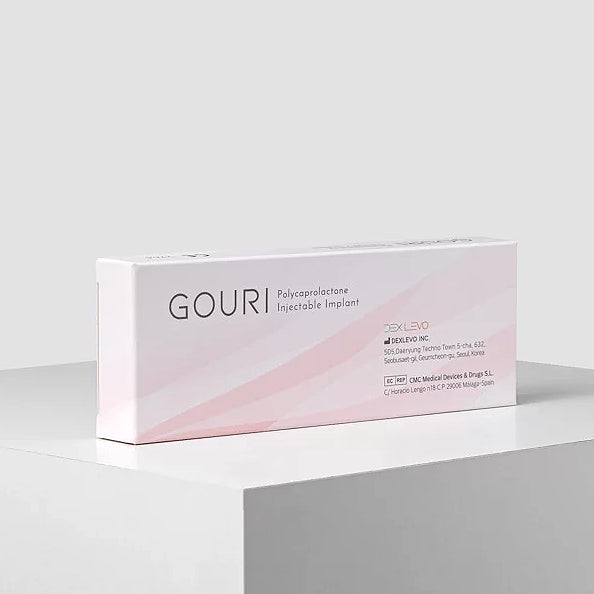
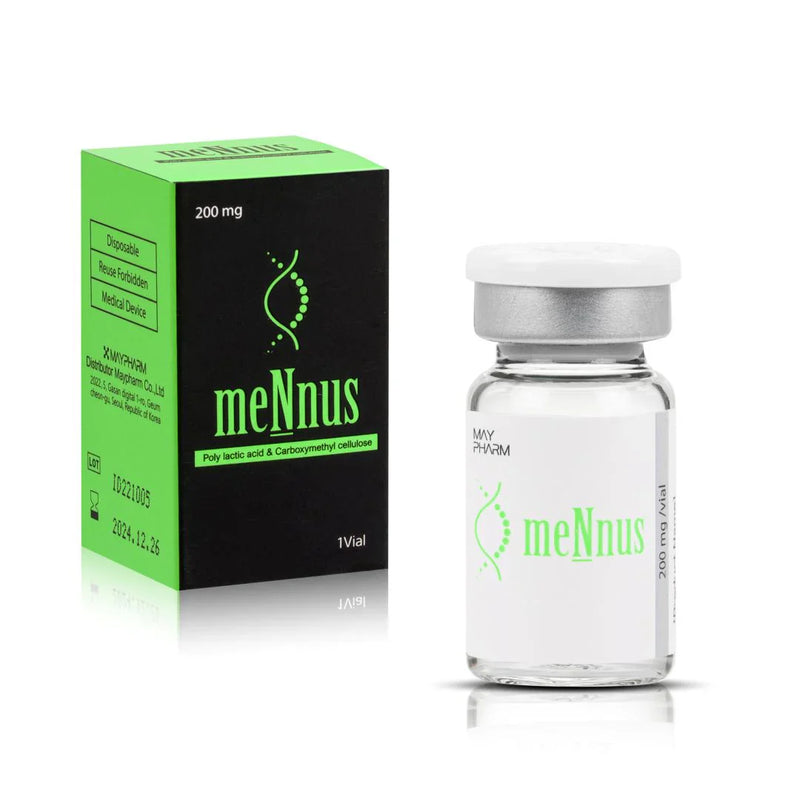
Biostimulator and PLLA-based lines sit across the catalog, from single-product presentations such as GOURI to MENNUS, within the broader skin boosters and ampoules range. Knowing how the material works is what lets you read those products for the right things.
Frequently asked questions
Frequently asked
How does PLLA stimulate collagen?
As a class, PLLA acts as a temporary microparticle scaffold. Once placed, it prompts a mild, controlled tissue response that draws in fibroblasts, which gradually deposit new collagen around the scaffold over weeks to months. The PLLA itself is then broken down and cleared. This describes the published mechanism for the category, not a guaranteed result in any individual.
Why does PLLA take months to work?
Because the mechanism runs through the body's own collagen synthesis, which is inherently gradual. A biostimulator works by prompting tissue over time rather than adding volume on day one, so the timeline is a property of the material. It is why protocols are usually spaced across multiple sessions with intervals between them.
Does PLLA stay in the skin permanently?
No. Poly-L-lactic acid is biodegradable; it is broken down into lactic acid and cleared by normal metabolic pathways. The material is designed to be temporary scaffolding that is resorbed, leaving behind the body's own tissue response rather than the polymer itself.
Is PLLA a filler?
It is categorized as a biostimulator rather than a volumizing filler. An HA filler adds volume directly and immediately; PLLA works indirectly by prompting a gradual collagen response and is then resorbed. The two are specified, read, and scheduled differently for that reason.
Disclaimer. This article is general educational information for professionals and is not medical advice. It describes the published mechanism of poly-L-lactic acid as a class, not what any specific product will achieve for an individual. Products referenced are intended for professional use; regulatory status, indications, and permitted claims vary by country and change over time. Confirm current requirements with the relevant authority.
Sources & references
- KSTATION, Reading a PLLA Biostimulator (particles, reconstitution, and sourcing). kstations.com
- KSTATION, Biostimulators versus HA fillers (how collagen-stimulating injectables differ from volumizing gels). kstations.com
- U.S. FDA, Is It a Cosmetic, a Drug, or Both? (Or Is It Soap?), structure/function vs. drug claims and market-specific regulation. fda.gov