A brand name tells you what to order. The licence holder behind it tells you something else: how much of the category you are looking at when you look at one company. Those two facts are usually treated as the same lookup, and they are not. In some Korean ingredient categories a single holder sits behind several products at once, so learning one company teaches you a meaningful share of the shelf. In others almost every product has its own company, and the same effort buys you exactly one item.
The ratio is measurable, because the Korean drug register records both the product and its holder. Counting live entries against distinct holders across five ingredient categories gives a number for each: how many licences the average company holds in that category. It runs from about 1.3 to about 4.7, which is a wider spread than the idea of an average suggests, and the spread does not follow the lines you would expect.
The ratio across five categories
Take the injectable side first, since it is where most of this catalogue sits. Botulinum toxin returns 57 live entries held across 21 companies, a ratio of roughly 2.7 licences per holder. Lidocaine injectables return 30 entries across 15 holders, roughly 2.0. Sodium hyaluronate injectables return 113 across 70, roughly 1.6. Glutathione injectables return 38 across 26, roughly 1.5. Ascorbic acid injectables return 46 across 36, roughly 1.3.
So the injectable categories span from 2.7 down to 1.3, a difference of more than two to one. At the bottom of that range, a category is close to one company per product: 36 companies producing 46 licensed items means most of them hold exactly one. At the top, a typical holder has two or three, and the largest holders will have more than that.
Two of those figures deserve a second look because they sit at opposite ends and describe categories that a buyer would otherwise treat as similar. Glutathione and ascorbic acid injectables are both antioxidant preparations, both supplied in vials, both sitting in the same corner of a catalogue. Their holder structures are close, at roughly 1.5 and 1.3, and both mean the same thing in practice: near one company per product. Sodium hyaluronate injectables, at 113 entries across 70 holders, sit only slightly above them despite being a much larger category. Size and concentration are not the same axis, and the biggest injectable category in this sample is also one of the most fragmented.
The practical translation is straightforward. In ascorbic acid injectables, identifying the maker behind one brand tells you almost nothing about any other brand you will encounter, because the next brand is a different company. In botulinum toxin, identifying a maker frequently accounts for several of the names in front of you at once, which is why the same handful of company names keeps appearing in that category's discussions and why brand-level comparisons there so often collapse into company-level ones.
Key takeaway
Licences per holder is not a quality signal. It tells you how much of a category you learn when you research one company, which is the difference between doing supplier diligence once and doing it for every brand on the list.
It is worth being explicit about what the ratio does not capture, because a mean is a blunt instrument. A figure of 2.7 licences per holder does not mean a typical company holds two or three. It is equally consistent with a category where three companies hold ten licences each and eighteen hold one, which would produce the same mean and a completely different market. Nothing in the entries-per-holder number distinguishes those two shapes, and the distinction matters to a buyer, because in the second case the concentration is entirely in a corner of the category they may never touch.
So the ratio is best read as a first sort rather than a finding. A low number is informative on its own: it cannot hide a concentrated core, because if most companies hold one licence there is no room for anyone to hold many. A high number is ambiguous and needs the distribution behind it before it means anything specific. That asymmetry is worth remembering, since the high numbers are the ones that invite conclusions.
Where the ratio inverts: injectable against everything else
The more interesting result appears when the same ingredient is counted on both sides of the route split, because several of these substances are licensed as both injectable and non-injectable products.
One thing to settle before the numbers. The register carries no administration route field, so the split used here reads the licensed product name: entries whose Korean name marks them as an injection on one side, everything else on the other. That second bucket is not a synonym for oral. Of the 153 non-injectable sodium hyaluronate entries, 141 are classified as ophthalmic preparations. The 189 non-injectable lidocaine entries run to topical anaesthetics, dermatological preparations and haemorrhoid products before anything is swallowed. Only glutathione, where 34 of the 37 sit in the antidote class, and ascorbic acid, whose two largest classes are vitamin preparations, behave the way the word oral suggests. What follows compares one route against the rest of the register, not swallowed against injected.
Ascorbic acid is the extreme case. Its injectable side is the most fragmented in the sample at roughly 1.3 licences per holder. Its non-injectable side returns 565 live entries across 119 holders, roughly 4.7. The same substance, in the same register, produces the most fragmented structure in one route and by far the most concentrated in the other. A company in the non-injectable vitamin C market typically holds four or five licences. A company in the injectable vitamin C market typically holds one.
Sodium hyaluronate shows the same direction with a smaller gap: roughly 2.7 per holder on the non-injectable side against 1.6 on the injectable. Lidocaine runs 2.3 non-injectable against 2.0 injectable, nearly flat. Glutathione runs about 1.3 non-injectable against 1.5 injectable, which is the one case where the injectable side is marginally the more concentrated of the two.
The gap in the ascorbic acid case is large enough that it changes what the word category means. On the non-injectable side, 565 live entries is a bigger population than every other count in this sample combined, and 119 holders is also the largest company count, but the entries grow faster than the companies do. On the injectable side the same substance produces a population an order of magnitude smaller and a structure where holders and products are nearly one to one. Whatever forces produce those two shapes, they are clearly not properties of the molecule, since the molecule is identical in both rows.
Botulinum toxin is the exception that shapes the rest
Set against that route pattern, botulinum toxin sits awkwardly. It is injectable only, and it is the most concentrated injectable category in the sample at roughly 2.7 per holder, higher than two of the four non-injectable counts.
What makes this worth pausing on is that the concentration is visible from the outside, in a way the others are not. A buyer working in that category encounters the same company names repeatedly, and the well-known brands resolve to a short list of makers. In ascorbic acid injectables, a buyer encountering forty brands is encountering something close to forty companies, and no amount of familiarity compresses that list.
The consequence is that the two categories reward completely different research habits. Where holders are concentrated, company-level knowledge compounds: what you learn about one manufacturer applies to the next product from the same one, and a supplier relationship covers several lines. Where holders are fragmented, company-level knowledge does not compound at all, and the efficient unit of diligence is the product rather than the maker.
The same split explains why supplier consolidation is easy advice in one category and bad advice in another. Reducing the number of suppliers is straightforwardly good where a handful of holders cover most of a shelf, because fewer relationships still reach most of the products. In a category where holders and products are close to one to one, consolidating suppliers means giving up product coverage, and the saving in relationship management is paid for directly in what can be sourced at all. Neither is a preference. It is arithmetic that changes shelf by shelf.
One boundary condition has to be attached to all of this before it is used. The register records the licence holder, and a licence holder is not necessarily the factory. Contract and commissioned manufacturing are ordinary in this industry, so two companies holding two separate licences can have their products made in the same facility, and a single holder's several licences can be produced in different places. Counting holders counts legal responsibility for a product, which is the right thing to count for verification purposes and the wrong thing to count if the question is how many physical manufacturing operations stand behind a category.
What a low ratio does to brand names
In a fragmented category, brand names proliferate faster than in a concentrated one, simply because more companies are each naming their own product. Forty-six licences held by thirty-six companies produces close to forty-six distinct naming decisions, made independently, with no shared house style. In a category where twenty-one companies hold fifty-seven licences, a substantial share of the names come from the same handful of naming departments, and they tend to be internally consistent: related products carry related names, strengths are marked the same way, and a suffix means the same thing across the range.
That is why brand-name confusion is not evenly distributed across categories. It concentrates where holders are fragmented, because there is no common convention for names to follow. A buyer who finds a category unusually hard to keep straight is often reacting to its holder structure rather than to anything about the products.
It also means the register itself is more useful in exactly the categories where it feels least necessary. In a concentrated category, brand recognition mostly works, and the register confirms what the buyer already suspected. In a fragmented one, brand recognition has nothing to grip, and the holder field is the only stable identifier available.
Reading a category by its structure before its products
Ask how many companies stand behind the category, not just how many products. If the two numbers are close, treat every product as its own diligence problem and do not expect familiarity to accumulate. If the product count is a multiple of the company count, invest in the companies first, because that knowledge will apply repeatedly and will let you recognise related products before you have looked them up.
Then check the route split before trusting either number. A count that mixes injectable and non-injectable entries will smooth over the exact difference that matters, and in at least one ingredient here that smoothing would turn a fourfold structural difference into a single unremarkable average.
And treat the ratio as a description of effort rather than of risk. A fragmented category is not less safe. It is more expensive to know, and the expense falls on the buyer rather than on the product. Categories where a small number of holders account for most of the shelf are cheaper to learn and, for that reason, easier to become complacent about, since the same names keep appearing and eventually stop being checked.
| Ingredient | Route | Live entries | Holders | Per holder |
|---|---|---|---|---|
| Botulinum toxin | Injectable | 57 | 21 | 2.7 |
| Lidocaine | Injectable | 30 | 15 | 2.0 |
| Sodium hyaluronate | Injectable | 113 | 70 | 1.6 |
| Glutathione | Injectable | 38 | 26 | 1.5 |
| Ascorbic acid | Injectable | 46 | 36 | 1.3 |
| Ascorbic acid | Non-injectable | 565 | 119 | 4.7 |
| Sodium hyaluronate | Non-injectable | 153 | 56 | 2.7 |
| Lidocaine | Non-injectable | 189 | 82 | 2.3 |
| Glutathione | Non-injectable | 37 | 29 | 1.3 |
Frequently asked
How many Korean licences does one company usually hold?
It depends entirely on the category. Across the five ingredient categories counted here, the figure runs from about 1.3 to about 4.7 live licences per holder. There is no useful category-independent answer, which is why an average taken across a whole register describes nothing in particular.
Does a high ratio mean a category is dominated by big companies?
It means holders are more concentrated, which usually implies fewer and larger participants, but the ratio alone does not distinguish a category with several mid-sized holders from one with a couple of very large ones and a long tail. It is a measure of how far company knowledge transfers, not of market share.
Why would the same ingredient be concentrated in one route and fragmented in another?
The register records that it happens but not why. In this sample, ascorbic acid runs about 4.7 licences per holder outside the injectable route and about 1.3 within it, the widest gap of the four ingredients checked on both sides. Any explanation for that gap would have to come from outside the register, so it is reported here as an observation rather than as a conclusion.
Does knowing the manufacturer tell me about other brands?
In a concentrated category, often yes: the same holder is likely to stand behind other products you will meet, so the research transfers. In a fragmented category it mostly does not, because the next brand belongs to a different company. Deciding which situation you are in before starting saves the effort from being spent in the wrong place.
Is a fragmented category riskier?
Not inherently. Every entry counted here is a live licence regardless of who holds it. Fragmentation raises the cost of knowing a category rather than lowering its standards, and the practical effect is that diligence has to be done per product instead of per supplier.
How KSTATION uses holder structure when listing
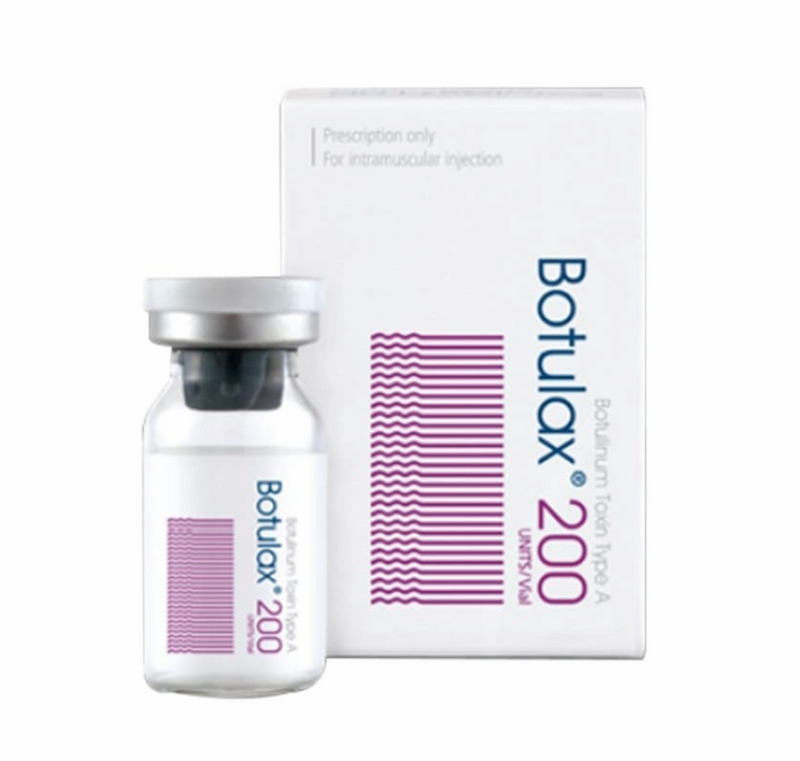
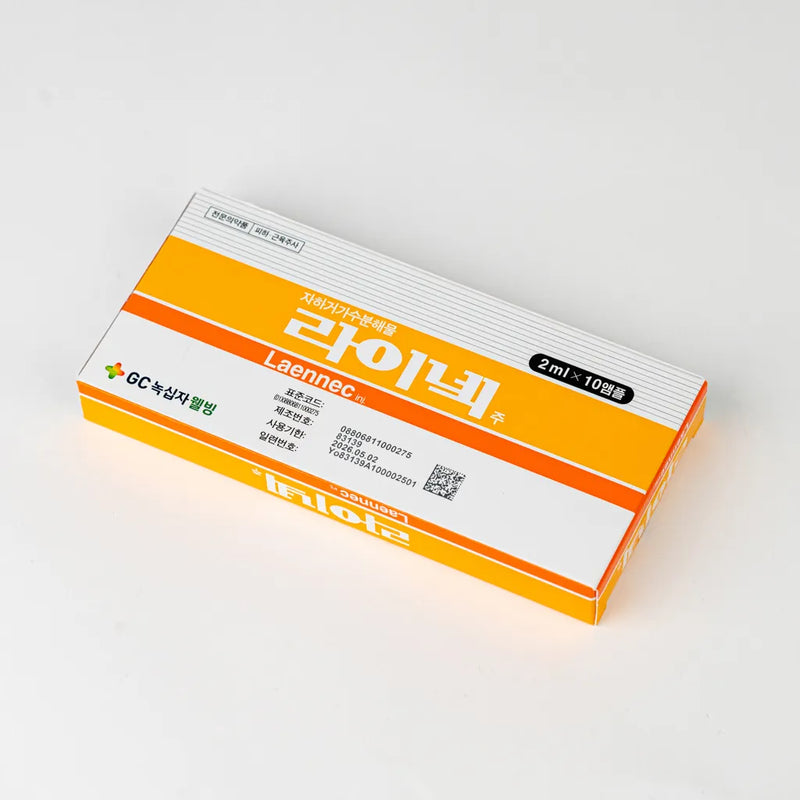
The botulinum toxin range is the concentrated end of this spectrum, where a short list of makers accounts for most of what a buyer encounters, and products such as BOTULAX 200 Units sit inside that structure. The vitamins and injectables range sits at the fragmented end, where brand names multiply because the companies behind them do, and an item like LAENNEC Inj is better identified by what its licence records than by brand familiarity.
For the register mechanics underneath all of this, our guide to what prescription-only status means when importing covers the supply classification the same entries carry, and the verification walkthrough for Korean toxins covers the checks that follow once a holder is identified.
Sources
- Korea Ministry of Food and Drug Safety, Drug Product Permit Information Service. Ingredient queries for botulinum toxin, lidocaine, sodium hyaluronate, glutathione and ascorbic acid, retrieved 8 September 2026 and re-checked 10 September 2026. Counts are of live entries and distinct licence holders, split by administration route.
- Injectable route: botulinum toxin 57 entries across 21 holders; lidocaine 30 across 15; sodium hyaluronate 113 across 70; glutathione 38 across 26; ascorbic acid 46 across 36.
- Non-injectable route: ascorbic acid 565 entries across 119 holders; sodium hyaluronate 153 across 56; lidocaine 189 across 82; glutathione 37 across 29. The register has no administration route field, so this bucket is everything the licensed name does not mark as an injection, and it is not equivalent to oral: 141 of the 153 sodium hyaluronate entries are ophthalmic.
- Ratios are simple entries-per-holder figures rounded to one decimal place. They describe the mean and do not indicate how licences are distributed within a category.
This article describes licence register structure and market composition. It does not describe indications, dosing, administration, or clinical outcomes, and the ratios reported carry no implication about product quality, safety or efficacy. Register counts reflect the public dataset at the time of retrieval and may change as licences are granted or withdrawn.