
Dermal Fillers
Dermal Fillers
Dermal fillers are cross-linked hyaluronic acid gels injected to add structural volume and contour, distinct from skin boosters and biostimulators; the Korean range includes lines such as REVOLAX, NEURAMIS, Chaeum, and Caratfill.
Dermal fillers are the volume category of injectable aesthetics, and Korean lines such as REVOLAX, Neuramis, and Chaeum are now familiar in clinics far beyond Korea. The useful first distinction is what a filler does: it adds structural volume, unlike a skin booster, which is positioned for skin quality, or a biostimulator, which prompts the body's own collagen over time. And the question a sourcing buyer resolves before a purchase is rarely what a filler does, but whether the specific syringe is genuine and correctly handled. This page collects what a dermal filler is, how the Korean hyaluronic acid lines are grouped, and how to verify one.
What a dermal filler is
Most dermal fillers in K-derma sourcing are cross-linked hyaluronic acid gels, injected to add volume and contour and later resorbed by the body. In Korea they are regulated as medical devices under the Medical Device Act, typically at the higher risk classes, and lawful products carry MFDS approval, KGMP manufacturing certification, and a designated Korea license holder. They are prescription products for administration by trained professionals, not consumer cosmetics. This page describes the category and how to source it; it does not describe how to use it or what results to expect, which are clinical questions.
How the Korean HA fillers are grouped
The neutral way to place fillers side by side is by the depth a line is formulated for and whether it includes lidocaine, rather than by claimed effect. Most Korean lines are sold as a family spanning superficial to deep placement, with the finer variants for shallow lines and the denser variants for deep or structural work.
| Line | Depth range (as named) | Lidocaine |
|---|---|---|
| REVOLAX | Fine / Deep / Sub-Q | Available with lidocaine |
| NEURAMIS | Light / Deep / Volume | With and without lidocaine |
| Chaeum | No.1 to No.4 (fine to deep) | Lidocaine range |
| Caratfill | Sub-Q / Deep / Kiss | Lidocaine range |
| ELASTY Plus | F Plus / D Plus / G Plus | Lidocaine range |
The full stocked range sits under the derma fillers collection.
Cross-linking, and what to actually read
What separates one HA filler from another is largely how the hyaluronic acid is cross-linked, since cross-linking is what turns a soluble polysaccharide into a firmer, longer-lasting gel. Two variables do most of the work. The first is whether a gel is monophasic, a single uniform gel, or biphasic, particles suspended in a carrier, which shapes how a line is positioned for smoothness versus lift. The second is the degree of cross-linking, which is part of why one line is framed as soft and spreadable and another as firm and structural. Neither is a ranking; they are descriptions of what a gel is built to do.
For the underlying ingredient, see the Hyaluronic Acid guide. For worked examples, a closer look at a monophasic HA filler shows how gel structure reads on a single product, and biostimulators versus HA fillers places the volume category next to the collagen-stimulating one.
Regulatory status by market
Status differs by country and by product. Korean HA fillers are approved and marketed as medical devices under the Ministry of Food and Drug Safety (MFDS) in South Korea. In the United States, some hyaluronic acid fillers are FDA-approved while many Korean products are not cleared for aesthetic use, and individual products differ, so confirm the specific product and market rather than assuming a shared status.
How to verify an authentic filler
Because a filler goes into the face and its safety depends on it being the genuine, correctly handled product, and because counterfeits and parallel-imported stock are a real risk in this category, verification runs through a chain of checkable details, not a single glance:
- Security features. An intact, tamper-evident holographic seal, and a QR or DataMatrix code that resolves to an official manufacturer verification page rather than a dead link.
- Korean serialization. MFDS runs a nationwide serialization system in which prescription products carry a GS1 DataMatrix code encoding the product identifier, serial number, lot, and expiry.
- Lot matching. The lot number and expiration on the syringe must match the printing on the carton exactly.
- Regulatory marks. MFDS approval and KGMP manufacturing certification, with a designated Korea license holder.
- Storage and handling. Confirm the product has been stored and handled according to its labeled specification from factory to clinic.
- Provenance. A documented purchase from an authorized channel. Untraceable origin or unusual pricing are reasons to stop.
KSTATION checks manufacturer and licensing details before a product is listed and stocks officially sourced products only. For the full buyer-facing method, see how to distinguish authentic Korean dermal fillers from counterfeits and our Editorial & Sourcing Policy.
Common questions
What is the difference between a dermal filler and a skin booster?
A dermal filler adds structural volume and contour and is defined by that role, while a skin booster is positioned for skin quality such as hydration and is defined by its active. Both are injectables, but they sit in different categories. Which suits a given case is a clinical question.
What is the difference between a filler and a biostimulator?
A hyaluronic acid filler adds volume directly and is later resorbed, while a biostimulator is a resorbable polymer that prompts the body to form its own collagen over time. See the guide on biostimulators versus HA fillers for the neutral comparison.
What does cross-linking mean in a filler?
Cross-linking is the chemistry that links hyaluronic acid chains into a stable gel, which is what lets a filler hold its shape and resist breakdown. The type of gel, monophasic or biphasic, and the degree of cross-linking are what position a line as softer or firmer. It is a description of structure, not a claim of superiority.
Are Korean HA fillers FDA-approved?
Some hyaluronic acid fillers are FDA-approved, but many Korean products are not cleared for aesthetic use in the United States, and individual products differ. They are approved as medical devices in South Korea under the MFDS. Confirm the specific product and market with the relevant authority.
How do I verify an authentic filler?
Check the whole chain: an intact holographic seal, a QR or DataMatrix code that resolves to the manufacturer, a lot number and expiry that match between syringe and carton, MFDS and KGMP regulatory marks, correct storage, and a documented purchase from an authorized channel. Untraceable origin or unusual pricing are reasons to stop.
Sources & references
- U.S. FDA, Dermal Fillers (Soft Tissue Fillers), overview and regulation of hyaluronic acid and other filler materials. fda.gov
This page is general educational information, not medical advice, and describes the dermal filler category rather than what any product will do for an individual. These are prescription products for administration by trained professionals; this page does not describe dosing, administration, or expected results. Regulatory status varies by country and changes over time.
Reading on Dermal Fillers
E.P.T.Q. vs NEURAMIS: Two Korean HA Filler Lines, Spec by Spec
E.P.T.Q. and NEURAMIS are both Korean cross-linked hyaluronic acid (HA) filler lines sold in several versions, both with 0.3% lidocaine in most...

SOSUM Filler: What It Is and How to Source It Authentically
The name on a SOSUM box is JSBIO's. The name on SOSUM's Korean licence is not. Korea's medical device register lists no...
Korea's 2025 Production Figures for Toxins, Fillers and Cosmetics, and What They Measure
Three reports from Korea's Ministry of Food and Drug Safety, published between May and July 2026, put numbers on the three Korean...
Toxin Licences and Filler Licences: The Korean Companies That Hold Both
Botulinum toxins and dermal fillers are regulated in Korea as different kinds of product, in different registers. Toxins are licensed as drugs....
Which Korean HA Fillers Are Monophasic? A Table of 32 Listings
Monophasic and biphasic describe how a hyaluronic acid filler gel is built: one continuous cross-linked gel, or cross-linked particles carried in a...
Which Korean HA Fillers Contain Lidocaine? What 31 Product Pages Declare
Whether a hyaluronic acid filler contains lidocaine is one of the most practical questions a buyer asks, and one of the easiest...
ELASTY vs ELASTY Plus: Same Gel Concentration, Three Differences Worth Knowing
ELASTY and ELASTY Plus share a brand, three version letters and the same declared hyaluronic acid concentration. It is easy to read...
Korea's Filler Register After 2020: Where the Growth Came From
Korea's register of dermal filler licences holds 1,167 filings granted since 1999. More than half of them, 660, were granted from 2020...
Notified, Certified, Licensed: The Three Doors Into Korea's Medical Device Register
Every medical device on the Korean market came in through one of three doors. Some were notified, which means a file was...
What One Millilitre of Filler Actually Declares, and What It Leaves Out
"How much is 1 mL of filler" is one of the most common questions in this category, and it contains an assumption...
Why Your HA Filler Is Not in the Korean Drug Register
A buyer does the responsible thing. They take the name of a Korean hyaluronic acid filler, go to the Ministry of Food...
Reading a Hyaluronidase Vial: What the Korean Register Actually Licenses
A hyaluronidase vial tells you remarkably little. A brand name, a parenthetical ingredient, sometimes a potency figure, and a company name in...

How Long Dermal Fillers Last: What Sets the Clock, Family by Family
How long dermal fillers last, and why the same question has several answers: what determines filler longevity, how HA and collagen-stimulating families...
Reading an HA Filler: Cross-Linking, Cohesivity, and Sourcing
How to read a hyaluronic acid dermal filler by what actually varies between them: cross-linking, gel structure, firmness, and lidocaine, and what...
Cross-Linked vs Uncross-Linked HA: One Molecule, Two Jobs
Hyaluronic acid behaves as two different materials depending on one processing step. What cross-linking changes, and why an HA booster and an...

REVELINA, Explained: A Monophasic HA Filler in Three Depths
REVELINA is a cross-linked, non-animal HA dermal filler in three depths (FINE, SUB-Q, DEEP). A neutral, B2B look at its monophasic structure,...

Biostimulators vs HA Fillers: How PLLA, CaHA, and PCL Work
HA fillers fill and can be dissolved. Biostimulators ask your skin to build collagen and cannot. A clear comparison of PLLA, CaHA,...

Part 15: The Ultimate Guide to Hyaluronic Acid – From Daily Cosmetics to Advanced Fillers
Hyaluronic acid is the rare ingredient that shows up in a five-dollar drugstore serum and in a clinic-grade dermal filler, and the...

Part 8: Protecting Your Investment – The Ultimate Storage Guide for Botox, Fillers, and Skin Boosters
A skin booster, an exosome ampoule, or a hyaluronic acid filler is a real investment, and like any investment it holds its...

Part 6: How to Distinguish Authentic Korean Dermal Fillers from Counterfeits
Korean dermal fillers and botulinum toxin have earned a global following on the strength of consistent quality and competitive pricing, and brands...

Part 5: Maximizing Your Results: The Essential Aftercare Guide for Botox & Fillers
Aftercare is the quiet half of an injectable result. A botulinum toxin or dermal filler treatment is a clinical procedure performed by...

Part 3: Fillers – The Perfect Solution for a Youthful and Voluminous Face
As skin ages, the face loses volume. Fat pads shift and shrink, bone resorbs at the margins, and the soft tissue that...
Dermal Fillers in the catalog
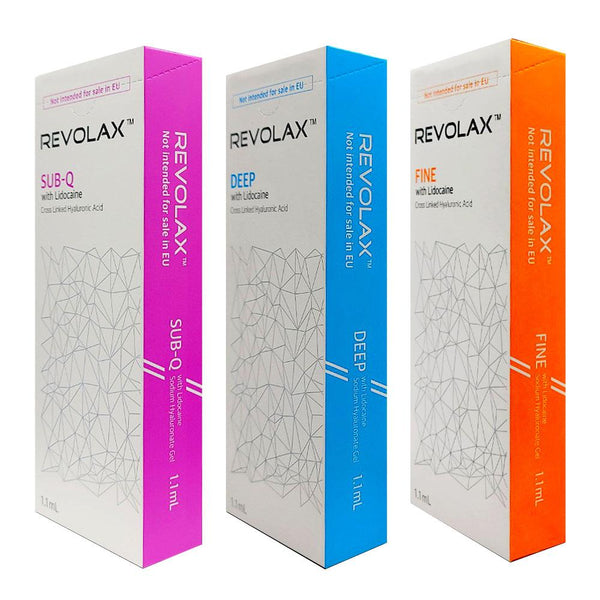
REVOLAX (SUB-Q / DEEP / FINE)
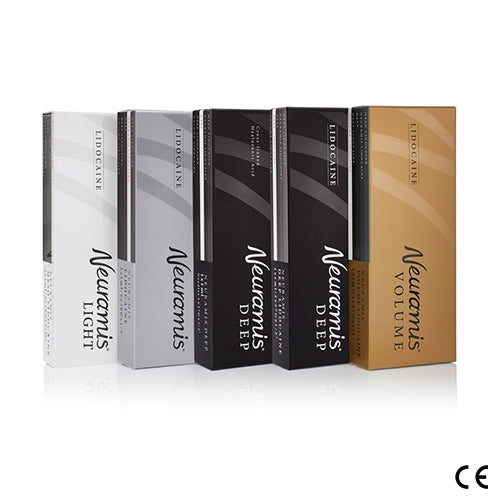
NEURAMIS (Lidocaine / Light Lidocaine / Deep Lidocaine / Deep Non-Lido / Volume Lidocaine)
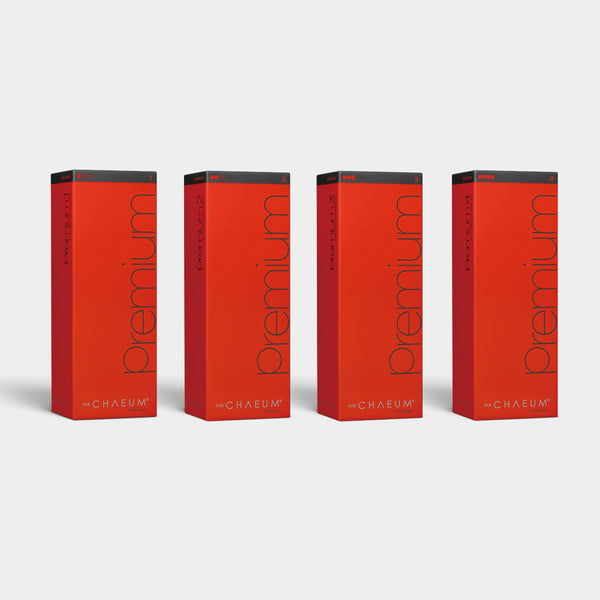
CHAEUM PREMIUM (No.1 / No.2 / No.3 / No.4)
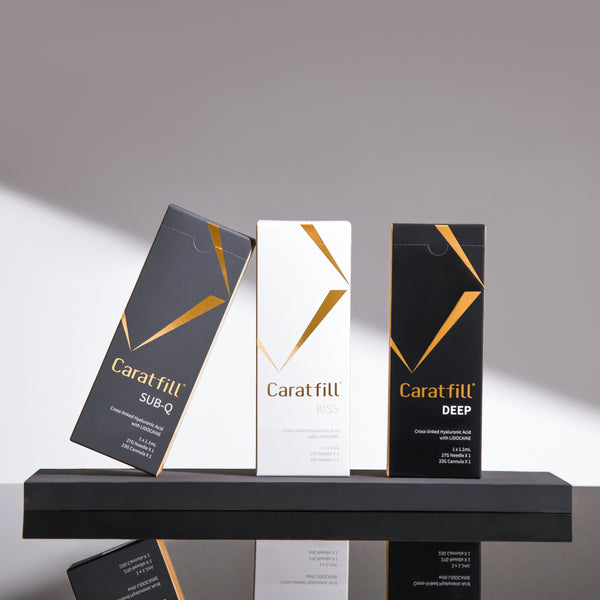
Caratfill (Sub-Q / Deep / Kiss)
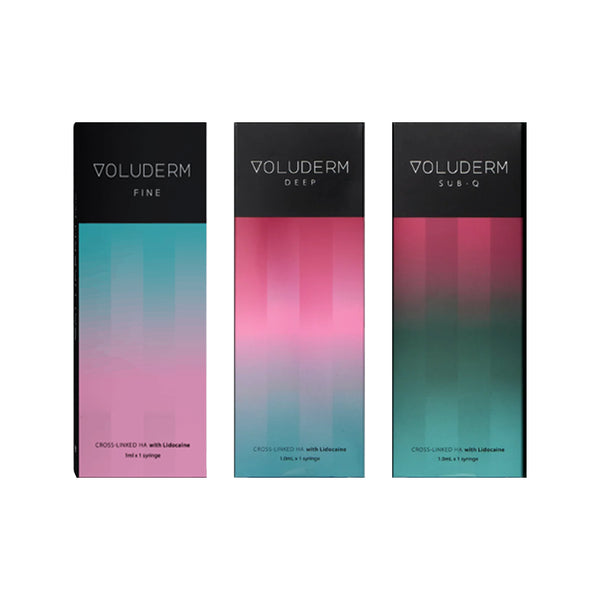
Voluderm (Fine / Deep / Sub-Q)
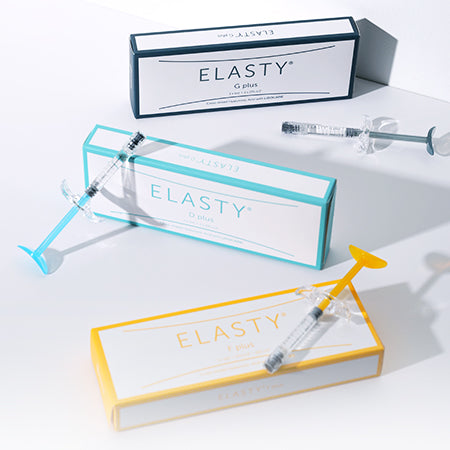
ELASTY Plus (G Plus / D Plus / F Plus)
Officially sourced. Curated for North America.