Acetyl hexapeptide-8 is a six-amino-acid peptide that marketing often sets beside botulinum toxin. In Korea the two are not filed in the same place. Botulinum toxin sits on the drug register, licence by licence. Acetyl hexapeptide-8 sits in the cosmetic ingredient dictionary, and a search of the drug register for it returns nothing.
Eight listings on our store include it, so the difference is worth setting out plainly. This article reads both records side by side.
What the peptide is
Acetyl hexapeptide-8 is a short synthetic peptide, the sequence Ac-EEMQRR-NH2, sold under the trade name Argireline and once labelled acetyl hexapeptide-3. It was designed in the late 1990s by copying the end of SNAP-25, a protein that nerve cells use to release their signals. The 2002 paper that introduced it tested it in a cream applied to the skin.
Botulinum toxin acts on the same SNAP-25 protein, which is where the comparison comes from. The two share a target, and they are filed in different places.
The cosmetic ingredient dictionary entry
The Ministry of Food and Drug Safety (MFDS) publishes a dictionary of cosmetic ingredient names, with a Korean name, an English name and a short line on origin for each. Acetyl hexapeptide-8 appears there as 아세틸헥사펩타이드-8, and the origin line describes it as the product of acetylating hexapeptide-8. A second entry combines it with another peptide, oligopeptide-249.
An entry in this dictionary is a standard name for use on cosmetic labels. It is not a licence and does not attach to any one product. Any manufacturer can use the name for the ingredient.
The drug register, searched for the same peptide
The drug register works the other way round. Each record is one licence for one product, with a holder, an ingredient line and a classification. A search of its ingredient field for "Hexapeptide", "Acetyl Hexapeptide" or "Argireline" returned no records on 22 October 2026. The same search for "Glutathione" returned 85 and for "Botulinum" returned 60, so the zero reflects the register's contents rather than a failed query.
All 60 botulinum toxin records carry the classification 전문의약품, the register's category for medicines dispensed on prescription. Fifty-nine are current, and each states its toxin content in units per vial. Our earlier reading of Korea's toxin register in four waves covers when those licences arrived.
The word botulinum in the cosmetic dictionary
The cosmetic dictionary does contain the word botulinum, in sixteen ingredient names. Every one of them is a peptide. Thirteen are described as single-chain recombinant peptides produced by fermenting E. coli, and their English names include "Clostridium Botulinum Polypeptide-1" or "-2" joined to other peptide sequences. The other three are synthetic peptides or proteins, one of them described as based on the amino acid sequence of botulinum neurotoxin type A.
A name that includes botulinum does not move an ingredient onto the drug register. Those sixteen entries are cosmetic ingredient names in the same dictionary as acetyl hexapeptide-8, and none of them is a botulinum toxin licence.
Where it appears on our listings
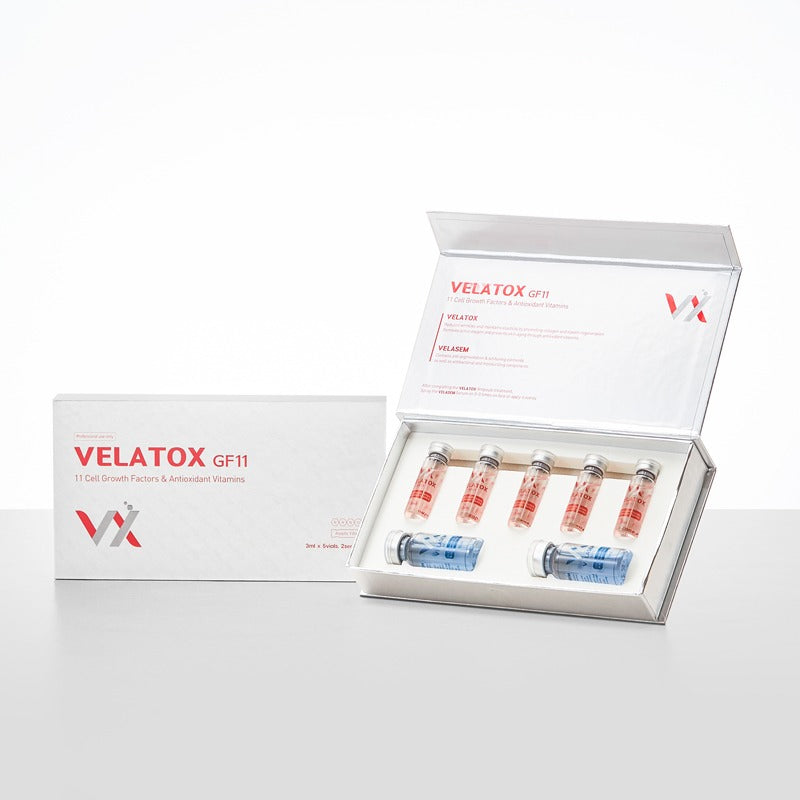
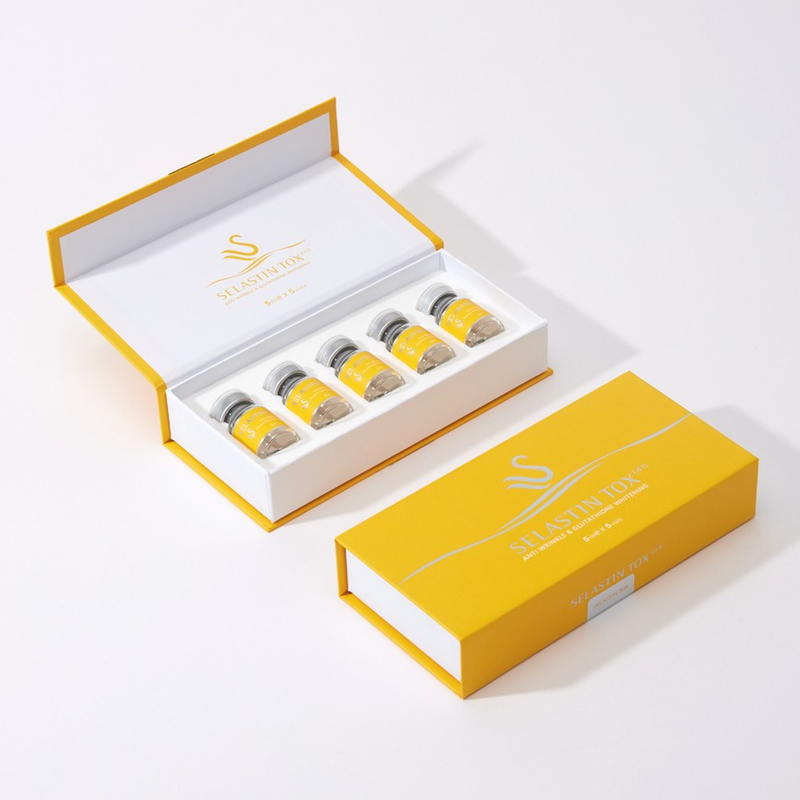
Eight active listings name acetyl hexapeptide-8. Six are skin boosters: REJUBEAU Aqua Bomb, VELATOX GF11, SELASTIN TOX, ExoLume, PLAXOM and LACTO EXO COLLA. Two are fat-dissolving solutions, Lipo Lab V-Line PREMIUM and LipoLume.
In every case it is one item in a group of peptides, most often listed beside palmitoyl pentapeptide-4 and, in some, palmitoyl tripeptide or tetrapeptide forms. None of the eight states how much is present. A product name that resembles a toxin brand, such as SELASTIN TOX or VELATOX, is a brand name. The ingredient lines of both name peptides and growth factors, and no botulinum toxin.
The listings named here
KSTATION supplies the REJUBEAU Aqua Bomb in packs of five syringes and VELATOX GF11 and SELASTIN TOX in packs of five vials, all within our skin boosters and ampoules collection. The licensed toxins we supply are compared by maker and form in Korean botulinum toxins compared. For where peptides sit among the other actives in a booster, see the skin booster family by active.
Frequently asked
Is Argireline the same ingredient as acetyl hexapeptide-8?
Yes. Argireline is the trade name of the peptide whose standard ingredient name is now acetyl hexapeptide-8. Older labels may call it acetyl hexapeptide-3.
How do I search the Korean cosmetic ingredient dictionary?
MFDS publishes it as an open data service that can be searched by Korean ingredient name. The Korean name for acetyl hexapeptide-8 is 아세틸헥사펩타이드-8, and the search must use the exact spelling.
How many entries does the cosmetic ingredient dictionary hold?
On 22 October 2026 the open data service returned 21,945 cosmetic ingredient names in total, from salts and plant extracts to synthetic peptides.
Sources and references
- Blanes-Mira C. et al., "A synthetic hexapeptide (Argireline) with antiwrinkle activity", International Journal of Cosmetic Science 24(5), 2002, pp. 303 to 310 (DOI 10.1046/j.1467-2494.2002.00153.x), on the peptide's sequence and design.
- Ministry of Food and Drug Safety (MFDS), cosmetic ingredient dictionary open data, entries for 아세틸헥사펩타이드-8 and names containing 보툴리눔, retrieved 22 October 2026.
- Ministry of Food and Drug Safety (MFDS), Korean drug product register, ingredient searches for Hexapeptide, Acetyl Hexapeptide, Argireline, Glutathione and Botulinum, retrieved 22 October 2026.
- KSTATION product listings for REJUBEAU Aqua Bomb, VELATOX GF11, SELASTIN TOX, ExoLume, PLAXOM, LACTO EXO COLLA, Lipo Lab V-Line PREMIUM and LipoLume, retrieved 22 October 2026.
Register and dictionary entries are a reading taken on 22 October 2026 and change without notice. This article describes where ingredients are filed and what listings declare. It makes no claim about the effect of any ingredient or product.