Korean filler licences carry a field for the company that had the product made, and a second for the plant that made it. Of 1,031 live licences for Korean-made products in the filler classification, 99 fill in the first. In nearly all the rest, the licence holder is the maker. That is close to the reverse of Korean injectable drugs, and it means the outsourcing most buyers meet in fillers, the brand that sells another company's licensed product, is not in this field at all.
Three names on one filing
Korea licenses dermal fillers as medical devices, under a tissue-repair classification that the Ministry of Food and Drug Safety records in four slightly different spellings. Read all four together and the register holds 1,323 filings in that classification, of which 1,085 are live: 1,031 for products made in Korea (licence numbers beginning 제허) and 54 imports (수허). The classification also covers some tissue-repair products that are not facial fillers, so these are counts of the classification, not of filler brands.
Each filing names a licence holder. Two further fields can name other companies. One is the commissioning company (제조의뢰자), the party that had the device made. The other is the manufacturer, the plant that made it. On a Korean-made filing both are normally empty, and an empty pair means the holder made the product itself. Our glossary of the drug and device registers describes the manufacturer field and notes that the register does not explain an empty one. Counting the filings shows how rare a filled one is.
| What the filing records | Live filings |
|---|---|
| No commissioning company, no separate manufacturer | 923 |
| No commissioning company, manufacturer named | 9 |
| Commissioning company named, made by a different company | 95 |
| Commissioning company named, made by the holder | 4 |
| All live Korean-made filings | 1,031 |
Ninety-five filings, about one in eleven, name a commissioning company and a different maker. We call these contract-made below. In 96 of the 99 that name a commissioning company, that company is the holder itself, under the same name once differences in how the corporate form is written are set aside. The field is less a third party than a flag: the holder is saying it had this product made elsewhere, and the manufacturer field says where.
One in eleven, where drugs run at two in three
Korean drug licences carry a comparable field for contract manufacturers. When we read it across five injectable ingredient groups in October, 102 of 151 live filings named one, two out of three. Glutathione injections ran at 34 of 38. That reading is set out in the plants behind Korean injectable licences.
Fillers sit at the other end. Of the 196 companies holding live Korean-made filings in the classification, 156 have no contract-made filing at all. In the drug groups, a crowded field of licence holders turned out to rest on a few plants. In fillers, the holders mostly are the plants.
The plants on the other end
The 95 contract-made filings name 28 plants. Three of them account for 45 filings, and fourteen are named on a single filing each.
| Plant | Filings naming it | Holders served | Years granted |
|---|---|---|---|
| JP Cares | 19 | 2 | 2021 to 2026 |
| Bioplus | 13 | 8 | 2016 to 2025 |
| GCS | 13 | 6 | 2023 to 2026 |
| CHA Meditech | 6 | 4 | 2016 to 2023 |
| Isovalley | 6 | 1 | 2023 to 2025 |
| LG Chem, Iksan plant | 4 | 1 | 2011 to 2013 |
| Biostandard | 4 | 1 | 2024 |
| 21 other plants | 30 |
Two shapes stand out. Bioplus and GCS each make for six or more holders, the closest the filler register comes to the generalist plants of the drug side. JP Cares is the opposite: 17 of its 19 filings are held by one company, PNF Cares, and every one of PNF Cares' 17 live filings names JP Cares as manufacturer. The register shows the pairing. It does not say whether the two companies are related, and we have not assumed it.
All 28 plants also hold live filings in the classification under their own names. CHA Meditech, for example, holds 15 live filings of its own, none of which names a commissioning company or a separate manufacturer, and appears as the plant on six filings for four other holders.
Holders with no plant on the record
Forty Korean holders have at least one live contract-made filing. For 33 of them, every live filing they hold is contract-made: on the register, these are companies that hold filler classification licences without making any of the products themselves.
Most use a single plant. Four use more than one. Zoe Bio is the widest, with 11 live filings spread across four plants: Bioplus on five, Biostandard on four, and two other plants on one each. A holder using several plants is a holder whose products, under one company name, come from different production lines, and the filing number is what tells them apart.
Mostly a recent arrangement
| Granted | Live filings | Name a commissioning company | Share |
|---|---|---|---|
| Up to 2014 | 93 | 5 | 5% |
| 2015 to 2019 | 181 | 14 | 8% |
| 2020 to 2022 | 218 | 14 | 6% |
| 2023 to 2024 | 241 | 25 | 10% |
| 2025 to 2026 | 298 | 41 | 14% |
Two thirds of the live commissioned filings, 66 of 99, were granted from 2023 onwards, and the share has risen in each recent period. The growth of the filler register after 2020, covered in where that growth came from, has increasingly included holders who license a product and have it made elsewhere.
The older commissioned filings have mostly gone. Among Korean-made filings granted before 2020, 31 of the 50 that name a commissioning company have since ended, against 56 of the 311 that do not. The register records when a filing ended and carries a code classifying the ending, but the open data service does not publish what its values mean, and we do not interpret it, so this is a difference in survival, not an explanation of it. It does mean that a live list of commissioned filler filings is weighted heavily toward recent grants.
What the field leaves out
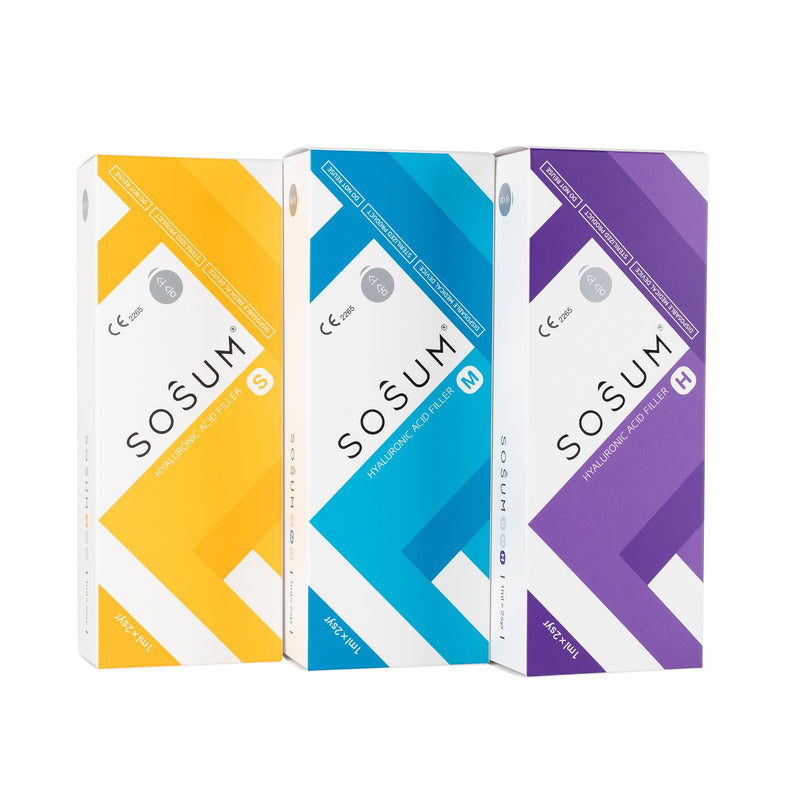
The brand owner. The commissioning field names the company that had a filing's product made, and on Korean-made filings that is almost always the holder. It does not name a company that buys a holder's licensed product and sells it under its own brand. That relationship sits entirely outside the register. SOSUM is the case we have documented: it is marketed by JSBIO, and the filing it is supplied under, 제허 13-872, is held by CHA Meditech with both the commissioning and manufacturer fields empty. On the register, CHA Meditech is the maker, and JSBIO does not appear. The full reading is in SOSUM filler: what it is and how to source it.
The product name. The open device licence records carry no brand or product name field, so none of these counts can be broken down by brand. A single filing can cover several brands, and a plant that makes for several holders cannot be matched to a particular brand from these fields alone.
The history of the arrangement. A few filings show that the field keeps the name entered for it. One filing held by Hyundai Bioland names SK Bioland, the company's name before it was renamed, as commissioning company. The record shows the arrangement as it now stands and does not show when it was set.
Imports work differently. All 54 live import filings name a foreign manufacturer. Eleven also name a commissioning company abroad, and in five of those the commissioning company and the plant are different firms. For an import, the field is the only place the register shows a foreign product being made under contract.
Reading the names on a filler carton
Expect up to three names, each in its own place. A Korean filler carton may carry a brand owner, the licence holder and, on a contract-made product, a manufacturer. The holder and licence number are what the register can confirm. A manufacturer printed on the carton should match the filing's manufacturer field. A brand owner's name will not be in the register at all, and its absence is not a discrepancy.
Do not expect a second company by default. On nine out of ten Korean-made filings the holder is the maker. Paperwork naming a separate manufacturer for a product whose filing names none is worth a question to the supplier, because the record and the paperwork then describe different arrangements.
Do not read the field as a grade. Contract manufacture is a recorded arrangement, not a quality signal, and the register publishes nothing that would support ranking a self-made product above a commissioned one or the reverse.
Checking a filler from us against its filing
Our filler range sits under derma fillers. Where we have tied a listing to a specific filing, as with SOSUM, we say which one and who holds it. If a carton or document you receive from us names a company you cannot place, send our team the product and the name and we will show you where, if anywhere, it appears on the licence record.
Frequently asked
Who manufactures Korean dermal fillers?
Mostly the licence holders themselves. Of 1,031 live Korean-made filings in the tissue-repair classification, 99 name a commissioning company, and 95 of those name a manufacturer other than the holder. Those 95 are spread across 28 plants, every one of which also holds live filings of its own.
What is the commissioning company on a Korean device licence?
It is the party that had the device made. On Korean-made filler filings it is almost always the licence holder itself: 96 of the 99 live filings that fill the field name the holder there, setting aside differences in how the corporate form is written. On imports it can name a foreign company that had the product made by a separate plant.
Are contract-made filler filings more likely to end?
Among Korean-made filings granted before 2020, they have ended more often: 31 of 50 that name a commissioning company, against 56 of 311 that do not. Across all years, 40 of the 139 Korean-made filings that have ever named one have ended. The register carries a code classifying each ending, but the open data service does not publish what its values mean, so the reason cannot be read from it.
Why is a filler brand not listed in the Korean device register?
Because the open register records holders, commissioning companies and manufacturers, not brands. A brand owner that sells a holder's licensed product under its own name does not appear in any of those fields, so a search under the brand owner's company name can return nothing for a product that is properly licensed.
Sources and references
- Ministry of Food and Drug Safety (MFDS), medical device product licence register (open data service), tissue-repair classification under all four recorded spellings, fields for licence holder, commissioning company, manufacturer, grant date and end date, retrieved 21 October 2026.
- MFDS drug product licence register, contract manufacturer field for five injectable ingredient groups, retrieved 21 October 2026, as reported in our earlier reading.
- KSTATION editorial policy, on how register facts are separated from product claims in our writing.
Register figures are a reading taken on 21 October 2026 and change as filings are granted, amended and ended. This article describes which companies the register names in which roles. It says nothing about product quality, indications or use.