Korean drug and device records are written in a compact administrative vocabulary, and a handful of words carry most of the meaning. A buyer who can read those words can tell, from a single register entry, how a product came onto the Korean market, who stands behind it, what category it belongs to and whether the entry still stands. This glossary collects the terms that come up most often in our reading of the registers, gives the Korean term alongside a plain English equivalent, and says what each term establishes and what it does not.
Who and what: holders, names and sites
Licence holder (허가권자)
The company in whose name a Korean drug or device filing is held. For a domestic product it is usually the Korean manufacturer or a Korean company that has a product made for it. For an import it is the Korean importer. The holder is the party legally responsible for the filing in Korea, and it is the most reliable single field for identifying a product, because brand names are not index keys in either register. A holder's name is recorded exactly, so two companies with similar names are two companies until a filing shows otherwise, as our reading of companies holding both toxin and filler licences illustrates.
Licensed product name (품목명)
The name under which a product is filed, written in Korean. For drugs it usually combines a product name, sometimes a strength, and the active ingredient in brackets, and it often ends in a syllable that marks the dosage form. It is the key a register search needs. Romanised brand names, and descriptors used in marketing, generally do not appear in it, which is why a product described in English has to be matched to its licensed Korean name before its record can be read.
Export name (수출명)
An alternative product name recorded on some drug licences for use outside Korea. One licence can carry several. An export name is an additional name on the same filing, not a separate licence and not a statement about any destination country. The distinction between an export name and an export-only designation is set out in export-only Korean licences.
Manufacturing site (제조소)
A device register field that names a manufacturer separately from the holder. Every import filing in the filler category names one, because the maker is a foreign plant. Domestic filings name one less often. The field is useful when filled; how to interpret it when empty is a question the register itself does not answer, and it should not be read as a quality signal either way.
How a product entered: routes and procedures
Licence (허가)
The route by which a product is reviewed before entering the Korean market. For drugs, it is required for categories such as new drugs, biological products and placenta-derived drugs, and for products without an established equivalent. For devices, it is the procedure for class 3 and class 4 devices, and for class 2 devices requiring clinical data. A licence means a review took place; it does not rank a product above one that entered by another route. See Korea's two drug filing routes.
Notification (신고)
The route for products that match something already defined. For drugs, that means a product whose active ingredients, specification and strength match an existing licensed or notified product, an official compendium or a published manufacturing standard. For devices, it is the procedure for class 1 devices. Notification is a statement about novelty, not quality: it skips a fresh review for a composition or device type that has already been reviewed or codified.
Certification (인증)
A device procedure only. A designated body reviews a class 2 device against applicable standards. There is no certification route for drugs. On device records, certification sits between notification and licence, and many device items, such as wound dressings, hold certifications and licences side by side. See the three doors into Korea's device register.
Device filing prefixes (제허, 수허, 제인, 수인, 제신, 수신)
The first two syllables of a standard Korean device filing number. The first syllable records origin and the second records procedure.
| Prefix | Origin | Procedure |
|---|---|---|
| 제허 | Manufactured in Korea | Licence |
| 수허 | Imported | Licence |
| 제인 | Manufactured in Korea | Certification |
| 수인 | Imported | Certification |
| 제신 | Manufactured in Korea | Notification |
| 수신 | Imported | Notification |
Some older notification numbers begin with a regional name before these syllables. The register does not explain that format, and it is best read simply as an older notification number.
Device class (등급)
Korea's four risk classes for medical devices, from class 1, for devices with negligible potential harm, to class 4, for permanent implants, devices in contact with the heart or central systems, and devices made from animal-derived or insufficiently characterised materials. Class determines procedure. Dermal fillers are class 4 under two items, so every Korean filler filing is a licence.
Biological product (생물학적제제)
A drug category that includes botulinum toxins. Biological products are excluded from the notification route, so every Korean botulinum toxin filing is a licence. The chronology of those licences is set out in Korea's toxin register in four waves.
Placenta-derived drug (인태반유래의약품)
A drug category named in the regulation as excluded from notification. Every live Korean placenta-derived drug filing, injectable or oral, is a licence. The composition side of these products is covered in reading a placenta injectable.
What category a product is in: supply and classification
Prescription-only drug (전문의약품)
A drug that in Korea is supplied on prescription. The supply category attaches to each individual filing, not to an ingredient, and injectable filings are prescription-only as a class. What that status does and does not imply for a buyer outside Korea is discussed in what prescription-only means when you import.
Over-the-counter drug (일반의약품)
A drug that in Korea can be supplied without a prescription. The same active ingredient can appear in over-the-counter and prescription-only filings, most often because the dosage forms differ. Route of filing and supply category are independent: a licensed drug can be over-the-counter and a notified drug prescription-only.
Classification code (분류번호)
A bracketed number on a drug filing, such as [01140], that places it within the register's classification system. It is an administrative index for organising filings, not a clinical claim about what a product does. Reading a code as a verdict produces confident errors, as our reading of an injectable vitamin filed under analgesics shows.
Dosage-form syllable (주, 정, 액)
Korean licensed drug names typically carry the dosage form inside the name. An injection usually ends in 주, a tablet in 정, a liquid in 액. For a reader who cannot otherwise read Korean, that syllable is the most useful single character on a carton, because route of administration often determines supply category and classification.
Tissue-repair biomaterial (조직수복용생체재료)
The device item under which most dermal fillers are filed, alongside the related item tissue-repair material (조직수복용재료). The first item appears in the register under two spellings, one written solid and one with spaces, and most filings from 2021 onward use the spaced form. A count built on one spelling alone will be low. The growth of this item since 2020 is set out in Korea's filler register after 2020.
What status an entry has
Live (정상 or 유효)
An entry that is currently in force. Live status is the precondition for everything else on the record meaning what it says today. A record that exists but is not live tells you that a filing once stood.
Withdrawn (취하)
A filing that has been withdrawn, most often at the holder's initiative. The register records that it happened and when, not why. Withdrawal rates vary widely by category and track the age and commercial rhythm of a category more than anything about product quality, as the licences that left describes.
Expired (유효기간만료)
A filing whose validity period has ended, so that it is no longer in force. Like withdrawal, it records an end rather than a reason. For a buyer, an expired entry and a withdrawn entry have the same practical meaning: the filing no longer stands.
Cancelled and business closure (취소, 폐업)
Two further ways a drug filing can end. A cancellation ends a filing by a decision rather than at the holder's initiative, and business closure ends filings when the holder's business ceases. Both are recorded, like withdrawal and expiry, as an ending with a date and without a reason. How often filings end, and a routine for re-checking the records behind stock already held, are set out in re-checking a Korean filing after purchase.
Designations that qualify a filing
Export-only designation (수출용)
A designation written into a drug's licensed product name. It marks a licence granted with an export purpose. It is not an export name, not an approval in any destination country and not a grade. Among Korean botulinum toxin licences, fifteen of 59 live licences, as of October 2026, carry it, and several companies entered the toxin register with an export-designated licence before later receiving one without it. The meaning of the designation is covered in export-only Korean licences.
Traceability designation (추적관리대상)
A yes-or-no field on device filings marking whether a device falls under Korea's additional statutory tracking scheme for certain implanted devices. It is not set on filler filings. Its absence does not make a product untraceable; lot numbers, expiry dates and manufacturer records exist independently of it, as why an HA filler is not in the drug register explains.
Outside the drug and device registers
Cosmetic (화장품)
Products regulated under Korea's cosmetics law rather than as drugs or devices. Cosmetic products are not entered in the drug or device registers, so a search there returns nothing for them, and that absence is expected. Many ampoule and booster-type products are cosmetics. The difference between a product's regulatory category and the word Korean on its label is discussed in three claims that travel separately.
Functional cosmetic (기능성화장품)
A cosmetic that claims one of the functions designated under the cosmetics law and therefore goes through a product-level review or report. The designation concerns permitted claims for a cosmetic. It does not move a product into the drug register.
Terms that are easy to confuse
Licence and licensed, in the ordinary sense
In everyday English a product that is lawfully on the Korean market is often called licensed, whatever route it took. In register terms, licence (허가) is one specific route, and notification and certification are others. This glossary uses licence in the specific sense. When a supplier says a product is licensed in Korea, it is worth asking whether they mean the specific route or simply that a filing exists.
Export name and export-only designation
Both involve the word export, and both appear inside or alongside a licensed product name, which is why they are often merged. An export name is an alternative name on the same filing. An export-only designation is a qualification of the filing itself. A licence can carry export names without the designation, the designation without export names, or both.
Withdrawn and expired
Holder and brand owner
The holder is the company named on the filing. A brand owner is whoever owns the name printed on the product, and the two can be different companies. A brand can be marketed by one company while the Korean filing is held by another, which is why the holder, not the brand, is the field to match.
Classification code and supply category
Item name and product name on a device record
A device filing records an item, the regulated device type such as tissue-repair biomaterial, as well as the specific product filed. The item determines the class and therefore the procedure. The product is one filing within that item. Counting filings by item tells you how large a device category is; it does not tell you how many brands are in it.
The terms applied to three products
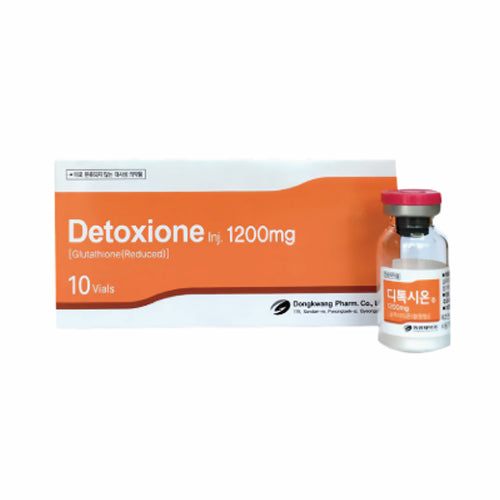
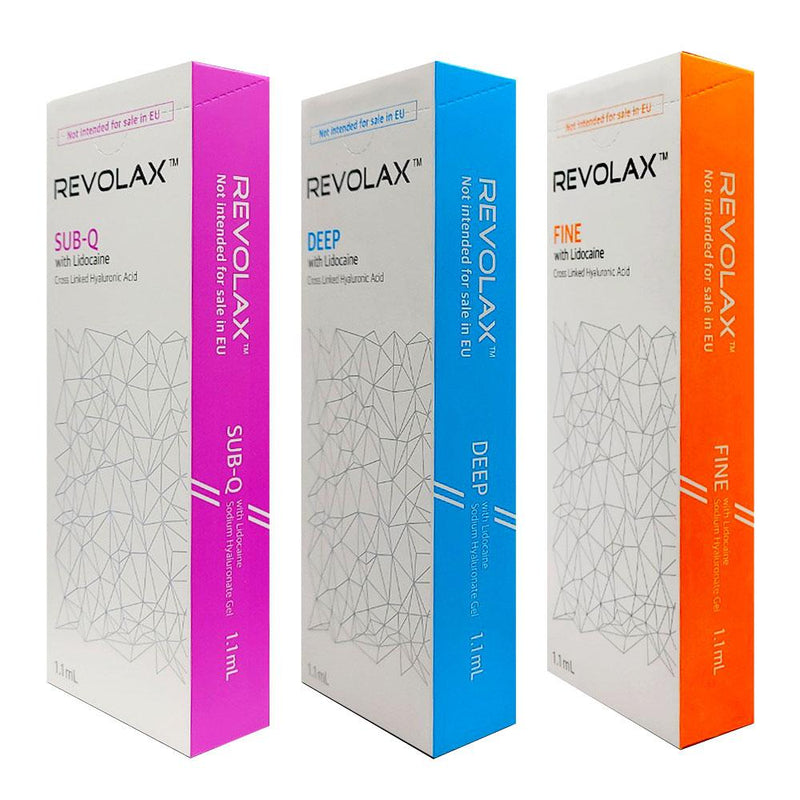
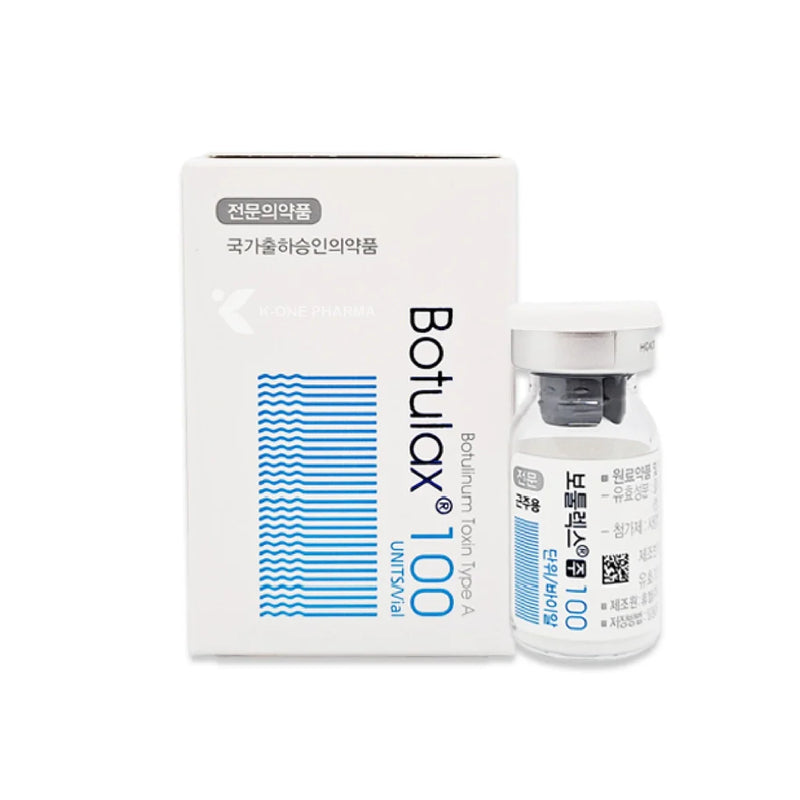
Three products in our range show how the vocabulary reads in practice. Detoxione is a drug filing: its holder is a Korean company, its licensed name ends in the injection syllable, it entered by notification, its supply category is prescription-only, and it is live. REVOLAX sits in the device register: its holder files under the tissue-repair biomaterial item, class 4, with licence prefixes for Korean manufacture. Botulax is a biological product filing: licensed, as every toxin must be, held by the company whose first toxin licence dates from 2009.
Frequently asked
What does 허가 mean on a Korean drug or device record?
It means licence: the product entered the Korean market through a review. For drugs it is required for categories such as biological and placenta-derived products and for products without an established equivalent. For devices it is the procedure for class 3 and 4 devices.
What is the difference between 전문의약품 and 일반의약품?
전문의약품 is a prescription-only drug in Korea and 일반의약품 is over-the-counter. The category belongs to each filing, so the same active ingredient can appear in both depending on dosage form.
What does 수출용 mean on a Korean licence?
It is an export-only designation written into the licensed product name, marking a licence granted with an export purpose. It is not an approval in any destination country and not a quality grade.
Sources and references
- Ministry of Food and Drug Safety, public drug product licence register and medical device product approval information, field definitions as returned by the open data services, read September 2026.
- Ministry of Food and Drug Safety, Regulation on Drug Product Licensing, Notification and Review; criteria and procedures for medical device classification; Regulation on medical device items and item classes.
- Cosmetics Act and the Ministry's regulation on the review of functional cosmetics.
Definitions describe how terms are used in Korean regulatory records as of September 2026 and are simplified for buyers. They are not legal advice and do not describe how any product is used or performs.