Over ninety days, searches containing the word Korean led people to our pages 8,498 times, and the single most common of them was korean glutathione injection. The word is doing a lot of work in that query, and it is doing more than one job. It can mean the product was made in Korea. It can mean the product is licensed by Korea's Ministry of Food and Drug Safety. It can mean the product ships from Korea. Most of the time a buyer assumes all three at once. The Korean register shows how often they come apart, and why it is worth asking which one a seller means.
How often searchers type Korean
In the ninety days from 14 June to 11 September 2026, 272 distinct search queries containing Korea or Korean caused a page on kstations.com to be shown. Together they produced 8,498 impressions and 372 clicks. Half the impressions landed on product pages, and the rest on category pages, collections and articles.
One ingredient dominates. Five of the twelve most frequent queries are about glutathione, and those five alone account for 3,773 impressions. The others in the top twelve are spread across vitamin C injections, biostimulators, mesotherapy products, numbing cream, dermal fillers, multivitamin injections and botulinum toxin.
| Query | Impressions | Clicks |
|---|---|---|
| korean glutathione injection | 1,232 | 79 |
| korean glutathione | 989 | 39 |
| korean glutathione 1200mg | 813 | 68 |
| korean pink glutathione injection | 434 | 50 |
| korean glutathione peptide | 305 | 12 |
| korean vitamin c injection | 163 | 4 |
| korean biostimulator | 160 | 7 |
| korean mesotherapy products | 153 | 3 |
| korean numbing cream | 120 | 6 |
| korean dermal fillers | 104 | 1 |
Claim one: made in Korea
The first meaning is manufacturing location. A product made in Korea was produced at a plant in Korea, whatever else is true of it.
This is the claim the word most naturally suggests and the one hardest to check from a listing, because manufacturing location is a physical fact rather than a registered status. For licensed products it can usually be traced through the register: a domestic drug licence names a Korean holder, and a domestic device licence carries the prefix for Korean manufacture. For products that sit outside the drug and device registers altogether, there is no equivalent entry to read.
It is also the claim that says least about regulatory position on its own. A product made in Korea may be licensed for the Korean market, licensed only for export, or not subject to a product licence at all. Those three possibilities are covered below, and each is common.
Claim two: licensed in Korea
The second meaning is a register entry. A product licensed in Korea has a filing with the Ministry of Food and Drug Safety that permits it on the Korean market, whether through a licence, a certification or a notification.
A licence in Korea does not mean the product was made in Korea. The register includes imports, filed by a Korean importer on behalf of a foreign manufacturer, and they are a fixed part of the categories aesthetic buyers care about.
| Category | Korean filings | Import filings | What the import filings are |
|---|---|---|---|
| Botulinum toxin type A | 58 licences | 5 | Three foreign brands, filed by their Korean subsidiaries |
| Dermal fillers (live) | 944 licences | 54 | Filed by Korean importers, each naming a foreign manufacturing site |
Those import filings are genuine Korean licences, and a product sold under one of them is fully licensed in Korea. It is simply not made there. For a buyer whose reason for wanting a Korean product is Korean manufacture, the licence alone does not deliver it. The history of those imports and how they compare with domestic filings is set out in Korea's filler register after 2020 and Korea's toxin register in four waves.
A licence also has its own internal distinctions. Drugs reach the register by licence or by notification, as described in Korea's two drug filing routes, and devices by licence, certification or notification. All of those count as licensed in Korea in the ordinary sense of the phrase.
Made in Korea, licensed for export
The two claims can also separate the other way. A product can be made in Korea and hold a Korean licence whose name carries an export-only designation.
In the toxin category this is common. Of 57 live Korean toxin licences, 15 carry the export-only designation 수출용 in the licensed product name. Several companies that entered the category between 2019 and 2022 did so with an export-designated licence first and received a licence without the designation later. What the designation means, and the questions it does and does not answer, are covered in our explainer on export-only Korean licences. The point here is narrower: made in Korea and licensed for the Korean market are two facts, and for these filings the first is true while the second takes a specific, qualified form.
A product sold abroad under one of these licences is Korean-made and does hold a Korean filing. Describing it simply as Korean is accurate as far as it goes, and it leaves out the detail a careful buyer would want to see.
Made in Korea, outside the drug and device registers
A fourth combination is the most common in skin care and many booster-type products: made in Korea and not in the drug or device register at all.
Korea regulates cosmetics under a separate law. Businesses that make and place cosmetics on the market must be registered, and cosmetics that claim certain designated functions go through a product-level review or report as functional cosmetics. Ordinary cosmetic products are not entered in the drug or device registers, because they are not drugs or devices. A Korean-made ampoule classified as a cosmetic will therefore return nothing in a drug or device register query, and that absence is expected rather than suspicious.
For a buyer the consequence is that Korean, attached to a cosmetic product, is a claim about manufacture and brand origin. It cannot be checked against the drug or device register, and it should not be expected to be. The question worth asking is different: which regulatory category the product belongs to, and therefore which records apply to it.
Pink and peptide: descriptors with no register counterpart
Two of the most searched glutathione queries add a descriptor: pink and peptide. Together, korean pink glutathione injection and korean glutathione peptide drew 739 impressions in the period, and variants of them many more.
We read the name of every Korean drug filing that declares glutathione as an active ingredient, 85 in all: 75 live and 10 that have ended, five recorded as withdrawn (취하) and five as expired (유효기간만료). None of the 85 contains the Korean or English words for pink or for peptide in its licensed product name. Two contain the Korean word for white, and both are tablets, as the dosage-form syllable 정 at the end of each licensed name shows.
That result is narrow and should be read narrowly. It does not show that any product sold with those descriptors is anything in particular. Descriptors like these are often marketing language, and a licensed product can be marketed under words that do not appear in its licence. What the result does show is that pink glutathione and glutathione peptide are not names the Korean drug register uses. A buyer who wants to connect a product described that way to a Korean filing has to find the filing by its licensed name, because the descriptor will not lead there.
Claim three: sold from Korea
The third meaning is logistical. A product sold from Korea is dispatched from Korea to the buyer.
This is the claim most independent of the other two. A Korean-made, Korean-licensed product can be sold from anywhere it has been distributed to. A product sold from Korea can be an import that was licensed in Korea and then re-sold. Where a product ships from says nothing about where it was made or how it was filed, and nothing in the register records it.
It is still a meaningful fact for a buyer, for practical reasons that sit outside the scope of this article. The only point here is that it is a separate fact, and that a listing can be accurate about dispatch while saying nothing about the other two claims.
Putting the three claims side by side
| Made in Korea | Korean filing | Example in the register | What a register query returns |
|---|---|---|---|
| Yes | Yes, for the Korean market | Domestic drug licences and notifications; device licences with the domestic prefix | A live entry naming a Korean holder |
| Yes | Yes, export-designated | Fifteen live toxin licences carrying 수출용 | A live entry whose licensed name carries the designation |
| No | Yes, as an import | Five toxin licences; 54 live filler licences | A live entry naming a Korean importer and, for devices, a foreign manufacturing site |
| Yes | Not applicable | Cosmetic products | Nothing, by design |
The table also shows where each claim can be confirmed. Korean filings are checkable against the register in every row where they exist. Manufacturing location is visible in the register only indirectly, through holder and route for domestic filings and through the manufacturing-site field for device imports. For products outside the drug and device registers, neither is visible there at all.
Questions that separate the claims
When a product is described as Korean, three short questions separate the meanings. First, is there a Korean drug or device filing for this product, and under what exact licensed name? Second, who is the holder on that filing, and does the filing carry any designation such as export-only? Third, if there is no filing, which regulatory category does the product belong to?
The order of the questions matters. Starting with the filing is faster than starting with manufacture, because a filing either exists or does not, and its existence immediately narrows the possibilities. If there is a filing, the holder and any designation on it settle most of what the word Korean could mean. If there is no filing in the drug or device register, the product's regulatory category becomes the next question, and for cosmetic products that answer usually closes the matter. Manufacturing location, which is the hardest of the three to establish independently, is often the last question left, and by then it is usually the least uncertain.
For searches built on descriptors, such as pink or peptide, the same questions apply with one addition. Find the licensed name first, because the descriptor will not appear in it.
How the three claims apply to products in the KSTATION range
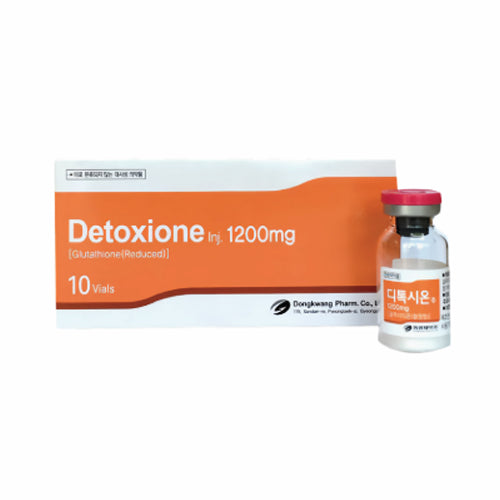
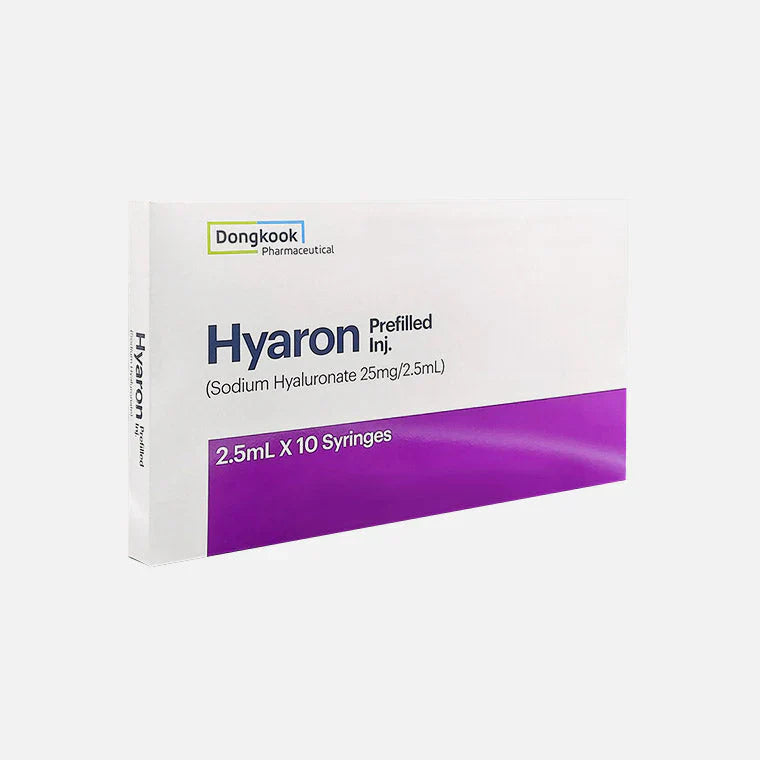
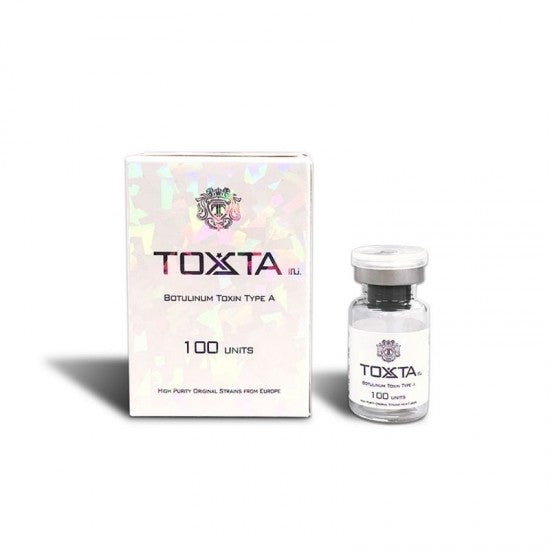
Detoxione is a reduced-glutathione injection made by a Korean holder, Dongkwang Pharm, and notified in Korea in 2015, with a higher-strength version notified the same year. It is Korean in the first two senses together. Hyaron Prefilled is a sodium hyaluronate product held by Dongkook Pharmaceutical under a Korean drug filing, again Korean-made and Korean-filed, and the relationship between its brand name and its several filings is set out in our monograph on Hyaron and how to source it authentically. TOXTA belongs to Jetema, whose first toxin licence in 2020 carried the export-only designation and whose later licences, from 2021, do not.
Frequently asked
What does Korean glutathione actually mean?
It can mean a glutathione product made in Korea, one licensed or notified in Korea, one sold from Korea, or any combination. The Korean drug register holds 85 filings declaring glutathione, and none uses the words pink or peptide in its licensed name, so a specific product has to be matched by its licensed name.
Is every Korean aesthetic product licensed in Korea?
No. Drugs and medical devices have Korean filings, but cosmetic products are regulated separately and do not appear in the drug or device registers. Some Korean-made drugs also hold licences carrying an export-only designation.
Can a product be made in Korea but not licensed for sale in Korea?
A product can be made in Korea and hold a Korean licence carrying an export-only designation. Fifteen of 57 live Korean botulinum toxin licences carry that designation in their licensed names.
Sources and references
- Google Search Console, kstations.com, queries containing Korea or Korean, all pages, 14 June to 11 September 2026. 272 distinct queries, 8,498 impressions, 372 clicks.
- Ministry of Food and Drug Safety, public drug product licence register (queried by active ingredient: glutathione; botulinum toxin type A) and medical device product approval information (tissue-repair items), retrieved 14 September 2026.
- Cosmetics Act and the Ministry's regulation on the review of functional cosmetics, on product-level review and reporting for functional cosmetics.
Figures are readings taken on 14 September 2026 and move over time. This article distinguishes regulatory and commercial claims only. It is not legal advice on import, sale or use in any country and says nothing about what any product does.