Two ingredients show up again and again in the vitamins-and-injectables aisle under the same loose heading: antioxidant. Glutathione and vitamin C are different molecules with different labels, but they share a heading and a habit, and understanding both is more useful than arguing which one is the real antioxidant. This is what the word actually points to here, and what it does not.
One boundary first, because it matters for this pair more than most. This page describes what these injectables are and how they are handled. It does not claim that either lightens, brightens, or otherwise changes skin, and neither is FDA-approved for aesthetic use in the United States. Those are clinical and regulatory questions, and the restraint is deliberate. For the evidence-and-claims discussion specifically, we kept a separate piece on glutathione and the skin-whitening question.
What antioxidant means on this shelf
In chemistry, an antioxidant is simply a molecule that can neutralize reactive species by giving up electrons, and both glutathione and vitamin C are studied in that role in the body. On a product shelf the word is doing less work than it looks: it names a chemical behavior the ingredient is known for, not a promised outcome. Reading it that way keeps the focus where a sourcing page can actually stay, on what the molecule is and how it is kept intact, rather than on what it might do.
The two you will actually see
Glutathione is a tripeptide, a small molecule built from three amino acids, glutamate, cysteine, and glycine, and in injectables it is supplied as reduced glutathione. Vitamin C is ascorbic acid, a single water-soluble vitamin. They are chemically unrelated, and they are not interchangeable. What groups them is category and behavior, not structure: both sit in the vitamins and injectables family, and both are studied as antioxidants.
| Glutathione | Vitamin C | |
|---|---|---|
| What it is | Antioxidant tripeptide | Ascorbic acid, a vitamin |
| Built from | Glutamate, cysteine, glycine | A single molecule |
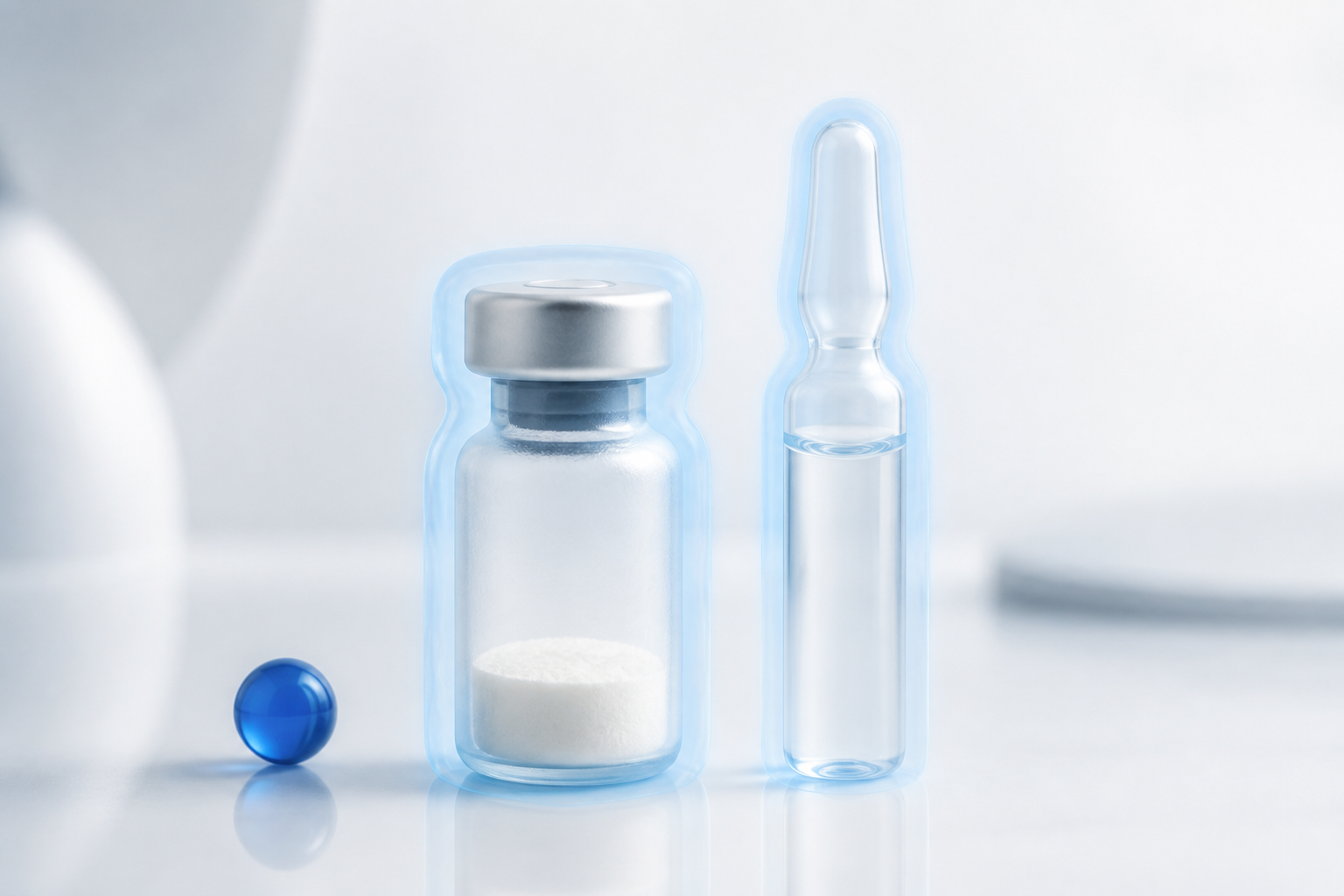
| Injectable form | Reduced glutathione, often freeze-dried | Ascorbic acid in a sealed ampoule |
| Shared trait | Reacts with light and air | Reacts with light and air |
| US aesthetic status | Not FDA-approved | Not FDA-approved |
Why both are packaged like something fragile
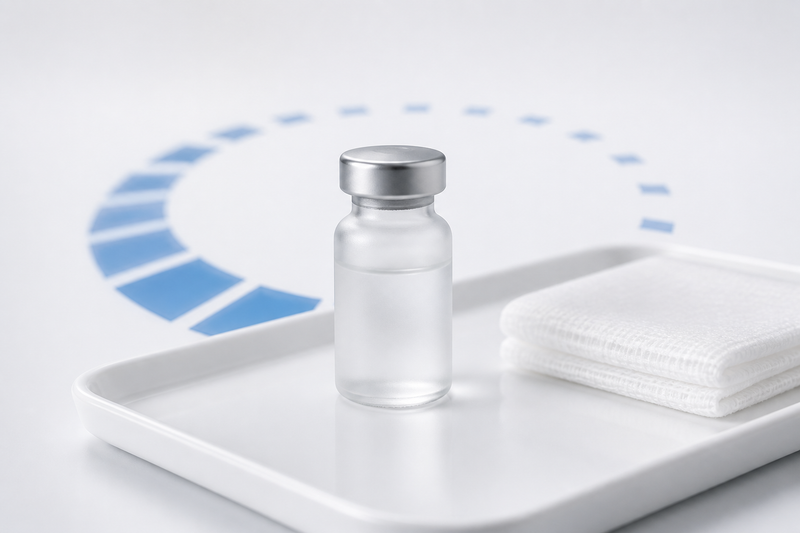
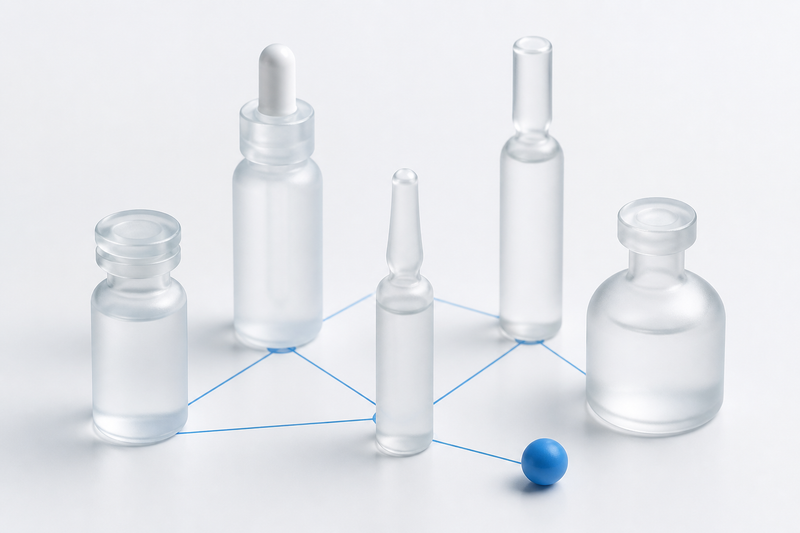
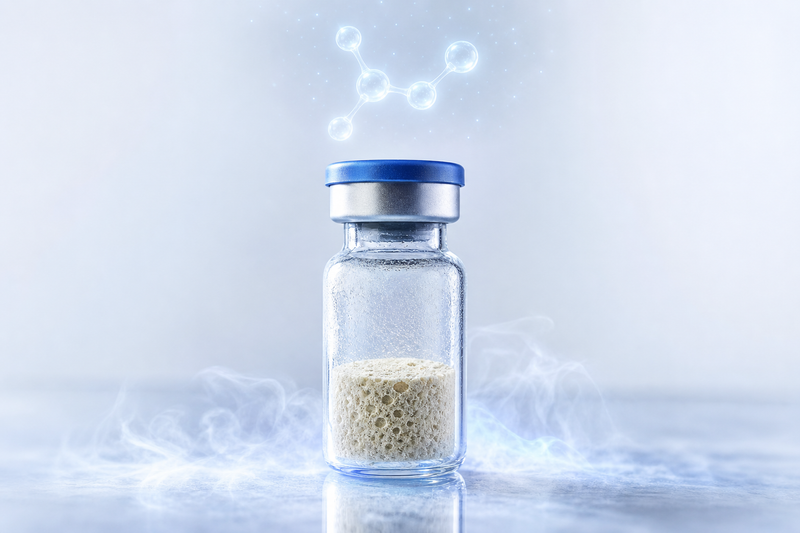
The trait the two genuinely share is instability. An antioxidant is, almost by definition, a molecule that readily reacts, and both reduced glutathione and ascorbic acid oxidize on contact with light and air, converting to forms that no longer behave the same way. That is why you see the same packaging logic across both: sealed, light-protected ampoules, and, for glutathione, a freeze-dried powder reconstituted fresh rather than a solution left standing. The vitamin C reading guide and the glutathione hub both come back to the same point: an antioxidant is only itself while it is kept from the very reaction it is named for.
What the label tells you, and what it does not
For both, the label is worth reading for the same short list: which form of the antioxidant, at what concentration, in what protected format, and cleared for which market. What the label does not settle is any question of benefit, which sits outside a sourcing page entirely. Kept to that scope, the two are legible: know the molecule, know that it is reactive, and check that it was packaged and stored to stay intact.
Where sourcing fits
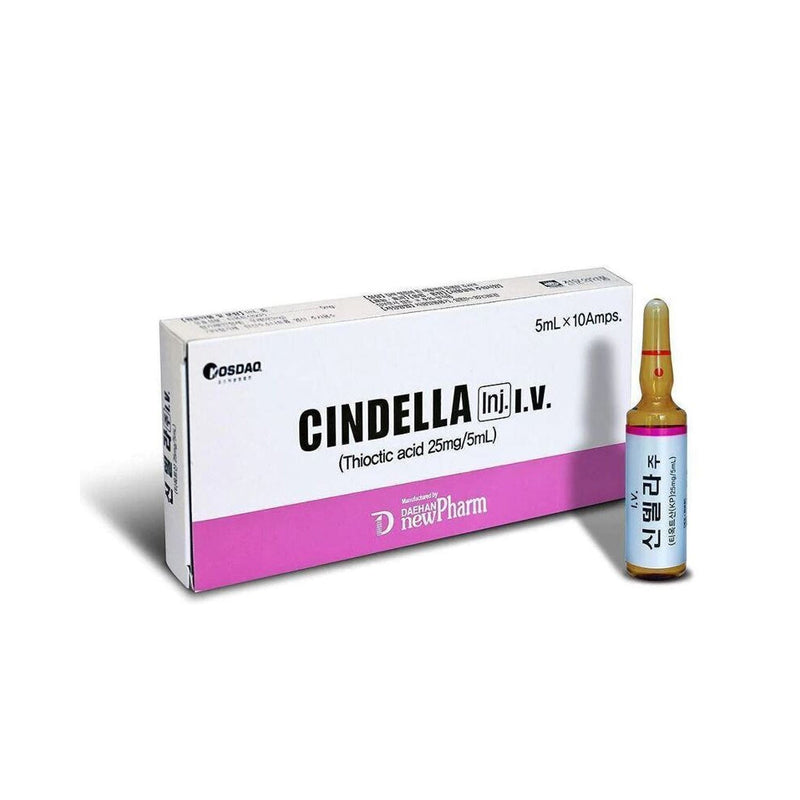
Because both degrade if mishandled, storage and traceable provenance sit right beside the spec, and the sourcing discipline is the same for either one. KSTATION curates official-channel vitamin and antioxidant injectables and keeps provenance traceable, set out in the Editorial & Sourcing Policy. The stocked range sits in the vitamins and injectables collection, including compounded ampoules such as CINDELLA Inj. For the ingredient-by-ingredient read, the glutathione hub and the vitamin C reading guide pick up where this overview leaves off.
Frequently asked questions
Frequently asked
What is an antioxidant injectable?
It is an injectable whose active is a molecule studied as an antioxidant, meaning it can neutralize reactive species. In practice the two you will see are glutathione, an antioxidant tripeptide, and vitamin C, ascorbic acid. The word describes a chemical behavior, not a promised result.
Are glutathione and vitamin C the same thing?
No. Glutathione is a tripeptide built from three amino acids; vitamin C is a single vitamin, ascorbic acid. They are chemically unrelated and not interchangeable. What they share is a category, vitamins and injectables, and a behavior, both are studied as antioxidants and both react with light and air.
Why are these injectables sealed and light-protected?
Because both antioxidants oxidize on contact with light and air, converting to forms that behave differently. Sealed, light-protected ampoules, and for glutathione a freeze-dried powder reconstituted before use, all exist to keep the molecule intact until it is administered.
Are antioxidant injectables FDA-approved?
Neither injectable glutathione nor injectable vitamin C is FDA-approved for aesthetic or skin-related use in the United States. Confirm the status of a specific product for the destination market with the relevant authority, since rules differ by country and change over time.
Disclaimer. This article is general educational information and is not medical advice. It describes what injectable glutathione and vitamin C are and how they are handled, not what either will do for an individual. It makes no claim that either lightens or changes skin, or that either is safe or effective for any use. Neither is FDA-approved for aesthetic use; these are products for professional use where lawful. Regulatory status varies by country and changes over time; confirm current requirements with the relevant authority.
Sources & references
- Pizzorno J. Glutathione! Integrative Medicine (Encinitas), 2014 (glutathione as an antioxidant tripeptide; reduced vs oxidized forms). pmc.ncbi.nlm.nih.gov
- Telang PS. Vitamin C in dermatology. Indian Dermatology Online Journal, 2013 (ascorbic acid chemistry, instability, and oxidation). pmc.ncbi.nlm.nih.gov
- U.S. FDA, Is It a Cosmetic, a Drug, or Both? (Or Is It Soap?), structure/function vs. drug claims. fda.gov