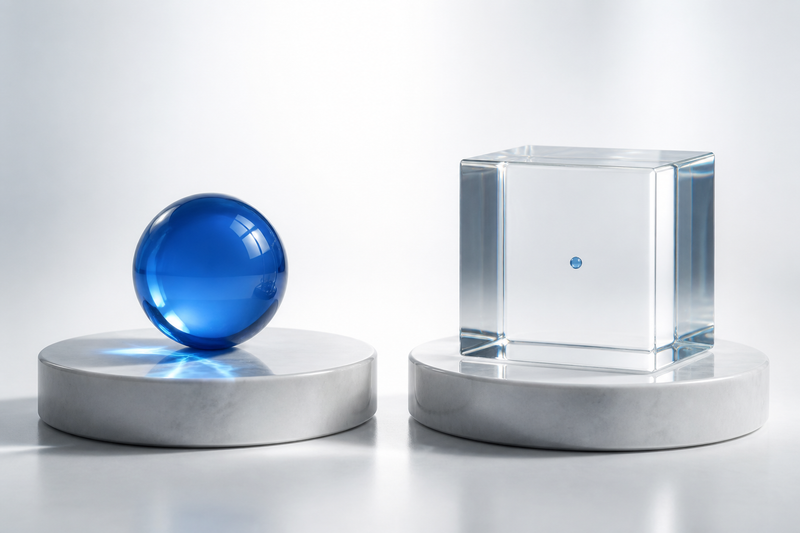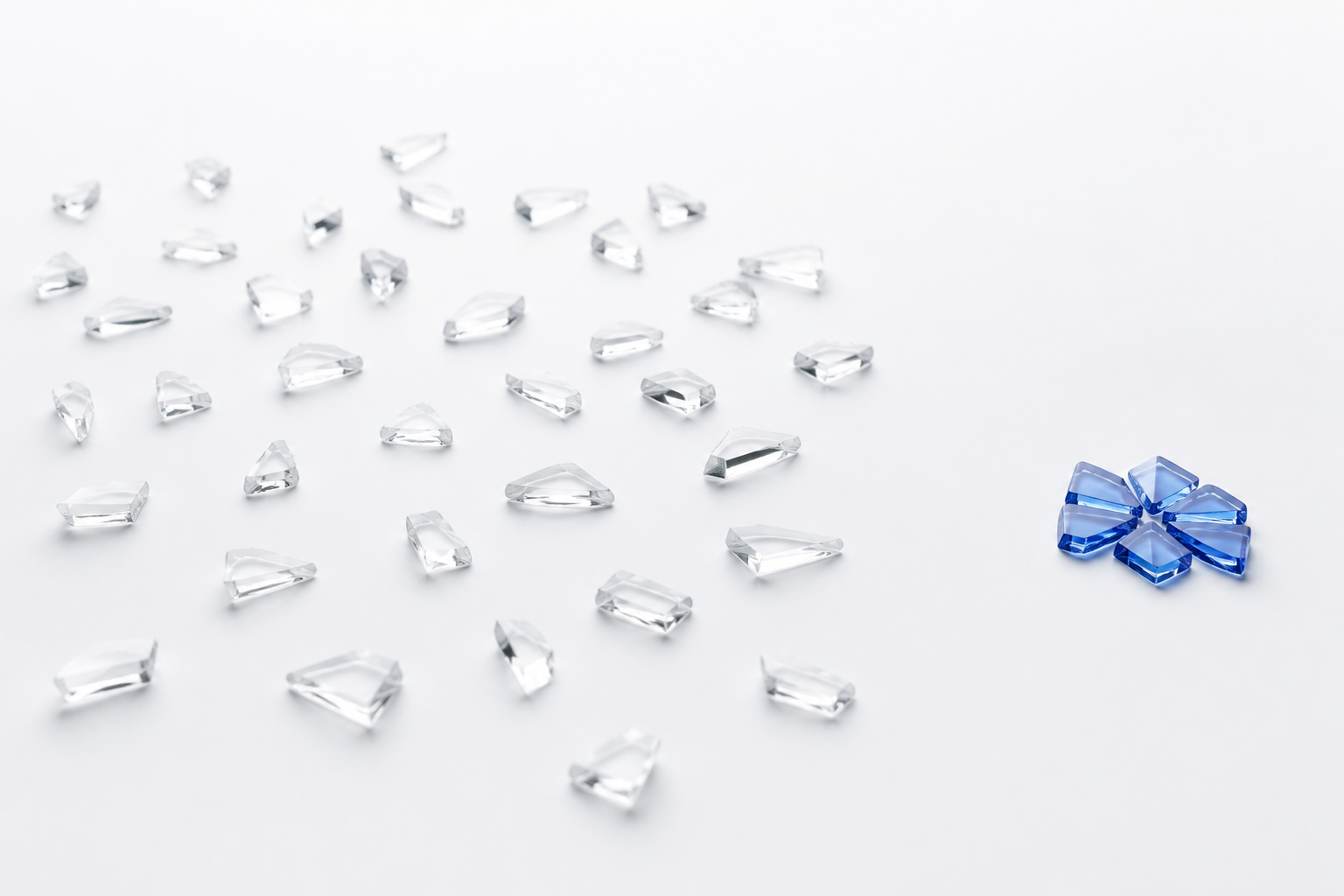
Ascorbic acid holds 840 licences in the Korean drug register. That is more than double the next largest entry examined in this series and roughly twenty times the placenta population. It is also, for a buyer trying to understand a vitamin C injectable, close to useless. The number is real and the ingredient is correct, and almost everything that makes it large is unrelated to the product in question. This piece is about why a big count is often worse than a small one.
840 licences, and what the total is made of
The full search returns 840 licences, of which 611 are currently valid and 229 have been withdrawn or expired. That withdrawal rate, roughly twenty-seven percent, is the highest this series has recorded. Lidocaine sits near seventeen percent, sodium hyaluronate near twelve, and placenta extract at zero. A quarter of everything ever licensed under this ingredient is no longer on the register.
The valid population splits 565 non-injectable and 46 injectable. That ratio alone should slow down anyone reading the total as information about injectables: more than nine in ten licences describe something other than the product category most buyers in this field are asking about.
The dates stretch further back than anything else examined here. The oldest non-injectable licence dates to August 1962 and the oldest injectable to March 1969. Six decades of accumulation is what a total of 840 mostly represents, and it explains the withdrawal count as well: enough time has passed for hundreds of formulations to be retired.
None of that is a criticism of the register. It is recording exactly what it should. The problem is entirely on the reading side, where a large number gets treated as a strong signal when it is usually just an old one.
The holder count says the same thing from another direction. One hundred and twenty separate companies hold non-injectable ascorbic acid licences, against thirty-six on the injectable side. A field that broad is not a specialist market with a few established manufacturers; it is a commodity ingredient that almost any pharmaceutical company will have formulated at some point. Ingredient entries in this series have ranged from a single licence holder, in the case of placenta hydrolysate injectables, to this. The two ends of that range call for completely different sourcing questions.
Twenty classification codes for one molecule
The non-injectable population is where the scattering becomes extreme. Its 565 licences are distributed across twenty separate classification codes, and the distribution is not a long tail hanging off one dominant class. It is genuinely dispersed.
The largest group, 249 licences, sits under [03190] for other vitamin preparations, followed by 107 under [03160] for mixed vitamin preparations. Then the categories stop looking like vitamins at all: 69 licences under [02310] for dental and oral preparations, 42 under [01140] for antipyretic, analgesic and anti-inflammatory preparations, 20 under [03290] for general tonics, and 16 under [07210], the class for X-ray contrast media. Below those sit smaller groups under circulatory preparations, mineral preparations, calcium preparations, liver preparations, antihistamines, and one solitary licence under a urogenital classification.
A classification code records what a preparation is filed for, not what is in it. So this spread is not telling you that ascorbic acid performs twenty different pharmacological roles. It is telling you that ascorbic acid appears as a component in twenty different kinds of formulation, and each finished product was filed under the heading its primary purpose belongs to. The molecule is a passenger in most of these records.
Which is precisely why the total misleads. Someone researching an injectable vitamin C product and reading "840 licences" absorbs an impression of a large, well-established regulatory category. What actually exists is a very old, very common excipient-grade ingredient that shows up in dental preparations and contrast media, plus a much smaller group of products where it is the point.
| Non-injectable (565) | Injectable (46) | |
|---|---|---|
| Supply class | 546 over-the-counter / 19 prescription-only | 46 prescription-only, no exceptions |
| Classification codes used | 20 | 3 |
| Largest class | [03190] other vitamin preparations, 249 | [03140] vitamin C and P preparations, 36 |
| Notable outliers | [07210] X-ray contrast media 16, [01410] antihistamine 1 | none |
| Licence holders | 120 companies | 36 companies |
| Oldest licence | 1962-08-23 | 1969-03-11 |
The outlier classes deserve a careful reading rather than a dismissal, because they are informative in a limited way. Sixteen licences filed under a contrast media classification do not mean ascorbic acid functions as a contrast agent; they mean sixteen finished preparations whose primary purpose was radiological imaging happened to include it, and were filed accordingly. The same logic covers the dental and analgesic groups. What the outliers establish is the breadth of formulation, and specifically that this ingredient travels into product categories that have nothing to do with each other. That breadth is the mechanism behind the misleading total.
The injectable 46, which behave completely differently
Isolate the injectable column and the picture changes so sharply it looks like a different ingredient. Forty-six licences, every one of them prescription-only, filed across just three classification codes rather than twenty. Thirty-six sit under [03140] for vitamin C and P preparations, with five each under mixed and other vitamin classes.
This is a tight, coherent population. Where the non-injectable side is 565 licences held by 120 companies spread over twenty filings, the injectable side is 46 licences held by 36 companies concentrated in one class. If you want to know something about vitamin C injectables specifically, this column is the entire answer and the other 565 rows are noise.
There is a further contrast worth drawing with the previous article in this series. Lidocaine broke the rule that route determines supply class: its non-injectable licences split 139 over-the-counter against 50 prescription-only, so knowing the route told you very little. Ascorbic acid restores the rule emphatically. Non-injectable is 546 over-the-counter against 19 prescription-only, and injectable is 46 out of 46 prescription-only. Route is an almost perfect predictor here.
The date gap between the two columns reinforces the separation. Seven years passed between the oldest non-injectable licence in 1962 and the oldest injectable in 1969, and both predate the aesthetic injectable market by decades. Whatever established this ingredient in Korean pharmaceutical practice, it was not the category buying it today. That is the third ingredient in this series to show the same shape, after placenta and lidocaine: an old medical presence that a newer industry later drew on, with the register still recording the original context rather than the current one.
One structural point about the injectable column is worth drawing out, because it explains why the two halves of this entry diverge so completely. Injectable products face a narrower set of approval routes and a stricter supply classification by default, so the population that survives that filter tends to be small, concentrated and homogeneous. Non-injectable products face a much wider range of formats, from tablets to gargles to topical preparations, and each format opens another filing category. The dispersion is therefore not random; it is what happens when a cheap, stable, widely useful molecule meets a framework that files by purpose. The same mechanism produced lidocaine's six non-injectable classes, just at a smaller scale.
Why a big number is harder to read than a small one
Small results force you to look at rows. Four licences for cross-linked hyaluronic acid, three for collagen, zero for trichloroacetic acid: in each case the count is so small that reading the actual entries is the only sensible next step, and the entries are where the information lives.
Large results invite the opposite behaviour. Eight hundred and forty feels like a conclusion in itself, so the reading stops at the total. And the total is the one number in the result that carries almost no meaning, because it aggregates six decades, twenty filing categories, two routes, and both current and withdrawn records into a single figure.
The failure is not subtle in hindsight but it is very easy to commit in the moment, because nothing in the output looks wrong. Every one of the 840 rows genuinely contains ascorbic acid. The search was correct, the index was correct, and the answer was correct to a question that was never quite asked.
The correction is mechanical rather than clever: read the breakdown, never the total. Route first, then supply class, then classification codes, then dates. If any of those four splits the population into groups that behave differently, the total was never a meaningful summary of anything.
There is a related trap in how these totals get quoted onward. A supplier or a marketplace listing that says an ingredient holds hundreds of Korean licences is making a technically accurate statement that will be read as a claim about the specific product on the page. Neither party necessarily intends to mislead. The number is simply doing work it cannot support, and the only defence is to ask which subset of it applies, a question that reliably produces either a precise answer or a change of subject.
Reading an ascorbic acid record without inheriting the noise
The checks below are the same ones this series has been building, applied to the case where the volume of results is itself the obstacle.
Nothing here requires more than the breakdown the register already provides. The discipline is in refusing to stop at the first line of it.
- Filter by route before reading anything else. 46 of 611 valid licences are injectable. Any statistic quoted without that filter is describing tablets, dental preparations and contrast media alongside the product you care about.
- Count classification codes, not just licences. Twenty codes on one side and three on the other is the single most informative fact in this entry, and it does not appear anywhere in the total.
- Check the withdrawal ratio. 229 of 840 are no longer valid. A total that silently includes retired records overstates a category by a quarter here, and other ingredients differ enormously on this measure.
- Read the outliers rather than dismissing them. Sixteen licences under a contrast media classification say something real about how broadly this ingredient is formulated. They do not mean the ingredient acts as a contrast agent, and neither reading them as noise nor over-interpreting them is right.
- Do not carry a rule over from the last ingredient. Route predicted supply class almost perfectly here and barely at all for lidocaine. The pattern is a property of each entry.
What the register does not record, here as everywhere in this series, is what any preparation does. There is no efficacy field, no outcome data, and no indication text in the searchable record, so none of these 840 rows supports or refutes a claim about results. Questions about dose, route selection or clinical appropriateness belong to a qualified practitioner and are outside the scope of a licence lookup entirely.
It is also worth noting what a withdrawn record does and does not mean, since 229 of them sit inside this total. A withdrawal can follow a commercial decision, a portfolio consolidation, a manufacturing change or a regulatory one, and the register does not distinguish among these. So a high withdrawal ratio is not evidence of a problem with an ingredient; for a six-decade-old commodity it is closer to evidence of normal turnover. What it does mean is that any total quoted without separating valid from lapsed records is inflated, here by roughly a quarter.
Vitamin C products in KSTATION sourcing
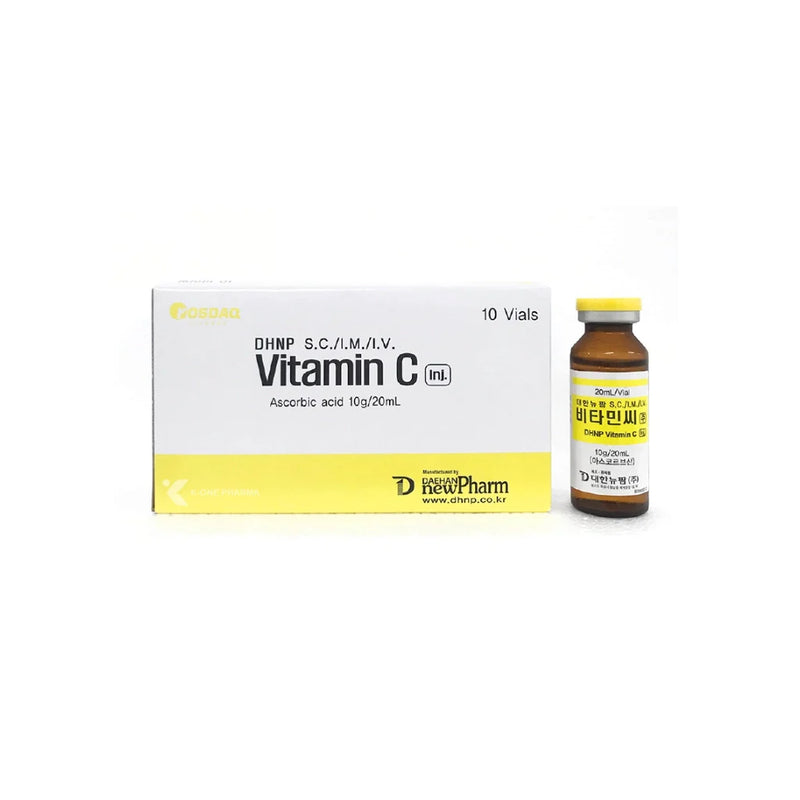
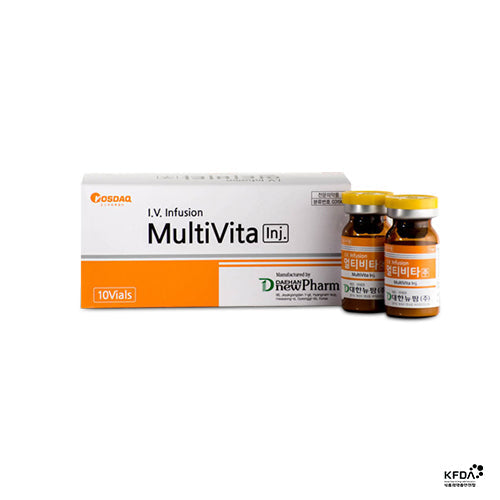
The range includes injectable vitamin C preparations, which sit in the 46-licence column rather than the 565-licence one: VITAMIN C Inj and the blended MultiVita Inj, alongside others in the vitamins and injectables range. All are professional-use products.
That distinction matters more for this ingredient than for most, because vitamin C preparations span an unusually wide range of forms, concentrations and intended contexts, and the differences between them are not visible in an ingredient name shared by 840 records. Two products can both declare ascorbic acid and differ in every specification that determines what they are.
The pre-listing check records the declared composition, the manufacturer and the classification of the specific product rather than the ingredient's aggregate position, and the method is in the Editorial and Sourcing Policy. For an ingredient with 840 licences across twenty filing categories, the aggregate position is exactly the wrong thing to record: it would be identical for a vitamin C ampoule and a chewable tablet, which is another way of saying it distinguishes nothing.
Frequently asked
Is vitamin C injection prescription only in Korea?
All 46 valid injectable ascorbic acid licences are prescription-only, with no exceptions. Non-injectable products behave the opposite way: 546 of 565 are over-the-counter. So the answer depends entirely on route, which is not true of every ingredient in the register.
How many vitamin C products are licensed in Korea?
840 licences exist under ascorbic acid, of which 611 are valid and 229 withdrawn or expired. The valid group splits 565 non-injectable and 46 injectable. The larger figure includes tablets, dental preparations, analgesic formulations and contrast media, so it is not a count of anything a single buyer is likely to be researching.
Why is vitamin C in so many different drug classes?
Because a classification code records what a finished preparation is filed for, not what it contains. Ascorbic acid appears as a component across twenty categories of formulation, and each product was filed under its own primary purpose. In most of those records the molecule is a component rather than the point of the product.
What class does the Korean register put ascorbic acid in?
Twenty classes on the non-injectable side, led by [03190] other vitamin preparations with 249 licences, then [03160] mixed vitamins with 107, [02310] dental and oral with 69, [01140] antipyretic and analgesic with 42, and [07210] X-ray contrast media with 16, among others. The injectable side uses only three, with 36 of 46 under [03140] vitamin C and P preparations.
Does a large licence count mean an ingredient is well established?
It usually means the ingredient is old and widely formulated, which is not the same thing. Ascorbic acid's 840 licences accumulate from 1962 onward across twenty filing categories and include 229 records that are no longer valid. The breakdown by route, supply class and classification is informative; the total on its own is not.
Sources & references
- Ministry of Food and Drug Safety (MFDS), Korean drug product licence register, ingredient query "Ascorbic Acid" (840 licences, 611 valid, 229 withdrawn or expired), retrieved 2026-08-24. data.go.kr
- MFDS Korean drug product licence register, route, supply-class and classification breakdown for the same query (non-injectable 565 across 20 codes; injectable 46 across 3 codes, all prescription-only), retrieved 2026-08-24. data.go.kr
- KSTATION, Editorial & Sourcing Policy (product-level rather than ingredient-aggregate verification). kstations.com
Disclaimer. This article is general educational information and is not medical advice. It describes how ascorbic acid is recorded in the Korean drug licence register and how those records distribute by route, supply classification and classification code. It makes no claim about what any product does, does not infer clinical use from a classification code, and gives no guidance on dose, route or administration. Products referenced are supplied for professional use by qualified practitioners. Regulatory status varies by country and changes over time.